
HTTP Requests in Go: A Comparison of Client Libraries
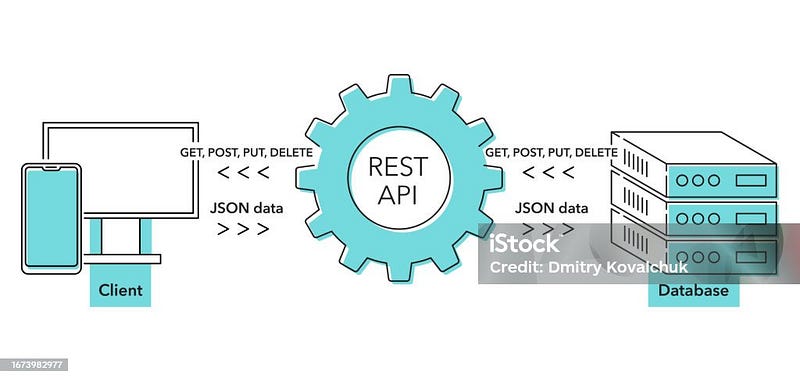
When developing a full-stack web application, the backend often needs to interact with other web services. In Go, commonly referred to as Golang, making HTTP requests is a fundamental skill. Various client libraries are available to simplify and enhance this process. In this blog, we will examine the core net/http package provided by Go's standard library, as well as popular third-party libraries, discussing their pros and cons. Finally, we'll conclude with recommendations on the best library for different situations.
The Standard net/http Package
Golang’s standard library includes the net/http package, which provides HTTP client and server implementations. The package is robust and well-suited for many use cases, making it the go-to option for developers.
package main

import (
    "fmt"
    "io/ioutil"
    "log"
    "net/http"
)
func main() {
    response, err := http.Get("https://api.example.com/data")
    if err != nil {
        log.Fatal(err)
    }
    defer response.Body.Close()
    body, err := ioutil.ReadAll(response.Body)
    if err != nil {
        log.Fatal(err)
    }
    fmt.Println(string(body))
}
Pros:
- Standard Library: No additional dependencies are required.
- Powerful: Provides a lot of flexibility and is suitable for various use cases.
- Well-Documented: Extensive documentation and community support.
Cons:
- Verbosity: It can be verbose, especially for complex requests.
- Error Handling: Handling errors and edge cases can be cumbersome.
Third-Party Libraries
Third-party HTTP client libraries can offer higher-level abstractions, more features, and simplified syntax. Here are some popular options:
1. fasthttp
fasthttp is known for its performance. It claims to be up to 10 times faster than net/http.
package main

import (
    "fmt"
    "log"
    "github.com/valyala/fasthttp"
)
func main() {
    statusCode, body, err := fasthttp.Get(nil, "https://api.example.com/data")
    if err != nil {
        log.Fatal(err)
    }
    fmt.Printf("Status Code: %d\n", statusCode)
    fmt.Printf("Body: %s\n", body)
}
Pros:
- Performance: Excellent for high load environments.
- Memory Efficiency: Less memory allocation compared to
net/http.
Cons:
- Compatibility: Not fully compatible with
net/http. - API Complexity: API can be complex for beginners.
2. gorequest
gorequest is a simplified client that provides a clear and concise interface for making HTTP requests.
package main

import (
    "fmt"
    "log"
    "github.com/parnurzeal/gorequest"
)
func main() {
    request := gorequest.New()
    _, body, errs := request.Get("https://api.example.com/data").End()
    if errs != nil {
        log.Fatal(errs)
    }
    fmt.Println(body)
}
Pros:
- Simplicity: Easy to use interface.
- Chaining: Fluent API that allows chaining methods.
Cons:
- Performance: Not as performant as
fasthttp. - Error Handling: Handling multiple errors as a slice can be unconventional.
3. resty
resty is a simple HTTP and REST client for Go inspired by Ruby's RestClient and Node.js's SuperAgent.
package main

import (
    "fmt"
    "log"
    "github.com/go-resty/resty/v2"
)
func main() {
    client := resty.New()
    resp, err := client.R().Get("https://api.example.com/data")
    if err != nil {
        log.Fatal(err)
    }
    fmt.Println(resp)
}
Pros:
- Ease of Use: Friendly for new developers.
- Features: Automatic JSON/XML parsing, OAuth/Bearer tokens, etc.
- Chaining: Fluent API similar to
gorequest.
Cons:
- Overhead: Slightly more overhead than the
net/httppackage. - Abstraction: Might hide some low-level control for advanced usage.
Conclusion
Choosing the right HTTP client library in Go depends largely on your specific needs and project requirements.
For general use cases where you want to rely on the standard library without adding third-party dependencies, net/http is sufficient and recommended. It's powerful, well-supported, and provides the low-level control required for most applications.
If you need high performance and are willing to trade off some compatibility and ease of use, fasthttp could be the best choice. It's ideal for high-throughput services where performance is critical.
For developers looking for an easy-to-use client that takes care of most common tasks with minimal boilerplate, gorequest or resty would be more appropriate. They are especially useful for simple RESTful services or when starting with Go.
Each library has its merits, and the “best” one is contingent upon your unique needs. For a balance of performance and usability, resty is a strong contender. However, for projects where absolute performance is the goal, fasthttp stands out. Ultimately, you'll need to consider your priorities and choose accordingly.


