
HP has been in China for 40 years and has witnessed the rise of Chinese companies.
In the past two decades, China has experienced the fastest economic growth cycle. Personal computers have become a highly needed productivity tool in various fields in China. Countless Chinese companies have sprung up, including world-class Internet companies, manufacturing companies, and thousands of There are thousands of small and medium-sized start-up companies, and a prosperous commercial market is also growing with the rise of Chinese companies.
A start-up group of three or five people or a large and advanced company, an automobile production line related to the energy revolution, a group of world-famous super projects, behind it is not just a computer, but the forty-year development of China Hewlett-Packard The presentation of years of user insights, product innovation, and ecological construction accumulation.
Behind those companies, large and small, that people are familiar with, there is China HP. “This is HP that people don’t know much about. We are the heroes behind the scenes.” Zhou Xinhong, vice president of China HP Co., Ltd. and general manager of the Greater China Personal Information Products Division, concluded.
Since joining HP in 2002, Zhou Xinhong has accompanied the growth of HP China for nearly two decades and has been deeply involved in the field of commercial computers. Over the past twenty years, I have witnessed the growth of HP China and the growth of Chinese enterprises together with countless HP people.
36Kr chatted with him about his story with HP. This story contains the excitement after success and the sadness after setbacks, but more importantly, it is about how HP, a company, constantly introspects and iterates, always puts customers first, and practices “in China, for China” “in principle.
The 40 years of China HP are not only the development history of a foreign-funded enterprise in China, but also an exciting history of the rise of Chinese enterprises and the Chinese economy.
“Like building a house, lay the foundation well.”
In 2001, HP announced that it would acquire Compaq for US$25 billion. Once the two giants with a revenue of US$40 billion merged, they would directly change the landscape of the PC industry. The Los Angeles Times made a direct judgment: “This transaction will create the world’s largest PC company.” PC company[1].”
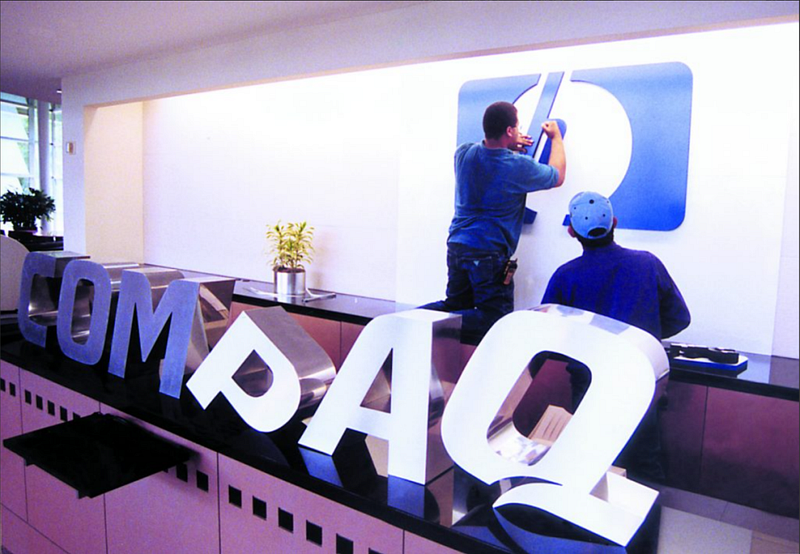
The relationship between Zhou Xinhong and HP originated from this “merger of the century”. In 2000, Zhou Xinhong joined Compaq Taiwan. After the merger of HP and Compaq, Zhou Xinhong joined China HP and came to Shanghai from Taiwan to serve as vice president of China HP and general manager of the desktop business department of the Information Products Group.
In 2005, HP, which had gone through several years of consolidation, had revenue exceeding US$80 billion and was on its way to becoming the world’s largest PC company. China HP has also been rooted in China for 20 years, and its talents, management, and business have been developed from scratch. However, an objective fact is before us. China HP’s turnover only accounts for 2.5% of HP’s.
China HP is still not big enough. Zhou Xinhong, who has just landed in Shanghai, feels even more strongly. “If you look at the PC business, mainland China’s market share only accounts for 2.5%.” This figure excites Zhou Xinhong. “That’s an opportunity, because the space is huge and your starting point is very small.” Low means preparing to run up.”
The Chinese market is so big, why is the market share only 2.5%?
In 2005, when HP China formulated its three-year plan, it discovered that the problem was that sales management was not detailed enough. Zhou Xinhong said, “HP views the Chinese market as a whole. There is no regional division like North China and South China, and sales are still stuck in the north.” It’s wide, not sinking enough.”
As a result, a “New Channel Deal” was launched within HP. At the end of 2005, the Chinese market was officially divided into eight sales areas. Each area was looking for a general agent to handle local sales; at the same time, sales were allowed to penetrate into fifth- and sixth-level cities and even counties and towns.
As a multinational company, communicating with the headquarters is a skill. The key is to let foreign colleagues understand the particularity and complexity of the Chinese market. Zhou Xinhong invited his foreign colleagues to go to the sinking market to hold a channel meeting. The location was not the high-end hotels in Beijing, Shanghai and Guangzhou, but small hotels in fourth-, fifth- and sixth-tier cities. “You are going to come to fourth-, fifth- and sixth-tier cities, or even county towns. Come and see, you have a chance to grow bigger, come in and see, I need support.”
Another skill is to convince channel customers that the product and price are suitable for the Chinese market, which is particularly critical. “When the channel is about to be rolled out, one of the problems encountered is price. If the price problem is not overcome, no sales will dare to move forward. Once it is overcome, sales will dare to move forward.”
Compared with local brands, the prices of foreign brands are relatively high. The price of a HP desktop is 7,000 to 8,000 yuan, or even 10,000 yuan. In that era when people were keen to go to Zhongguancun to DIY their own computers, such prices were not available. attraction.
In order to get closer to the local needs of the Chinese market, HP established the China Design Center (CDC) in Shanghai in 2004. “What the CDC initially did was to remove unnecessary configurations, reduce costs, retain configurations needed by the market, strike a balance between configuration and price, and design a series of customized products for China.”
At that time, Zhou Xinhong often went to various third- and fourth-tier cities with the sales team and design center team to visit channel customers, asking them what kind of products they needed and what difficulties they encountered in selling products.
Compared with the Chinese market in the past, the customers faced by China HP in the first 20 years after entering China were often national projects and the information industry. However, by 2005, more and more corporate customers had appeared in China, and HP and customers When signing the contract, you are facing the corporate information manager and financial manager. At this time, the cost-effectiveness of the computer, supporting software, and services become particularly critical.
If compared with the global market, foreign customers often use enterprise-level needs as the benchmark, but customers in the Chinese market are very diverse. Zhou Xinhong said, “Education and government, two very large desktop PC application markets, account for a total of 42.5% of the market share.” %, so HP attaches great importance to it [2].” Government, education, and small and medium-sized enterprises, these customers do not have such high professional needs, but they need a balance between price and products.
With the local R&D center and user insights, China HP has launched several new commercial desktop products, including HP Compaq d260, HP Compaq d280 and HP Compaq dx6120 series. The price of d260 has been directly reduced to 2999 yuan, which is HP’s first A desktop computer priced below 3,000 yuan. According to Zhou Xinhong’s recollection, in the past, agents would think that the product was too expensive and they would be afraid that you would stuff it with goods. However, with d260, they rush to buy it as soon as it is sold, because agents can sell to more customers.
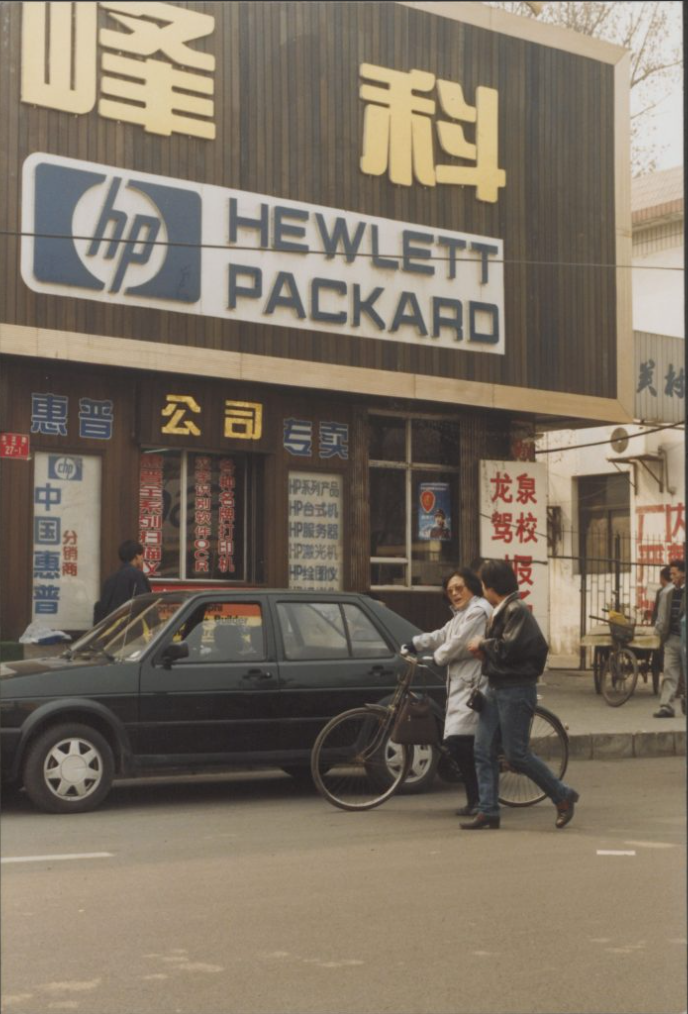
Use products that are more economical and suitable for the local market to pave the way, divide China into eight markets, and sink sales, channels, and services. “It’s like building a house, lay a good foundation, and then start to plant things on top.” This is how Zhou Xinhong summarized what HP China was doing at that time.
From 2006 to 2009, China HP maintained a growth rate of more than 1,000 stores per year. Even during the economic crisis in 2008, China HP’s performance was not affected at all[3]. In 2008, China HP had 4,000 consumer computer sales stores and about 1,000 industry customer stores [4], and its services were extended to more than 1,200 cities.
Everything went as smoothly as the Los Angeles Times predicted. In fiscal year 2006, HP Group’s revenue reached US$91.7 billion, surpassing IBM for the first time to become the world’s largest PC company. In the Chinese market, HP also surpassed Founder for the first time and became China’s second largest PC manufacturer. By 2009, its domestic market share exceeded 16%.
“The more the fire burns, the more dangerous it will be inside.”
The first ten years of the new century were the best ten years for Chinese PCs and also the ten years of rapid development for HP in China.
“We are playing a smooth card. As long as we do it right, our share will probably increase.” In Zhou Xinhong’s view, China’s HP’s rapid growth is due to the business environment in the Chinese market. “From 2002 to 2010, HP was in a period of vigorous development, during which there were the Olympic Games in Beijing and the World Expo in Shanghai. Although HP was not directly involved in these projects, HP shared the dividends of the upward growth of the Chinese market.”
A set of data from the Beijing Survey Team of the National Bureau of Statistics shows that from 2004 to 2008, Olympic factors boosted Beijing’s GDP by a total of 105.5 billion yuan, and there were as many as 50 industries directly or indirectly related to the Olympics. The first generation born in the 1980s entered the society. Director Zhao Baogang made “Struggle”, which reflected the spiritual outlook of young people, and won the first place in the ratings that year.
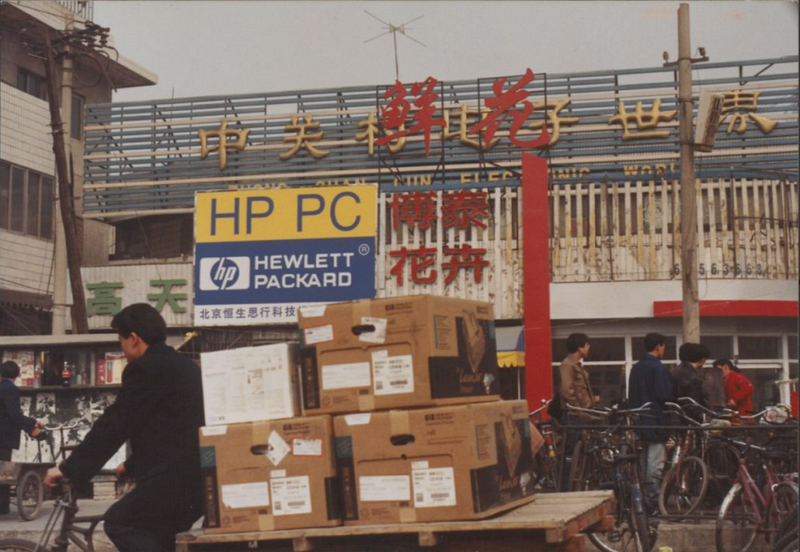
Specific to the PC industry, in 1984, China’s computer sales were only 110,000 units [5]. By 2007, China’s personal computer market sales, including desktops, laptops and servers, reached 27.942 million units [6]. Sales have increased more than 250 times in more than 20 years, with sales approaching 150 billion yuan.
The Chinese market is very lively, gathering international giants who have been deeply involved in the Chinese market for two decades, and local upstarts born in Zhongguancun are also taking turns to appear on the scene.
“The more the fire burns, the more dangerous it will be inside.” In Zhou Xinhong’s view, high-growth tailwinds will not always be available. After a period of prosperous growth, it is often followed by more intense competition — price wars, product replacements, acquisition waves, and ranking fluctuations.
When industry growth slows down and industry competition intensifies, how can you prevent yourself from falling into homogeneous competition? How to find the second growth curve? These are problems that HP and all PC manufacturers have to face.
More segmentation was one of the choices HP made at that time. Since 2007, HP has been targeting customer segments and officially launched HP’s “Full Assistance” program focusing on China’s small and medium-sized enterprise market, including providing targeted products, solutions, channel support, and IT operation and maintenance for small and medium-sized enterprises.
In Zhou Xinhong’s memory, “This was the first time that HP segmented and marketed the customer market to drive market demand.” The background at that time was that, thanks to policy support and the impact of the economic environment, independent entrepreneurship was ushering in climax.
“Legend of Zhongguancun” is the epitome of the entrepreneurial boom. What was once the “Daoye Street” has transformed into the “China’s Silicon Valley” housing 20,000 high-tech companies [7]. Reflected in the data, in 2008, small and medium-sized enterprise customers accounted for 60% of China’s GDP [8].
In addition to customer segmentation, HP also provides products and solutions for more industry segments. In 2009, HP launched a comprehensive launch of the Z series workstations.
“The traditional desktop case is disassembled into the motherboard, memory, and graphics card. A lot of wires and cards are intertwined. But when our workstation is spread out, there are square modules inside, just like opening a BMW. The hood.” Zhou Xinhong described the structure of the Z series workstation. For customers, the beautiful appearance of the Z series workstation is a good thing, and the convenience of subsequent maintenance is a good thing.
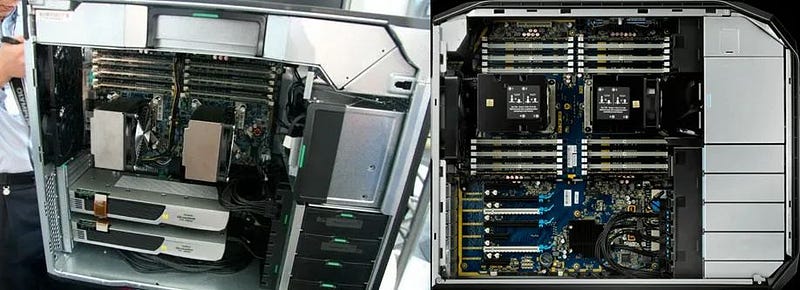
More than ten years later, Zhou Xinhong visited a TV station and found that the HP workstation Z820 released at that time was still plugged in and working. He was immediately moved, “because it was already an antique.”
As a productivity tool used in segmented tracks, workstations were expensive, ranging from tens of thousands to hundreds of thousands. They were not a mainstream product at the time, and their use scenarios were often concentrated in segmented industries such as energy, automobiles, and animation media. But for the PC industry, where competition is becoming increasingly fierce, the demand for segmentation has injected a dose of stimulant into all manufacturers, and they have launched workstations one after another.
Simply providing customers with products is not enough. Products are only low-dimensional competition. Higher-dimensional competition is about user insights, design thinking, product innovation, solutions, services, etc.
Insight into customer needs is particularly important. For example, HP has the Workstation Industry Solutions Conference and Industry Customer Council (CAC). At the end of 2009, CAC summarized and displayed solutions for different typical application industries for the first time.
Brands that provide value to their customers and truly meet their needs tend to win. According to an IDC survey, HP workstations ranked first in the industry in the Chinese market in 2011 with a market share of 47.3%, and have achieved outstanding performance of ranking first in the market for ten consecutive quarters.
As competition in the industry intensifies, competition not only occurs on the front end, but also on the back end, a strong and stable supply chain system is particularly important. In 2009, HP has reached annual computer sales of 10 million units and plans to increase production capacity. HP computer production base is located in Chongqing.
HP was the first PC company to build a base in the west. In 2008, although the electronics industry was booming, most companies were located in coastal areas, and there was no electronics industry in inland areas [9]. Huang Qifan, then mayor of Chongqing, observed that although the world economy was still in the shadow of the financial crisis, laptops were a resilient industry and planned to build “Asia’s largest laptop base” in Chongqing.
Accompanied by HP Global Vice President Fu Biaobang at the time, Huang Qifan went to the United States to meet with HP Chairman Mark Hurd. Huang Qifan calculated an account for Mark Hurd, explaining how much lower the cost of manufacturing in Chongqing was than in coastal areas, and that Chongqing would provide HP with Fu Biaobang was also playing drums about the preferential conditions. Finally, Mark Hurd nodded, and the Chongqing production base was settled.
Huang Qifan later repeatedly mentioned in his books and in public that HP was a key step in the start of Chongqing’s electronic information industry. In the electronics industry, OEMs often follow orders, with major customer HP acting as the locomotive, driving other brands, OEMs and supporting companies to settle in Chongqing.
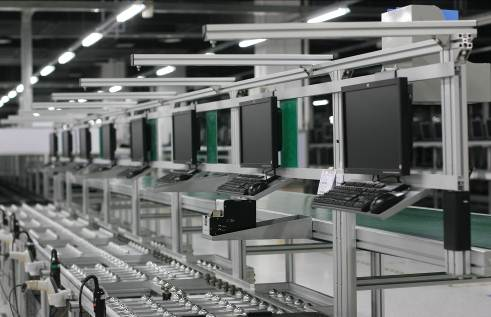
Today, Chongqing has been the world’s largest notebook computer production base for six consecutive years. 400 million HP computers have been continuously produced from the production line of the Chongqing production base and sold to HP consumers around the world.
The cooperation between HP and Chongqing is a two-way journey between foreign-funded enterprises and local governments, and it is also the epitome of mutual benefit between HP and the Chinese market. There have been many similar stories over the past 40 years.
HP invests real money in the Chinese market and cooperates with countless Chinese enterprises and local governments. Through day-by-day accumulation, it deepens its understanding of the Chinese market and insights into user needs. This is what HP “does in China and for China”. “The best embodiment of the principle.
“The best way to avoid problems is to improve product quality”
For any great company, the road to everlasting success is bound to not be smooth sailing. The tide of the times is coming, and HP has also experienced a brief period of pain.
When HP spread its sales channels to county towns and built factories to the west, preparing to fight in a wider world, the wave of mobile Internet was brewing. In the spring of 2009, Sequoia China held an annual meeting with the theme “Mobile Only”. Sequoia was very worried that some of the PC-based companies it had invested in would be eliminated by the times in the future. It would not be one company, but a group of companies [ 10].
The mobile Internet has indeed impacted the traditional PC industry. IDG data shows that global PC shipments maintained relatively steady growth from 2003 to 2008 and began to slow down after entering 2010.
The pressure doesn’t just come from outside. Problems such as the decline in product reputation and organizational structure adjustments have put HP in a state of internal and external difficulties. The five years after 2010 were the gray years of HP, and many old HP people left briefly.
But opportunities and challenges coexist, and the new wave also brings new opportunities. “The red envelope war during the Spring Festival in 2014 suddenly made online payment popular. When buying a PC, you can order on your mobile phone, and the price is relatively cheap.” At that time, Zhou Xinhong saw the opportunity in online channels and returned to HP in 2015.
At the beginning of the return, HP’s situation can be described as “a lot of waste waiting to be done”. Loss of confidence in the channel and high inventory are two major problems that need to be solved urgently. Zhou Xinhong and his colleagues reorganized channels just like they did when they first joined HP. They first looked at whether there were any problems with services and products before talking about performance. “The best way to avoid problems is to improve product quality and service. There are no shortcuts beyond this.”
Every time a product is launched, HP will convene a meeting with everyone, including executives and people from foundries, to gather around to see the positive reviews. Every time there is a negative review, everyone will become extremely nervous. Once, a user commented, “I feel like the screen is a little red.” HP re-investigated this comment and even asked the Shanghai laboratory to regenerate a color calibration software and put it into the factory for re-testing and delivery.
Mobilizing all resources to respond to a comment is an aspect of HP’s emphasis on product quality and customer feedback. In real service scenarios, customer needs may be more complex and diverse, and HP strives to achieve the ultimate goal.
In order to provide good customer service, HP will hold sales training sessions regularly. Zhou Xinhong recalled the scene of a sales training meeting. In a sales training meeting with 500 people, “Someone played the role of purchasing manager, some played the role of CFO. I came to visit you as the salesperson, and then everyone tortured the salesperson.”
After a period of adjustment, in 2017, HP aimed at the needs of small and medium-sized enterprise users and teamed up with JD.com to create a C2M reverse customized product — the “Zhan Series” product “Zhan 66”.
In actual research, Zhou Xinhong found that large companies have their own dedicated procurement channels and larger purchase volumes, so they have better bargaining power and can get good prices and services. However, the situation of small and medium-sized enterprise customers is somewhat different. Embarrassing, they need good equipment to support their innovative ideas, but they do not have enough resources and appropriate channels.
JD.com, which started as a 3C company, is a new channel that naturally adapts to the needs of small and medium-sized enterprises, and the Zhan series is a new product that best meets the needs of small and medium-sized enterprises — focusing on full performance, reliability, high quality and price, and also targeting the products that many start-up teams do not have. Professional IT personnel have launched 7×24-hour cloud online manual services.
Although computers have almost become a necessity for everyone at that time, for the vast majority of consumers, the parameters of GPU, CPU, and graphics cards are like garbled characters. After reading hundreds of computer purchasing guides, the question in their mind is still “What should I do?” I need to do office work and play games on a daily basis, which computer is suitable for me?” HP understood this purchasing anxiety of users and used the term “full blood” to position the performance of the Zhan series computers.
“Full health” is generally used to describe the exciting state of sufficient blood in games. It coincides with the high performance and stability of the War series computers. Whether you are a gamer or not, you can learn from the word “full health”. Learn exactly what this product has to offer. To this day, the term “full blood” is used by almost everyone to describe hardware, and it has become a non-quantitative industry standard in the PC industry.
When the “War Series” was launched, the entrepreneurial boom once again reached its peak. Inspired by “mass entrepreneurship and innovation”, investors have focused their green dollars on the mobile Internet. E-commerce wars, food delivery wars, online ride-hailing wars, and bike-sharing wars…are coming one after another, and Internet bosses and investors are welcoming After its own golden age, countless small and medium-sized enterprises have sprung up like mushrooms after a rain, and the number has jumped to 46 million. Behind the huge number is a commercial market that is waiting for support.
The “War Series” keeps pace with the times and has become an inseparable production tool for countless entrepreneurs, business white-collar workers, and college students. Data is the best explanation. Today, the sales volume of HP Zhan series has exceeded 2 million units since its launch, accounting for 25% of HP’s commercial notebook sales.
I have always had empathy for small and medium-sized enterprises and entrepreneurs, which may be rooted in the entrepreneurial spirit of HP — this PC giant known as the “Legend of Silicon Valley” with annual revenue of 60 to 70 billion US dollars, in 1984 Previously, it started from a garage in Silicon Valley, two young people, and $538 in entrepreneurial capital.
“We have overcome one difficulty after another, and we actually feel more at ease.”
The first product in HP’s history was not a PC, but an audio oscillator HP200A. In 1939, Disney was looking for a special sound effect for the then-new movie “Fantasia”. HP’s HP200A not only met Disney’s needs, but was also much cheaper than its competitors on the market.
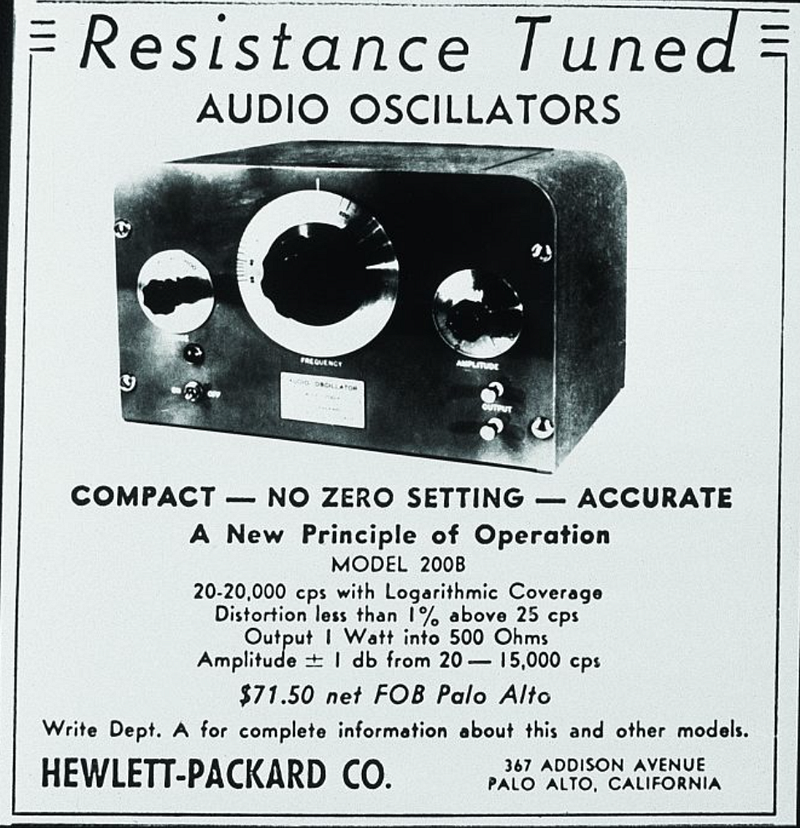
Soon, Disney came to visit and ordered 8 HP200B (modified version of 200A), becoming one of HP’s first customers. The two giants became involved, and their partnership spans almost decades.
In 2003, HP and Disney signed a 10-year strategic alliance to enhance consumers’ entertainment experience by developing new technologies. HP not only provided Disney with 7,000 computers, 10,000 servers, and 13,000 HP LaserJet printers, but also provided Linux-based workstations and servers for Disney’s feature film animation, and even the Disney fireworks show that made people believe that “there is magic in the stars.” The control system behind it is also indispensable for HP [11].
Not only Disney, but also well-known animation and film design companies including DreamWorks and Pixar Pictures, many of their classic animations are inseparable from the help of HP workstations. In the Oriental DreamWorks studio, each artist is equipped with a HP Z8 and two Dreamcolor monitors as standard.
In HP’s long history, there have been countless partnerships like this with Disney. Mutual achievement with customers is exactly what HP China has been doing for the past 40 years.
The core of HP’s ability to establish long-term and stable cooperative relationships with customers lies in its insight into changing user needs. Advanced manufacturing, the Internet, new energy, AI, industry trends are always changing, and the needs of large companies that are at the forefront of the trend often also have the characteristics of the times.
Since China’s automobile production and sales reached the top of the world in 2009, it has not been surpassed for 14 years. The automobile industry has not only created a huge consumer market, but also driven growth in the upstream and downstream of the industry chain. HP is one of the few suppliers that can provide high-performance workstations and mature IT operation and maintenance services.
Automobile companies have very high requirements for machines and production lines. For example, they require machines not to be down for more than one minute. During peak production periods, it takes about one and a half minutes for a car to come off the production line, but if the machine is down for one minute, , then one less car will be produced, which will reduce the company’s revenue by hundreds of thousands.
Therefore, a set of 7×24 uninterrupted IT infrastructure services is particularly critical. Starting in 2010, China HP began to participate in the data center renovation project of Volkswagen Group (China) to improve resource utilization and ensure uninterrupted and reliable services [12].
In recent years, more and more automobile companies have joined the wave of digital intelligence and new energy, and HP is helping automobile companies realize digital intelligence transformation. For example, HP and NVIDIA teamed up to build a digital twin factory for the BMW Group, simulating the entire production line without real machinery and equipment, thereby reducing risks and hidden dangers after the construction of the real factory begins.
The digital twin factory puts forward higher requirements for the computing and analysis capabilities, GPU, memory speed and other performance of the workstation. Dongfeng Motor uses the HP Z8 Fury workstation to simulate new energy vehicles. The computing time of a traditional workstation takes about 5–6 hours, but the powerful GPU computing power of the HP Z8 Fury workstation’s four professional graphics cards reduces the time to 2 hours. Within 60%, the production time is shortened by more than 60%, which greatly improves the production efficiency of the enterprise.
The wave of digital intelligence and the new energy revolution are booming. As of July this year, the penetration rate of new energy vehicles in my country has exceeded 30%, and the cumulative production has exceeded 20 million vehicles, leading the world. The fact is that the needs of many industries in China are ahead of their time.
“AI is a typical example. The number of AI papers produced in China ranks first in the world, more than in the United States.” Zhou Xinhong explained that AI big data is too huge and requires a powerful edge computing platform to assist processing, and HP workstations can just do that. fill this role.
In 2022, in the AI wave of Industry 4.0 and facing the golden age of AIGC computing power, HP Z series workstations will be fully upgraded, transitioning from being mainly oriented to creative groups to oriented to professional vertical fields such as data science, intelligent manufacturing, and 3D graphics.
Since the birth of HP’s first workstation in 1977, HP has accumulated considerable experience in the workstation field, which was originally HP’s area of strength. Nowadays, the tide of AI is surging, and it is natural to follow the trend and enter the AI track. thing.
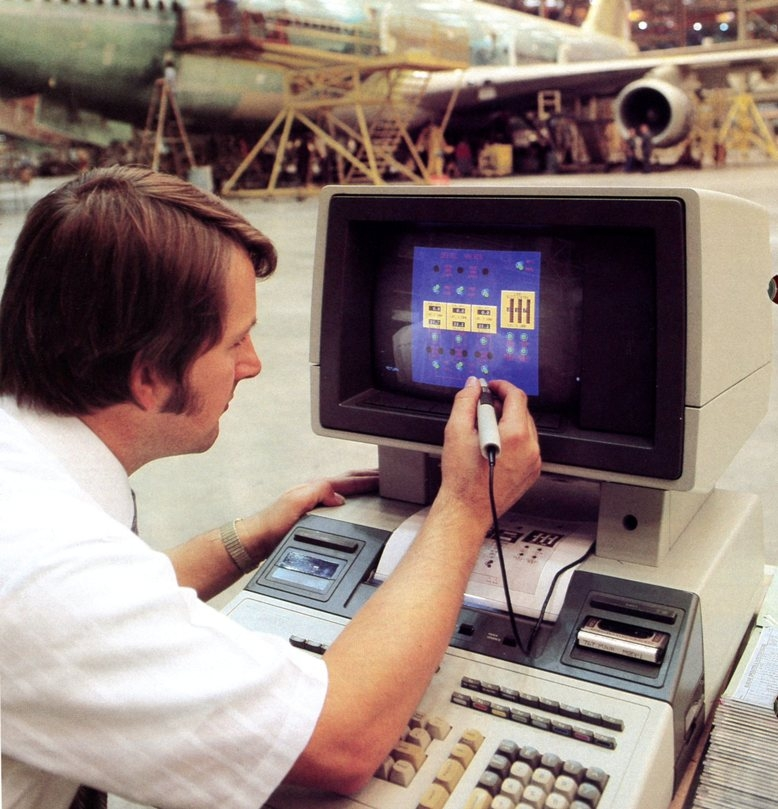
After the epidemic, it is unstoppable for Chinese companies to go global. Remote coordination of IT systems has always been a problem faced by many enterprises. In the overseas scenario, the IT situation of enterprises is even more out of control. Domestic companies often face problems such as equipment chaos and poor policy implementation when going overseas.
For Chinese companies, it is important to choose partners to accompany them to the world. Multinational companies that are well versed in the global market are a better choice. HP has complete on-site service capabilities worldwide and mature PC and printer businesses, which can provide customers with comprehensive solutions.
Since the signing of a memorandum of understanding on joint venture management between China and the United States in 1983, HP has entered China for 40 years. Education, retail, Internet, manufacturing… HP can be found in all walks of life. HP has become an inescapable partner for Chinese enterprises and an important contributor to China’s digital economy.
“We have overcome one difficulty after another, and the more we feel more at ease.” At HP, Zhou Xinhong encountered difficulties and briefly left. However, without HP’s platform, environment, and systematic cooperation methods, he always felt unsatisfied. This is also the feeling shared by many old HP people who have left.
HP is a company with a huge organizational structure, “but it is relatively flat, the work pace is fast, and you can collaborate across departments. People who work with you will not say that there are superiors and subordinates. This is a kind of DNA, even if you are As a new employee, I don’t think I will treat you like a new employee, which is HP’s people-oriented spirit.”
In people’s stereotypes, foreign-funded companies are always labeled as not localized enough, but from China HP, we see a foreign-funded company striving to take root in the Chinese market, serve the Chinese economy, and adapt to China’s speed.
If “people-oriented” is placed in the context of the Chinese market, it is exactly the principle that HP has adhered to for 40 years — “in China, for China.” This has been HP’s attitude over the past 40 years, and it will be its consistent attitude in the future.
References: [1]HP to Purchase Rival Compaq Computer, Los Angeles Times [2] HP focuses on the government and education market, Government Procurement Information Network [3] Breaking the pattern is not easy. Where is the new HP? First Financial Weekly [4] Zhang Yongli: The number of HP computer retail stores in China is approaching that of Lenovo, NetEase Technology [5] Computers have made three leaps forward in 30 years, Phoenix Information [6] China’s personal computer market sales scale is nearly 150 billion yuan, Xinhuanet [7] IT industry in 30 years: rapid rise, ifeng.com [8] HP launches “whole-process assistance” program in China, Beijing Business Daily [9] “Structural Reform”, CITIC Publishing Group [10] Shen Nanpeng clarified: I am not a game maker, Chinese entrepreneur [11]HP And Disney Launch 10-Year Strategic Alliance, The Walt Disney Company [12] Working with HP technical services, Volkswagen China completed a new data center transformation, HP