
A Field Guide to Feelings
How Your Body Can Help You Find Peace

If you’ve been feeling depressed, anxious, grieving, guilty, or preoccupied with cravings, then you probably tried to reason yourself out of it. You’ve wanted to get your head screwed on right and the clouds cleared from your mind. You believed if you talked to somebody, they could tell you things that might help you feel better. Don’t let me stop you. I would be the last person to prevent you from thinking better, but it isn’t just a matter for the mind. Your body can help, too. Let your body help you with your depression, anxiety, grief, guilt, or craving.
I know, I know. You may think the problem is your body’s to begin with. If you’re depressed, your body hasn’t wanted to move. You feel your anxiety in your clammy hands, dry mouth, queasy stomach, pounding heart, or tight chest. It’s those tears that show you, and everyone else, you’re grieving. Your hangdog expression is the badge of your guilt, and you can practically taste the thing you crave. It seems like your body has turned against you.
You could just as well blame your mind. After all, it’s your mind that’s not thinking right. It can’t be trusted to know what’s good. Both the body and the mind are implicated. But they both can help.
Let me show you how your body can help you feel better. If you don’t believe it’s possible, then I guess you’ve never danced. I could tell you to dance right now and, if you did so, you’d feel better right away. But if you think you don’t know how to dance or are too self-conscious, then let me give you other things your body can do to pitch in and help you feel better.
Let’s start with the lungs. Ask them to breathe. They’ll say they’ve been breathing anyway. So, thank them for it and ask them to breathe just a little bit deeper and slower. When they do, other parts of your body will get in on the action. Your stomach should go in and out. Your nostrils should flare. Maybe your mouth will open. You should feel the air whirling in your sinuses, whistling through your throat, and filling your chest.
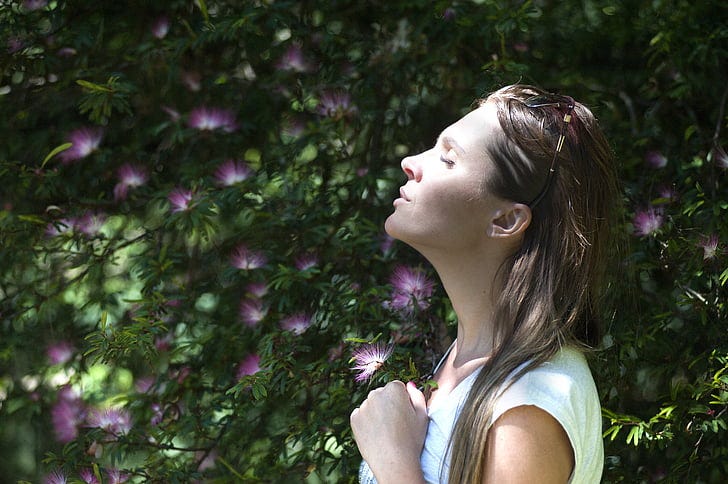
After a few seconds of this, you could feel better right away. But if you still don’t, or if you want to feel even better, then get your legs going. They can help, too. As them to take you for a walk. It’s doesn’t have to be far. You could feel better just by walking into the next room, but for best results, go outside, pick up the pace, swing your hips, and get your arms pumping. Your feet are involved in this, as well, for they always like to help. Your feet have supported you all your life.

While you’re out on your walk, ask your eyes to look for things you haven’t noticed before. If you’ve been depressed, anxious, grieving, or guilty, your eyes haven’t been doing anything at all. Your sight has been turned inward. Have your eyes look to the outside and see there’s been a world out there that has been going on all the time, even when you didn’t notice. The trees have been swaying in the wind while you’ve been depressed. Birds have flown through the sky while you were anxious. The sun rose and set, despite your grief; and flowers bloomed for you, even though you’re guilty. If you’ve had cravings, then your eyes have tried to find what was not there. Have them see what actually exists and how wonderful it all is.
While you’re at it, give your ears something to do. Have them listen and hear things you may not have noticed. If you’ve been depressed, anxious, grieving, guilty, or craving, you’ve only been listening to your thoughts. Meanwhile, that wind has been making a sound and those birds have been singing. Who knows, you might even be able to hear the sun rising and the flowers blooming if it were not for all the other sounds around.
Other senses want to help, too. While you’re breathing, try to catch the scent in the air. While you’re walking, feel the ground under your feet. Pluck a stem of grass, put it in your mouth and try to detect a taste.
When you get back home, there are things that your hands can do. Take your left hand and make a fist, as if you were holding on to something for dear life. Something is going away and you’re trying to pull it towards you, to prevent it from leaving. The thing you are holding on to could be an identity, a certainty, a loved one, your innocence, or your sense of control. It’s your past. Squeeze your hand with all the force you can to symbolize how you are hanging on to the past, a past that has got to go, a past that has passed. No matter how hard you grip, you will never be able to keep it, anyway. Continue to squeeze, so that you feel the tightness in your arms and your shoulder. You may even be gritting your teeth, and the muscles in your temples may be hard, as well. Already your heart beats stronger and you’re breathing faster. If you continued, your entire digestive tract would cease its work and your food would sit there, undigested.
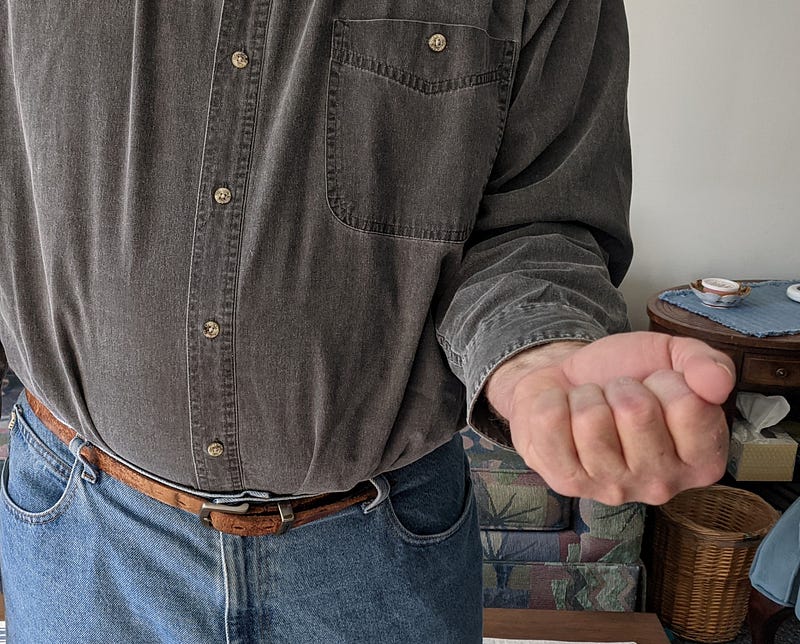
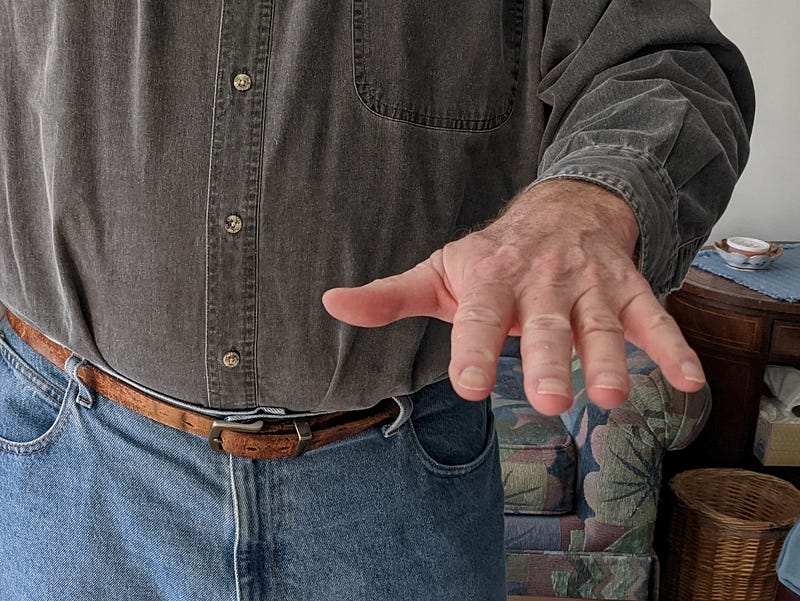
Now release the hand, turn it over, and let all that go. Imagine the past falling to the floor, bouncing on the ground, and running away. Let all the muscles of your hand, arm, shoulder, jaw, and head relax. Take a couple of breaths and feel the relief. Your heart will soon be beating slower, you’ll be breathing easier, and your gut will digest your last meal.
Next, take your right hand and put it out as if you are trying to get something to stop. You could be trying to stop all the things people are expecting of you, the future you’re afraid to face, life without that loved one who must leave, the consequences of your mistake, or the possibility you might not ever get what you want.
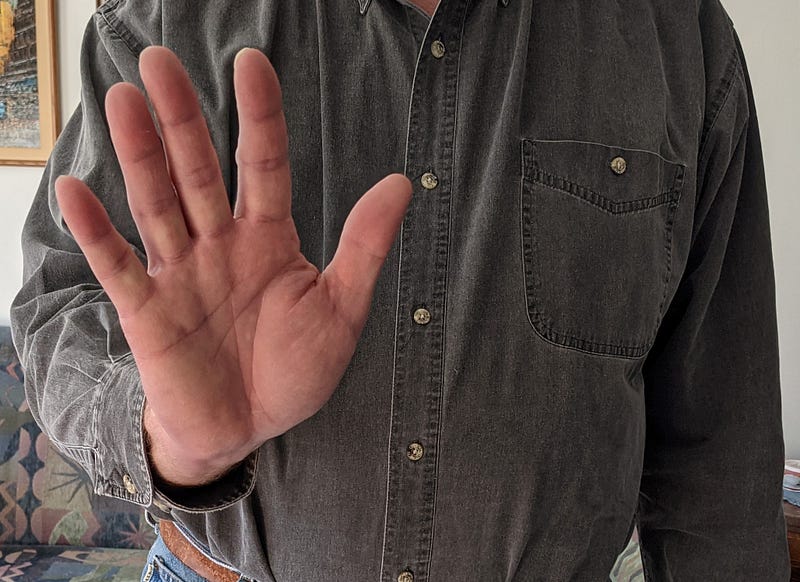
Take the hand that you have in this stop gesture and press it against a wall. Push against that wall with all your might. Feel the tension build in your hand, wrist, arm, shoulder, stomach, back, hips, legs and feet. Just as when you made a fist with your left hand, this pressure is causing your teeth to clench and those muscles in your temples to tighten. Your whole body may be trying to push against that immovable object and it ain’t budging.
The wall you are pushing against is the future, which you believe is closing in on you. You can’t stop it from coming, but you try. Resistance never works.
Now, stop pushing and relax. Feel the blood return to your hand, wrist, arm, shoulder, stomach, back, hips, legs, feet, jaw, and head. As before, your heart will soon be beating slower, you’ll be breathing easier, and your digestion will proceed.
Take that hand that had been pushing against the wall and turn it over, so your palm is facing upwards, as if you are ready to receive a gift. Accept whatever the future is trying to give you. Take it as the reward it is meant to be.
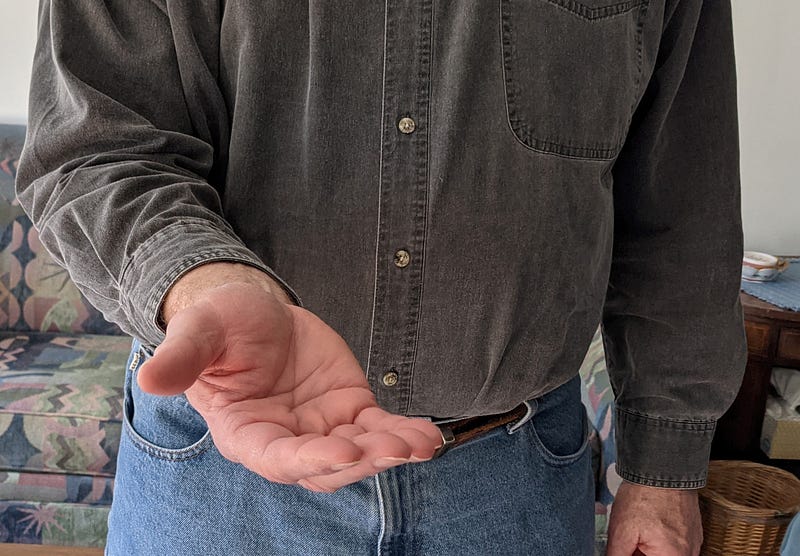
Now, take your two hands, the left hand that is letting the past go, palm down, and the right hand that is accepting the future, palm up, bring them together, and clasp them like this.
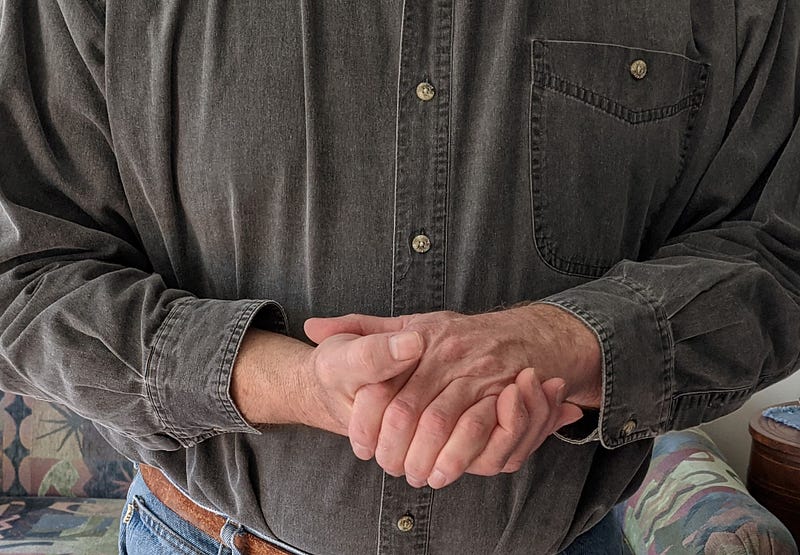
This is the gesture of acceptance of the here and now. It lets go of the past, welcomes the future, and holds the now, very gently, as if it were that precious gift the future gave, and you are keeping safe.
Now you have a gesture that you can use whenever you need it. When you are going to the doctor because he has some news. When your wife says you need to talk. When your husband has got something he needs to say. When your child is on your last nerve. When your boss is angry about a thing you did. When your refrigerator calls and offers you a piece of chocolate cake. Whenever, you need it, you have that gesture to use. No one but you will know what it means. It’ll remind you of the thing you did today, when you let go of the past, accepted the future, and held the present in your hands.
Keith R Wilson is a mental health counselor in private practice and the author of The Road to Reconciliation: A Comprehensive Guide to Peace When Relationships Go Bad.