
How You Can Optimize Your Writing Techniques
Start today and avoid the risk of unstructured writing

I’ve just finished my first month on Medium and I’ve made 8.89$ in June 2020. My goal for July is to at least double this number. I’ve been writing mostly about different aspects of the finance sector.
I wrote the first story directly and immediately on Medium. I did not have a clear structure while I was writing. The story was developing as I wrote. After I finished writing, I noticed how hard it was to keep updating the structure of the story. I knew immediately that I had to change something.
Note the idea
Ideas can come at any given time. If you are anything like me, ideas will pop up in your head when you are in the shower, in bed, while driving, at work, or even while eating.
We cannot control the time, in which an idea will pop up in our heads. But, we have control of whether we want to note this idea down or if we want to let it go unnoticed.
The easiest way to note down said idea is to write it down in a notebook or on the notes app on your smartphone. I immediately open the Medium app on my smartphone, start a new story and I write the idea as a title. By doing so, I’m always notified every time I open medium to write, that there is an idea waiting for me to explore.
Design your post
Any functioning thing around us has a design of sort. A Medium post is not any different. The architecture of the post is very important, it is what keeps the readers engaged with your post.
A post’s architecture describes how its elements are connected. It defines how the different parts of the story come together to deliver the overall meaning.
There are many ways to design a post. One person might use the mind mapping method. Another might use post-it notes on their computer. I do something different, I handwrite with a pen.
I use an iPad pro to take handwritten notes. When I’m exploring the possibility of a new idea, I write down my stream of thoughts in my notetaking app. After I’m done writing down the ideas I have, I take a look at the entire thing and I decide their order. I ask myself:
How are those ideas connected together to maximize the delivery to the reader?
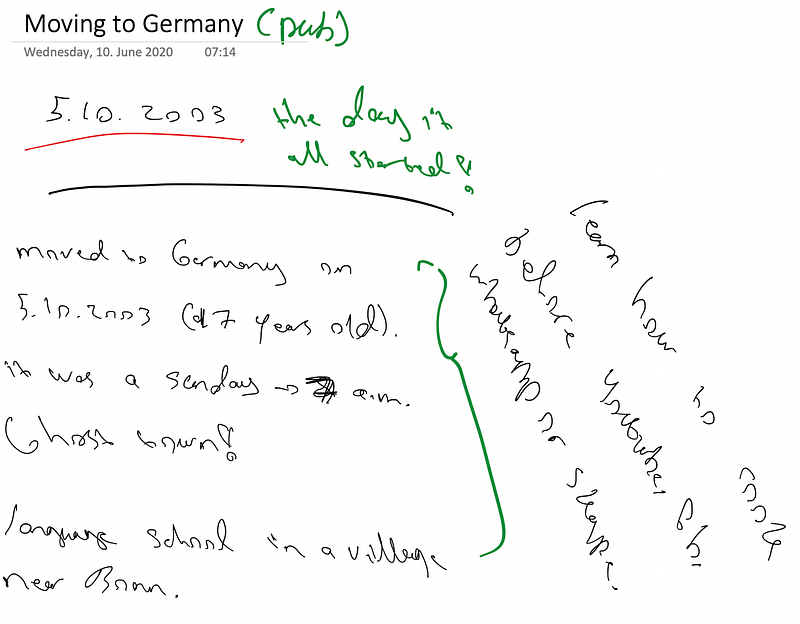
Writing on the iPad makes it possible to move my ideas around. After I move the bullet points around, I achieve the post’s optimized design. The screenshot below shows how my notes look like, and now I’ve noticed it shows my terrible handwriting too.
Do the research
Some posts need research to gather the necessary information. Do not forget to note down your resources and to cite them in your post on Medium. The internet allows us to have all the information we need on the tips of our fingers. Small research is enough to take your post to the next level and to keep the reader engaged with you even more.
On one of the last medium posts I published, I did a small research on The LEGO Group. I added a summary of the company in the story. This allowed my story to give the reader all the necessary information to the story. Noam Chomsky said:
As a research tool, the internet is invaluable
Add a quote or two to your post on Medium, if it is possible. A good quote can be the heart of a compelling story. It enhances the credibility of your story. Well crafted words by famous people leave an everlasting impression by readers. Search for relevant quotes for your story in BrainyQuote. It is a huge database for quotes that you can use for your story.
Start writing
After finishing the research and the story’s architecture, you can start writing your story on Medium. To allow for even faster writing, learn the Medium shortcuts. Type Cmd+? or Ctrl+? to open Medium’s shortcut list.
There are many free apps that you can use to avoid typos in your text. I use Grammarly and it is a great help. Hemingway Editor is an app that I use to check my text in general.
Try to have a designated time for writing. Do not only write when you are free. It is hard in the beginning but after a month, it will be part of your routine.
Format your story while you write it down. A good looking post is as important as its content. Try to keep the sentences short. Each paragraph should be five lines or less, This is pleasing for the eyes while scrolling down the story.
Edit your story
Leave the draft for an hour or two. Come back to it and try to read it with different eyes. This will help you to look at your story from a different perspective.
Try to share a draft link of the story with a good friend. Ask them to read it critically too. They might notice a typo or two that you have missed. Ask them to grade the story and its content as well. Their feedback is like the feedback you will get from the general readers.
Chose a great headline
The title and the subtitle of your post are important as well. They are the first things people will read. People will decide if your post is worthy to deserve a visit based on its title.
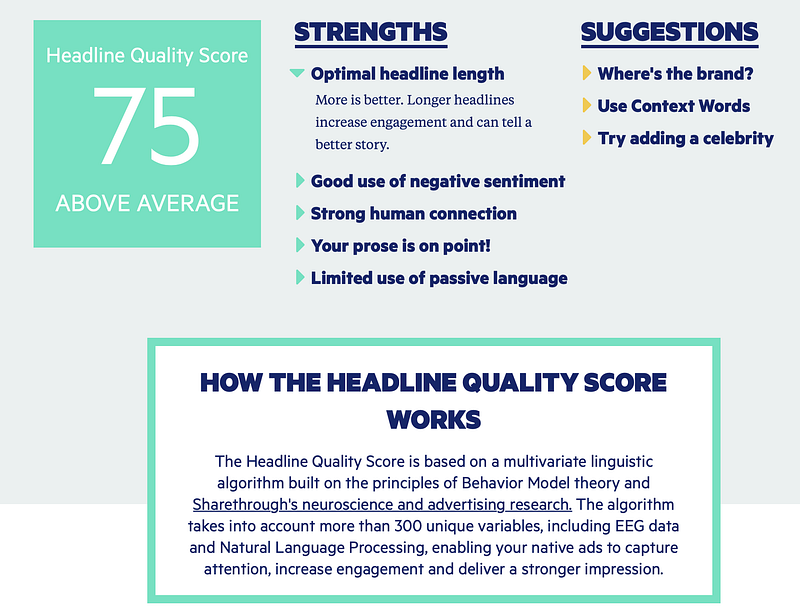
I use sharethrough tool to check the title of my stories. It scores your headline and it will give you recommendations to optimize the title. The following screenshot shows the score for the title of this story. See how sharethrough gives me recommendations, and encourage my choices.
Final steps
The last steps after writing your story are publishing and promoting the story.
Publish your story
Decide whether you want to self publish your story or submit it to a publication. If you decide to submit it to a publication, then find out the most suitable publication for the story. Research if this publication curates for your target audience.
Some publications do not publish on the weekends. If you managed to get your story accepted on Friday, then your story will be on their page for 2–3 days. This allows your story to stay visible longer.
Do not forget to choose the right keywords for your story as well. This is the main way, readers will be able to search and find your story.
Promote your story
Promoting your story is also important. Use social media to promote your story among your followers and friends. If you wrote about a current subject, then reply to trending hashtags with a link to your story on Medium.
I schedule my tweets to promote my stories on Twitter. Tweetdeck is a free app that allows you to schedule tweets. After I publish a new story, I schedule my promoting tweets for a week.
The majority of writers on Medium forget to optimize their SEO. To do so click on three dots on the upper right corner, more settings, and finally SEO settings.
I also have a profile on Manystories, on which I share my Medium posts as well. Manystories promote my story further to interested audiences and readers.
Writing might start as a challenge for new writers. but by applying simple steps and methods it can become easier and more rewarding. Get the most out of your writing time and structure your stories by applying these methods.


