
How You Can Get In On AI; Become A Player And Stop Being A Spectator

Will the AI trend go away?
My honest opinion: no!
But even if it’d go away, you don’t have to worry about that. A Yiddish proverb says, “provide for the worst; the best can take care of itself.”
The status quo remains should the AI trend go away; what you have to fear is what’d happen if it doesn’t.
The implications of missing out on AI can be far-reaching:
- AI will possibly take over jobs.
- Those who gained AI skills will take what’s left.
Here’s what researchers found out:
In the U.S., a study by OpenAI researchers estimates that language models will affect 80% of the jobs by at least 10%, and 1 in 5 would see at least half of daily jobs affected by AI.
AI won’t make all jobs go extinct, in some cases, workers will need to expedite their tasks and increase productivity by learning new AI softwares and tools.
So your first step in getting into AI is finding out how you can leverage it in your current field.
Exploring How AI Can Be Used In Your Industry
Unlike NFTs, AI doesn’t have a utility issue; it’s shaping how work is done in many industries.
Whether finance, marketing, writing, healthcare or education, there will always be away to take advantage of AI.
Researchers at University of Pennsylvania and Robert Seamans of New York University published a paper that attempted to help people find out if their work will be affected by AI.
Using two types of AI, those capable of generating and analyzing speech (like ChatGPT), and others with the same capacity for images (like Midjourney), they analyzed numerous skills human engage in; from lifting heavy things, down to reasoning and writing.
They published their result in a table, but you can find a dynamic version of in this post by Washington Post. The post also has a section where you can type in your job and then see how likely it is that AI will affect it.
Here’s the result I got when I searched “architect”:
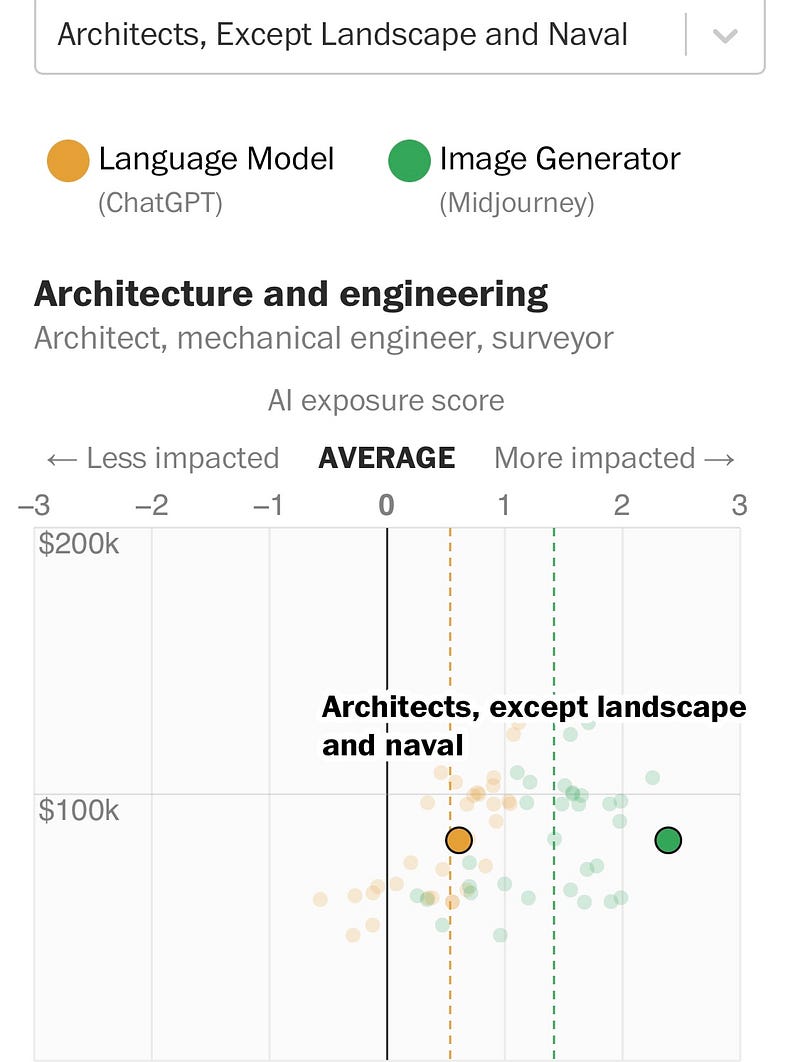
You can use the tool to find out the possibility of AI impacting your field.
Here’s a rule of thumb:
- Jobs we already do with computers will see more change, while those that require manual tasks will see less.
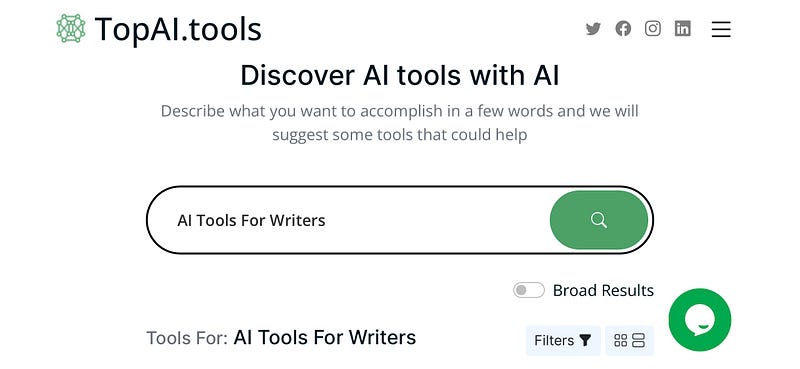
Next is to consider how AI can help you improve on your job; or you can flip the process and search out AI tools specific to your field. This way you can see what tools are out there and what they can help you do.
You can use the website Top AI Tool.
AI Soft Skills
Asides from having the tools, there are soft skills you need in the age of AI. According to Microsoft, 85% of leaders globally agree to this.
These skills include:
- Analytical judgment
- Flexibility
- Emotional intelligence
- Intellectual curiosity
- Bias detection and handling
- AI delegation (prompts)
Humans will always be in charge; these skills help you do so effectively. These skills are important for choosing when and where to use AI or not. They’ll also help you determine how best to utilize Ai tools.
Like modifying a ChatGPT content; using it, or discarding it.
AI Hard Skills
If you want a new skill or you need to switch careers, then you have a great opportunity to get in on AI. Here are top AI hard skills and you can get in on:
Programming
There are low and no code AI solutions that can help you get things done, but businesses that wants to deploy their own AI solution tailored to their specific need will more likely need skilled coders.
Moreover, the chances of a non-coder to use AI to code projects are slim. In the end, AI will majorly help those already skilled in coding in upping their game.
You don’t need to learn all the programming languages. Their are computer programs used for different purposes; for AI, what you need is to learn at least one of: Python, R, C++, and Java.
Learning how to code is a baseline skill for getting into AI; once you’ve gained the skill, then you can specialize.
Data Science
AI feed on data and use them to carry out tasks and make decisions.
Data scientists know how to collect, manipulate and work with data to get insight from them. Data scientists are the ones that collects data and fine-tune them for AI to use in performing defined tasks.
Getting started in data science will require that you learn any of the programming languages that we outlined above.
Go here to get a list of five online resources to learn data science for free.
Data Analysis
AI can help use gain deep understanding of complicated subjects, more than can be done using human analysis. This is great.
But if we can’t communicate these findings to others, and explain why they’re valuable, this can render our findings useless.
Data analysis is the skill of understanding, then communicating and visualizing data. Data analysts gain insights using AI tools and then turn them into easy-to-understand narrative and visualization that conveys what needs to be done, when and by whom.
This helps in understanding industry trend and driving business growth.
Natural Language Processing
AI is not just shaking how we work, it is snapping life in general. As AI becomes mainstream, the need for it to understand human language, whether it be written, spoken, or even scribbled, increases.
Natural language processing help train AI to understand contexts, carry out summarization, and extracting of keywords. This way, AI can be made to better understand and communicate with us.
Python programming language, knowledge of maths and statistics, are some prerequisites for getting started in NLP.
Machine Learning
Can computers learn from experience without being explicitly programmed?
This is the question the field of machine learning looks into.
In traditional programming, data and algorithm are fed into a computer to get an output. In machine learning, data is fed into a computer alongside the output, and the computer works out a program for itself.
Machine learning is used in a wide range of industries like e-commerce, finance and healthcare. They’re use in facial and speech recognition; recommendation systems, marketing and sales, plus more.
The wide application for machine learning makes the skill a valuable one.
Wrapping Up
There are things I’d rather sit at the sidelines and watch other people do. Meta launched Thread at a time I was cutting down on social media. I didn’t change my mind then.
I still don’t have an account.
There are no serious implications for missing out on Thread, but that of missing out on AI is big.
Starting out is not as hard as it seems. It’s your move to make.