
How We Understand One Term Can Be the Difference Between ‘Healthy Living’ and ‘Always on a Diet’
What a Google Search reveals about indulgent food
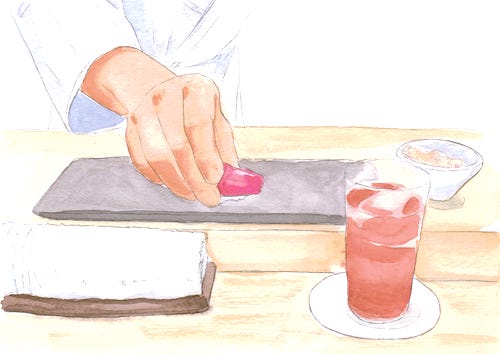
One Google search, two very different results
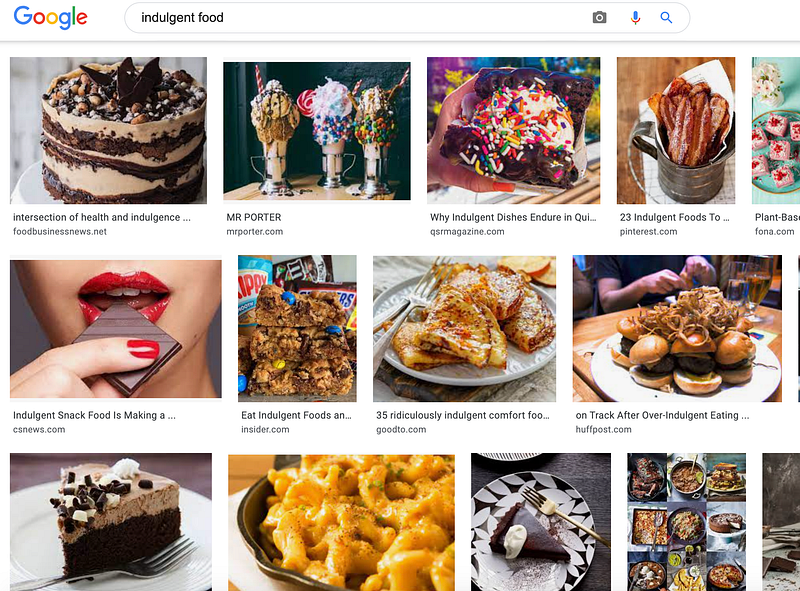
What happens when you Google the terms “indulgent food”? What images do you think will pop up in the search results?
If you guessed overflowing milkshakes, candy, ice cream, chocolate, bacon, burgers, and fries, you’re exactly right. It’s not much of a surprise is it?
But what happens when you Google “indulgent food” in Japanese?
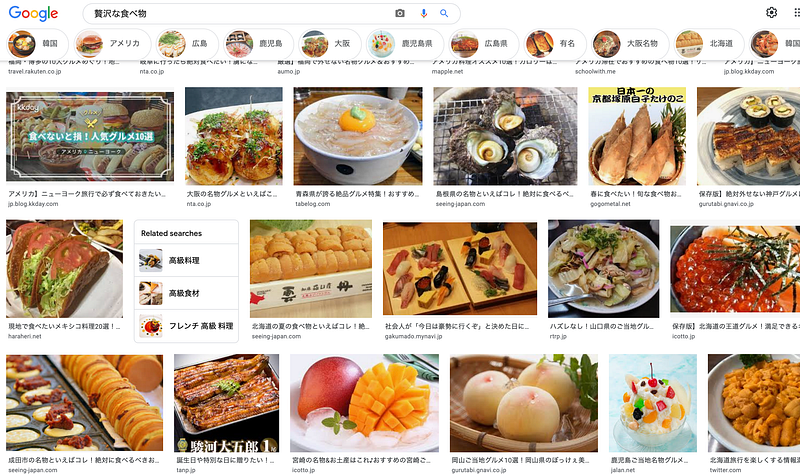
The search results bring up images of sushi, unagi, salmon roe, uni, mangoes, white peaches, bamboo shoots, seafood, and wagashi Japanese confectionery desserts. Would this be something you’d expect from the terms ‘indulgent food’? If you’re Japanese, it shouldn’t be too big of a surprise.
Let’s have a peek at three crucial differences between the results:
1. The food choices.
While indulgent food is often associated with unhealthy food in the U.S., this is not necessarily the case in Japan. Instead, indulgent food is correlated with quality ingredients: artisanal fruit, high-grade sushi, or freshly-caught seafood.
While high quality ingredients can be defined as expensive or hard to attain, sometimes even the price point isn’t the defining factor. It can be factors such as seasonality, history, or locality, which contribute to a food’s luxuriousness.
For example, this small toasted mochi shop in Kyoto attracts locals, travelers, and people from all over Japan — not because its mochi is Instagram-worthy-colorful or flamboyantly novel, but because of the craftsmanship and history behind their one product. The shop has been in business for over 1020 years! That’s what defines its luxuriousness.
2. The portion size.
Take a look at the serving size of the foods in the American version of indulgence. The glasses are overflowing, the ice cream sandwiches can barely contain themselves, the cakes and cookies are enormous, and the burgers and fries are piled up. In another sense, quantity is equated with being better, or more indulgent.
But in the Japanese version of indulgence, the sizes are relatively moderate. It would be a stretch to call it a small amount, but it’s clear that quantity is not as important. Instead, there is more focus on presentation, plating, and delicate garnish.
3. The variety.
In the American version of indulgence, it’s easy to see that a few ingredients dominate: chocolate, cheese, ice cream, and heavy fried foods. Yet this can be much harder to pinpoint in the Japanese search results. There’s sushi, but there’s also fruit. There are vegetables, but also a few sweets.
The definition of what it means to be indulgent has a much wider scope in the Japanese mindset.
How to stay healthy and happy, while never going on another diet again
This difference in understanding indulgence is key, because it shapes our understanding of what joyful food is. When unhealthy, large, and consistently sugary or calorie-rich foods become our version of what ‘treating ourselves’ is like, trying to eat healthy seems like a choice of deprivation. It means we’re always on a diet, always holding back on joy.
And this idea of depriving ourselves not only makes a diet unsustainable, but it can even lead to shame and stress, or habits of ‘diet-breaking’ and binge-eating.
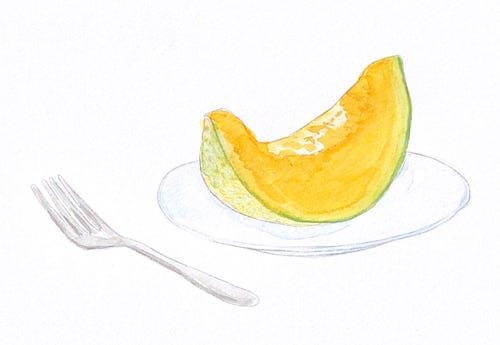
Instead, when we understand that food that is high quality, seasonal, and delicious to us is what really makes something indulgent, then healthy eating can become one in the same with the idea of treating ourselves. Eating seasonal, sweet mangoes can become our idea of indulgent eating, not just ice cream. Smoked and grilled fresh seafood becomes just as appetizing as a big burger.
Does this mean ice cream and burgers are never seen as indulgent in Japan? Of course not! People love enjoying these foods (me included), but the important difference is that they are not seen as the exclusive definition of what indulgent food is, and letting ourselves regularly enjoy food that we see as treating ourselves is key to sustainable healthy eating.
Learn to be healthier, inspired by life in Japan:
I teach about health inspired by simple Japanese philosophies and lifestyle practices, so you can learn to find peace, fulfillment, strength, and health in your own body. Stay in the loop and get access to free resources: Sign up here!
