
How We Take Back Control Of Black Women’s Femininity
Don’t let others define how you look and behave
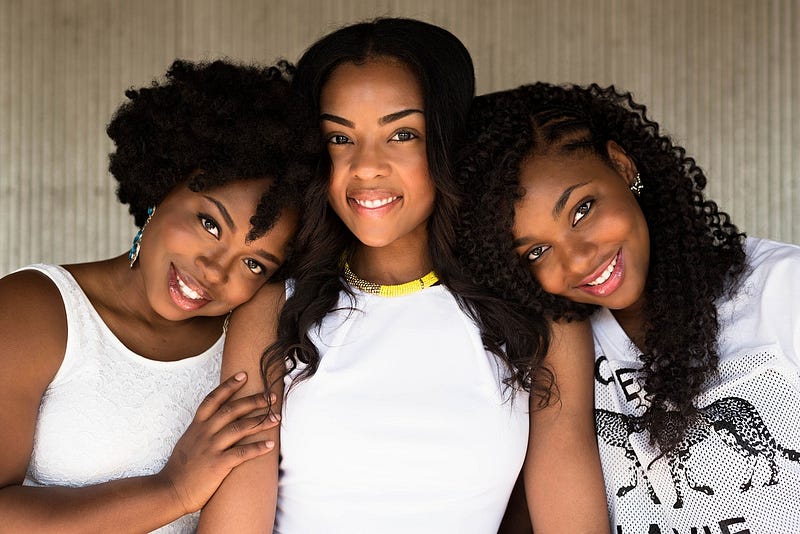
No, I’m not trying to sell you something. Picture this: what would happen if the black woman was to take her femininity back from the hands of other people? Black women are often seen as ‘unfeminine’ because we have not taken control of our femininity and defined it for ourselves; instead, we allow others to define it. Obviously, historically we had had no choice. But we have choices now.
Celia, a slave
We can go back to the plantation to see how femininity was snatched from us, then handed over to and defined by others. Take ‘Celia, a Slave’ (1835–1855), as she is known. In 1855, Celia killed her slave master Robert Newsome in Missouri, USA, due to the sexual abuse she suffered from the age of around fourteen. Celia was then put on trial for murder, which resulted in her being hung, even though there were clear laws at the time that protected women from rape and sexual abuse.
The prosecution successfully argued that ‘these laws did not apply’ to Celia. This was a technical argument over the wording used in the law: the words ‘woman’ and ‘women’ were used as they are now, and rightly so. However, in our foremother’s time, it was only white women who were seen as ‘women’ and feminine; so the law did not apply to a black woman like Celia. Secondly, Robert Newsome’s death was not seen as self-defence from rape, since a black woman was not considered a woman, and only a woman (at that time) could be subject to rape. Celia’s full story and trial can be found in Celia, A Slave (1991), by Melton Alonza MacLaurin.
Struggle For Control
With Celia’s story we see a clear example of other members of society defining who is and who is not a woman and feminine. This part of our history we have always known, but it highlights just how long others have had control over our femininity and womanhood. In Ain’t I a Woman (1981) bell hooks argues and powerfully demonstrates that,
‘while black men were not forced to assume a role colonial American society regarded as ‘feminine’ (cooking, cleaning etc.), black women were forced to assume a ‘masculine role.’ Black women laboured in the fields alongside black men, but few if any black men laboured in domestics alongside black women in the white household, with the possible exception of butlers.’
A quick glance back through history demonstrates that we have never really been seen as the feminine archetype. This was placed at the feet of white women and was reserved for them.
Post-slavery white women also clearly did not ‘labour’ as we did, which is why they fought during their feminist movement of the sixties and seventies for the right to work and earn their own money, to break free of the men in their community. But at that time, our foremothers were already working and earning due to necessity. That necessity arose from the differences between the black women’s family structure and the white women’s. This family structure was clearly shown in The Negro Family: A Case For National Action (1965), Daniel Patrick Moynihan’s sociology study which showed who was the provider and who largely was not at the time.
Past and Present Influencers on Femininity for Black Women
Fast forward, and today our femininity is still in the hands of other people. On social media, we have “femininity coaches” and female content creators trying to sell courses, groups, and sessions to ‘work on your feminine energy’ as a black woman. I’m not knocking them; bless them for trying to add value where they feel they can as a woman regardless of their race. My point and issue with this is that on an individual level we are still allowing others to influence our own personal definition of how we are or are not feminine. It’s in somebody else’s hands and control (again) as to how we define our own femininity.
Is this a good thing? Yes and no. Like I said, it’s clear (some) might be trying to add value, and some content creators may do this with a positive intention, but it takes away your power (again) as an individual black woman to create your own reality, to really learn yourself, and to create the best version of you based on your own definitions.
Consider this also when it comes to how others influence the feminity of black women. A Gitnux market data report into the black beauty industry in 2023 found that:
85% of the black hair care market was owned or controlled by non-black persons or companies.
This is a large percent of ‘others’ influencing exactly what black women do when it comes to hair. Clearly, according the the same research, this is not what we want. In the same Gitnux market data they found that:
47% of black customers prefer to use products made especially for them.
With such a large percent of ‘others’ controlling the market we spend in, it’s likely that ‘others’ are influencing you and me with their own agendas when it comes to femininity and how we are seen.
Still not convinced? In 2023, a white lady (Amira Bessette) TikToker stated what makes ‘black women’s hair un-elegant’. She removed the video from her personal account due to the backlash she received. But the video can been seen via the Atlanta Black Star. The policing of black women is endless, the desperate dash for the control over our femininity has been ongoing since the plantation, and it seems like everyone’s got something to say about it.

And The Role Men Play?
The worst of it is that on the other end of the spectrum we have men trying to sell us the same thing, from their perspective of what it means to be feminine. I don’t bless these men for trying though, because the problem with the latter is that men are likely to base their pitch on how to ‘work on your feminine energy’ based on two things:
· Their own agenda for black women
· The past and stereotypes
Tyler Perry and the ‘light bill guy’
It’s clear that there is a male agenda for black women, from my observation and maybe yours, and this is to keep your standards low!
Girl, did you reflect on what Tyler Perry said ‘particularly for black women’ about the ‘light bill guy?’ That, ‘if you have a man who can only afford to pay this and nothing else, but if you earn enough and can afford everything else this is fine.’ He feels that for us black women in particular this should be enough. *Face-palm.*
I hope you did catch the real message behind this. Perry’s expectation is that you don’t expect too much from a man, and you keep labouring as you have done (historically) with little support from him. This keeps you in the masculine position (as you have historically been, compared to other female groups) and ensures you are seen as the unfeminine woman when compared to other races. But this ‘light bill guy’ is not the norm or what is promoted in other communities to other groups of women. Especially not from people within their own community.
It’s clear that there is a male agenda for black women, from my observation and maybe yours, this is to keep your standards low!
Secondly, consider this: if your expectations or standards concerning what you require in your relationship (an equal or better financially, not a ‘light bill guy’) were to change, where would it leave the ‘light bill guy’? Without a mate, I hear you say…exactly.
This is all part of the agenda. How so? Within the ‘let me help you work on your femininity’ sales pitches to black women, some content creators are also advocating for black women to raise their standards and expectations for men. Where did this come from? It could be down to the What’s Behind The Rise Of Lonely Single Men (2022) research and article from Psychology Today which states that women increasing their standards when dating are creating the following results:
Dating opportunities for heterosexual men are diminishing as relationship standards rise.
Men represent approximately 62% of dating app users, lowering their chances for matches.
Men need to address skills deficits to meet healthier relationship expectations.
These findings relate to Perry’s comments in that men are becoming aware of the shift in women’s dating standards, including some black women. So men are feeling uncomfortable, and the ‘light bill guy’ is at risk of losing out.
I understand that Tyler Perry’s statement was not said in relation to black women’s femininity or trying to help black women ‘work on their femininity,’ like many other content creators do. His comment was said in a different context, but it still speaks to the role we have played historically and still do today — the masculine provider and protector role. Perry’s comment is not helping black women to move out of that role. Instead, it helps to maintain the status quo and feeds abandonment issues for ‘the light bill guy.’ It shows how our femininity is still controlled by others. Tyler Perry’s statement indirectly controls our femininity by keeping black women in the masculine role of providing, and for who? Another man and possibly a family that you may have with him.
Some may say, ‘what happened to your independent woman attitude as a black woman? Blame Beyonce and her gang for that Independent Woman song you all sang.’ But, no. It could be argued that the concept of an ‘independent woman’ is still wonderful, when she is providing for herself, meaning single — like single single!
If a man wishes to couple with a woman and have a family, it could be argued that it is not her role to both provide and take on childcare, when men have male privilege and the ability to earn more in a society that is largely male dominated. And if a man wishes to date a woman and not have a family, but nurture her feminine energy, and he shows up as “the man” or a man, it is still not predominantly her role to provide everything the couple needs. The man still has his male privilege and ability to earn more, with or without children. But I digress. *Rolls eyes*
Kevin Samuels and feminine stereotypes
Let’s look at the late Kevin Samuels whom I did not watch, did not listen to or admire, but know enough to understand that he did heavily try to promote to black women what is and is not feminine. His approach was in line with point two above — the past and stereotypes. How so? He felt that feminine women or feminine energy was based on being ‘fit, friendly’ and ‘submissive’ wasn’t it? And he often elevated other races of women ahead of black women, stating that they possessed these qualities more than we do, hence they are more desirable. Just like historically on the plantation, Samuels promoted the message that other races of women were the feminine archetype.
For those who are fans of the late Kevin Samuels, if that is your stance, no problem. But given the fact that he had two failed marriages, his kids were nowhere to be seen, and I’m sure he was behind drastically on child support, this was not a man with a good track record and history in relationships to look to for advice on how to date and relate to women. Please spare me the defence of this man based on his history. For the female supporters, Sis, all he did was degrade you as a black woman and make it entertainment — just like Tyler Perry. I could go on, but let’s move on.
How We Take Back Control Of Black Women’s Femininity Reputation
It could be suggested that it is time for black women to individually define for themselves what femininity is, then live their life according to that. There is nothing wrong with wanting to work on your feminine energy; there are major benefits from becoming ‘softer,’ if that’s what you desire. There’s nothing wrong with taking back the narrative that femininity belongs only to other races of women; this is the biggest lie. The truth is, we have been placed in a masculine light; we did not go there as volunteers. Given that, is it not time to course correct? And shouldn’t we do that ourselves, and not leave it to “femininity coaches” or others?

So, what would that look like? How can we individually define for ourselves what femininity is? If I am honest, I have always been a very feminine girl, teenager, and woman from my appearance to my general energy and how I show up in the world. I have never felt the need to buy into the ‘let me help you work on this femininity thing’ sales pitches. That said, I know there are black women out there who will and do buy into them in large numbers, because of how our femininity has been snatched away from us. I’m also very awake to our reputation around femininity, and to who is trying to control our narrative.
There are some women who genuinely due to life experiences feel they need to work on their feminine energy. The realisation of this, or even the personal decision to work on femininity as a black woman is a wonderful thing; it shows growth; I support this for all black women.
So, what would that look like? How can we individually define for ourselves what femininity is?
But as I looked around and saw male and female content creators trying to sell their definition of femininity to me and all black women, I asked myself, ‘if we took back control on an individual level of our own feminine energy, what would this look like?’
Possibly:
· A woman could ask herself what does she already do that she believes is feminine?
· How could she personally enhance what she already does?
· What is it that she does not do, that in her own opinion is feminine? How could she try to work on this? This will be different for us all (and that’s perfectly fine). The key here is to identify for yourself if there is anything you consider feminine that you don’t do or stopped doing that you could restart again. For example, when I was younger I would spend so much on perfume. Probably way too much because I had the spare money. That changed when I moved out of my mum’s home in London, an expensive city, and had my own bills. But when considering my femininity, I decided this is something that I wanted to go back to doing. I wanted to define my own ‘signature scent’ as I did when I was younger. So, when I took myself perfume shopping, I went back to purchasing my ‘signature scents.’
· How does she select her mates, as this impacts her feminine energy. Does she look for the toxic masculinity we see floating around on social media, podcasts, and generally in the community? By looking at how, where, and who she selects as a partner, and by basing it on different criteria than she used in the past, by selecting someone with non-toxic masculinity, a black woman could increase the chances of her meeting a partner who has healthy masculine energy and hence nourishes her own feminine energy.
· How does she present herself to the world, and is this in line with what in her opinion is feminine? This could include her physical presentation or her attitude and mannerisms.
· How does she allow others to treat her? Does she allow others (men mainly) to take her out of her feminine energy? This will mean different things to different women depending on their experiences. For example, it could mean she is dating men (or women if that’s her preference) and being placed in the position where she is dealing with ‘the light bill guy’ (or girl) as per Tyler Perry’s advice. Or it could mean that she’s entertaining people, situations, places, and things that bring out the worst in her, causing her to step out of her natural feminine energy.
· How does she practice her own self-care? What can be done to love on herself and pamper herself more?
· Does she surround herself with women she is inspired by, who bring out the best in her, are rooting for her, help her to grow and embrace what she feels is feminine energy?
· Does she love things about herself? Does she see herself as ‘softer’, ‘beautiful’, or whatever descriptor she sees as feminine? If she does not, how can she work on this? If she does, how can she maintain it?
Keep This In Mind…
These are just a few thoughts I had. Keep in mind that my thoughts above on how one can individually take back the control that others seem to want to define what femininity is for black women, are based loosely on my own definition of femininity. Yours may be different.
The Way Forward…
My aim here is to share but not influence you as others have tried to. I would love for black women to consider this for themselves! So, food for thought: what is it you see as femininity for yourself as a black woman? What is your own viewpoint? How will you embrace it and take action to remove the control from others?
It is my belief that if we were to do this individually for ourselves and you define it, I define it, and she over there defines it, and we did not allow others to sell us their ideology on what femininity is, there would be more personal self-discovery, healing, growth, and possibly the image of the black woman that screams negative stereotypes about ‘lack of femininity’ would be something that would be hard to stick to us. Those that say we ‘lack femininity’ just want control; what do they know?
Going back to my opening question: what would happen if black women were to take back control of their femininity? We might discover that we were fully feminine all along.
Thanks for your readership, I hope my writing gave you something to think about. If I’ve caught you in a good mood or you’re feeling kind, you can buy me a coffee here: https://www.buymeacoffee.com/MeAndMyMuse
Why not follow me for more of my thought-provoking muse.
For more of the good stuff, follow Fourth Wave. Have you got a story, essay, or poem that focuses on women or other disempowered groups? Submit to the Wave!


