
Relationships
How We Care for Those Who Can Do Nothing for Us
Relationships, Polyamory, and Caretaking
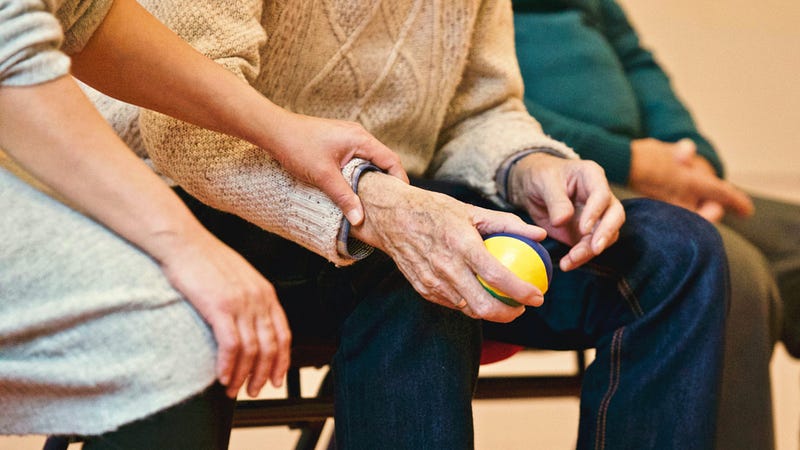
Sitting here in the wide-open living room I find myself plucking away at my keys, working on a few various pieces of upcoming material, and checking messages and chat conversations. As I bounce back and forth between social media windows and chat conversations I occasionally glance up at her to make sure she’s okay.
Silence fills the room as I stare across the table and see her elderly wrinkled body at rest, immobilized, as her half-shut eyes drift off. Her mind is occupied, focused, elsewhere, and I sit here without saying a word. My goal is just to be present, nothing more.
She’s probably frightened. In fact, she asked me to sit with her here for that very reason, I can only imply. At her ripe old age of 83, her medication sometimes causes her blood pressure to drop suddenly and without warning. She gets dizzy, faint, and feels like she’s going to pass out at a moment’s notice. I’m the only one here and available, so I sit with her in silence.
I know this feeling she’s going through all too well. I used to get panic attacks when I was young. I remember the pain and confusion of those moments, even though I haven’t had any symptoms in a decade. I can still clearly recall the terror and that feeling that I just wanted someone to be with me. Even when we’re powerless to take away someone’s anxiety, just being present and close can make all the difference in the world.
The words, “I’m right here if you need anything,” uttered at the right moment could never prove more powerful. It’s the best thing we can do for someone in that situation, to just be there with them and not leave. Since my younger days, I’ve given a lot of my time to people having panic attacks or similar mental health episodes to help them get through it.
This is the best thing I can recommend, be as quiet as possible, but softly remind them as needed that you’ll be there if they need you for anything. Too many questions become bothersome and stressful. Too much talking doesn’t distract them, it just makes them more nervous. Think: be gentle, like you’re lulling a child to sleep.
Nobody wants to faint or pass out and just be left there — there’s comfort in knowing that someone is there to get us medical attention should we need it.
I remember once I had a close friend over and ended up having a panic attack that lasted a perversely long time. She sat by me and we talked, she cuddled me through my silence and worries that just seemed to go on endlessly.
And now that the tables have turned and it’s my turn to return the favor.
They don’t even have a term for our relationship and by that I mean there’s no proper title for my relation to the 83-year-old woman before me. My girlfriend and I are polyamorous, she’s my girlfriend’s husband’s mother, making her, what, my mother-in-law-in-law? I’m not really sure, but our closeness doesn’t change because of the fact that there’s no official title.
People who define relationships as titles and not actions amuse me. Actions speak much louder than words and concepts are only good insofar as they have a bearing on the real world and real people in it.
Her motion is extremely limited, her body in its frail state, paralyzed from the neck down with minimal only movement in her arms. She can move her arms somewhat, and her head, and that’s about it. I can only imagine how she feels being in this condition for most of her life. It’s been in this condition for decades now after an accident left her paralyzed.
I stop and think about the vast expanse of time that’s led up to this moment. I was only an infant at the time of her accident and now, here we are, our paths have crossed, our fates have collided, and I sit here and hopefully help her feel a bit more secure with my mere presence.
If you don’t know the power of pure presence, I suggest you sit silently with someone else while you do another task and try to tap into its subtlety. There’s a power that comes along with togetherness that anyone watching sporting events in the age of COVID-19 can testify to.
Sports without the crowds we’ve all become accustomed to over the years is just different. It’s not the same without the crowds we knew and loved in a time that by now almost feels like a past life.
And even then, sports weren’t the same when watching from home as they were in a stadium with a crowd of tens of thousands of screaming fanatics. You absorb the energy through the others in the room, there’s an exchange that takes place and it’s like everyone’s vibrating on the same frequency. Right now, the goal is the same only with a much more toned-down frequency.
I’m convinced this same process happens to us on a smaller scale in one-on-one encounters.
There’s something organic that happens inside of us when we’re close to another human being that’s nonverbal, it’s something we intuit and experience, the reciprocal exchange of sameness and humanness. My task today is to give off this presence.
If there’s a lesson in this story, it’s that we remember to not underestimate this power in your own life and be sure to be as present as possible, even without words, when around others. If COVID has taught me anything, it’s the power of human proximity.
Here I sit quietly and type while she calms down and we each wait for her blood pressure to return to normal. Tomorrow, I’ll have to help her to drink water or milk, or perhaps to take a bite from her food.
It teaches you things helping someone else do the most basic things that we all take for granted, many things about the nature of life, humanity, and your own internal emotions. How we treat other people is a direct reflection of how we feel about them, about humanity at large, and about ourselves.
She and I often talk about life, where we’ve been, what we’ve done, and who we were decades ago in times that feel like whole other lifetimes. She tells me about the berry farm she used to own and care for, she tells me about her LSD experiences and hallucinogenic mushroom experiences, sharing with me her life from a time long before, one that only exists now in our imaginations and memories.
If you haven’t yet basked in the tales of an eighty-something-year-old-woman reminiscing on her old drug days, I must say, it’s highly recommended. It’s humbling and will help take you away from the small worries you think are so important that will be forgotten in six months.
“You can easily judge a person’s character by how they treat those who can do nothing for them,” said German writer and philosopher Johann Wolfgang von Goethe, and I’ve found it to be a truism. But how often is it missed by so much of what we call social science? Even when those who try to deal with such things offer explanations, they so often end up unsatisfactory in the fact that even our explanations of selflessness always tend to have a selfish cause beneath them, like kin-selection is really just another way of saying that you’re supportive of someone who shares your genes, but only because they share your genes. But most of the people I know don’t operate this way. What about the people we care about who can do literally nothing for us?
I find myself at a loss for a selfish explanation for this moment besides the fact that it’s a human moment. Just two people connecting, caring, and extending a bit of love and respect for one another, even if through the lens of exchange the relationship can only be viewed as lopsided. Perhaps that says more about the lens than the relationship.
I believe that we humans have evolved the ability to just enjoy the moment with one another’s presence, without the pretense of material necessity. We don’t need to obtain something from every exchange with another, we can just be, just care, just love, and just experience together. Not every encounter is zero-sum.
Why is it so difficult for so many people to conceptualize goodness without attaching a motive to it? And more importantly, why do we demand of our altruism that practitioners get absolutely nothing out of the deal? Why, when it comes to selflessness, do we demand our selfless people be all-or-nothing, giving 100% of what they have and are, yet, when it comes to selfishness, we don’t demand with such scrutiny that people act in their own self-interest, that one selfless act invalidates the entire concept?
What about the stranger who stops to help on the side of the road or gives instruction to the person from out of town? So much civility falls through the cracks of explanation and as I sit here and I type, I can’t help but wonder why people so strongly over-systematize their worldview and deny the instances right before their very eyes, the things they can touch, feel, and see, and prefer treating overly abstract explanations as gospel. Is this the consequence of the information age, that our narratives of information become our new religions?
Nonetheless, I’ll go back to talking to her when she’s ready. I’ll continue what I do and not question it too strongly. If there’s an answer that takes me away from these moments, perhaps I don’t even want it. I’m enjoying being helpful like others have for me and that’s good enough for me.
Here’s another piece you might enjoy.


