
How We Can Use Mindfulness Practices to Respond to and Reduce Anxiety
It’s well worth the time it takes to practice and master

I just finished a five-week coping with anxiety class through my health provider, Kaiser Permanente.
Would it surprise you to learn this is their most attended class? Susana, our instructor shared that before COVID, one in three people report experiencing anxiety. But now, that number is up to two in three.
So if you’re feeling anxious, you’re in lots of good company.
The good news is, not only do we not have to suffer alone, there are techniques we can learn that help. In some cases, a lot.
One of them is mindfulness practices.
What is mindfulness?
Mindfulness was first popularized by Jon Kabat-Zinn, Ph.D. with his ground-breaking book, Full Catastrophe Living.
For our purposes in class, they kept things simple and clear. Because when we’re filled with anxiety, that’s the best approach.
Mindfulness teaches us awareness of our experiences moment by moment in a direct and sensory way. We’re not on auto-pilot, daydreaming, or what-if-ing. We’re here now as Ram Dass reminded us in his classic, Be Here Now. Or more recently, Eckhart Tolle in his The Power of Now.

The point is to give the present moment our full attention.
Or as much of it as we can. This is a practice, after all, which may take time to learn and master.
In mindfulness, our focus is on our activity, be it driving, washing dishes, bathing the cat, or cooking dinner. It helps to pay attention to sensory details, even speak them out loud or to ourselves.
For example, “My hands feel Kitty’s strong feline muscles as I lift her into the tub. I hug her to my chest as she squirms and thrashes in an attempt to get away. I notice her meows have become yowls — her way of letting me know she’s pissed. Ouch! I see the red blood running down my arm where she’s just scratched me with her uber sharp claws.”
See how by paying that close attention, there’s really no mental (or physical) room to worry about bills or a spat with a spouse? Or create catastrophic what-if scenarios that trigger our fight or flight mechanisms.
Though in this case, thoughts like what if I get cat scratch fever? are understandable if far-fetched, Unless Kitty hasn’t had all her shots.
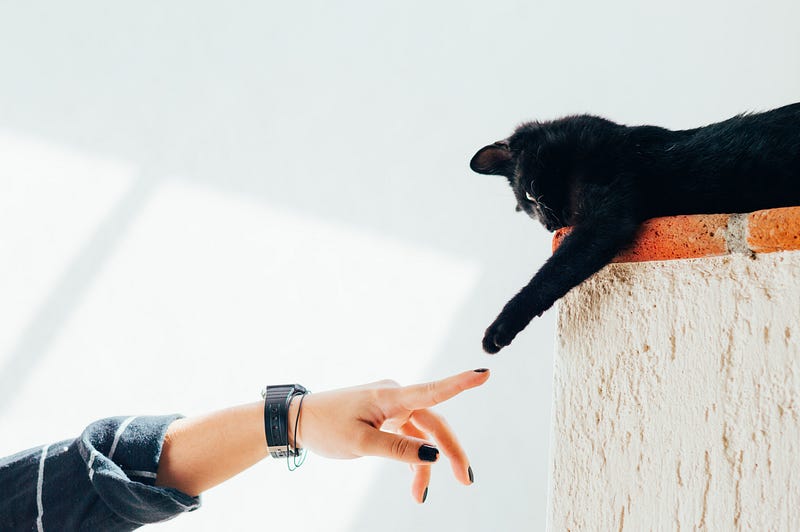
The point is to observe both our body sensations as well as our thoughts and even our fears without being overwhelmed by them. When a fear thought comes up, we notice it, but we don’t engage with it. Nor do we label them good or bad. We just notice, and gently let them go.
We did an in-class exercise on this.
We pretended to be in a darkened theater imagining our thoughts and worries as characters on a stage. Then we had them walk across the stage from the right and exit stage left.
We were to watch them while they were on stage. And once they disappeared into the wings, let them go.
I found this very helpful.
I imagined my thoughts taking the form of people I have issues with. That made it visual for me. I watched them cross the stage very slowly, taking their sweet time so they could linger in my hyper consciousness for as long as possible, the rascals!
That was the best I could do. Given we’re to show the same kind of compassion for myself as we would for a close friend going through similar stuff, that’s a-ok.
My characters finally made it into the wings. But then my mind’s eye saw them scurrying behind the curtain back to the left side so they could cross the stage again and again!
This quirky twist on the exercise showed me how tenacious my worries are. Or maybe I’m keeping them center stage. Either way was eye-opening. And still, a helpful exercise to do.

The intention of all this is to detach.
Or at least turn down the volume on their intensity, by redirecting our minds and bodies to focus on the life we’re living and doing right now.
It also teaches us to trust that we will handle the issue when the right time comes. We may need to gather more information or talk to a confident or therapist. Taling those preparatory actions sooner rather than later help me not get so anxious about the what-if event I’m worried about.
For example, as I shared recently, practicing my jerry-rigged car seat cushion ahead of the dreaded trip to return the rental car (link) helped ally my fear that it would be a hardship on my neck without the fancy 3-inch cushion I normally use. It was harder, but I made it work.
Mindfulness is good for us.
Not only does mindfulness help reduce anxiety, it’s good for our bodies and brains.
It can lower our blood pressure, reduce low back and stomach pain by relaxing muscles. We may enjoy improved sleep — hooray!
According to our workbook, research studies show mindfulness is associated with growth in the part of the brain associated with learning, memory, and emotional regulation. I like that!
Mindfulness also reduces emotional reactivity in the amygdala, the part of the brain associated with our lungs, heart, and digestive system. Good areas to keep calm.
A Final Point.
Don’t wait till you’re stressed to the smithereens to start practices like these. You might have a learning curve like mine. Think of it as a fire drill. We practice them routinely to the point of boredom so that when the time comes, we don’t have to think about it. We know exactly what to do.
And, we do it! May this prove as helpful for you as it is for me. If not more!
What are you ‘too old’ or ‘too scared’ to do? Let me show you how!
Marilyn Flower writes political humor and satire to delight socially and spiritually conscious folks. She’s the author of Creative Blogging: Ninja Writers Guide to Character Development and Bucket Listers, Get Your Brave On: How to Do the Thing You’re ‘Too Old’ & ‘Too Scared’ to Do. Clowning and improvisation strengthen her resolve during these crazy times. Stay in touch!