
Car Business Trade Secrets to Save You Thousands
Or How Dealerships Still Swindle You

There it is. You’ve been looking for that specific model and color for months. You’ve searched every day across a 100-mile radius of your locality to find it. Maybe it’s a diesel truck or an SUV with a third row. Doesn’t matter. It’s what you’ve been looking for but there’s one problem. The price is too high. It’s 2020 and car dealerships swear up and down that the internet has made them honest in their pricing. Do you reach out to them and see if they’ll haggle or do you assimilate with the rest of the shoppers and pay the price?
The car business is kind of like the mafia…once you’re in, you never really leave. Personally, I’ve been working in marketing and advertising within a couple of large dealerships for 14 years. This article may put me at odds with the ‘biz. That’s okay.
I want to reveal some underhanded tricks that still go on at dealerships wherein they deceive unknowing customers into paying too much. Listen though, you have to understand that dealerships must make money. That’s how they stay open, obviously. I hope that’s obvious. You’re rarely able to buy a vehicle for what they truly have in it but it happens on occasion.
Secret 1: ROs and Packs
In the haggling process, dealers often like to tout how much they’ve spent on the vehicle with routine maintenance at their service department. If this is true, they have paper records. Ask to see those. Yes, they still keep too much paperwork. It’s your right to see the actual repair order from the service department.
Their purpose in mentioning these repairs isn’t to tell you how nice they’ve made it; it’s to subconsciously influence you into thinking that they’ve spent a fortune on it and can’t go any lower in price. While parts and labor are expensive, the dealer’s parts department generally sells the parts to service at a 5% markup. The service department will then charge sales only something like 40% of the standard labor rate. For example, if you walk in off the street and the labor rate is $100 per hour, the sales department is only paying $40/hr for that same repair. The repair order you ask to see will most likely reflect these costs. Pay attention.
But that’s not the whole story when it comes to the backend. Dealers also magically tack on what they call a pack. These vary widely from dealer to dealer but most all dealers have, at the very minimum, an $800 pack in their vehicles. Larger dealerships with more volume will pack higher. The establishment I was previously employed by (and later fired by — see that story here: https://bit.ly/2YIrUWs ) packed nearly every vehicle at $1800.
Pack is a safety net for their pockets. The pack doesn’t reflect anything that’s been done to the vehicle, it has nothing to do with the year, make, or condition. This incredulous fee is there to line their pockets so that even when the dealership has said, “we’re losing money on this deal”, they’re not. The sensationalist term used in the business is “giving them away”. It means that the vehicle was sold and the only profit on the car itself was the pack.
Do not be deceived; they’re never losing. Ask them about their pack if you want to see them squirm. Don’t ask your salesperson. Ask to speak with the ‘tower’ or ‘sales desk’ and inquire about their pack fees. You might be able to squeeze another $500 off the price this way, possibly more, who knows?
I’ve also heard of dealers doubling packs to protect the entire amount. They might add a $600 auction acquisition fee and a $600 freight cost. There are a hundred thousand different excuses a dealership could use but ultimately, it’s just there to protect the bottom line. By splitting it, they protected it further. Until now.
Don’t expect them to give up the entire pack. Again, businesses have to make money. Be polite and courteous and you may score some extra off that price.

Secret 2: Point Hiking
Let’s say you shave off another $1000 from the price of your dream vehicle. The service RO’s were less than they’d said and you spoke with the manager charmingly about their pack. The vehicle is expensive and naturally, you have to finance it. No problem. The dealership has been forced honest, what with your newfound knowledge of RO’s and pack fees. There’s nothing else they can do to harm you, right? Unfortunately, that’s not quite true.
Another way for dealers to make money when they’re “giving them away” is to mark up interest rates. By adding points to your percentage, they get paid on the backend of the deal from the financial institution. This is completely legal but it’s not always completely explained honestly.
Don’t think for a moment that your local, hometown dealership isn’t doing this. They are.
Your credit application comes back approved through Acme Bank and Trust and the finance manager quotes you a payment that’s just a little higher than what the salesperson and managers told you. Sound familiar? This is point hiking.
Scalping…it should be called interest rate scalping. Your credit score was 710 and your payments are now going to be $550 a month? No, no, no. Never take that first-rate quote. Ask them what the rate is. In general, dealerships will try and bump 2 points. This increases your payment past what you agreed on.
You can call them out on this point hiking. Ask them to show you the printout from the financial institution’s approval. Have them print it while you sit in the F&I office. Watch them get ‘iffy’ about it. That’s a telltale sign you’re being point hiked. This can potentially save you $35 to $50 a month on your payment, resulting in thousands saved over the course of your loan term.
Don’t think for a moment that your local, hometown dealership isn’t doing this. They are. The more points they hike and the more people that get hiked, the more they make on the backend. Even tiny dealerships selling less than thirty cars a month are bringing in $20,000 additional monthly from point hiking. It’s a plague. Either finance through your own bank or confront them on their point hiking.
Another tip: be sure to ask to see what price they’re submitting to the bank. They often times mark up the price sent over to ensure that the transaction fees don’t eat into their profits. This is complicated to explain but know that your $14,976 vehicle may be submitted for approval at $16,976…this changes the game in their favor. More about this on Secret 4.

Secret 3: Extended Warranties
You’ve saved some money on the bottom line price, you’ve reduced your interest rate to what it was actually approved at, and now, to be safe, you’re curious about extended warranties. Make no mistake, these can come in handy. In fact, I’ve personally been able to use an extended warranty on a previous vehicle I owned miles after it went outside the factory warranty. It saved me a fortune and paid for itself just from that transaction.
Here’s the issue, though. That extended warranty they offer you; the price is never on the brochure. Why is that, you think? It’s because there’s a price markup on those too. $200 is common. But more is not uncommon. A solid warranty that will cover the entire car’s drivetrain should be able to be purchased for less than $1200 for three extra years.
One thing to consider: try and pay the extended warranty by cash or check. Adding that into the financing obviously adds interest to something that already had some markup on it. It’s just a bad situation. Haggle on the warranties. They have the room. Let them make a little but go for the win.
Secret 4: Down Payments
There’s a gap in understanding between the consumer and the company regarding down payments. My advice to you is to keep any mention of down payment hushed until you’re in finance preparing to sign papers. This won’t always save you money but it can be a lifesaver.
Dealerships have been known to accept down payments and add those to repair orders or other things on the car so that they can “hide it” from the banks. This seems like the most unethical of practices, and it is, and to be fair, I’m not sure if it’s even legal — but it happens.
If they can hide that amount from the bank, they can get you financed at the payment you want but stretched out over a longer term, making them more money.
Not only is it about rate but length of term and bottom line price. You want them to get your rate on the vehicle’s price that they agreed to sell for and then you want them to add that down payment, reducing the cost of the vehicle and having them submit it to the banks once again.
Make sure they resubmit it after it’s all said and done. Depending on the financial institution, this may or may not result in money saved but it’s worth a shot.
The truth is unless you really want to have lower-than-average payments, skip the down payment, and write a check specifically for your extended warranty.
Secret 5: GAP Insurance
This brings us to the other warranty that dealerships always push; GAP. This is an asset protection service and, in my estimation, is a must for any newer model vehicle that’s financed. I have examples galore that I could list but let me give you another personal insight into what GAP does.
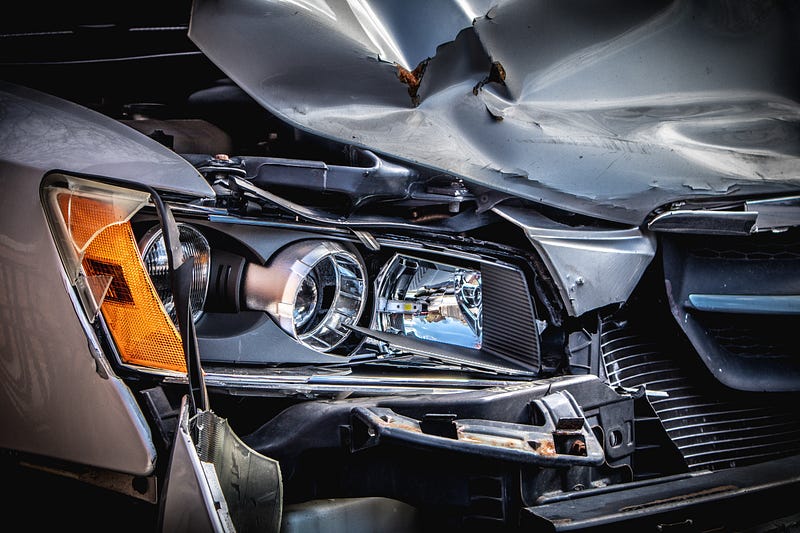
I was dating a girl who drove a nearly new Buick Regal Turbo. She was t-boned at an intersection, walked away unscathed, but the Regal wasn’t so regal. It was totaled. Panic mode set in, not knowing how she’d pay it off. Insurance only gives book value. This is a real issue in America. We often owe way more than what the car is actually worth and insurance companies are quick to make sure you know what the ACV is on the vehicle.
Fortunately, for her, she had purchased GAP under my direction, and as they say on infomercials, results not typical, she actually made $2000 more than what she’d paid for it. Of course, she used the tips I’ve revealed in this article. It allowed her to cover her hospital visit and purchase another GAP warranty on her new Jeep Renegade.
I say all that to say this, GAP is totally worth it. But they mark it up too. This is a complete toss-up as to how much any dealer will mark it up. It happens and it can be haggled too. You can easily squeeze another $200 out of them for the price of your GAP. And unless you want to pay interest on it too (because it’s added to the total cost being financed too) pay cash or check.

Thankfully, the internet has made the car business way more honest. I’m not saying they’re dishonest, honestly. I’m just saying they’re not that honest. We can help them along with that.
These tips will save you some money, months, and headache on your next vehicle.


