
How Trump’s Reckless Remarks Endanger NATO and Europe
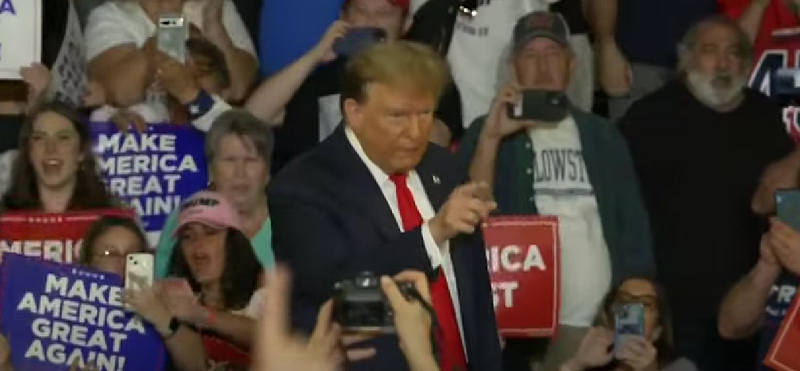
Donald Trump, the former US president who is running for re-election in 2024, has recently made a shocking statement that could have grave consequences for the security and stability of Europe and the world. At a campaign rally in South Carolina, he said that he would not protect any of the US’s NATO allies who he felt were not paying their fair share of the alliance’s budget, and that he would encourage Russia to attack them.
This is not the first time that Trump has expressed his disdain for NATO, the military alliance that was founded in 1949 to counter the Soviet threat and that has been the cornerstone of transatlantic cooperation and peace ever since. Trump has repeatedly accused many NATO members, especially Germany, of being “delinquent” and “free-riders” who take advantage of the US’s generosity and leadership. He has also threatened to withdraw the US from NATO or to reduce its commitment to the alliance’s core principle of collective defense, which states that an attack on one is an attack on all.
Trump’s hostility to NATO is not only based on a misunderstanding of how the alliance works and how it benefits the US, but also on a dangerous disregard for the values and interests that NATO represents and defends. NATO is not just a transactional arrangement that can be measured by dollars and cents; it is a strategic partnership that is rooted in shared democratic principles, human rights, and the rule of law. NATO is also a vital instrument for advancing the US’s global leadership and influence, as well as for addressing the common challenges and threats that face the transatlantic community, such as terrorism, cyberattacks, nuclear proliferation, and climate change.
By undermining the credibility and cohesion of NATO, Trump is playing into the hands of the alliance’s adversaries, especially Russia, which has long sought to weaken and divide the West and to expand its own sphere of influence and aggression. Russia, under the authoritarian rule of Vladimir Putin, has repeatedly violated international law and norms, most notably by annexing Crimea and waging a hybrid war in eastern Ukraine, where more than 130,000 people have been killed since 2014.
Trump’s suggestion that he would encourage Russia to attack NATO members who do not pay enough is not only irresponsible and reckless, but also potentially catastrophic. It could embolden Putin to test NATO’s resolve and solidarity, and to launch a military provocation or assault against a vulnerable ally, such as the Baltic states or Poland, which share a border with Russia and have a history of Soviet occupation and oppression. Such a scenario could trigger a major crisis or even a war, which could drag the US and other NATO members into a conflict with a nuclear-armed adversary, with devastating consequences for human lives, regional stability, and global order.
The European allies of the US, who have been alarmed and dismayed by Trump’s attitude and actions towards NATO, must not remain passive or complacent in the face of this existential threat. They must reaffirm their commitment to the alliance and to each other, and to uphold the values and principles that bind them together. They must also increase their defense spending and capabilities, as well as their strategic autonomy and resilience, to deter and defend against any potential aggression from Russia or other actors. At the same time, they must maintain the dialogue and cooperation with the US, which remains their indispensable partner and ally, and hope that the American people will reject Trump’s dangerous vision and choose a leader who values and respects NATO and its role in ensuring peace and security in the transatlantic region and beyond.