
How to Write Deeper by Thinking Bigger (The Art of Looking Back, In, and Forward)
The thinking writer’s trifecta of reflection, introspection, and prospection
What do authors Viktor Frankl, the Dalai Lama, Elizabeth Gilbert, Cheryl Strayed, Michelle Obama, Paulo Coelho, and Karl Ove Knausgård all share in common?
Despite their diverse backgrounds and the varied nature of their works — from the existential musings of a Holocaust survivor and the spiritual teachings of a Tibetan leader, to deeply personal narratives and introspective autobiographical accounts — each author demonstrates remarkable proficiency in reflection, introspection, and prospection.
What does this mean?
- Reflection is the process of thought-fully considering past experiences and events to gain insights and learn from them. (Looking-Back)
- Introspection involves looking inward to examine and understand one’s thoughts, feelings, and motivations. (Looking-In)
- Prospection is the act of looking forward, thinking about and envisioning future possibilities, goals, and outcomes. (Looking-Forward)
The writing from the list of authors above explores depths of personal tragedy, journeys of self-discovery, as well as day-to-day struggles of personal identity, choices, and pondering some next steps in their lives (and in some cases, in society).
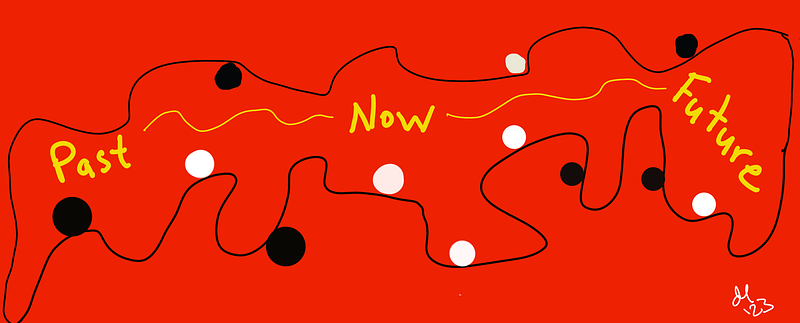
They all navigate complex, intermeshed, intermingled, processes (and experiences) of examining the past, pondering the present, and envisioning the future.
This shared approach is a common thread pulled throughout their work. And, it offers valuable lessons for any writer seeking to deepen their craft. This goes for fiction, non-fiction, or in-between writers.
Here is a sampling of each author’s bestsellers.
- Viktor Frankl. Bestselling Work: Man’s Search for Meaning (1946). Over 12 million copies sold.
- Paulo Coelho. Bestselling Work: The Alchemist (1988). Over 150 million copies sold (one of the top-selling books ever)
- Dalai Lama. Bestselling Work: The Art of Happiness (co-authored with Howard Cutler) (1998). Several million copies sold.
- Elizabeth Gilbert. Bestselling Work: Eat, Pray, Love (2006). Over 12 million copies sold. (Movie adaptation in 2010)
- Cheryl Strayed. Bestselling Work: Wild: From Lost to Found on the Pacific Crest Trail (2012). Over 4 million copies sold. (Oscar-nominated film adaptation in 2014)
- Michelle Obama. Bestselling Work: Becoming (2018). Over 10 million copies sold. One of the most popular memoirs ever written.
- Karl Ove Knausgård. Bestselling Work: My Struggle: Book 1 (Part of “My Struggles” series). (2009 — Original Norwegian publication). Almost 1 million copies sold.
Harnessing the Triad of Reflection, Introspection, and Prospection in Writing
For writers (and prospective writers), these three thinking processes — reflection, introspection, and prospection — can be far more than simply abstract concepts. They can also be more than tools for powering up your writing.
For example, Coelho’s book The Alchemist is fiction but it’s based very much on his explorations, spiritual beliefs, and search for meaning in his own life.
The rest of the books in the list are non-fiction (or close to) and deeply personal, thought-full — and combine elements of reflection (looking back), introspection (looking inward) and prospection (looking forward).
Each of these books was also most likely profoundly life-changing, challenging, and rewarding for each author to take on, write, edit, and then talk about.
In some interviews I’ve seen (and read) with some of these authors — it’s clear the act of writing these books, telling their stories, and in some cases being involved in making movies about the books — had massive impacts. Not just on the authors themselves, but also on their families and friends.
Knausgård, for example, is in his third marriage. In his book, he is writing about his first marriage. In interviews, he has shared the deep and lasting impacts on his life as a result of writing and publishing his books. In many cases, he’s lost contact with family members and lost friends.
Personal Journeys For Writers Through Their Writing
Writing — especially writing about one’s own life — whether private or public — is a deeply personal journey. Going ‘public’ with personal stories can be both deeply therapeutic and/or traumatic (as well as all stages in between).
Whether it’s an Either/Or — or a Both/And — the core remains that writing can be highly transformative for anyone.
It’s a journey of organizing and weaving words and delving deep into one’s psyche, experiences and identity — and jumping back and forth across time. This is a combination of both reflection and introspection. And, any which way we look at it, going into these processes translates to contemplating the future — looking to future choices, aspirations, or directions.
The paradox inherent in this is whether we look back, in, or look forward — they all happen in the Now. And, thus, for any writer, engaging in this triad of reflection, introspection, and prospection it can be a profound and paradoxical experience. This, in turn, will shape your writing and one’s very being.
Telling the stories of our own stories becomes mind-bending and transformative. And, not to say, this is always positive and simple.
Here is where Learning Journals can become a significant ally and key tool in a writer’s toolbox.
Learning Journals Fuelling My Writing and Thinking
About 3 decades ago — as I entered my 20s — I started a process of regular journalling. It started after travelling in Australia for a year (I’m from Canada) — when I was 19.
When I returned, I continued the process of regular journaling. Some years it was on and off through the months. And in my mid-20s I shifted to calling them Learning Journals. I found this more inviting — and a move away from the stigma of journals being thought of as “Dear diary”.
Fast forward almost 30 years to 2021. In January 2021, I defended a doctoral dissertation in Education, which was largely based on over 5-years of keeping detailed Learning Journals about my research and journey through a doctoral program. In some cases, I called them Research Journals, but they were still Learning Journals.
I wrote and recorded notes in these almost daily. I cut and paste snippets of papers and quotes. Put in sticky notes that I would write on when I didn’t have a journal in hand.
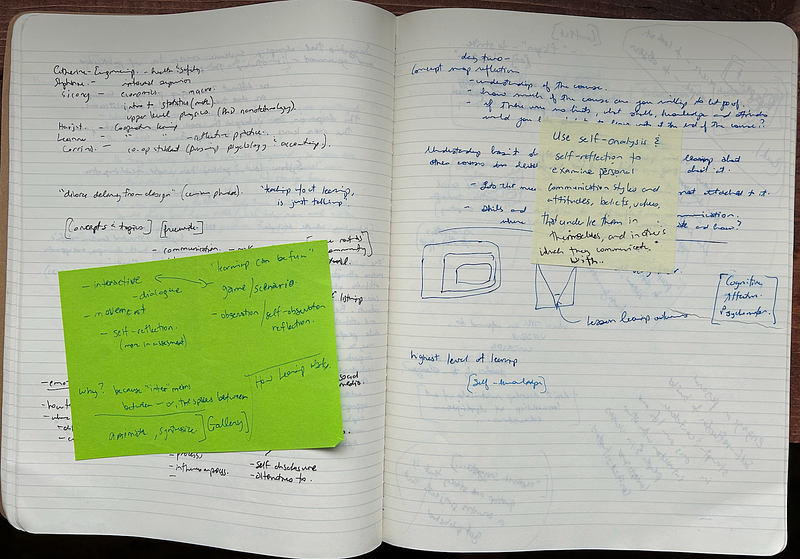
I then returned to these Learning Journals (repeatedly) as I compiled and wrote my dissertation. I also shared some reflections on my personal website — I called it a Research Blog.
I also used all my submitted assignments, projects, and online discussion forums as a form of Learning Journals. Components of these then became “artifacts” in my research — as well as part of the final dissertation.
The dissertation was an autoethnography, which is related to autobiography, but goes deeper into reflecting upon cultural and social influences on one’s self. This is the ‘ethno’ (culture) component, which stands in place of the ‘bio’ (life) of autobiography.
Endless Sources of Material
Learning Journals act as reservoirs where one can store and revisit thoughts, ideas, and experiences. And like different kinds of reservoirs (eg., water storage, hydro-electric facilities, recreation, etc.) — Learning Journals provide endless material for reflection, introspection (now), as well as looking to, or fuel for the future (prospection).
That is the continued paradoxical nature of them. The real power of Learning Journals comes from going back into them — as an act of reflection — thinking about what you’re reading and what feelings come up now (introspection) — and then pondering what that means for the future (prospection).
As a writer, that ‘future’ could be as simple as the current piece of writing you are working on. When I sit down to write a piece, I have some thoughts on where I’d like it to go (prospection) — but it often shifts paths and directions as I work on it in the present.
For writers (or prospective writers) seeking to emulate some of the depth found in the works of writers like Coelho, Frankl, Gilbert, and others — a Learning Journal can be a critical tool as well as a companion on the journey to deeper writing.
And, in the process deeper self-exploration as well.
Learning Journals — A Gateway to Deeper Writing (and Self Exploration)
A Learning Journal offers a structured yet flexible approach to exploring your thoughts and feelings, past experiences, and future goals. I often share there is no ‘right’ or ‘wrong’ way to keep a Learning Journal.
And there are so many different kinds or ways to engage them. I recently started a new account on Medium dedicated specifically to these powerful tools: The Learning Journal Initiative.
In a recent story, I shared: 33 ‘Learning Journal’ Styles to Activate Your Creative Depths — Plus 15 techniques and 10 insights to transform your approach. (links at end of this story).
And, this doesn’t mean, for example, keeping 33 different Learning Journals going at once. One journal can suffice, but being diverse in what you’re recording can do wonders for creativity and writing — especially, as what you’re recording becomes a vault you can continue to draw upon over the years.
I still regularly return to the ‘Research’ Journals I kept during my doctoral work — and these have often fuelled Medium stories, LinkedIn posts, and articles posted in various other places.
For those new to the concept and idea of Learning Journals, it can be a bit overwhelming. Plus school systems have instituted in all of us various notions of ‘right’ and ‘wrong’ ways of doing things. As such, here are some practical exercises to try.
Practical Exercises for Writers and Thinkers
To integrate these processes into your writing practice, here are some practical exercises to try.
- Reflective Writing Prompt: Choose a significant life event and write about how it influenced your perspective on a theme you often explore in your writing.
- Introspective Exercise: Write a letter to yourself as a character. What would you tell yourself? What strengths and weaknesses would you point out?
- Prospective Planning: Create a vision board in your journal for a future writing project. Include the plot (if fiction) or main topics as well as the emotions and messages you intend to convey.
The fascinating thing I find with writing prospectively in a Learning Journal — is the ability to come back and re-visit these over and over and over again. The prospection (looking forward) then becomes material for reflection (looking back) and introspection (looking in).
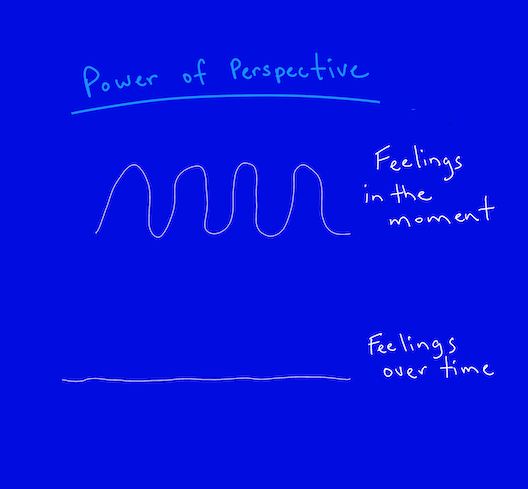
All of those will raise feelings and emotions. Write about those too. Record them. Because in the future, you can look back and also see not only how your thoughts and predictions changed, but how you feel about them too.
Hard Copy and Digital Learning Journals (Private and Public)
By regularly practicing reflection, introspection, and prospection through a Learning Journal, you’ll gain deeper insights. These can be hard copy (pen and paper) or digital — or both.
They can also be diverse and integrated in with your current work — especially in digital environments. For example, I use Medium as a form of Learning Journal. There are the stories that I publish, but also the comments from others. I also keep various private lists and am preparing to make some public ones.
I also write free weekly issues on my Substack site: Box Cutter Co. I’ve been doing this for just over a year now. Free weekly Issue №54 just went out. Free Issue №52 was a reflection on the first 51 issues. I also recently started a companion of free weekly issues — on Box Cutter Co. — called: The Solopreneur Series.
The theme of Box Cutter Co. is sharing my systems, processes, learning, and reflections as I build digital writing businesses from scratch. This is… a form of Learning Journals. A digital and public one.
The same goes for tracking, reviewing, and reflecting upon social media posts. I am active on X (Twitter), LinkedIn, and more recently Facebook. It’s important to review analytics when building a digital writing business (part-time or full-time). Doing that in a semi-structured way is also a form of a Learning Journal. I use Notion and hard-copy (pen and paper) to track these.
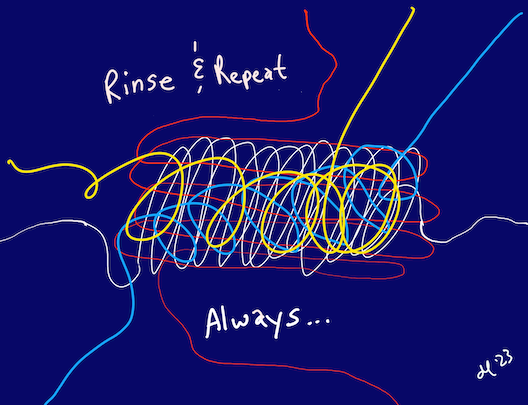
All of this information fuels my current and future writing. It’s like a process of constantly rinsing and repeating until the end of my time — and then one’s writing can also live well beyond their lives.
Bringing it Together
If you are an active creator, writer, artist, researcher, or otherwise — Learning Journals can be an immensely powerful tool to support your work, creativity, and personal plus professional growth.
- Do you already use Learning Journals (or a form of)? What would you add to this material?
- If you haven’t used Learning Journals before, what are you curious about?
David Loewen writes daily. He publishes Free Weekly Issues on Substack Box Cutter Co. sharing experiences and systems for building digital writing businesses from scratch. The Learning Journals Initiative (on Medium) is the most recent project, with a growing list of stories.