
How to Write a Stunning First Sentence and Scene
Because first impressions matter
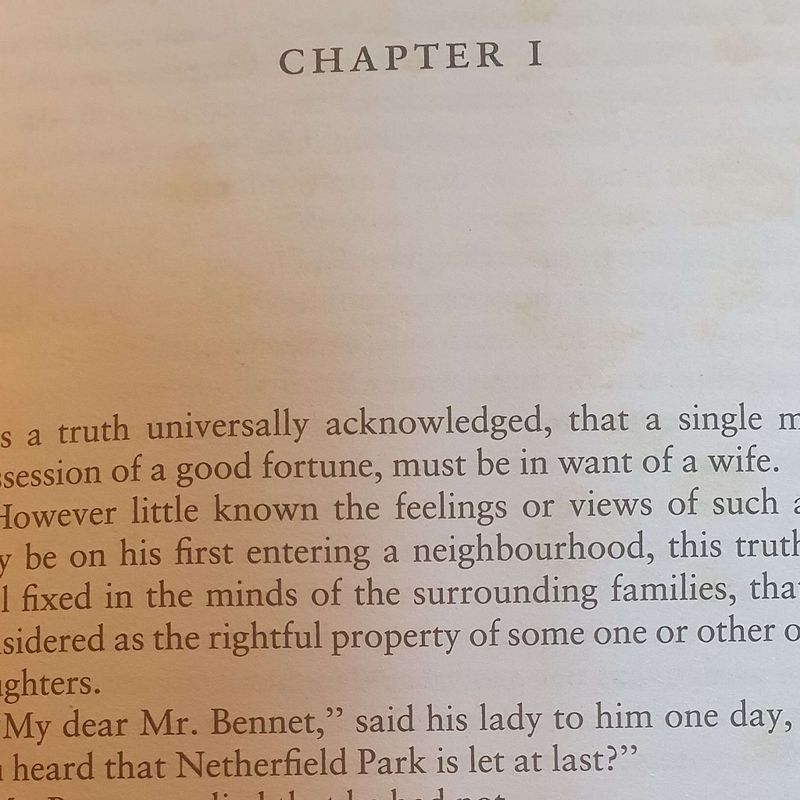
If you capture the right beginning, you’ve written a small version of the whole.
Hooked: Write Fiction That Grabs Readers at Page One & Never Lets Them Go by Les Edgerton
Years ago, I read Hooked by Les Edgerton, which is a must-read for writers. In it, he explains how much first impressions matter in writing.
We have so many entertainment options nowadays that if something isn’t immediately appealing, we have no reason to stick with it. The only way we writers are going to gain an audience is if we convince people we’re worth their time.
The Goals of an Opening Scene
- Introduce the story-worthy problem, also called theme or moral argument.
- Hook the reader.
- Forecast the ending. Beginning with a hint of what’s to take place at the end creates a story that feels complete.
- Establish the story rules, meaning you explain what kind of story it’s going to be and stick to that. Never write an opening that has nothing to do with the rest of the story and serves solely to draw readers in.
The Seven Components of an Opening Scene
1 — The Inciting Incident
An inciting incident is the event that pushes the status quo to its breaking point.
In The Hunger Games, it’s Katniss’s sister being named as tribute. In Beauty and the Beast, it’s Beast imprisoning Belle’s father.
It’s important not to skip past this event. The Hunger Games could have started with Katniss entering the arena, showing the Reaping in a flashback or as a memory, but that option robs readers of the connection that living through the inciting incident creates between them and the character.
The inciting incident gives your protagonist something to want, and they have to want it desperately because it’s that desperation, that intensity that gives readers something to root for and worry over.
2 — The Initial Surface Problem
The inciting incident creates two problems, but your protagonist will only be initially aware of one of them.
The initial surface problem has to be so compelling that it forces your protagonist to take immediate action. In The Hunger Games and Beauty and the Beast, the immediate action is saving a loved one, but it can be almost anything. In The Wizard of Oz, Dorothy has to journey out to reach the Emerald City. In A Game of Thrones, Ned Stark goes to King’s Landing to protect his king and uncover the plot that killed his foster father.
The protagonist’s attempt to resolve the initial surface problem must fail in some way. Belle frees her father but has to take his place. Same deal with Katniss. Ned realises his king isn’t the man he once knew and that King’s Landing is a den of vipers.
The protagonist’s failure allows new surface problems to arise, which keeps the story going.
3 — The Story-Worthy Problem
A story-worthy problem, also called theme or moral argument, relates to the protagonist’s psyche.
Belle’s story-worthy problem is that she’s living in a place that doesn’t understand her. For Katniss, it has to do with suffering under the thumb of an abusive government.
The initial surface problem should arise from the story-worthy problem, but neither the protagonist nor the readers should know what the story-worthy problem is. The realisation should come slowly as the story progresses.
Make sure you have an excellent understanding of what your story-worthy problem is before you start writing. Your story’s depth relies on it.
4 — Backstory
The first chapter of The Hunger Games introduces us to the world Katniss inhabits, its rules, limitations, and problems. It explains what the Reaping is and what the Hunger Games are but does so without turning into a history lesson. It also tells us about Katniss’s past, but again without it feeling like an info dump.
The key to backstory is determining where it should appear and how much of it is necessary for readers to understand what’s going on.
Weave backstory into action scenes and try to encapsulate it into a few telling words.
5 — Character Introduction
Interest in the protagonist has to be earned. You can’t begin with your character crying over something and expect readers to care.
It’s important to establish character from the word go. This doesn’t mean starting with a physical description because what the protagonist looks like doesn’t tell us who they are.
Instead, let readers know something about your character that will generate sympathy, empathy, and/or interest. Do this by putting them in action. The scene that introduces us to Belle shows us someone bookish and friendly who has limited interest in her current reality and is viewed as an outsider by her community.
Readers are neither lazy nor unintelligent. Show them — don’t tell them — who the character is. Give them clues and let them figure it out.
6 — Language
Your writing style can make or break your opening scene.
Be succinct. Your readers’ time is valuable, so don’t write five words when one or two will do. Use strong verbs. Avoid adverbs and the overuse of adjectives. Find the most telling details and focus on those. And don’t settle for clichés; if people wanted to read the same sentences over and over, they wouldn’t bother buying new books.
7 — The First Sentence
A lot of readers, editors, and agents will decide if your book is worth reading or not based on the opening sentence.
It should spark curiosity and hint at a question readers want answered.
When I wake up, the other side of the bed is cold.
The Hunger Games by Suzanne Collins
Why is the other side of the bed cold? Who is supposed to be there? Why aren’t they there? Where are they?
That first sentence suggests trouble. It promises danger and an unsettled universe.
Editor Rebecca Heyman does live readings of first sentences people send to her on her Instagram account and through Reedsy. She gives great, actionable feedback.
First Scene Red Flags
- Opening with a dream. If you throw readers into an action sequence only to reveal the action isn’t real, they’ll lose their trust in you.
- Opening with an alarm clock going off. There’s nothing more normal than waking to an alarm, and we don’t read books for “normal”.
- Opening with dialogue. Dialogue without context is confusing and will often force readers to backtrack as soon as they’ve gathered all the context clues.
- Opening with no white space. Nothing will send readers running faster than huge, unbroken blocks of text. Vary paragraph lengths. Include dialogue. Make the pages visually appealing.
- Opening with a prologue. If the purpose of your prologue is to supply backstory, it’s bad story-telling. Likewise, if you think your first chapter is so uninteresting that you need a semi-related action scene beforehand.
Opening Scene Length
Your opening scene should plunge readers directly into the story. Writers in previous centuries liked to take their time, but it’s not an option anymore.
Your first scene (note that a scene is not a chapter) should be short. Get your protagonist in trouble as soon as possible with the inciting incident and then get right into the struggle to resolve the ensuing problems.
If you’ve looked into querying literary agents, you’ll have noticed that some of them ask for the first ten pages or 5,000 words of your manuscript. That is the maximum length of time you have to introduce the seven components of an opening scene.
When I first learned how important the opening sentence and scene are, I spent days, possibly weeks, reworking what I had. I worried over it endlessly to the point where it stopped being productive.
Give your opening scene a bit of thought, write it, and then leave it alone. You’ve got a whole story to finish and several editing passes to go through before all the rough patches get smoothed out. It doesn’t have to be perfect on the first go, not even the second or third. You have time.