
How to Write a Poem: It’s Not an Easy Thing to Do Well, But the Tools Are Open Source
Like hiking toward the sun, it’s a beautiful trip

If you want to learn a martial art, you can go to any number of dojos and get instruction about punches, kicks, and defensive moves. If you want to learn to weave a basket, you can study with a basket maker who will show you how to mold and shape reeds, which last longer, and how to piece them together.
Poetry is an art, and when you make a poem, it will then hold things inside it. I can’t tell you how to become a poet. I can’t tell you how to write the poem you have inside you. I can give you instruction about the tools most often used to make poems, and I can offer assistance on how to piece them together.
“There are certain things a young boy will learn by picking a cat up by his tail that he won’t learn any other way.” — Mark Twain
I’ve read and written poetry for over thirty years. I studied poetry and literature over the course of my college career. Not the four traditional years, but between ’92 and ’09. Life informs what we learn like nothing else.
Just as money is a representation of energy, words are representations of experience. The words and ideas from the greatest teachers are made more effective with lived experience. Here, I’ll offer an overview of what I’ve learned.
What is poetry
Hell, I don’t know. Some people say that what they share is poetry even when it doesn’t align with any definition I’ve come across. I’m not some arbiter of what is or is not poetry.
“Like a piece of ice on a hot stove the poem must ride on its own melting.” — Robert Frost.
Even what is good or bad has some degree of relativity. The standards by which we measure the quality of a work are important, but they’re not static.
What we can definitely say, one way or the other, is which tools were used and what we liked. That’s it. Even the great poets are sometimes more successful than others. I like to ask a few questions when I judge something I’ve written.
What moves you
I didn’t write poetry unless a feeling of inspiration overtook me. Not until college, anyway. When you need to submit poetry for workshop, you can’t sit around and wait for inspiration. You? Can go out and find it.
“Poetry is the spontaneous overflow of powerful feelings: it takes its origin from emotion recollected in tranquility.” — William Wordsworth
To write a poem, you merely need to be moved by something. What does that even mean? Pablo Neruda wrote an Ode to his socks. The wonderful writer here on Medium, Amanda Laughtland, wrote a poem for the Sun. To be moved, we really just need to pay attention.
Are you grateful for the first cup of coffee? How about your vehicle? Your phone?
How’s your relationship with your partner? Your best friend? Your brother or sister?
All of these things and more? Are open subject matter for poetry.
The tools
You’ve obviously got internet access, so I’m not going to write out all the different tools at your disposal. This link is a great place to start.
We’ve all used simile and metaphor. We’ve all experienced words that rhyme. If you’ve ever read a Dr. Seuss book or seen The Grinch Who Stole Christmas, you know poetry can be playful. When you decide you want to start, feel free to imitate.
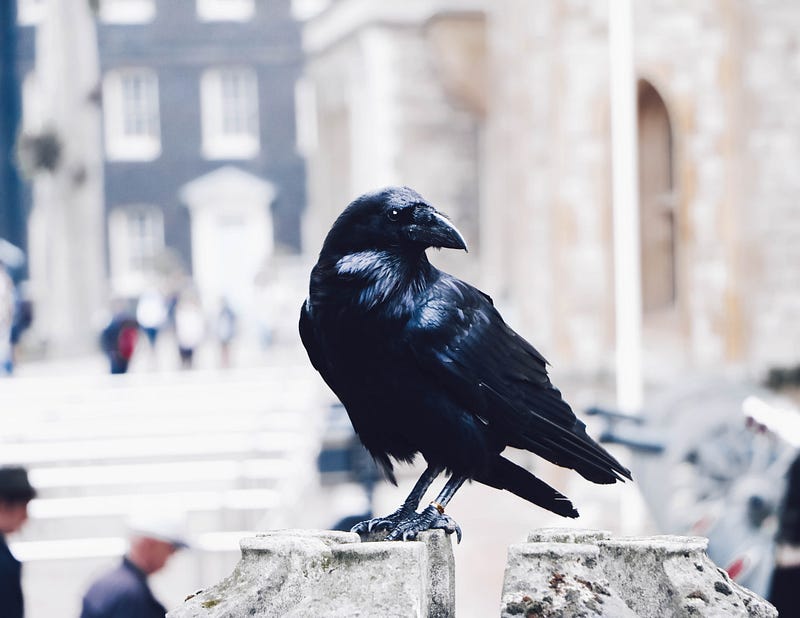
My first poem was an imitation of Edgar Allen Poe’s “The Raven”. I had read it out loud more times than I could count, and felt inspired to try my hand.
Poe said, “Once upon a midnight dreary, while I pondered, weak and weary…” And I mirrored, “Once on a day when I sat lonely, sitting where no one would know me…”
Who’s it for?
This is a vital question. It’s so important you answer this question before you write. It can be for a special someone. It can be for a special something. It can even be for yourself and for your eyes only.
When you know your audience, though, you know what voice to use. You have different voices. When you speak to the receptionist at your doctor’s office, you’re likely to be a lot more formal than when you talk to your sister. When you have this in mind, it’s easier to choose the language you use.
When you identify the voice you want to use, that helps you understand the tone of the poem. Severe? Playful? Frightened? Joyful? These are all valid. When you understand the voice and tone, you can even play around there. What if you wrote a poem for the receptionist in the voice you use with sis?
Abstract vs. concrete
When you tell your partner, “I love you,” there’s a good chance your partner has a really good idea what you mean. If you want the world to know how you love your partner, maybe you’ll say something like what Sage Francis said:
“I played connect the dots with your beauty marks / And I ended up with picture perfect sheet music.”
If this is for you in years to come? If the day this event happened is one you’ll never forget? It’s enough for you to say something like, “When I got that note, I felt paranoid.”
If this poem, though, is for your children to read, years from now, maybe something a little less abstract would be more effective. If we mean to convey an emotional state to our reader, maybe we say something decidedly more specific:
“It felt like 3pm again and every corner of the schoolyard brick wall was another set of eyes that stared at me while I waited for the bully to show up.”
Smoke and mirrors
Poetry is all around you. If you use simile and metaphor? Great. If you opt for internal rhyme over end-stopped rhyme? Great. If you decide, instead, to abandon convention and let the poetic spring forth from an accurate memory? Great.
If you adore those George Jetson socks you got in college for retro day? If you can’t bear to throw them out? What if you describe them? Tenderly. Tell me why they’re still in your sock drawer. Tell me how many times you’ve darned them. Tell me how lucky you feel when you wear them. Because that?
Is where poetry comes from. If you’re excited or endeared? And you decide to tell me why with as much detail as you can muster? Chances are, I’m going to get there, too.
The most important part
Nobody. I mean No. One. Gets to the end of the road and wishes they had shared less. Or wishes they had told fewer stories. Or tried fewer things.
There was a time when even good ol’ Billy Shakespeare hadn’t ever written a poem. Everyone starts somewhere. You don’t have to share them. You don’t have to read them out loud. Honestly, you don’t even have to write them down.
But next year? 365 days from now? You might look back and wish you had started. Today. A simple piece. Gimme a haiku. Gimme a couplet. Think of the very last time you smiled and convey that in three lines. You won’t regret it.
The good news is? You can always go back and change it! Make it better! Make more sense! You’re the poet, remember, and it ain’t finished until you say it is. I believe in you!
In truth, MW Mercer
I really appreciate you devoting a little of your time today to read my work! I’m investing this time and energy from my life in order to transition away from selling my time away doing other things.
You can join Medium.com to read everything I write (and works from thousands of other great writers, too!) by clicking the link below. I’ll get a portion of the cost of your membership- only about $5/ month- and I’ll thank you very much!