avatarSruthi Korlakunta

Free AI web copilot to create summaries, insights and extended knowledge, download it at here

2592

Abstract

800/0*8rrLeFgAL6kCQwxY"><figcaption>Photo by <a href="https://unsplash.com/@nofilter_noglory?utm_source=medium&amp;utm_medium=referral">Tim Goedhart</a> on <a href="https://unsplash.com?utm_source=medium&amp;utm_medium=referral">Unsplash</a></figcaption></figure><p id="ff36">The moment such a question enters your mind, all focus turns to observing the situation and analyzing your behavior while holding you back from living in the moment. If you think you are or you said something you aren't very happy with, move on and don't repeat it. Whatever you do, live outside of your head, don't bury yourself inside of it. <b>Accept yourself before anything and anyone else.</b></p><h2 id="36cb">Appreciate the complexity of others</h2><figure id="9edf"><img src="https://cdn-images-1.readmedium.com/v2/resize:fit:800/0*NRaSVHdg0gKkvrmE"><figcaption>Photo by <a href="https://unsplash.com/@hikeshaw?utm_source=medium&amp;utm_medium=referral">H Shaw</a> on <a href="https://unsplash.com?utm_source=medium&amp;utm_medium=referral">Unsplash</a></figcaption></figure><p id="ec96">Fatma is a childhood friend of mine who moved to a different country a decade ago. We were really good friends and we continue to be so to date, despite the distance. When I take a step back and think if we would be friends had we met today, probably not. The way we grew apart, this would not be possible.</p><p id="711c">In childhood when you make fewer assumptions, making friends with someone totally unlike you is not impossible. As we become adults, we become more complex. There is a lot of life experience to justify what we do and how we react to every little stimulus. But when we meet another person and find something “off-putting”, “disagreeable”, we simplify the entire person to this opinion or thought.</p><p id="f4e9">We are quick to appreciate our own complexity but we are quicker to ignore that of others. This causes us to be judgemental and assume a moral, intellectual, or societal “higher” ground than the other person. This assumption makes you distance yourself from what could be a potential friendship.</p><h2 id="0cd0">Commit less, but Commit</h2><figure id="9737"><img src="https://cdn-images-1.readmedium.com/v2/resize:fit:800/0*hT3B1gab1ZlLXLXd"><figcaption>Photo by <a href="https://unsplash.com/@postebymach?utm_source=medium&amp;utm_medium=referral">Drahomír Posteby-Mach</a> on <a href="https://unsplash.com?utm_source=medium&amp;utm_medium=referral">Unsplash</a></figcaption></figure><p id="54ae">I come from a culture where everybody is invited to everything. Birthday parties, Hou

Options

sewarming, Weddings. We people in the east don't restrict our guest lists. Hardly any events are “invitation only”. There is always room for one more. Then I moved to Germany, where even a game in the park are invite-only. This “closed-circle” comes from a fear of commitment to social contact.</p><p id="1acd">A major hindrance to building your social life is fear of commitment. You might be afraid that you cannot spare enough time for this contact. That too much might be expected of you. The truth is, most people are happy to have people who just say “hello” once in a while without wanting to go away on a holiday for a week.</p><p id="f387">People need you usually only as much as you need them. If fear of commitment is what is stopping you, commit only as little as an hour every month (if that is what you can spare) maybe just get lunch together with someone. You hold the remote control for your time.</p><h2 id="2938">Watch your words</h2><figure id="5d04"><img src="https://cdn-images-1.readmedium.com/v2/resize:fit:800/0*q3OJRkcDiIojO_CU"><figcaption>Photo by <a href="https://unsplash.com/@adamjang?utm_source=medium&amp;utm_medium=referral">Adam Jang</a> on <a href="https://unsplash.com?utm_source=medium&amp;utm_medium=referral">Unsplash</a></figcaption></figure><p id="2384">I have a friend who grew up in a very negative family atmosphere. Big-hearted as she is, it is impossible to sit through a conversation with her without trying really hard not to be offended. We all form a judgment about a topic or a person almost reflexively. You cannot control your judgment, but you can choose how to react to it.</p><p id="8576">Try starting your sentence with affirmative or positive adjectives. Find the one most positive thing in whatever was just said, and then build your conversation on this. Regardless of whether the other person says “I like Michael Jackson” or “I love the taste of rubber shoes”, don't shun him or her and make them feel belittled. Everyone has had their journey and reasons, If you cannot acknowledge this, there is no prospect for a good social life. Just so you know, literally everyone you meet is going to say something you don't like.</p><p id="8115">If you can implement even one of these four suggested changes, the odds are that your social life will be more fulfilling than it is already. This is not to say that you have to be someone else or manipulate people or even that you should always agree. It is possible to be positive and friendly without losing your integrity. That, is the real sport of public relations.</p></article></body>

How to Win Friends in 2020

In a world where everyone is lonely, it is an important question

Photo by Phil Coffman on Unsplash

There was a time when I was worried about why I feel like the odd one out in every group that I go out with. At first I thought that it might have something to do with them.

A bad friend will quickly tell you here that “They’re jealous of you”. Or that “They are just not smart enough to see your point!”. I even read this book very cheesily titled “How to win friends and influence people”.

Back then, it felt like a ridiculous book, but now after living through the past couple of years in a new country with few contacts, I see that there is some truth to it.

After a lot of intro and extrospection, it was clear to me that this is not my problem alone. Regardless of how many friends one has, how often they seem to appear at parties, and how socially put-together one is, many people have trouble with having a fulfilling social life.

Many others keep hanging with the same people they cannot seem to stop complaining about. A lot of relationships are Instagram-smiles-only.

Nevertheless, there are ways to change this. After all, each one of us wants and seeks the same comfort and respect. There are millions of good people who are willing to trust and invest in good social connections.

Here are a couple of things I learned from some of my peers and some valuable literature which made me more comfortable in my shoes and surroundings.

Acceptance

I grew up very conservative, with other conservative friends like mine. Ever so often, I was told that I “talk too much for a girl”. For a long time in my life, I constantly questioned myself if I'm “too active for a girl” and felt ashamed of most things I said.

A lot of pressure comes from “meta” questioning such as — “Is my laugh too loud”, “does this person find me ugly”, “Is my dress too slutty for the occasion”, “Did that sound very stupid”, “Am I being taken for a know-it-all”.

Photo by Tim Goedhart on Unsplash

The moment such a question enters your mind, all focus turns to observing the situation and analyzing your behavior while holding you back from living in the moment. If you think you are or you said something you aren't very happy with, move on and don't repeat it. Whatever you do, live outside of your head, don't bury yourself inside of it. Accept yourself before anything and anyone else.

Appreciate the complexity of others

Photo by H Shaw on Unsplash

Fatma is a childhood friend of mine who moved to a different country a decade ago. We were really good friends and we continue to be so to date, despite the distance. When I take a step back and think if we would be friends had we met today, probably not. The way we grew apart, this would not be possible.

In childhood when you make fewer assumptions, making friends with someone totally unlike you is not impossible. As we become adults, we become more complex. There is a lot of life experience to justify what we do and how we react to every little stimulus. But when we meet another person and find something “off-putting”, “disagreeable”, we simplify the entire person to this opinion or thought.

We are quick to appreciate our own complexity but we are quicker to ignore that of others. This causes us to be judgemental and assume a moral, intellectual, or societal “higher” ground than the other person. This assumption makes you distance yourself from what could be a potential friendship.

Commit less, but Commit

Photo by Drahomír Posteby-Mach on Unsplash

I come from a culture where everybody is invited to everything. Birthday parties, Housewarming, Weddings. We people in the east don't restrict our guest lists. Hardly any events are “invitation only”. There is always room for one more. Then I moved to Germany, where even a game in the park are invite-only. This “closed-circle” comes from a fear of commitment to social contact.

A major hindrance to building your social life is fear of commitment. You might be afraid that you cannot spare enough time for this contact. That too much might be expected of you. The truth is, most people are happy to have people who just say “hello” once in a while without wanting to go away on a holiday for a week.

People need you usually only as much as you need them. If fear of commitment is what is stopping you, commit only as little as an hour every month (if that is what you can spare) maybe just get lunch together with someone. You hold the remote control for your time.

Watch your words
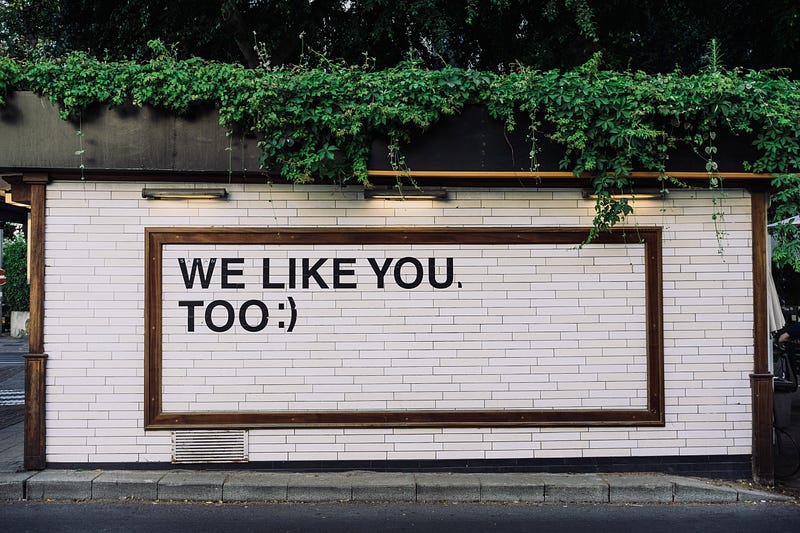
Photo by Adam Jang on Unsplash

I have a friend who grew up in a very negative family atmosphere. Big-hearted as she is, it is impossible to sit through a conversation with her without trying really hard not to be offended. We all form a judgment about a topic or a person almost reflexively. You cannot control your judgment, but you can choose how to react to it.

Try starting your sentence with affirmative or positive adjectives. Find the one most positive thing in whatever was just said, and then build your conversation on this. Regardless of whether the other person says “I like Michael Jackson” or “I love the taste of rubber shoes”, don't shun him or her and make them feel belittled. Everyone has had their journey and reasons, If you cannot acknowledge this, there is no prospect for a good social life. Just so you know, literally everyone you meet is going to say something you don't like.

If you can implement even one of these four suggested changes, the odds are that your social life will be more fulfilling than it is already. This is not to say that you have to be someone else or manipulate people or even that you should always agree. It is possible to be positive and friendly without losing your integrity. That, is the real sport of public relations.

Self Improvement
Public Relations
Personal Growth
Psychology
Philosophy
Recommended from ReadMedium