
How to Widen Your Lens and become a Systemic Thinker and Communicator: in memory of Paul Byers
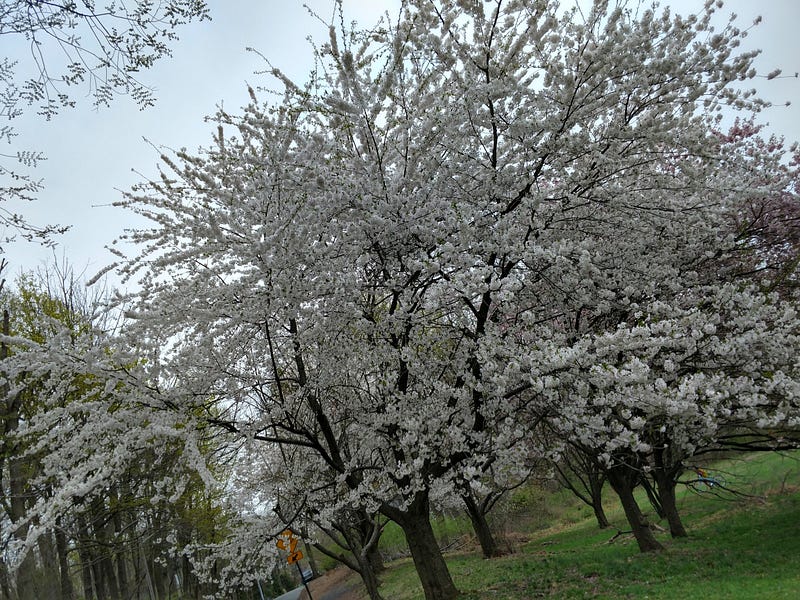
“The universe is a significant single whole…the most important function of art and science is to awaken this feeling and keep it alive in those who are receptive to it.”
Albert Einstein
It was my mentor, Paul Byers from Columbia University, who introduced me to the concept of Systemic Thinking and how to widen my lens. While his previous career as a photographer, prior to being an anthropologist, may have contributed to this, I think rather it enhanced his view. When I decided to widen the lens of my own personal environment, I made a pact to celebrate all my interpersonal relationships. These were not just words; this pact included embracing the many possibilities in what I call the “art of communication.” It was my commitment to make a conscious effort to deemphasize merely “doing things” and accentuate the “be” part of myself. I felt that I can better know who I was through relationships. This seemed to be a good prerequisite to a much higher and encompassing style of communicating. It also opened the door to my being more empathic and forgiving. It felt like a “softening” of my being. The consequence of this shift was that I began experiencing the “energy” of communication and the art of understanding what it meant to be interdependent., which in its pure sense encouraged an awareness of my good intentions. In short, it created a “pause” that fostered an awe of my unique opportunity to join, improvise and share in all of humanity. It was the beginning of forming a collective energy that exponentially connects to new personal and global possibilities.
This perspective was reinforced for me at a screening of the documentary “Deaf Jam,” which followed the lives of students from the Lexington School for the Deaf in New York City. Through the wonderful means of poetry these individuals demonstrated the power of communicating and finding their “voice.” After the screening there was a Q & A opportunity to meet the director and two young women who were featured in the film. One of the young women was of Palestinian descent and not deaf. The other, who was born deaf, was Israeli. They shared how they were able to create and perform collaborative poems that represented them both. Their experience demonstrated the power of synchronizing and producing a harmony that crossed cultural divides. Their profound state sharing broke any prejudices and produced a contagious feeling of hope for the future.
I experienced such a profound moment, perhaps for the first time in the late autumn of 1976. It was a “now I understand it” feeling. I believe it has significant relevant implications for our present times. It was prefaced by my sitting in a very dark and lonely Springfield, Massachusetts train station. I had just arrived from Boston in an equally desolate but charming anachronistic parlor car. I was meeting my friend and mentor, Paul Byers, who was driving from Manhattan. We were going up north to a 100-acre piece of land that was formerly a 60’s commune near Brattleboro, Vermont. This setting once served as the field study site for an anthropological dissertation by one of Paul’s friends, under the guidance of Margaret Mead, who later, with about eight others including Paul, purchased the land.
The day was cold, and my mood was deep and pensive. It was about a month after my son Galen was born, who was tucked away with his mother in Provincetown, Massachusetts where I was living at the time. I was uncertain of my life’s direction as I boarded the ferry to Boston early that morning. The harbor and then the Berkshires were glorious that day. The tune of James Taylor’s “Sweet Baby James” danced in the background as I took in what passed through the train window. Paul was in his late fifties; I remember that fact since I am now much older and find it hard to imagine being older than he was that day. He was from Kansas, had lived in Australia, was an accomplished pianist, journalist, and photographer and later in life a Ph. D. anthropologist. His close friendship with Margaret Mead resulted, among many other things, in a book about Small Conferences, which they co-authored (Mouton: New York, 1968).
I met him, a year earlier, while he was on the interviewing committee at Columbia University where I had been accepted into their department of Family and Community Studies, an interdisciplinary family studies doctorate program of anthropology, psychology, and sociology. At that time, I had just finished an intense two-year work experience, setting up alternative schools with a community-based education project in Newark, New Jersey. Shunning Columbia University’s traditional application form, at the suggestion of poet Allen Ginsberg (also from my hometown of Paterson, NJ), I replaced it with a long free verse poem about my growing up in Paterson. It was Paul who urged the others on the Columbia interviewing committee to accept me despite their concern that I might not be academic enough. He said, “We need people like Ken in our department” and then gave me a hug and smiled in a way that I would continue to look forward to throughout all the years that I knew him.
Paul’s’ specialty at Columbia was teaching “Communication and Systems Theory” and how to conduct research from this perspective. He had a personal part-to-whole interconnected lens that described a multitude of expanding “contexts,” where he believed all sorts of human potential evolved. When he was active as a photographer, he would live with and participate in the dynamics of the families he photographed. Paul was greatly influenced by anthropologist Gregory Bateson, who pioneered communication studies and was once married to Margaret Mead, told me that “You’re in good hands if anyone were to explain my work correctly, it would be Paul.” I participated in many workshops with Gregory and had the good fortune to discuss his insights with Paul.
I experienced this in-depth understanding of communication directly a few years later, when I was running an alternative high school in New York. Paul came by and gave a talk about conflict and “double binds” to my faculty and students. At one point, after listening to various troublesome issues, he had us hold hands and then discuss feelings about our connections. This brought a sense of harmony to all involved, many of whom pointed to that moment as the beginning of new and exciting friendships during that school year.
That cold afternoon, Paul arrived at the station nearly two hours late due to a heavy snowstorm. I could easily recognize his silhouette through the dimly lit station concourse. I was chilled and very aware of the dampness all around me as I got into his much-appreciated heated Subaru. I was still half in my train station state of mind, he had already driven several hours. We both smiled and I could feel the gradual commonality of our intent to connect as we drove amongst the snow-covered branches. Paul asked me about how I felt about the birth of my son Galen. He then described, using different examples, how he sensed that infants regulated dynamics by adjusting their eye contact. I was engrossed by his insight and wisdom.
Back at Columbia, he would hook us up with biofeedback machines during his classes, slow down films to look at frame-by-frame body movements and have us use our non-verbal senses in new ways; all of which pointed to his well-documented thesis that “we communicate through shared states.” This state sharing is like being with someone on an escalator, moving at a constant speed. When joining begins, even with a different temperament or energy, a “phase locking” occurs which synchronizes our biological rhythms with another and produces a powerful and meaningful opportunity between those communicating, a framework that Nora Bateson, president of the International Bateson Institute describes as “Symmathesy,” and is a vital part of her wonderful “Warm Data” process that I recently experienced which further supports my interest in mutual learning. When we desire to connect this way, there is a distinct harmony (that is always available), which Paul would describe in a very 60’s way as “good vibrations.”
Another educational tool he would extensively use was a current copy of Marilyn Ferguson’s Brain Mind Bulletin. He would challenge our perceptions using brain research, holograms, and perceptual distortions to motivate us and then relate the ensuing discussion to a favorite quote of his from Gregory Bateson regarding how all our problems can be traced to the difference between “how nature works” and “how humans think.”
We entered Brattleboro late that night and stopped to pick up some food and his ever-present Merit brand cigarettes, which I am sure played a part in his eventual demise. Paul moved, as usual, like a timeless presence, always stopping to observe things that probably would seem mundane to others. The store clerk’s behavior that night caught his eye and he beautifully put it into context, narrating the dynamics of how this clerk’s situation was maintained by his behavior and actions. I was fascinated by how his moving lens caught that fleeting moment and explained it in the context of an ever-present stream that is part of human evolution.
Despite his clear and concise gift of narration, he had a shyness that covered his sanguine manner. Instead of lecturing he would teach through inquiry to get us to speculate about how the living world (“Creatura”) cannot be described through the material-physical non-living world (“Pleroma”). By challenging historical influences, such as Descartes and Newton, who separated mind from body experience, Paul would point to the dangerous consequences of cause-effect (linear) and non-integrated (polarized) thinking.
In effect, Paul demonstrated how the “modern” Western way of knowing often rigidly eliminated “naturalistic” processes that allow for error, reversibility, and a novel opportunity for healing and self-correction. He would always encourage looking for “the difference that makes a difference.” The latter results from an appreciation of how nature works and a respect for the earth being more than the sum of its parts– with unlimited potential for adjustment and rearrangement. This is described by the Greek word “Gaia,” allowing for infinite celebrations of possibility.
A narrower view perceives change in a fashion that is reduced to external forces and causation. Consequently, man-made problems permeate political conflict and issues of global pollution, economic inequality, and dualisms of right-wrong, success-failure, good-evil, and Viagra-unhappiness. On the other hand, Paul’s holistic framework of understanding our world was so refreshing because it offered a simple means of resolving problems, though unfortunately and paradoxically difficult to implement. This is so, because cultural and institutional constraints that emerge from self-perpetuating systems disallow mitigating process and “natural” healing. Paul believed that nature was a continuous process of changing, self-corrective relationships.
For me, on a personal level, my relationship with him was an opportunity for “blending” and integrating the many aspects of my self-experience. I could be silent, which with my Italian ethnicity was initially difficult, and still communicate without the pressure of “logic,” which Paul would say “is not always an appropriate reference.” He would remind me many times that communication and learning is over ninety percent non-verbal and then gaze at me for a timeless all-encompassing moment.
When we arrived at the property late that evening, there were several feet of snow on the ground. Paul quietly took the chains out from the back of his Subaru and before I knew it, I was wrapping the tires on my side of the car. We traveled the mile or so through the narrow road to the A-frame cabin on the property. It was pitch dark and cold, yet soothing. There was a feeling of comfort with all that was around us. It took almost an hour, one foot at a time, getting out and pushing (no words said), until we got to the dwelling. The wood burning stove lit up the night and there was Paul’s smile (his face reminding me of Leonard Nimoy as Spock on Star Trek) saying , “Be in the beginning.”
I had read and heard the Zen-like epistemological explanations in his classes, and in books, but to be in the “repetitive yet newness of each nuance” in his presence was another thing. It was like experiencing the landscape from a grain of sand in that moment, a beginner’s mind. In that fleeting but distinct second I had seen how injurious it is to miss the “part-to-whole” connections of our existence. Not seeing it with friendships, in community, or seeing it in self-serving-ways produces a separation and imposed hierarchical structure that is in conflict with nature and does not allow deep communication and state sharing.
Later that evening, having a cup of tea, I asked Paul about my uncertain direction. He paused thoughtfully and said, “It is important that you continue to recognize the many different connecting patterns of your life.” I asked how that is possible. He answered, “Widen your lens; view the larger contexts and then feel the inner, natural ideal that shapes your feelings. This will frame solutions to support your direction.” It was then, that I “understood” what Paul meant by “the aesthetic,” the ideal human game of joy, which is to recognize our interdependent essence. Understanding it is the wisdom that sustains the natural flow of our relations.
Paul would repeat that message about the aesthetic in different ways throughout the next several years in many conversations and silent meditations. When I finished my own dissertation about communication double binds and passed my thesis defense, I broke down and cried from the strain of the moment. Paul, without hesitation, dropping the formalities walked around the large table where I sat. He gave me a hug and then drove me to the train station with a warm long smile and said, “It is time to get on with your life.” I immediately felt the essence that would shape my future.
I would occasionally see him (although not often enough) during the following years at Columbia or at his loft in Manhattan. I was always refreshed and replenished after a visit with him. He was consistently searching, observing, and sharing how we make sense of things, right up to his passing. About a month before he died (right after 9/11), he wrote that he was glad things were well with me. He mentioned that he was “near to being recycled and not too sorry, given the present state of the world.” I wrote back how I still believe in the inner natural ideal, the aesthetic, which will frame our eventual solution. His response, not surprising to me, was a simple “Thanks.” That was because Paul would best explain mostly without words, how the joining that is possible in each of us lies between and across the biological and cultural realms of our contexts.
Implications for being a Systemic Thinker and Communicator:
I learned from Paul Byers that we can feel the joy each moment and simultaneously be and connect with all its wider possibilities, which undoubtedly is the wisdom of communication.
Anyone can start this process of turning your communication up a notch by asking yourself how you communicate. What is the style of your communication? Is it passive, assertive, or aggressive? Describing how you communicate allows you to understand and respect your temperament and visualize your interpersonal relations. A good way to check your present perspective on life, mentioned above, is to widen your lens as was suggested to me by Paul Byers. When you widen your lens and view your communication style from a larger framework you open the door to being more vulnerable, less controlling, but also more human.
Most psychologists agree that there are four basic temperament styles, based on Carl Jung’s studies and popularized in the Myers — Briggs assessment: Feeling, Thinking, Intuitive and Sensate. The examples below demonstrate these four styles. It starts for me at this great art deco dinner in Paterson. Where else? The cook makes wonderful soup, but his long ponytail inevitably drops a hair into the pot. The first patron walks in, orders a bowl, sees the hair, starts yelling, leaves and does not stay to enjoy the soup. This is the angry sensate trait. The next fellow comes in, sees the hair in the soup, calmly calls the waitress over and whispers to her to bring another bowl. In this case he demonstrates the sanguine intuitive trait. The third person comes in sees the hair, begins to silently weep, does not say anything, pays and leaves, obviously the nervous-thinking person full of anxiety. A fourth person enters the diner and orders soup. He sees the hair and what do you think he does? He takes the hair out and enjoys the soup. This represents the laid-back feeling type. Each of us has components of all four, but we tend to be characterized by one or two, and each temperament is further differentiated by an extrovert and introvert part.
The point is this: we all view and construct our sense of the world differently. What I have found about people looking to attain a balance in their lives is that they are usually working from their introverted temperaments. Jung called our everyday face the persona, but there lurks an equally important part of our psyche and it is the shadow side. In many instances the shadow side is operating from an opposite temperament that we usually exhibit. A very intuitive persona may be out of sorts and communicate from the angry sensate temperament. The everyday outward analytic thinking person having a bad day can easily revert to an inwardly shy feeling position. It is in this shadow area that clues for change and articulating one’s pain resides. This is the grist for the perceiving psychotherapist to help differentiate from past negative experiences
Describe how your temperament has influenced your communication style.
Think about moments when you felt that you were not being heard or having your point understood. What were the circumstances of this interaction?
Leaving words aside, go back to that moment and think about what was happening non-verbally?
What was your posture and how were others looking and standing?
How might this situation have been more conducive to getting your message heard?
Conversely, think about a situation when you felt good while having a conversation. How was this experience different than the previous one?
How would mutual learning with another enhance your understanding of what it means to be interdependent?
Write a short poem or narrative that continues the phrase when I am heard I_______
*This was updated and inspired from a previous article that I wrote, “THE JOY AND WISDOM OF SYSTEMIC THINKING: TEACHING AND UNDERSTANDING THE AESTHETIC,” that was in the Journal of Systemic Therapies, Vol. 26, №1, 2007, pp. 11–22


