How to Visit Bars, Concerts, or Clubs On Your Own and Not Feel Like a Freak Loser (Because You Aren’t One)
Autistic Advice #10

Welcome back to Autistic Advice, a semi-regular advice column where I respond to reader questions about neurodiversity, accessibility, disability justice, and self-advocacy from my perspective as an Autistic psychologist. You can submit questions or suggest future entries in the series via my Tumblr ask box, linked here.
Today’s question comes from an Autistic person who is pretty sure they’d love the club scene — but their friends don’t, and they aren’t sure if going to bars and other venues alone is socially acceptable. They write:
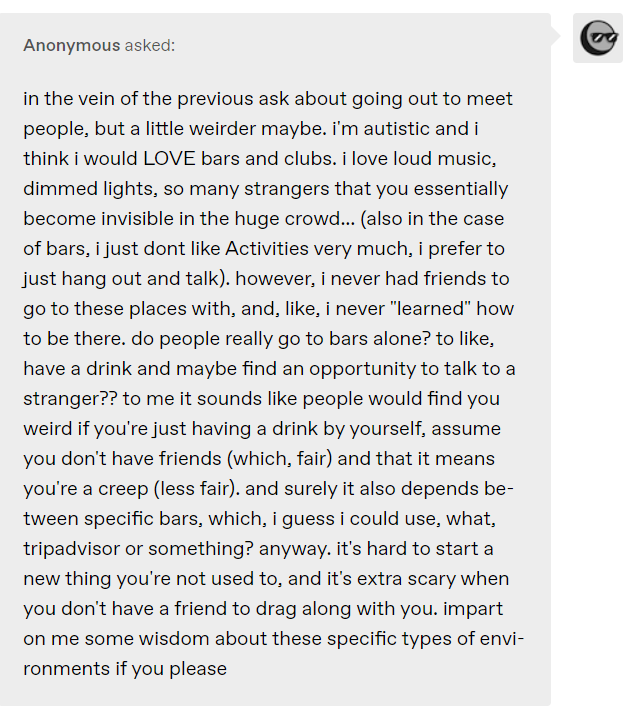
Yes, anon, people really do go to bars and clubs alone! Source: I do it all the time and it’s fun!
As I’ve written about before, I’m a pretty social Autistic person in many respects. When it comes to initiating a conversation I am truly godawful, but I love being around people, watching how they behave, making new friends, and most of all, throwing myself into unfamiliar and stimulating new experiences and seeing what I can learn from them. Without novel input, I feel numb and unalive, and getting out of the house to be amidst crowds and loud entertainment really helps ground me.
But most of my loved ones are of the more introverted sort. Or they’re highly COVID-conscious, still coping with the social-psychological fallout of pandemic trauma, or newly sober, and so I don’t have all that many people to visit concerts and bars with. As a result, I go to clubs and bar events on my own rather frequently. I used to go out on my own quite a lot before COVID, too.
I have been to local shows and large ticketed concerts solo; I’ve gone to all manner of bars, clubs, music festivals, and street fairs without accompaniment. I’ve been alone in everywhere from townie old-man bars to expensively lit, bouncer-patrolled clubs, and in such venues I’ve read books, danced, cruised, played video games, chatted to strangers, and even made a new friend or two. I have found that, despite all my fears that I’m an awkwardly inert, freak loser creep hovering on the margins of an otherwise pleasant social environment, in reality I’m just like anybody else in those spaces, and nobody minds I’m there one single bit.
Anon, nobody is looking at you at a bar or club, watching what you do all night and who you do it with, evaluating you as a loser based on the data they have gathered. I understand that it may feel like you’re under such unrelenting, inescapable scrutiny because you have experienced such scrutiny in the past, and your brain now runs an almost constant simulation of that scrutiny for yourself. But it’s not really happening.
When your brain makes you feel this self-conscious, it’s to protect you from future social punishment by imagining the worst possible perceptions other people might be having about you. Unfortunately, that self-protective reflex isn’t rooted in the reality of a bar or club-type environment. So you can thank your brain for the attempt at help, and then let go of those concerns.
Try focusing your attention outward, with interest, toward other activities and people. Approach new situations with genuine curiosity and a capacity for awe. The more you focus on living and experiencing and the world that you perceive outside of you, the less you’ll be worried about what you are doing and how other people are viewing it.
In bars, clubs, street festivals, and concert venues, people are entirely too worried about drinking, dancing, people watching, trying to hook up, fucking around on their phone, flirting with some poor captive bartender, and pondering their own internal orbs to bother keeping track of everything you’re doing and to judge it with malice. I promise you will not stand out as noteworthy or unusual at all.
Lots of people go to bars and clubs alone, additionally, some even to meet new people and make friends. So you dancing by yourself or even trying to make light conversation with strangers is nothing out of the ordinary to see. Neurotypical extroverts do that kind of thing all the time. That’s how bar regulars even become bar regulars. They start out not knowing anyone, then build up a social network gradually through consistency of presence, and by showing others consistent respect.
I find that it is easier to get over the initial crest of oh-god-do-people-think-I’m-a-freak anxiety of going somewhere alone by choosing a locale where there’s some shared subject of attention: something to watch, play along with, or dance along to, so that you feel engaged and not like you’re sticking out like a sore thumb. (You aren’t sticking out like a sore thumb at all, by the way, but I understand that at first you will feel like it). Again, by directing your attention outward, toward a stimulus, you’ll have less brain space left to ponder if you’re standing weird or holding your beer like a predator would (you aren’t, that isn’t a thing).
I used to go to weekly Mad Men watch parties at Fat Cat, a bar just down the street from me. It was a blast; there was a cart that went table to table, selling old fashioneds, people would dress up, and an older woman who used to work as a secretary at Leo Burnett during the 1960s would come, wearing vintage dresses she still had from that time period. As a crowd, we cheered when Pete Campbell fell down the stairs and gasped when Peggy confessed her love for Stan in the final episode. I’m still nostalgic for those moments.
Another bar in town held similar watch parties for Game of Thrones and House of the Dragon. Now, I visit Roscoe’s for their weekly Drag Race watch parties, which are regularly attended by stars of the show. I join the rest of the audience in gently heckling the girls when they have a flop moment on screen, and when a performance truly stuns us we all roar with approval. After the episode’s over, I hit the dancefloor with everybody else, shaking my drink in the air and waiting for the drag performers’ nightly stage show to begin.
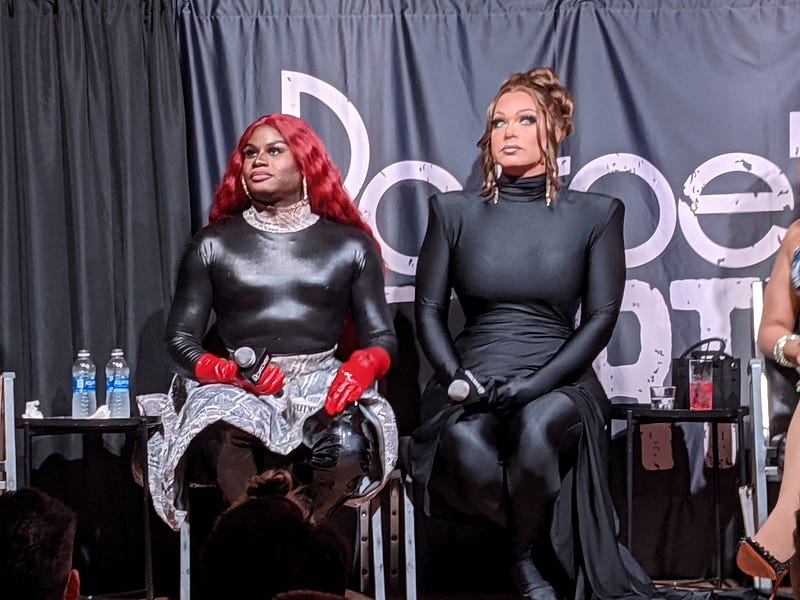
I also like to attend DJ sets, bingo nights, open mic nights, and other random events like Eurovision watch parties pretty regularly on my own. If you go to certain spots often enough, bartenders and locals will get to feel comfortable around you and might start chatting at you. That can really help too.
There’s a mid-fifties, androgynous bald person who shows up alone to the 80s music video nights at one of my local bars every single week, donning a miniskirt and thigh-highs to dance their ass off for hours. Everybody loves that person. Random gay guys share their poppers with them and gaggles of young women hop up on the platform to dance alongside them. Nobody finds them creepy. No one could ever call them a loser. By confidently, glamorously doing their own thing, they make all of us feel more comfortable strutting around the dancefloor too.
Street festivals and outdoor concerts are also great first places to practice partying solo, because if you start feeling self-conscious standing alone in one spot for too long, well, you can just wander around! Talk to vendors, check out another show at a different stage, move into the crowd to dance for a little bit and then wander back out, get a slushy, pet someone’s dog. There will be so many people to see and things to do that you’ll feel more anonymous, in a comfortable way.
I also recommend visiting townie bars where lots of old men and old lesbians hang out — you’ll hear a lot of stories and get some free shots of liquor once one of the queer elders takes you under their wing. Older gay people are way more practiced at visiting bars alone, because they lived in an era where people had to meet that way, and often enjoyed doing so. Going to a bar alone has never been a loserly activity. Historically, it’s been one of the ways that marginalized people find each other and build community.
Once you’ve gotten comfortable going to watch parties or music festivals alone, then you can level up and bring a book to a random watering hole and just enjoy a few hours there by yourself, quaffing cocktails and taking in the ambiance and intiating conversation as feels natural. Then you can graduate to taking the center of the dancefloor alone, or belting out Annie Lennox at karaoke, asking someone for their number, or whatever else you find hardest and most threatening.
It’s wonderful to share these kinds of experiences with others, of course, but don’t ever limit yourself with the belief that you need a social chaperone by your side to prove you belong in a public space. You do belong, and you deserve to be around similarly-tempered people who enjoy the things that you do.
Get on out there anon! You’ll meet new people, try new things, watch a variety of fascinating interpersonal dramas play out, and have a ton of fun amidst the music and lights. As Jesse Meadows says, Autistic People Party Too, and there is a space for us in the party scene that’s larger and more welcoming than you might think.
You can submit future questions to Autistic Advice here.