
Life
How to Utilise the Growth Mindset to Overcome Any Setbacks in Life
Being rejected by our dream school or company is by no means a sign that we are not good enough. It merely means that it is not our time yet.
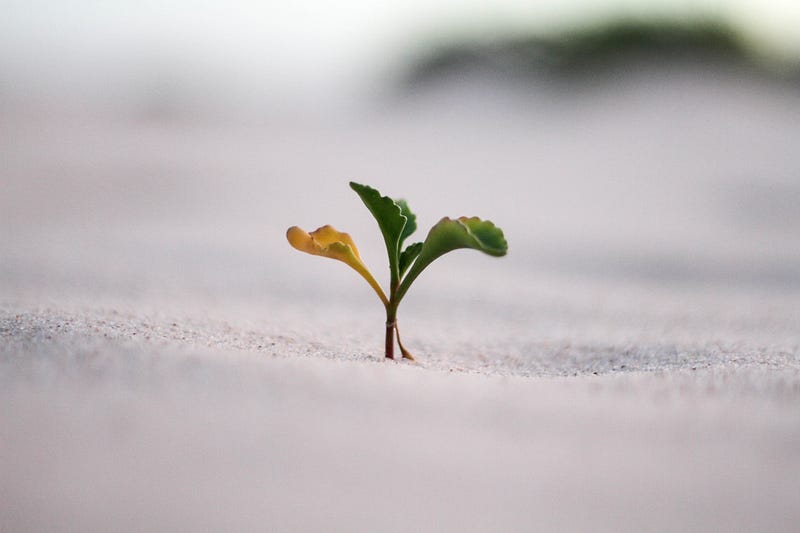
A high school in Chicago implemented a grading system where students were given the grade “Not Yet” when they failed to pass a course. This will, in turn, spurred the students learning interest as they were ascertained that their learning curve would improve progressively.
When we are ashamed of making a mistake, we have fallen into a fixed mindset. I was once very reluctant to speak or write in English because I used to tell myself that English is not my cup of tea. Yet, when I slowly embraced that “to err is human, to forgive divine”, I have started to enjoy the learning journey. Instead of reprimanding ourself when we make mistakes, we have to forgive ourself and learn from our mistakes.
1. Fixed Mindset
A fixed mindset is intrinsically a notion that our intelligence, character, creative ability are innate. I realised that our not-so-tech-savvy senior relatives often seek help from us even before attempting it themselves. They seemed to hold this “I am old, and I can no longer learn new thing” mentality. This mindset is often carved in stone and is very hard to change.
I will often tell them that they can go and tinker around with their Facebook and Instagram without having to be worried that they will lose their account. This reassurance has helped them to feel that it is all right to like a post or follow someone on accident because we could unlike a post and unfollow an account. This technique has proven to be quite successful in guiding our not-so-tech-savvy relatives.
English was not my cup of tea
I used to hate English a lot in my early secondary school days. I used to believe that my classmates who could speak impeccable English just happened to have the aptitude for that.
I grew up in a Mandarin, Hokkien, and Hakka speaking family. Frankly, I was not looking forward to my English classes when I was a young kid. English used to be one of the subjects that I dreaded the most. The fact that we had an English class every day didn’t make my life easier.
However, things started to change when I felt the importance of English and started to take my English classes seriously. There was indeed a lot of catching-up works to do, but I persevered. I was lucky enough to have very supportive teachers back then, who continually gave us encouragements and pushed us to our limits. Without them, I would not be interested in English at all. Therefore, having a good mentor is consequential in spurring that growth mindset.
只要功夫深 铁杵磨成针 — As long as you try hard enough, you can achieve anything
Transitioning from a fixed mindset to a growth mindset
Having a growth mindset doesn’t mean that everyone will eventually turn into Einstein. Einstein’s success wasn’t something that happened overnight. Our goal is to find something that we love and to be very good at it.
We need to learn how to come to terms with failures and convince ourself to try harder next time. We often blamed the environment or even the people around us. We would need to re-examine ourself and see what went wrong instead.
Being rejected, by no means, indicates that we are not a good fit for the role. Many factors contribute to a job offer, and most of them are out of our control. Instead of reprimanding ourself for failing a job interview, we should tell ourself that “it is just not my time yet”.
2. Growth Mindset
Growth mindset is a notion that humans can develop their talents through enough repetitions, hard work, and advice from the people in their vicinity.
The proponent of the growth mindset, Carol Dweck, suggests that we can’t attain a “pure growth mindset”, and that is fine. We must believe that each of us has unique skills, and it is virtually impossible to be the first in everything. It takes a significant amount of time to excel in something, be it music, language, or other skills.
Everyone has at least a few areas in which they could be in the top 25% with some effort. — Scott Adams (the creator of Dilbert)
What we can do instead is to aim to be the top 25% in multiple areas. These interdisciplinary skills will make us rare and valuable as we have unique skillsets that a few people have. We could also make use of these skills to start a startup.
I think my background in Computer Science has helped me tremendously in fostering the growth mindset. We need to find a way to confront the “computer bugs” when we encounter them. Therefore, we have slowly got used to the fact that humans make mistakes. Once we get the hang of it, we won’t repeat the same mistakes in the future.
3. Embracing Life-Long Learning
Many people thought that learning stopped once they have graduated from college. I once thought that I would be very well-equipped with all the knowledge I learned from my school. However, I was wrong. I soon realised that we need to pick up myriad new skills once we enter the workforce. Hence, we need to jump on the life-long learning bandwagon to stay relevant.
As we age, we tend to shun from something that we are not familiar with. We thought that the older we get, the harder it is for us to acquire new skills. We have this preconceived notion that we are not good at something when it requires extra efforts.
What is Lifelong Learning?
“Lifelong learning is the ongoing, voluntary, and self-motivated pursuit of knowledge for either personal or professional reasons.” — The UNESCO Institute of Lifelong Learning
Lifelong learning does not have to come in the form of formal education. It might be a pastime that you enjoy outside of your studies or works. It could range from learning a new language, learning how to cook, or even learning how to drive. Humans are curious by nature. We acquire new skills through our trials and errors.
There are a lot of paths that we can take in life. There are times when we realise that there are more attractive roles out there — that is perfectly fine! Our degree does not define who we will be in the future. For instance, some of my software engineer colleagues didn’t study Computer Science at university. However, they were still able to make substantial contributions to the team.
Nearly all of the skills that we learn in school will become obsolete one day. Therefore, the ability to pick up new skills becomes very important in this fast-changing world. Moreover, studies have shown that continuous learning could delay the onset of some neurodegenerative diseases like Alzheimer and Dementia.
How can I be a lifelong learner?
- Firstly, we would need to understand our learning style. We might be a visual, auditory, tactile, or kinesthetic learner. Determining which learning style works best for us will not merely improve the learning outcomes, it will also improve our morale.
- Secondly, to be a lifelong learner, we would also need to identify where your passions lie. It is never too late to change our job or major in school. Doing what we love is the key to a fulfilling and happy life.
- Lastly, we should embrace the growth mindset. Believing that our brain is limitless will empower us to pick up new invaluable skills.
“Sometimes life is going to hit in the head with the brick. Don’t lose faith! … You gotta find what you love. If you haven’t found it, keep looking and don’t settle.” — Steve Job’s 2005 Stanford Commencement Address
Conclusion
In summary, the key to staying relevant in this fast-changing world is to never stop upgrading ourself. Learning is a marathon and not a sprint. The extra efforts required to learn a new skill should not be a reason for us to retreat.
The advancements of Artificial Intelligence in this twenty-first century has the potential to disrupt any industries. If we don’t continue upgrading ourself, we will be made redundant sooner or later.