
How To Use Your Task Manager — And Why GTD is severely flawed (Barbell #3)
(You can also listen to this article on Youtube, Spotify, Apple Podcasts, and Google Podcasts)
Your task manager is the home for everything you must do (obligations) and might want to do (options).
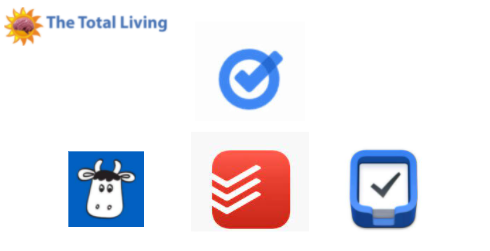
As I mentioned in this article, I prefer Google Tasks. It is by far the simplest and most user-friendly (although Remember The Milk, Todoist, and Things are solid alternatives). On the computer, Google Tasks is accessed via your Gmail, but if you install this extension, you can access your tasks separately.
You add a task by pressing the “+” sign and add to a list of your choice. When you are finished or do not want to do the task anymore, check it off. The task manager should be very close to you at all times.
Write as little as possible, avoid next actions
The famous Getting Things Done system argues for clarifying your to-dos down to the desired outcome and the very physical activity. According to the founder David Allen, if you do not take the extra steps, you have not finished your thinking.
Although this practice is very useful, it has a severe flaw. It presents a ton of friction straight away since you now have to expel brainpower to every single task. After 2.5 years of practicing GTD in various forms, I can confirm that the extra friction is enough to prevent me from writing down the task at all, which leads to the opposite effect.
However, you have to clarify down to the next action. I suggest that you do it differently instead.
The GTD workflow works the following when applying to reality
- Capture the task on paper or other tools. As few words as possible.
- In a separate batched time, look at the task again, figure out what the desired outcome and the physical next action is
- Write that physical next action on a next-action list with reliable retrievability and a project list if next steps.
- Delay in time
- Come back to the task and make sure that it is current. Clarify again if it is not.
- Do the task straight away, effortlessly
A lot of steps, right? My solution is the following
- Capture the idea directly into Google Tasks instead of another place. As few words as possible.
- Delay in time
- Come back to the task and figure out the next action without writing it down. Just a brief thought in your head
- Do the task straight away, effortlessly
This workflow is much, much simpler. I have eliminated all the steps except for the initial capture and a brief clarification before you do the actual task. Because the clarification is delayed until the very last moment, you do not need to worry about it being obsolete.
Example on GTD vs The Barbell System
Let us take David Allen’s favorite example for you GTD-fans: Mum’s birthday. The GTD workflow would look like this:
- Write down “Mum’s birthday” on “David Allen Note-taking Wallet®” or other capture tools. Put it in your in-basket
- In a holy clarification session, you pick up the note from your in-basket and ask yourself “What are the desired outcome and physical next action”. You find out that you should call your sister for advice.
- You then write “Call sister re how to arrange Mum’s birthday”, both on your sacred calls-list, AND (don’t forget) on your new designated project called “Give Mum a spectacular birthday experience”. All of this in Omnifocus or Lotus Notes with an e-productivity overlay of course…
- Delay in time
- Now you come back to the task three days later when you want to call. However, you realize that many things have happened since then. Your brother is now the designated person to inform you about ideas since your sister is on a relaxing vacation (and doing digital detox at the same time).
- In total panic, you scramble down all your notes in the “David Allen Note-taking Wallet®” and in-basket. You upload Omnifocus and update both your project and your sacred calls-list in a shameful manner. Replacing your sister with calling your brother instead.
- Now you feel safe calling your brother and do it, in an “effortless matter”.
I don’t know about you, but the workflow above sounds incredibly chaotic. I would not wish that overhead dissonance and breakdown on my worst enemy.
Instead, my Barbell system has the following workflow to the same example:
- Open Google Tasks and write down “Mum’s birthday”
- Delay in time
- Three days later, you open Google tasks and briefly ask yourself “What is the next action”. You find out that you should call your brother for advice since your sister is doing a digital detox vacation.
- Now you feel safe calling your brother and doing it, in an effortless matter.
HUGE difference in terms of overhead, number of actions required, and mental sanity.
Why The Barbell System is superior to GTD
In the Barbell example, you only need to write it down once. Your next action is now well-connected to reality, and zero overhead is required. Your task manager becomes a capture tool in itself and a place for reliable retrieval.
The next action is not changed but delayed. Your judgment of what to do is delayed until the very last moment. If you operate like this, you will not be disturbed that it says only “Mum’s birthday.” You trust that you will figure out the next action when you do it.
Imagine scenarios like the previous example happening 150 times each day (according to David Allen), as you receive many inputs. You can quickly see which system will self-destruct (GTD) and which one will be antifragile (the Barbell System). Which system who fears vs. loves change.
No wonder why people complain of “falling off the GTD wagon.” It is a recipe for misery and cognitive dissonance. However, GTD is much better than having no system at all, which is pure and utter hell. Nevertheless, the Barbell System is much, much better still.
Nassim Taleb repeatedly argues in the masterpiece Antifragile that small things love volatility and large things do not. In other words, you want your system to be as small as possible to effortlessly surf on top of the waves instead of sinking in GTD-style. The Barbell System is your surfboard.
In addition, you should not define the desired outcome when doing barbell. I have written in great length here why you should abolish expectations and predictions at all costs, but the summary is:
- You simply cannot predict the future. Stop it!
- You do not know what you want
- You constrain reality to your immature view of it
- You are super fragile to change, with lots of negative emotions coming as well
- Trial and error is the way to go if you want unconstrained success
However, we are not done yet with the task manager. There is a significant difference between obligations and options still, which Friday’s post will dive deeper too. You need this information to dominate whatever happens in your life.
(Tomorrow is celebration time!)
If you like this article series, you will enjoy the full e-book (a full expansion on how to use the Barbell System in your daily life). Click here to learn more.