
How to Use Writing to Improve Your Thinking
Writing is like taking the stairs
This story is behind Medium’s membership paywall, which means the writer earns through our Partner Program. To become a Medium member, click here.
The other day I read an HBR article about a company executive who discovers that employees are using the office copier for personal reasons. He creates a memo to address it. And he goes through three levels of revisions:
- First, eliminate wordiness
- Then, get the tone right
- Finally, make the intent clear
This revision process is something we can apply to our thinking as well as our writing. Let’s look at the steps that the executive took to make his writing sharper.
The first draft of the memo concluded: “Such practice [using the office copier for personal reasons] is contrary to company policy and must cease and desist immediately… Accordingly, anyone in the future who is unable to control himself will have his employment terminated.”
Sounds like a robot wrote that. So he shortened it to: “Such practice is contrary to company policy and will result in dismissal.”
The tone sounds a bit scary, right? The executive realized that it sounded like a false threat. And he knew he wouldn’t really fire employees for using the copier. So he edited: “Copiers are not to be used for personal matters.”
The memo was now clear and free of unnecessary words. But it felt like an overly simple statement of policy. The executive reflected. Did he really want to enforce the policy? What would he do if people kept using the copier for themselves anyway? Would he assign someone to police the equipment?
So he thought: What is the real intention behind the memo? And how can that intention be communicated clearly?
The executive realized he didn’t want employees using the copier for personal reasons because this costs the company money. So the final memo goes:
“We are revamping our policy on the use of copiers for personal matters. In the past, we have not encouraged personnel to use them for such purposes because of the costs involved… We are therefore putting these copiers on a pay-as-you-go basis…”
The message actually got longer. But we see the executive’s thinking evolve. He starts with:
- “The employees are taking advantage of the company. I’ll tell them to shape up or ship out.”
But after the revisions, he eventually concludes that:
- “Actually, the employees are capable of understanding a problem. I’ll set a reasonable policy and write a memo that explains how it will operate.”
By writing and revising his thoughts, the executive’s perspective changed. If he stuck only with his initial impression, he would’ve made his employees resentful. And they might’ve continued using the copier in secret. Which doesn’t solve the problem.
Revising your writing clarifies your ideas
It happens all the time. You want to say something, and you think about the best way to say it. But sometimes, you don’t need to focus on the writing itself, grammar, or the words you use. You need to focus on the reason behind your message.
To me, that’s one of the most useful aspects of writing.
The great thing about writing is that it allows you to put your thoughts on paper (or on a screen) and look at them another way. Our ideas can sometimes lack clarity and perspective because they are trapped in our heads. Writing takes these thoughts out and places them somewhere we can see objectively.
This process also trains our minds to use language better. Revisions make us ask:
- Are we being clear with our point?
- Do our words confuse our intended audience?
- How can we be more persuasive?
When you decide to write something down, whether that’s a formal business plan, proposal, or simply some freewriting in your journal, you give yourself the opportunity to improve your thinking. The problem is that most people don’t use that opportunity. They simply write down the first thing that comes to mind.
If you want to avoid that, and you want to become more intentional with your writing, try the following process
The three levels of revisions
Like the executive and his memo, we can “revise” our thoughts. This helps us make better decisions and communicate our thoughts effectively.
This can be used for various purposes; creating a presentation for a potential client, writing a blog post, and so forth. Outline your main idea. Then go through these three levels of writing that I adapted from Tim Ferris, who made a video on this topic.
- Write it for yourself — When you want to write anything, ask yourself: “What do I really want to say?” For now, don’t think about other people’s opinions. Don’t try to please or impress anybody. Simply look at what goal you’re trying to accomplish. Do you want someone to act? Do you need to make an appointment? Do you want someone to buy your product? Then write in a way that achieves that goal.
- Revise your message for people who care — Not everyone cares about what you write. Too often, we try to write for those people who don’t care. Why try to impress or please? That’s a waste of time. When you revise your work, always keep in mind that the people who actually care about what you have to say matter the most.
- Proof for clarity — You never want to write in an ambiguous way. When someone reads your work and doesn’t instantly get it, your writing is simply not clear. A confused reader is a reader you’ll lose. So try asking beta-readers/audience to highlight parts that are unclear for them. And see if there are statements that are unclear to you. If you’re unsure about a word/sentence/portion, cut it out entirely or rewrite it.
Writing is good for your mind (and your career)
I’ve always seen writing as a means to improve my thinking and life. It’s an activity that helps me clear my mind and gain a better perspective. That’s why I’ve been a proponent of improving your writing skills regardless of your profession.
We communicate in the written word every day through chats, emails, social media posts. We’re always trying to share our thoughts or persuade others into our line of thinking, one way or another. That’s how much writing impacts our lives.
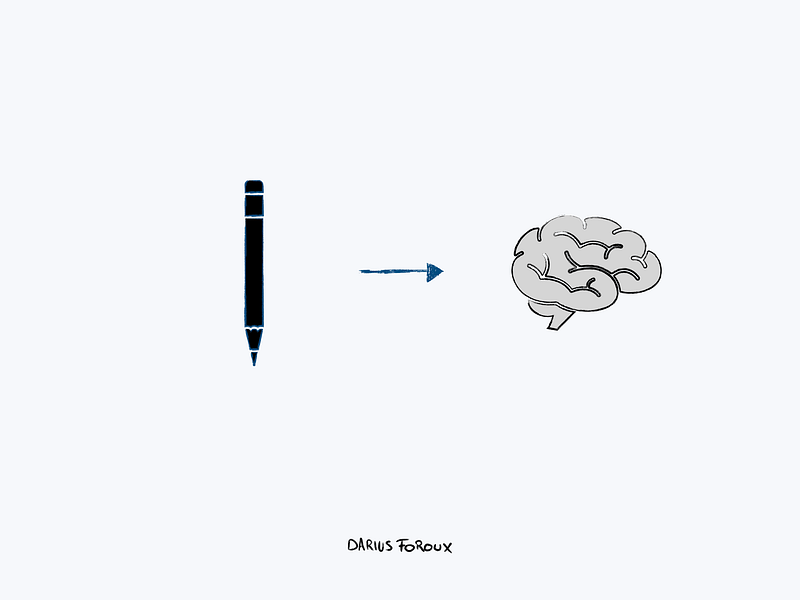
Think of this way: Every time you write, you get the chance to improve your thinking. It’s like taking the stairs instead of an elevator. You’re going up anyway, why not take the stairs, which is good for you.
When you write, take a few extra minutes to rethink your words. When you do that day in and day out, you automatically become a better writer without spending a lot of time on the process.