
How To Use Worms to Save The World.
A look at how earthworms can help get rid of our waste.

It’s the night before trash day, and you are cleaning out the fridge. Hiding in the crisper you find a science experiment that you don’t remember starting. Looking closer, a head of lettuce appears under a brown wilted shell. Without thinking twice, in the trash it goes. “Lettuce is natural right?” or “This will break down in no time.” are the thoughts that cross your mind. In fact, most people think this way, which is why food makes up 20% of all waste in landfills.
What’s the problem?
Food in landfills is buried, and decomposes at an alarmingly slow rate. A lack of oxygen available to the food means it goes into anaerobic(absence of oxygen) digestion.
That head of lettuce that you tossed, thinking it would disappear in a week, can take as long as 25 years to break down!
Along with the extended decomposition, methane and carbon dioxide are released in this process.
Methane is a greenhouse gas that is 28 times more potent to the environment than Carbon Dioxide. Now, we are losing land to landfills, and we are contributing to climate change.
What can we do?
There’s a hierarchy for how your food waste should be mitigated. Developed by the Environmental protection agency, it begins with producing only the food we need, and as a last resort, sending food to the landfill.
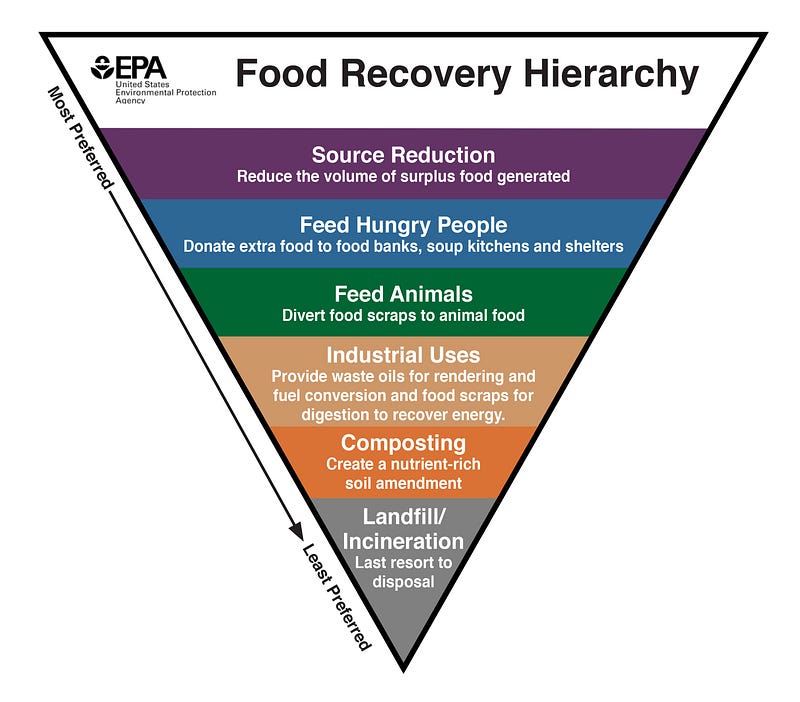
What we are going to concentrate on is near the bottom, Composting.
When the more preferred options aren’t available, composting can be an elegant solution providing nutrients to the soil.
Our hero the worm.
Eisenia Fetida more commonly called the “red wiggler” is the most common worm used for composting.
Red wigglers love food waste, and raised under the correct conditions, can consume up to a third of their body weight every day!
What do I get out of it?
Besides the obvious plus of helping the environment, composting with worms can have some immediate benefits for your family.
Composting can drastically cut down on the amount of trash your family sends to a landfill. That food stinking up the kitchen trash and rotting in the landfills could be turned into worm castings. Worm castings is the name for the “byproduct” produced by the worm after it eats your scraps.
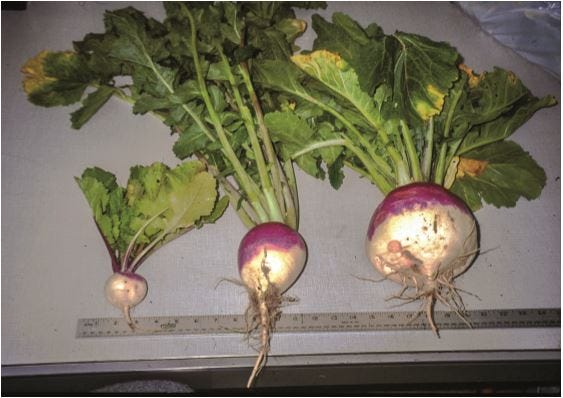
Worm castings are full of all kinds of nutrients.
Nitrogen, magnesium, phosphorus, and calcium will be added to your soil, vastly improving soil health. As shown in this photo from a study conducted by Rhonda Sherman and North Carolina State University, this can have a great impact on plant life!
Best of all, worm castings are an organic replacement for harsh chemical fertilizers used by most commercial farming operations.
Who wouldn’t want cleaner, healthier food?
Let’s take a look at the process for raising worms.
Favorable conditions.
A worm bin is incredibly easy to make. All you need is an opaque container with some air and drainage holes, and worm “bedding”.
Bedding can be anything like the following:
- shredded paper or cardboard
- aged manure
- peat moss
- straw and hay
- leaves
- commercially manufactured bedding
Your bin needs to be between 60–80 degrees Fahrenheit, with about 80% moisture. The bedding should be wet to the touch, but not wet enough to squeeze water out.
In these conditions, your bin will smell like a healthy forest floor. Yes, even with your nasty food waste in there!
To feed the worms put your waste just under the top layer of bedding, and the worms will take care of the rest.
When you notice the bin getting full of what looks like top soil, dump it out on a tarp, remove the worms to another container, and claim your reward of castings.
Conclusion.
As you can see, worm farming can be beneficial for you, your family, and the environment, with a small amount of work.
We haven’t even scratched the surface of the information available on this topic. If you want to learn more about the fascinating earth worm, I recommend this book by Rhonda Sherman.
Now get out there and save the world!