
How to Use the Star Approach in Your Life
See, Think, Act, and Reap in new ways.
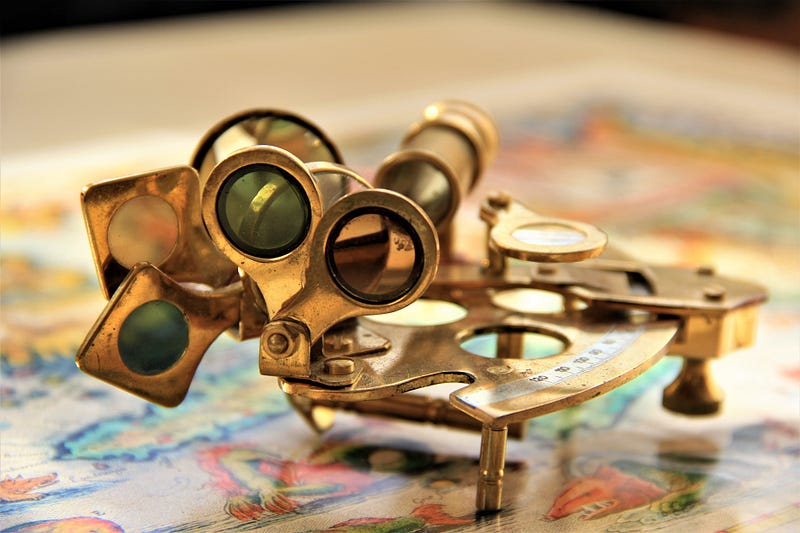
What comes to mind when you look up at the stars at night? For millennia, stars have been used to guide those taking long journeys. It’s estimated that light from the farthest stars has taken billions of years to reach the Earth, having been created in the distant past. The closest star, our sun, provides immediate warmth, light, and life to the Earth.
In our lives, there are numerous hidden behavioral patterns we have used in our past. When you come to see these patterns, you can use them to create change in your life by gaining control over them. Even a small change in a previously unseen pattern can change the course of your life.
Let’s discuss one of those patterns I recognized some years ago, which transformed my life. It is a simple pattern that allows you to create practically anything you wish. This pattern is very common in most people’s lives, yet very few have noticed it.
I use the acronym S.T.A.R. which is short for See, Think, Act, Reap. I call it the STAR approach to life and wrote a best-selling book about it titled “Uncommon Sense.” You can read some additional background about the STAR approach in How to STAR in Your Life.
Let’s look at the individual parts of STAR, which will give you a road map to truly transform your life.
See
To notice, observe, become aware of, view, watch, recognize, or witness. Most of us have limited insight when it comes to ourselves. For example, your spouse may call you stubborn, when you’ve always considered yourself flexible!
Why is this? First, each of us has filters through which we see. You’ve heard of looking at the world through rose-colored glasses? There’s much truth to that old idiom, especially when it comes to our view of ourselves. We tend to see in the way we expect. In other words, we do not always see what is really there, but what we think is there. Our inner sight is often a distortion of reality — an illusion.
A positive, highly optimistic person might see through rose-colored glasses much of the time, not realizing that such a perspective is distorting reality. To the rose-colored glasses wearer, a con man might appear trustworthy and a scam might seem genuine.
At the opposite end of the spectrum, a person with an ingrained negative perspective may consistently see through “dark glasses.” Those dark lenses, metaphorically speaking, filter out so much of the light that they make it difficult to see anything clearly. This person might view a great opportunity as a dangerous risk with a doom-and-gloom outcome.
We all know people on each end of the rose-colored to dark-shaded spectrum. You probably are somewhere in between, at least some of the time. How can you assess — realistically — where you are on this spectrum of bright-and-cheery to doom and gloom? An honest self-assessment is all that’s needed. Find someone you trust and have an honest discussion about how you are seeing in your life.
Think
To understand, reason, consider, comprehend, envision, make meaning. Becoming aware leads to new ways of thinking. When we think, we make meaning of what we see.
Sometimes, our thinking is straightforward. For example, you notice that you are dragging at three o’clock each day, so you might think about ways to overcome it. Perhaps you realize a brief walk will help wake you up.
Sometimes things are more complicated. If you discovered your thinking is consistently negative at work, but optimistic at home, you should consider what is dragging you down at work. There may be any number of answers to that one. The important thing is that after you notice (see) something, you can think about what it means. That insight will help you decide the best way to act on it.
Our lives are full of behavioral patterns. When you set out to observe (see) these patterns, you can begin to examine (think) and understand them. Just the act of observing the many patterns in your life will help you understand what they mean. That, in turn, will position you to choose what you want to do with them.
When a pattern serves you well, you may want to keep or even enhance it. When a pattern does not serve you well, you may decide to modify or eliminate it. But without first seeing it — and then understanding what it means — the pattern will continue doing its thing, day in and day out, influencing your life in ways of which you are unaware.
As you notice and understand your patterns, pay attention to the emotions involved. Also pay attention to your thoughts, physical body reactions, and the effect on your entire being.
Keep asking: Why is this so? Real change involves the whole person, and patterns affect you on many levels, physically and mentally.
Your emotions provide valuable information that can help you better understand the cold, hard facts you observe. Our patterns reveal who we truly are: logical and emotional human beings.
Are you using your thinking ability as well as you can? Ask yourself two questions::
· What am I spending my time (life) thinking about?
· What could my future look like if I began thinking new thoughts?
Use your mind to uncover more of who you are and why you do what you do. Discard the things that do not serve you well; commit to building those that do serve you well and add new things that will take you where you want to go.
Once you notice (see) something in a new way that can make an impact on your life, examine and consider (think) about what is causing it — and its potential to change and add to your life.
You can ask: When I look at what I see here, what do I think of it? Do I like what I’m seeing? Is it helping me receive the results I want?
Evaluate what you see in terms of its impact on your short-term and long-term desires, relationships, and sense of well-being. Ask yourself, “What meaning am I making of it all?”
Should your answer be anything other than “I will let it be,” you are ready for the next step. Define what you will commit to doing (act) to add, eradicate, or otherwise change what you have observed.
Act
To do, move, step, accomplish, undertake, execute. The answers to the previous questions will lead you either to accept things as they are or make you determined to act in new ways. For example, if you observe that you’re unhappy at work, giving the situation an honest evaluation (thinking) will help reveal whether the problem is with you or the job. Sometimes the problem is the way you “see” the job, and a simple shift of perspective will make all the difference!
Thinking will lead you to discover the options you have to change the situation. Should you find a new company to work for? Pursue a new career? Find new ways to look for fulfillment in the job you have?
Deep evaluation, and considering your options, also will reveal whether you currently have the desire and courage to commit to change. If you’re not ready to change, that’s valuable information!
But let’s say you’ve decided you are ready to change your work situation. You might conceivably decide to act in a whole range of ways, from speaking with a friend you trust, working with a coach or therapist, changing departments, getting more education, to applying for new jobs.
The action you take might involve baby steps or big steps, depending on what you see, what you think, and what action(s) you feel you are ready to commit to. You might even decide that, although you see that you’re not satisfied and you know what you could do to change it, the timing is simply not right.
If you are near retirement, you might simply accept the situation — for now.
Remember, no matter what you see or think, the choice about taking action is up to you. Inaction is also a choice, and sometimes more of the same is the right decision at the moment.
But if you decide this is the time to try something different, deliberate, thoughtful action that you commit to will lead to real change.
Reap
To obtain, bring in, come to have, secure, realize, receive. When you see things differently, begin to think differently, and then act differently, you will reap new results. When you reap gladly, you are likely to reap even more!
It’s important to reap both the good and the bad results of your actions. Learn from both kinds of outcomes and let them influence future actions. Appreciate your mistakes for the valuable lessons they carry. And appreciate the good things to draw more good things into your life. As the saying goes, “What you appreciate, appreciates.”
Choose what you truly want and know that, whatever happens, you can always plot a new course of action.
Next Steps
By becoming aware of the STAR approach in your life, you are positioned to begin using it thoughtfully. You have an opportunity to look for new things, to think in new ways so that you can take new actions and reap results beyond anything you had ever hoped.
How can you begin to apply the STAR approach? Pick one small thing you want to create and start. Nothing replaces first-hand experience. It’s your choice to begin charting a new course in life. All you must do is take the first step. If you see it, I’m sure you can create it!
Bill Abbate Leadership Writer in ILLUMINATION.
Thank you for reading this article! If you enjoyed it, please check out some others below.


