
How To Use The Law Of Diminishing Returns To Help Your Nutrition
Every bite past the first won’t be as satisfying
If you’re a celebrator of the Wintertime holiday season, I’m sure there’s a huge meal ahead of you (or a few depending on what your traditions are). At least, that’s my stereotypical misconception about the holiday. With that comes the desire to eat all the things.
I’ve said it once, and I’ll say it again: you can do whatever you want as long as you won’t beat yourself up about whatever choices you make over food. I give you permission (not that you need it, but it’s here if you do).
Onwards.
I’m the kind of person who has a lot of feelings to manage when I’m faced with a lot of food choices. My mind goes straight to FOMO (fear of missing out) and into the Pull of wanting to try every single thing repeatedly. Having one or two choices feels far more liberating and easy than having to pick and choose from a spread. Maybe you can relate.
Today we’re going to chat about the law of diminishing returns and how it relates to food.
The Law
The definition: a point when an additional factor of X results in a lessening of output or impact
If we think of this in terms of food, it can mean:
- The next bites won’t be as satisfying as the first
- The more you eat, the worse you’ll feel (past a point)
- Consuming more of X doesn’t increase your happiness after a point
The highest satisfaction comes with the first bite
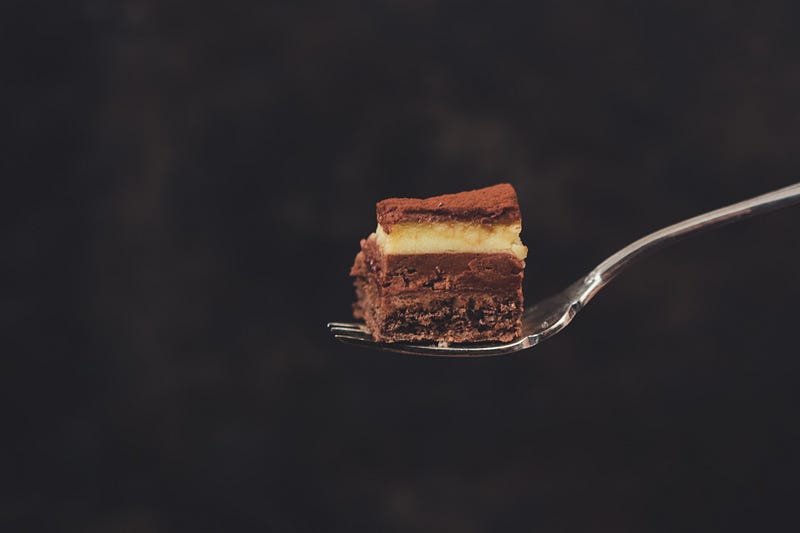
You’re at the table of food, looking over your options. The voice in your head is inspecting how much space you have on your plate versus all the available choices. You want to eat everything. What would happen if you had just one bite of every option? The highest satisfaction you get will be from that first mouthful anyway, so why not just keep it there?
The second and third (fourth, fifth, etc) are going to have the same taste, so why do you need to eat more of it? What is the reward if it’s all the same after the first mouthful? If your goal is to taste, then one mouthful is the key.
But there’s more to it than that. Capitalizing on that one single bite means you have to be laser-focused on your taste buds. That might not be possible at a holiday gathering. There are a bazillion different inputs happening around the meal; you can’t exactly excuse yourself to go sit quietly and have an emotional connection with your food. I mean, ideally, you can and probably should, but the reality is that it’s highly unlikely. The meal is centered around connection and going to isolate yourself is kind of counterproductive.
What can you do then? Sit, gather, be merry, but be quiet. Take a few long breaths before you pick up your fork (most people won’t even notice you’re doing this). Move slowly. Focus your attention on what you’re eating. Chew (people on average only chew 6–10 times before swallowing). Chew some more. Count to 30 in your head. Take another bite. Have a short side conversation before you move on to the next bit of food. Let your brain register what you just ate.
If you slow down and pay attention, you probably won’t want more anyway (and if you do, then who cares, just eat it mindfully).
The more you eat the worse you’ll feel
How many times have you overdone the quantity of food and then needed to unbutton or change clothes? I’ll be the first to say that I’ve done it more than I care to admit. I invite you to explore the emotional satisfaction that comes with eating a huge plate of X.
Why might the feeling of being stuffed be more of a reward?
The fuller you get, the less comfy you are. And if you’re a folk who is working on the aftermath of overconsumption (i.e. your inner critic is a jerk and will rake you over the coals for what you did), your discomfort will compound.
Tip: use the hunger scale to gauge how much you’ve eaten. You can also make a deal with yourself to have one plate full of whatever and then be done.
Future focus — how do you want to feel in two hours? Stuffed to the gills, or able to sit at the table and chat with your loved ones undistracted by digestion?
Consuming more & happiness
It’s dessert time. You’ve got a plate of trifle, a brownie, some cheesecake, a Nanaimo bar, and some chocolates (I speak from experience). A pile of sugar that your pancreas will have to deal with for the next 8 hours, but your mouth and reward center are both lit up like the Christmas tree in the corner. You’ve waited all year for this. Let’s go.
The issue is once you’re halfway through the choices your brain kicks in and realizes that perhaps this wasn’t the most productive thing. But you’re a completionist, so you keep eating. Nearing the end of the plate, you are not feeling so hot. Sugar shakes are setting in and maybe so is the regret. You crested the peak of happiness and went into the downward plummet of dissatisfaction. Maybe all that wasn’t necessary?
There’s a point where you get the most satisfaction, and then it falls off a cliff into the opposite feeling. I invite you to pay attention while you eat, slow down your bites, and increase your chewing. You’ll more easily know when enough is enough. Your digestion will thank you.
All this is said with no judgment. Do you want to eat your face off with consequences be damned? Knock yourself out. I’ve been there.
Eating mindfully, slowly, breathing, chewing, thinking, feeling, enjoying, and making your meal an experience might be the game changer for you.
One bite might be all that you want and need.