
How to Use Personal Geographies to Enhance Your Writing
And draw narratives from lives mapped and lived like stories
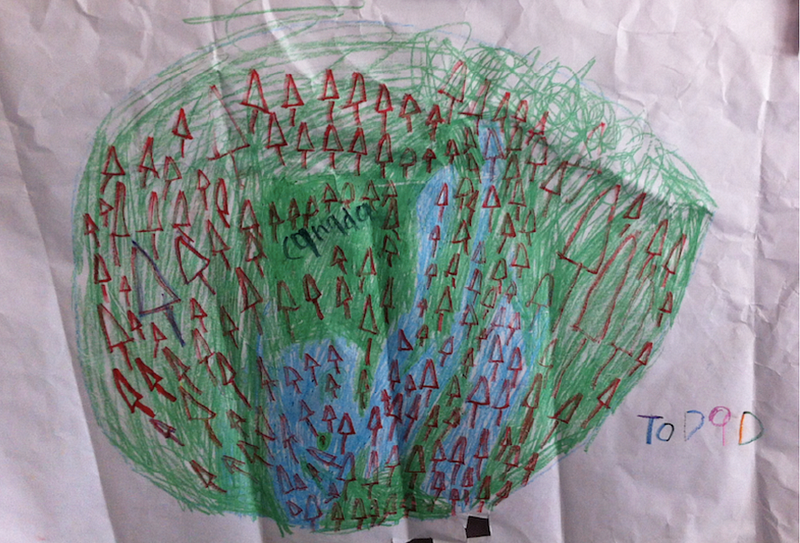
This map above is one of my favourite maps ever made. It’s on a large sheet of paper (flipchart-size). It was drawn by my daughter when she was about 4 years old (she’s now in her late teens).
At the time, it was her representation of what Canada was to her. It was one version of her personal geography. She has a much different view of Canada now — and if I asked her to draw a map it would look vastly different — as would some of her representations of her personal geographies.
For one, there would most likely be borders and straight lines and provinces and cities.
That’s what happens when we become schooled. Yes, there are benefits to schooling, but it also tells us how to see the world. It tells us where we are positioned in that world and how orderly everything is supposed to be around us.
What are Personal Geographies?
They are the internal maps we each construct, not just the physical spaces we move through, but also our experiences, relationships, and the emotions that give size, shape, and colour to our world.
These ‘maps’ are always shifting. They ebb and flow based on our senses, perceptions, memories, and the many narratives we tell ourselves — and more.
They are also deeply influenced by outside factors such as the families we live in, come from, and interact with. The communities, institutions and organizations we interact with across our life. Like schooling, healthcare, justice, and so on.
And, the larger structures that guide and dictate our lives — such as nations we live in, citizenship, official and unofficial languages, and so on.
As well as, by both our perceptions of time and reality of time (e.g., it never stops its relentless march forward).
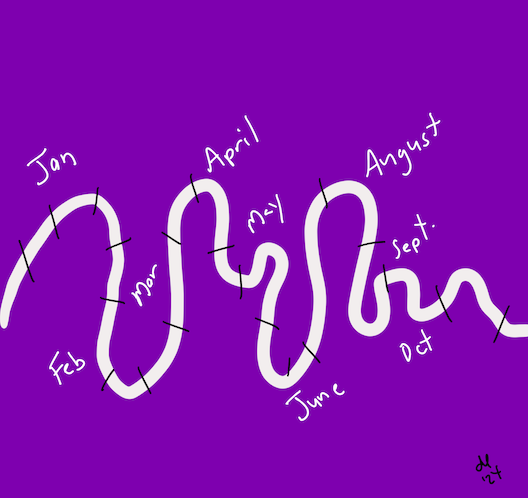
Our personal geographies often defy the rigidity of borders and the constraints of scale — yet, paradoxically, they define it as well. For example, if you live in the United States try walking up to the Canadian border (without a passport or ID) and see what happens.
These personal geographies are always changing — through the constant shifting of our pasts (which grow by the second), of our Now (always present), and the shrinking (by the seconds) of our futures.
(That last one may strike a chord — it’s supposed to).
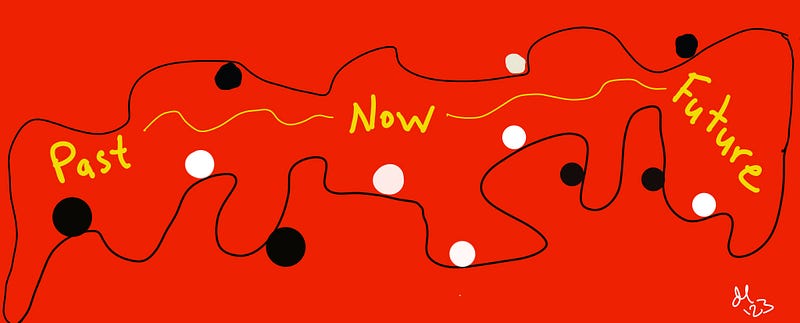
Personal Geographies and Identity
Our personal identities are not static. They shape-shift through what we do, who we meet, and where we go. They also transform and change as we gain more experiences in life — and, make certain choices.
For example, my life and identity changed dramatically when my first child arrived in the mid-2000s. A new identity of “father” was added. Then when I got married in 2009, I became a “husband,” “step-father,” and then we added a third child into our family.
The identity changes were not only personal — they are legal too. For example, I’m not married to my daughter’s mom. Based on the legal realities where we live, and our incomes, I pay a monthly amount for child support. Identities can be legally defined as well.
Added to this, over the last two (and more decades) I’ve completed university degrees (becoming a doctor of education), been a consultant (Solopreneur), and then a public sector administrator (for almost a decade), and now Solopreneur (again).
These are only a few of the experiences, narratives, and identities that continue to ebb and flow across my personal geographies. As life moves forward — along with time — experiences continue to accumulate. They become layered and stratified like dust and soil on landscapes and sea bottoms.
Self continues to be fluid. And, yet, many folks can get stuck in a steady, solid, static sense of Self.
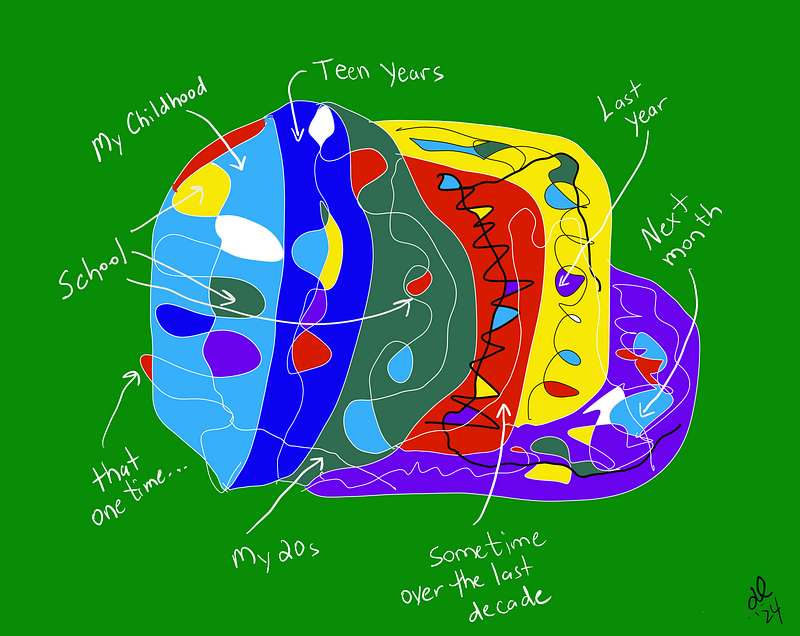
- “I am a plumber”
- “I am a teacher”
- “I am Canadian”.
- I can’t write. I can’t draw. I’m not creative. (And so on)
These personal narratives can often be glum, defeating, limiting, and more. And, before we know it, a decade has passed.
Mapping personal experiences, and exploring our personal geographies can be a powerful way of opening our lives to more possibilities, more exploration, new ways of navigating, and getting to know (as well as drawing) new landscapes and new territories.
Mapping Personal Experiences
From the moment we are born — we are situated in place. Our place of birth will — more often than not — dictate much of our lives. From citizenship through languages and identities — to decisions, options, and choices.
My older sister, for example, was born in Hawaii, even though both my biological parents were Canadian (from Ontario). She navigated dual citizenship (Canadian and American) up until she died in 2017.
I have a niece, who was born in Beijing, China even though her mom is American and her dad (my brother) is Canadian. She was also born scarily premature. My brother was visiting coastal British Columbia when it happened and got to experience the many challenges of entering a foreign country on emergency short notice.
From the moment our lives begin to the moment they end — Life gets mapped in unexpected ways and, in turn, maps impact our lives in unexpected ways. A flowing series of conscious decisions and happenstance, borders and passports, ports passed and expired visas.
Libraries of maps build with each experience in the days that pass — and unexplored territory reveals itself in days to come. The future is always, always unknown.
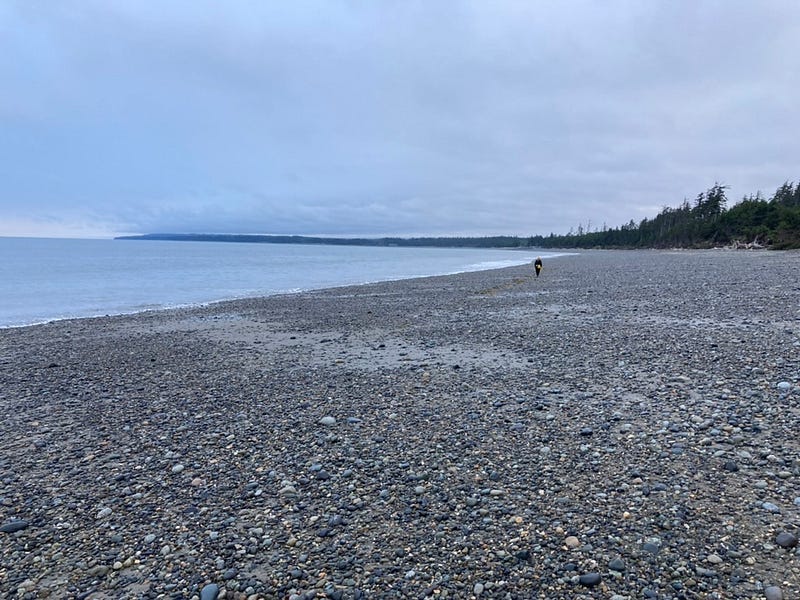
I consider myself fortunate in that I have experienced a lot of different and varied geographies across my life. I was born on the Pacific Northwest coast of North America. I lived much of my childhood on isolated islands about 80 km off the coast of northwest British Columbia.
My childhood was one of oceans, coastlines, beaches, and deep green forests with massive trees (coastal rainforest). The image below is our youngest son walking the beach where I spent much of my childhood.
(This was the day after we had said goodbye to my mom as she moved to the next stage of her journey in the universe).
And all three of our kids on a forest trail near where I spent my teen years. This picture is from the same trip just a few days after my mom’s passing.
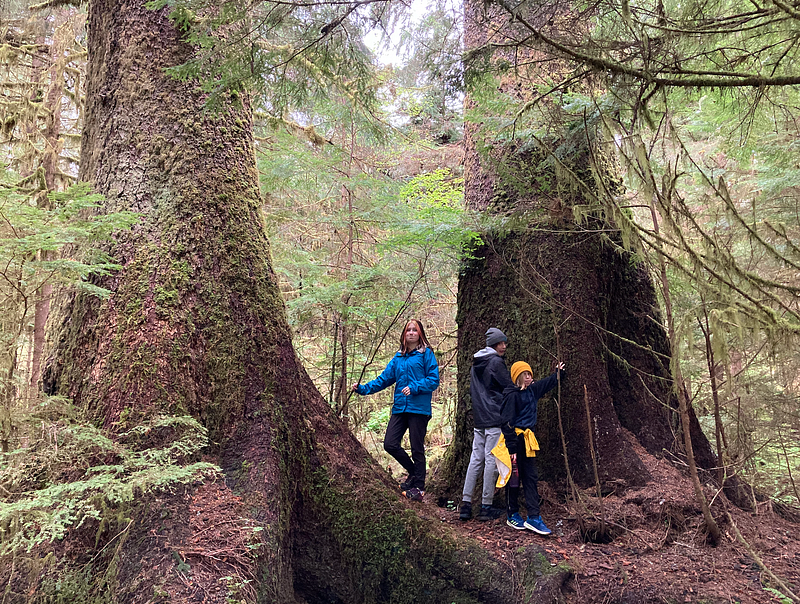
Navigating challenging times in life — such as the passing of siblings, parents or other loved ones — can often be greatly assisted by certain geographies. (It can also be a detriment for some too, e.g. traumatic memories).
I’ve done a lot of travelling and experienced a lot of varying geographies.
From living in the Yukon for several years in my late teens (after moving out young — before I was done high school) — to Australia when I was 19 — all across the western US states through my early 20s — Belize and Guatemala in my late 20s — a 10,000 km solo bicycle trip from the Arctic to Los Angeles in my early 30s — China, Singapore, Bali, Finland, Germany, Austria, Mexico (at various points in my 30s and 40s).
I’ve also lived in a tent for a good solid portion of my life. As a child, for a couple of summers when our mom (single at the time) cooked for trail-building crews working in Provincial parks (where she then met our stepdad).
And, through much of the summers of my 20s as I planted trees and supervised treeplanting crews working throughout the interior of British Columbia.
Plus the summers over three years in my late 20s, as I rode my bicycle through the Northwest Territories, Yukon, Alaska, British Columbia, Washington, Oregon and California. 👇
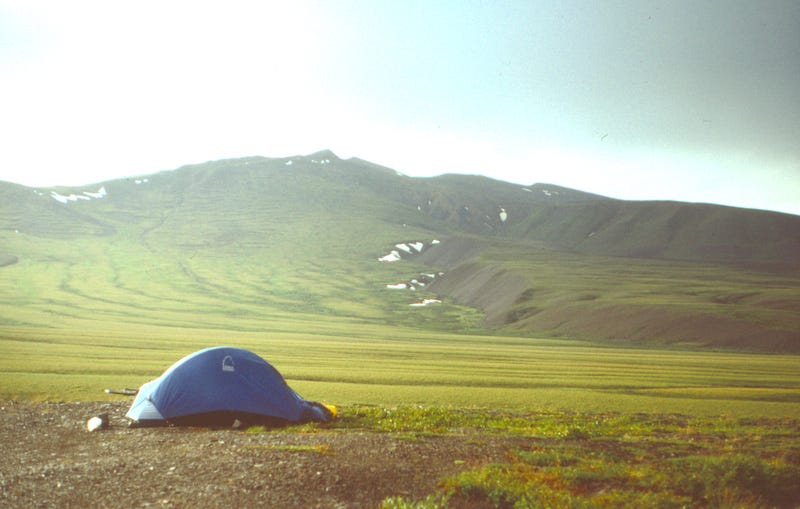
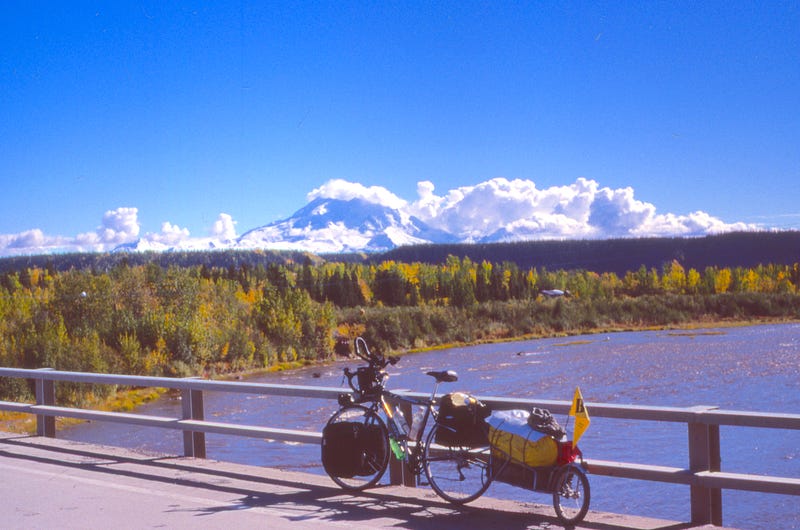
I’ve also worked in many remote Indigenous communities in northern British Columbia and the Yukon. Spectacular geographies and experiences of geographies through the lenses of people with stories of thousands and thousands of years wrapped into those landscapes.
The metaphor often used is Worldview.
Worldviews are always based in place (and space). They are place-based views, which means they are geographically situated. And, we too, are situated in place. Thus, the power of exploring, reflecting upon, and drawing upon personal geographies.
Writing as a Tool for Personal Geography
For close to 3 decades I’ve kept various forms of journals. One of my first was a day planner that I jotted notes in when I was travelling in Australia for a year when I was 19.
I’ve always kept a travel journal when I’ve been travelling. On my 10,000 km bicycle trip, I kept detailed notes and sketches of my trip. (Of which, I’ve intended to put into a book form for 20 years since completing the trip.)
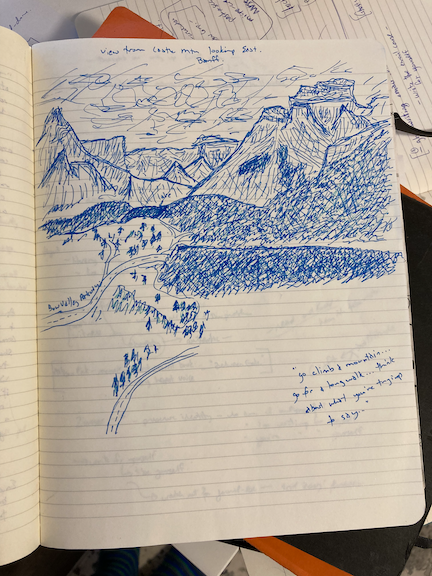
Over 2 decades ago, I started to call any of my notes, writing, and journals — Learning Journals. These have now become a library of experiences, notes, memories, writing, and personal geographies.
For years, writing has been my way of mapping life. Words on paper (sometimes screens and saved digitally) are the charts, maps, and explorations on this life journey.
The process is straightforward: think, write, read, and understand a little better. It’s not fancy, but in the relative plainness, there’s truth. Or at least truths from those times in which I wrote them. The pain of breakups and tough decisions in life. The ups-and-downs of experiencing loss and gains.
We often think we’ll remember various events and situations in life. They can remain fresh for a week, a month, or maybe even a few years. However, after a decade or so, many of those will fade into the mist, or get absorbed into the smaller-scale maps of time and experience.
Now, as someone who writes full-time for a living — and builds digital writing businesses from scratch — the boxes of journals are an incredible library of ‘maps’ to draw from for current creative projects and initiatives.
Added to this, having a habit of documenting, thinking, and reflecting — in writing, sketching, and drawing — I can continue to document current experiences, which then become maps and geographies to draw upon in the future.
Navigating Your Life “Lived Like a Story”
One of my favourite book titles is written by Canadian anthropologist Julie Cruikshank: Life Lived Like a Story: Life Stories of Three Yukon Native Elders.
It was written in collaboration with Elders Angela Sidney, Kitty Smith, and Annie Ned. The book explores their collective stories of lives and experiences across almost a century of living (each). A time of great change, in people and landscapes. The narratives are deeply place-based.
Here are a few prompts you may consider using to fuel some writing about personal geographies:
1. The Places of Your Past
Think of the first place you remember living — how did the sights, sounds, and smells shape your early memories? Write about how this place has stayed with you over time. Does it still influence your dreams and choices?
- Reflect on how this childhood geography has etched its lines into the map of who you are today.
- (Keep in mind this may be traumatic for some of you — so use this prompt with care)
2. Intersections of Relationships
Consider a relationship that significantly impacted your life. It could be a lifelong friendship, a brief but intense love, or maybe a challenging rivalry.
- Map out the journey of this relationship, noting high points and the low, the crossroads, and the destinations reached. How has this connection redrawn the borders of your personal world?
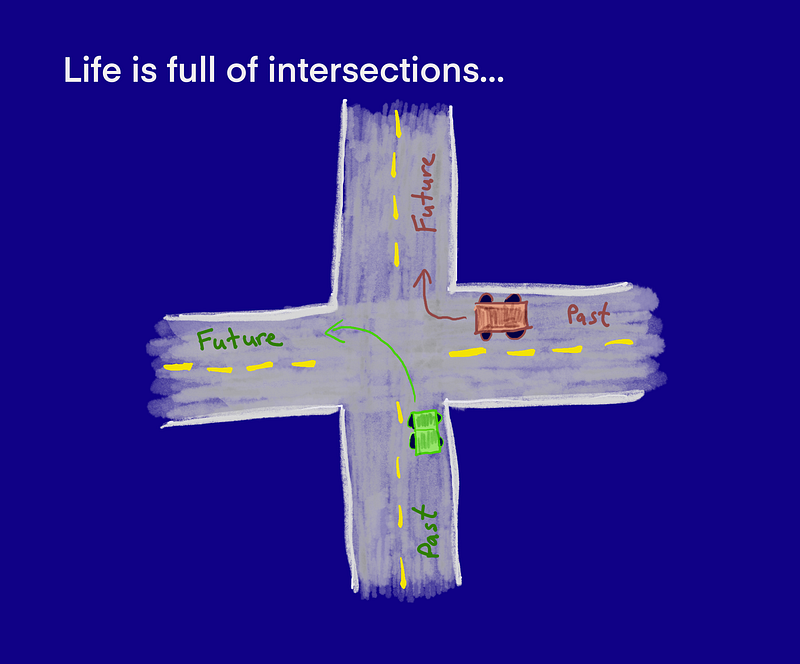
3. Mapping and Wording Your World
Draw a map of your personal world— not as it actually is — but how it feels. Include places that hold special meaning, people who are landmarks in your life, and events that have been crossroads.
- Then, write about each element you’ve drawn — describe why they’re significant and how they’ve contributed to the narrative of your life.
This exercise isn’t just for reflection. Consider using your map and accompanying writings as material for a creative piece. It could become a personal essay, a poem, or the starting point for a memoir chapter — weaving together your various personal geographies.
Place and Space Guide our Identities
Personal identities are deeply connected to place and space — in other words: personal geography.
Identity is a complex intertwining of many things including place of birth, ancestry, education, wealth, health, income, and the places where one lives, all contributing to the development of personal geographies.
By exploring and mapping these landscapes and geographies through writing and other creative expressions, we are documenting our journey (like an explorer) and opening doors to new perspectives and deeper self-awareness.
Our maps are never complete. They continually shift and change, just like our lives.
A wonderful book to explore this further: You are Here: Personal Geographies and Other Maps of the Imagination, by Katherine Harmon (2004)
David Loewen writes and publishes daily. He publishes Free weekly Issues on Box Cutter Co. sharing experiences and systems for building a digital writing business from scratch.


