
How to Use Drawings to Boost Your Imagination
Learning how to draw Rakugaki, a Japanese drawing style
Four years ago, I started the Learning Lab challenge 🚀, basically every 1 or 2 months I learn about a new topic and build something related to this topic. I don’t have a strict criteria to choose a topic, it depends on how I feel, the skills I want to develop, the new innovations to explore, or it can be just about my level of curiosity. As a developer and designer, I wanted to deepen my design skills. I thought that learning how to draw could help with that 🤔.
A few years ago, I went to a design fair in Paris and I found on a booth a book called “Become a Rakugaki expert: Develop your imagination through drawing”.
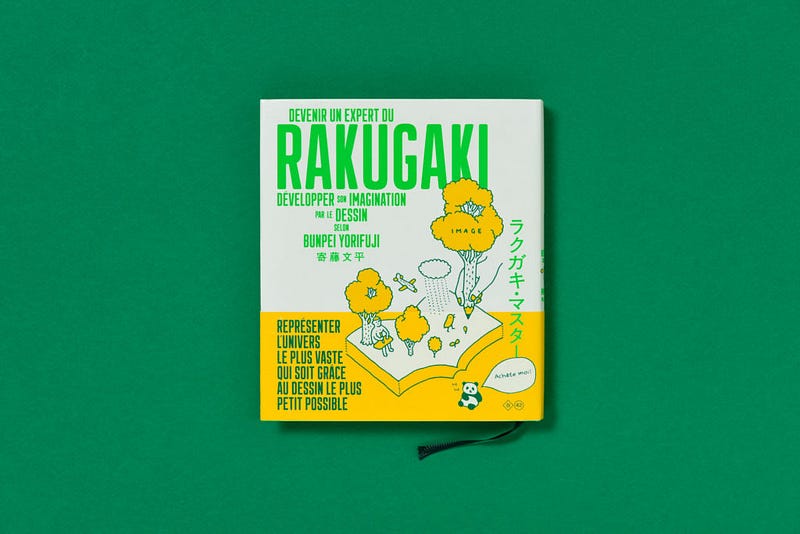
I opened it to check inside and it just looked amazing 🤯. It was a book about using this Japanese drawing style called Rakugaki§. I wrote the name down and I said to myself, one day I will buy this book and learn Rakugaki.
Here we are now, on the path to learn Rakugaki, my 15th learning of the Learning Lab challenge.
Learning preparation
This learning preparation follows the Learning Lab methodology.
- Finding a mentor I didn’t really look for a mentor this time 😬, I felt a bit like the Rakugaki book was my mentor.
- Defining the scope of the topic The scope was pretty simple. Learn everything from the book and be able to draw anything with this Japanese style!
- Choosing a learning resource It’s pretty obvious this time, I used the book Become Expert of Rakugaki — Bunpei Yorifuji, unfortunately, it seems that it’s only in French, Spanish or Japanese.
- Defining a project My initial project was to write an illustrated book about mental models. But because it will take time 🙈, I reduced it to a sample of this book (and I will release the book later).
Boost your imagination with Rakugakis
What is Rakugaki
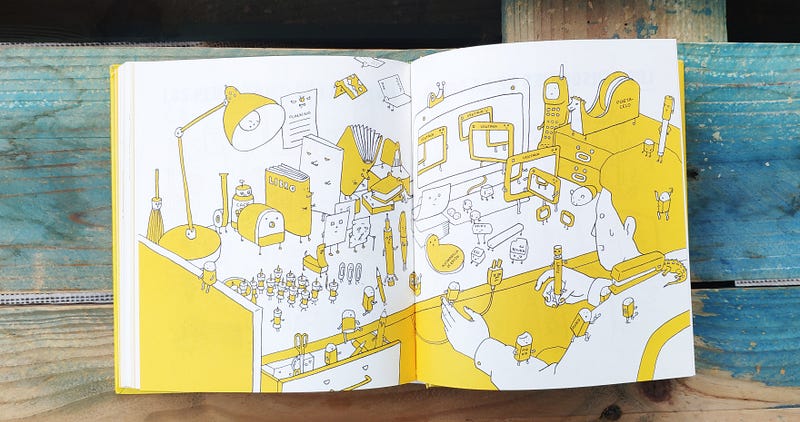
Rakugaki is a Japanese style that uses very simple drawings to represent complex situations with a lot of little details around.
Since a picture is worth a thousand words I let you see how it looks.
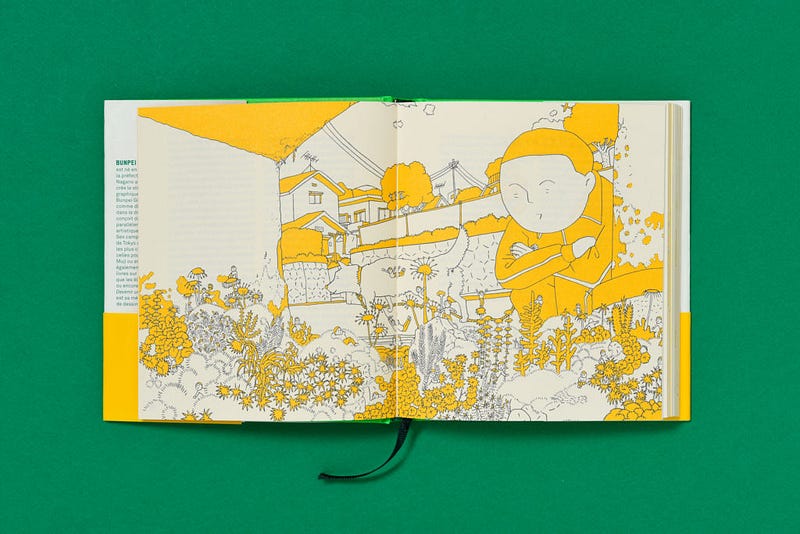
I probably took one of the most complex examples of the book. But taken apart, every single element of this image is simple to draw, and the book teaches you how to make each of these items.
How did I learn?
The book takes you, step by step, into the Rakugaki world.
The good thing with Rakugaki is that you don’t need to be skilled, you can start from scratch 🙌!
You will start by drawing simple lines, and see how to shape them into basic shapes, and understand the basic perspective.
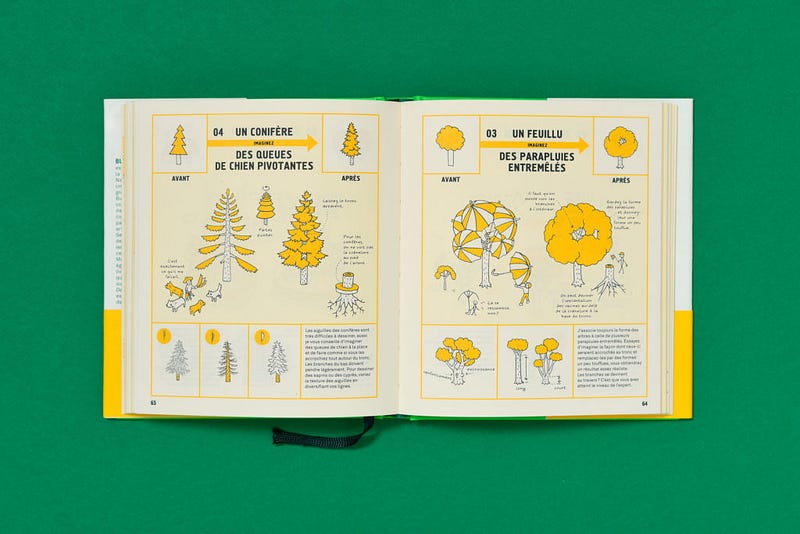
Then it teaches you how to make the simplest items such as a leaf, a tree, a forest, a lake, clouds, and some animals. Each of these is explained in a funny way, to better remember how to do it. You can see two examples below.
Then it goes more complicated about how to draw humans, and show emotions on them by playing with their position, torsion, and posture.
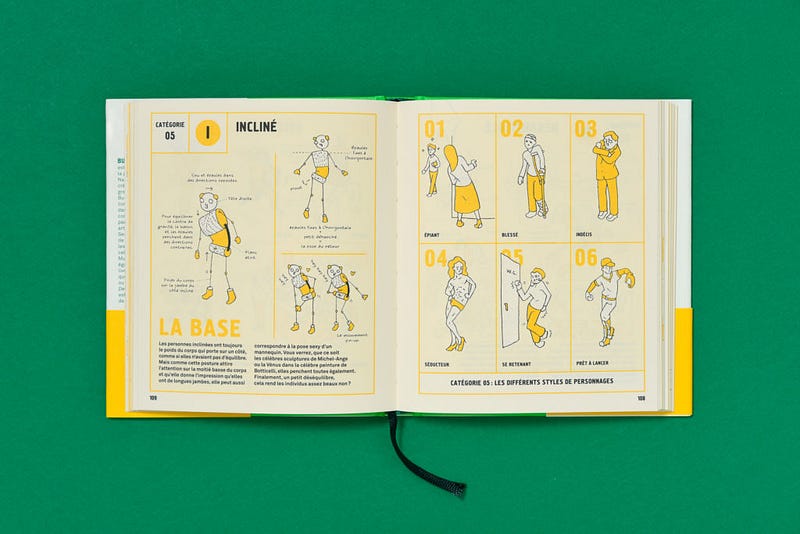
Then it goes more into details such as how to draw muscles, fat, clothes in a very simple way.
Finally, it ends up turning objects into “humans” and makes a crazy composition with all the things previously learned.
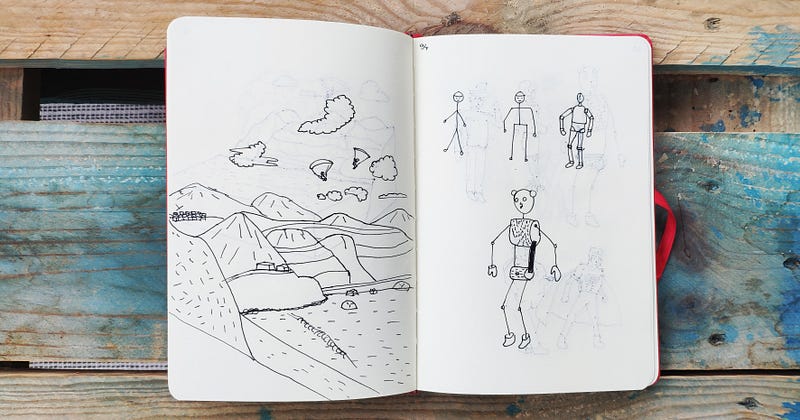
For each of the examples and the tutorial of the book, I tried to replicate it on my little notebook. I even did my own representation of the view from my window 🏝️. When drawing something, you need to think about what you see but also think about what you don’t, that is the creativity boost provided by Rakugaki.
The secret to making good drawings
Reading this book and practicing at the same time took me a lot of time.
But, that was very interesting and I will remember a few points that make the difference between an average drawing and a good one:
- When doing a shape, always close the line, don’t leave an empty space (except if it’s part of your drawing) and in the same way, don’t overflow when you close your shape!
- When you draw someone always put some lines in the clothes, it adds a little plus that makes it look very good.
- To draw properly someone in a situation (playing football) you need to put a lot of effort into reproducing the posture, the torsion in his body, and the tension in his arms and legs. It’s something that they show you in the book and it is the hardest to master.
- To draw a landscape or a situation, add as many small details as you can, it makes it more alive.
- Finally, instead of having only lines, fill some shapes with a plain color (like in the book).
The project
I initially wanted to write a book of mental models. Why? Because drawing them will make me memorize them better. But because there are so many mental models, it will take me some time, probably a few months, to draw them all. So, in the meanwhile, I decided to publish a sample of it 🙌.
What is a mental model?
A mental model is some sort of algorithm to understand situations in a better way. For example, there is a mental model called the “Decoy effect” it’s often used against you to make you spend more money. Being aware of that will make you make wiser decisions!
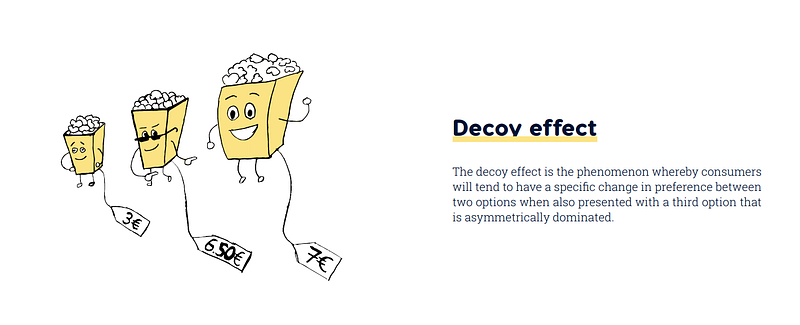
See a preview of the book
You can see a preview of my future book called Brain Patterns on its own website: https://brainpatterns.learn.uno/ 🚀
If you liked this post, please click the clap 👏button below a few times to show your support! Also, feel free to comment and give any kind of feedback. Don’t forget to follow me!


