
How to use ChatGPT and Midjourney as a Writer the Right Way
And how to build your brand
The debate rages around the use of AI, the AI-produced crap filling the world, and the ethics of it all. I agree that some of those topics need to be sorted out.
But while that is happening, there are plenty of good ways to use generative AI, especially for writers.
Let us be clear from the start — I am completely against using AI to do your job for you. You ask AI to write an article for you, and you screwed yourself right there and then. It is the same with AI-generated images; if you typed one prompt, got the result, and walked away satisfied, you did nothing good for yourself.
But using AI to improve your work is an entirely different thing.
Here is what I mean. I dreamt about being a writer since I was a kid. My imagination was sloshing with stories, sagas, actually. Epics. Yet life happened, and I became an engineer, scientist, photographer and artist.
And now, finally, I started to write. Well, a few of my stories have been published before, and I self-published a few things, too, but writer I am not. Not yet.
And if I tell ChatGPT, Sudowrite, or Claude to write for me, it will just steal and ruin my childhood fantasies and dreams. To be a writer, I have to write.
But there is so much I do not know about writing. It is one thing to spill your thoughts on paper and another thing for it to be readable stuff.
Ai came as unexpected help. ChatGPT turned out to be not a bad critic, either. To my surprise, it picked even subtle innuendos and jokes in my writing.
It also picked the things I did not — the story flow, language rhythm and variations, vignetting and transitions. To be honest, there were times I did not know what one or other term exactly meant. And it turned out to be an excellent teacher.
AI even helped me with one of my most peculiar demands: to keep my language intact. I am not a native English speaker (you probably can tell). It is a third language I learned and one of the four I use daily.
I do not want my language to come out on paper any different than I speak. I do not want to pretend to be an English speaker. Don’t ask me why; I have no clue, and it is probably stupid anyway.
But AI does help me retain my odd sentence structures and cumbersome wording while keeping me from completely ravaging English grammar. Right or wrong, good or bad, AI is helping me develop my own unique voice on paper.
And none of these things could be rationally objected to by the anti-AI movement. I do my writing; I work on my own style; I do the work. The smart-arse thing is helping me, not doing my work for me.
Admittedly, most of the people who will read this stuff and consider themselves to be writers are working on short-form stuff — articles, blogs, and short stories for Medium. Not Writers, just writers.
And from that perspective, do we need all that high-flying stuff with vignettes and flows, transitions and voices?
Well, if we talk about one single article, we might not need any of that. But our goal is a bit bigger than that, is it not? We want to attract readership, followers, returning readers and so on.
And if you think about that, it is well worth using the whole shebang of tools and methods to achieve the goal. Your voice and your style are parts of your branding. It is good to be distinguishable from a thousand other writers.
Hell, it is even a good idea to do a whole world-building throughout your articles. Employ the hero’s journey and save that damn cat, too, while we are at it. Follow the rules of “cosies” to make your readers feel good, even if you write about crochet.
That is where AI, like ChatGPT, could be a very useful tool. It is possible to brainstorm these ideas, find the ways to do it, and make that thing help you stick to the program.
The same is true with image generation using AI. It is not art yet; that much is true. It might never be; the future will tell. But it could be a very, very useful tool in developing your style and brand and building your world.
I recently read a few articles about Google ranking, user satisfaction, and other messy stuff of that sort. The thing is, even the Google search engine does not like too much white space; it needs to be dotted with pictures. Preferably original ones.
That’s where Midjourney, or another generative AI tool of your choice, could be a very powerful ally.
The task is not to create art nor to compete with photography. The task is to create visual elements for your story, elements that match the style, mood and atmosphere of your story.
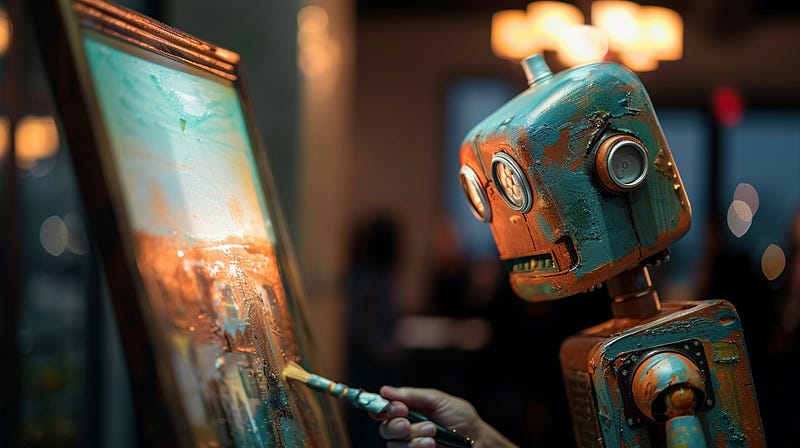
It can also help you enhance the perception of your brand as long as you are consistent and put some effort into it.
There are tons of articles written about the art of YouTube thumbs, with plenty of logic behind it. I do not see why it should not be applicable to writing on Medium or blogging. The marketing and branding principles remain the same.
I am blessed with a visual mind. I form images in my mind before the words. But it might not be as easy for other people. That is where a combination of tools might be of help.
You can copy and paste your whole article in ChatGPT, tell it to analyse it and ask what would be a good visual banner for it. Ask to describe the mood and atmosphere, ask to come up with a visual icon.
You can highlight one specific paragraph and ask to create a visual description for it. Or you can give two paragraphs and ask for a visual transition.
You really can do so many things that will make your articles better, while they will remain your articles, written and created by you.
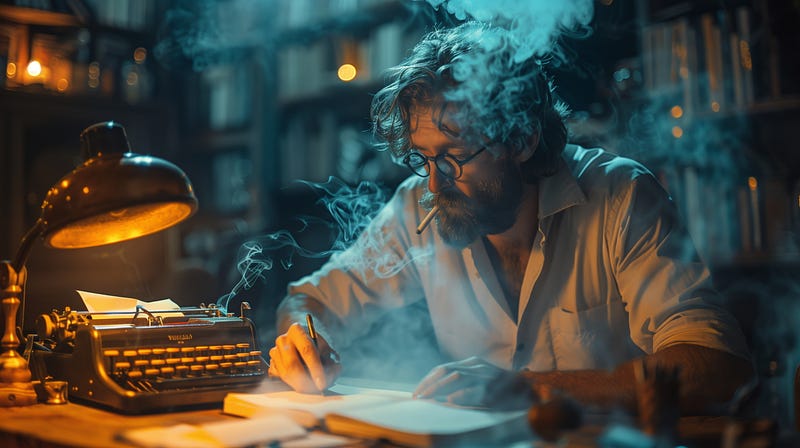
The images you create this way will be more related to your writing and might help enhance the atmosphere and define the mood. And you might end up building up your own world that readers would love to come back to.
Who cares if those pictures were not art? They were just colourful spacers inducing mood. But those pictures will be much more original than a standard set of free stock images, and they will rank better, too.
So here you go: don’t wait for arguments about AI to settle; use those tools in an intelligent, creative way, and you might end up a winner.
Please let me know if you would be interested in the more detailed article on how I use ChatGPT or work with Midjourney to do the things I mentioned above. Or share your own ideas about it all — that would be great.
Please clap and highlight; it will help.
Aivaras Grauzinis


