avatarJennifer Clinehens

Summary

The web content provides a curated list of six essential TED Talks that explore the application of psychology and behavioral science to enhance customer experiences, offering insights for professionals in design, strategy, consulting, and marketing.

Abstract

The article introduces six TED Talks that serve as a valuable resource for those interested in applying psychological principles and behavioral science to improve customer experiences. These talks feature renowned experts like Nobel laureate Daniel Kahneman, psychologist Barry Schwartz, and behavioral economist Dan Ariely, who delve into topics such as the dichotomy of experience versus memory, the paradox of choice, the pursuit of happiness through product variety, and the irrationality of decision-making processes. The content emphasizes the importance of understanding human behavior to make better decisions in various aspects of life, including economics, public policy, and personal satisfaction.

Opinions

  • Daniel Kahneman suggests that our 'experiencing selves' and 'remembering selves' perceive happiness differently, which has significant implications for our self-awareness and decision-making.
  • Barry Schwartz critiques the notion that more choice equates to greater freedom and happiness, arguing instead that an abundance of choices can lead to paralysis and dissatisfaction.
  • Malcolm Gladwell illustrates how the food industry's quest for the perfect spaghetti sauce reflects broader insights into consumer choice and contentment.
  • Dan Ariely challenges the idea of human rationality in decision-making, using visual illusions and research to demonstrate our predictable irrationality.
  • Rory Sutherland advocates for paying attention to small, often overlooked details that can lead to more effective and less costly solutions than grandiose schemes.
  • Alex Lasky presents an innovative approach to energy conservation, leveraging behavioral science to show how knowledge of neighbors' energy costs can motivate individuals to reduce their own consumption and bills.

How to use psychology to perfect your experience — 6 essential TED talks to watch now
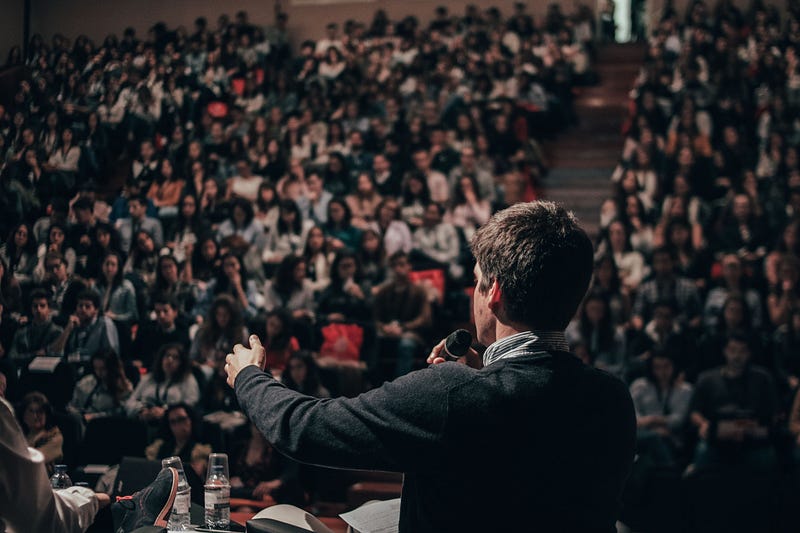
Photo by Miguel Henriques on Unsplash

Are you a designer, strategist, consultant, or marketer who wants to learn more about applying psychology and behavioral science to the customer experience? Not sure where to start?

Below, I’ve shared some of my favorite TED Talks that serve as a great introduction to the principles and use cases for applying behavioral science.

1. Daniel Kahneman: The riddle of experience vs. memory

“Using examples from vacations to colonoscopies, Nobel laureate and founder of behavioral economics Daniel Kahneman reveals how our ‘experiencing selves’ and our ‘remembering selves’ perceive happiness differently. This new insight has profound implications for economics, public policy — and our own self-awareness.”

2. Barry Schwartz: The paradox of choice

“Psychologist Barry Schwartz takes aim at a central tenet of western societies: freedom of choice. In Schwartz’s estimation, choice has made us not freer but more paralyzed, not happier but more dissatisfied.”

3. Malcolm Gladwell: Choice, happiness and spaghetti sauce

Tipping Point author Malcolm Gladwell gets inside the food industry’s pursuit of the perfect spaghetti sauce — and makes a larger argument about the nature of choice and happiness.”

4. Dan Ariely: Are we in control of our own decisions?

“Behavioral economist Dan Ariely, the author of Predictably Irrational, uses classic visual illusions and his own counterintuitive (and sometimes shocking) research findings to show how we’re not as rational as we think when we make decisions.”

5. Rory Sutherland: Sweat the small stuff

“It may seem that big problems require big solutions, but ad man Rory Sutherland says many flashy, expensive fixes are just obscuring better simpler answers. To illustrate, he uses behavioral economics and hilarious examples.”

6. Alex Lasky: How behavioral science can lower your energy bill

“What’s a proven way to lower your energy costs? Would you believe: learning what your neighbor pays. Alex Laskey shows how a quirk of human behavior can make us all better, wiser energy users, with lower bills to prove it.”

Design
Startup
UX
Marketing
Business
Recommended from ReadMedium