
How to use a Potluck Spirit to Cultivate Social Connections
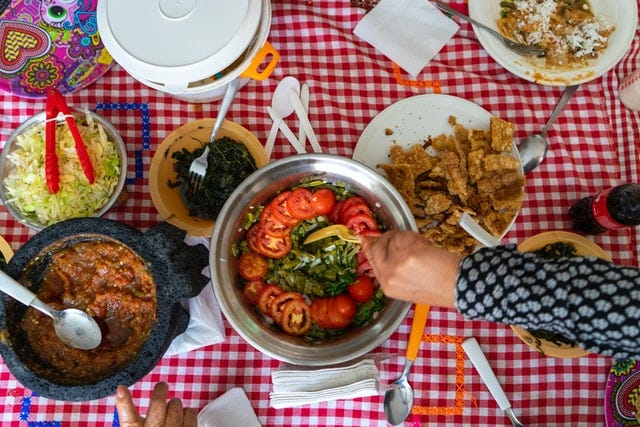
Potlucks make me uncomfortable. This is crazy considering how much I enjoy hosting (and attending) food-centric events. I do not think that it is due to a ‘letting-go-of-control’ issue for me. Nor is it a ‘concern-about-cleanliness’ issue. My concern is for the people on my guest list. It’s an ‘I-don’t-want-to-impose-on-other-people’ issue.
Typical reactions like, “What do I bring?” “I am pretty busy that week, do I need to bake something?” or “I don’t want to bring something someone else is bringing, can you tell me what everyone is bringing?” make me wonder if my invitation is an imposition. I can hear the stress in their voices. When I host a gathering, I want the event to be a gift, not a burden.
To test if I was alone in my discomfort, I googled, “Why do potluck dinners make me uncomfortable?” and a whopping 2,150,000 results came back in less than a second! Obviously, I have some company.

However, because potluck dinners are a natural and easy way to bring people together, build community, and improve our social health, it is time for me to conquer my discomfort. Will you join me in learning a bit more about the potluck spirit?
The Appetizer: The History of Dinner Clubs
Social eating is not a new concept. Our history is replete with examples of food being used to bring people together, including dinner clubs. Not to be confused with Supper Clubs which are typically “underground” restaurants, dinner clubs are regular gatherings in someone’s home oftentimes featuring a themed potluck meal.
There is some dispute about the original meaning of “potluck”. One theory states that it is a derivative from “potlatch”, a North American indigenous communal meal. Another theory claims that the word “potluck” dates back to the 16th century and refers to food provided for an unexpected or uninvited guest, or the “luck of the pot”. It was not until the latter part of the 19th century however that the modern American definition of “a meal of dishes contributed by participating guests for a common table” emerged.

Potlucks are in vogue today. There are specific cookbooks with recipes for portable dishes, articles about potluck etiquette, apps that organize and track invitations, and food assignments for potluck hosts. There is even a reality cooking series that has a potluck spirit: Martha and Snoop’s Potluck Dinner Party.
People in search of improving their social health and social network seek potluck opportunities. When I searched “potluck” on Meetup.com, a social networking platform, I found 135,000 members in 197 groups globally that mention “potluck” in their description.
The Salad Course: The Social Power of a Potluck Dinner
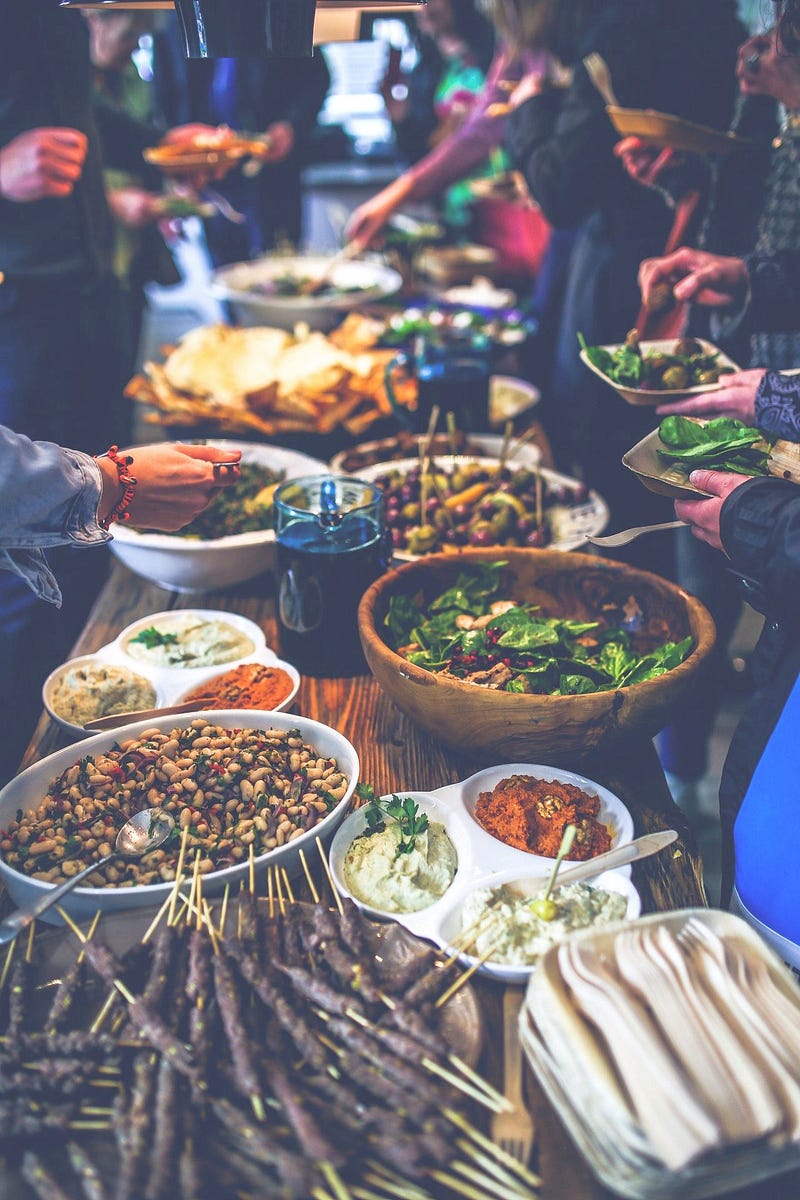
The social power of food is unparalleled as a gathering tool. The act of breaking bread and eating together is an important human ritual that helps to form bonds within and beyond our family and friends. From block parties to town-wide picnics and from meet-the-candidate coffees to dinner clubs, nothing else has the same staying power to bring us together. Used as a strategy to curb social isolation and loneliness, social eating is a ‘hot’ topic as we recover from pandemic-induced quarantine.
Beyond the social benefits of eating together, encouraging guests to contribute to a meal enhances authentic connections and strengthens the sense of community. In addition, a sense of intimacy is fostered when potluck dinners take place in a home, a place for family. The informal nature of a potluck also allows the diners to focus on the connections made and built, rather than other artificial dialogue.
The Main Course: Potluck Dinner Club Models
One of the joys of the potluck spirit is that these gatherings can be casual, sporadic, and under planned. You can throw an invitation out to friends, ask them to bring another friend and with everyone bringing a dish, the “party” is ready-made. The flexibility of the potluck though is that it can also be ‘more’ than a spontaneous gathering. For example, the ‘more’ choreographed gathering can include a theme (e.g., cultural, holiday, celebrity chef-inspired recipes, etc.) or involve a ‘more’ structured meal time with seating assignments and formal place settings. The boundaries of the potluck are definitely amorphous.
For the ‘more’ structured potluck dinner club, the ‘rules’ vary from one to another and oftentimes evolve over time. They dictate the degree of formality, the place, how many people are included, and how recipes are chosen, for example. No matter the rules though, the clubs have the same focus — deepening existing friendships and extending social networks.
Potluck dinner clubs come in all shapes and sizes. Here are a few examples:
1. Celebrity Chef Themed Potluck Dinner Clubs: Whether it is called a Cooking Club or a Potluck Dinner Club or something else, the potluck spirit is there if guests are walking in the door with a dish to share. I learned about one Cooking Club in particular that has roots in the potluck spirit when I interviewed Will, a friend-of-a-friend.
After watching an episode of Oprah that was focused on the association between happiness and belonging to a club, Will and his friends formed a “club” to join. In a democratic manner the Cooking Club chooses a celebrity chef to spotlight for their gathering, oftentimes tying in calendar themes (e.g., Christmas, St. Patrick’s Day, etc.). Typically, 8–15 people sign up to attend the dinner which rotates among the homes of 3–4 club members with the needed kitchen and seating space. Everyone individually selects and cooks a recipe from the collections of the chosen celebrity chef and brings their dish to share.
2. Musical Chairs during a Dinner Club: During Culinary Communities’ last Feast & Tell event, guest storyteller Erica Bauermeister shared how she incorporates a version of musical chairs at an annual dinner gathering. In the depths of winter, after the holiday season has passed, Erica hosts a pasta night for 30 friends and family members, not all of whom know each other. The guests are seated at tables strewn throughout several rooms in her home. To facilitate conversation and to avoid unsuccessful pairings, cards with a list of names are put at each place setting on the table. The seating shifts from course to course, and the names on the card indicate where you sit for each course. This is a creative solution to the never-ending seating conundrum at any dinner gathering and could be especially fun at potluck dinners.
3. Common Experience Potluck Dinner Clubs: Some Potluck Dinner Clubs expand their goal beyond the social into ‘support’. These clubs focus on grouping people with shared experiences such as a personal trauma or loss to offer community support and foster connections with the aid of a peer host. One example is The Dinner Party, a platform for grieving 20- and 30- somethings who break bread together while having difficult conversations.
Dessert: Wrapping it up
The potluck spirit embraces informality, inviting us to focus on deepening our connections and eschewing the aesthetics of place settings and other distractions inherent to a dinner party. In addition, the collaborative approach of the potluck spirit lends itself to new faces and lengthens our tables. There’s so much to recommend about the potluck idea, it is time I leave my hesitations at the door. I will instead focus on the truth that my guests will inevitably be happy to have dinner surrounded by friends and food; their discomfort over what to bring long forgotten. Potluck, anyone?