
How to Use a Musician’s Work Ethic for Writing Success
Practice techniques writers can borrow from musicians
Recently, I discovered that I can credit my adult work ethic almost exclusively to my childhood piano lessons. I began studying classical piano at the age of six and earned an associate’s diploma as a teenager. I subsequently taught piano and music theory for a number of years. Through these experiences, I have witnessed the impact of good and bad work habits among young pianists.
I believe in working smart, not just working hard. And I believe many of these musical work habits can be applied to other fields, even writing, which is what my adult career has come to. Today, I’ll share these habits and principles with you.
The 10,000 Hours Myth (What This Article Is Not)
First, I want to make clear what this article is not about.
Let’s start by getting rid of the famous 10,000-hour rule. It was popularized by Malcolm Gladwell in his seminal book Outliers. Based on psychologist Anders Ericsson’s research, it is the theory that the key to mastering anything is to practice it well for 10,000 hours.

It turns out that Gladwell oversimplified Ericsson’s premise. The truth is that simply putting in the time to get better at something is not enough. You probably know by now that simply parking your butt in a chair for 10,000 hours isn’t going to make you a talented and productive writer.
This article is about what we should do while our butts are in our chairs, and what works for me may not work for you. I encourage everyone to test and experiment with the techniques I lay out—or to even use them as inspirations for your own work habits. I am still testing many of them myself, fine-tuning and adjusting things as I learn more about my work and writing habits.
If you are interested in the science of expertise, I invite you to dive deeper into the concept of deliberate practice, which underpins many of the techniques I will outline. Much of this is derived from Peak: Secrets from the New Science of Expertise by psychologist Anders Ericsson and Robert Pool.
Without further ado, the following is a writing regimen based on the habits of musicians. Let’s jump in.
Warm-Up

Athletes stretch. Pianists play scales. My writing warm-up entails reading great writing first thing in the morning with a cup of coffee, a ritual I have adhered to for years.
I have a row of tabs in my browser containing all my favourite morning reading outlets. I begin by reading local news because these are often in simple English and 500 words or less. (Remember, my caffeine has yet to hit me at this point.) Then, I gradually move on to more sophisticated, analytic journalism. Some favourites include Vox, The New Yorker, BBC, and The Walrus (a Canadian publication similar to The Atlantic).
My warm-up accomplishes several things: it keeps me informed of what’s happening in the world, it motivates me to get out of bed (coffee and reading are two of my favourite things), and it wakes up the literary and linguistic parts of my brain. Reading good writing also inspires me to follow in the footsteps of successful writers.
But if you decide to do a reading warm-up, try not to fall into the trap of procrastination! If you’re prone to this, I suggest setting up a timer, like Pomodoro, to keep you on track.
Identify and Isolate Your Most Problematic Measures
A common problem among music students is that when they practice, they simply play a piece from beginning to end over and over. Unfortunately, this method is inefficient. Instead, students should pick out the measures they have the most trouble with and practice those first.
Now, no one likes doing this. Who wants to focus on a weak area and have their weaknesses pointed out over and over again? But this is the most time-effective way to progress. Once the student achieves some improvement, they can then incorporate those measures back into the line they belong to, then into the page, and then into the rest of the piece.
I apply a similar principle to my writing practice. After I complete a first draft, I read it over once and make note of areas that give me a red flag gut feeling. I then zone in on these areas and ask questions like: is this paragraph unclear? Is it too wordy? Does the previous paragraph transition smoothly into it and does it transition smoothly out?
This can also apply to story structure: does this plot beat make rational sense? Can I make it more coherent, considering the events before and after? What about it makes me think it needs work? In other words, I zoom in and spot-edit, then slowly zoom out to keep track of the bigger picture.
Of course, writers should only do this type of close editing after the actual initial writing is done. Which leads to my next tactic.
Practice (or Write) in Bite-Sized Chunks

I don’t think humans were designed to focus for long hours at a time. The 9-to-5 workday has made us believe we can, when in fact many of us burn out long before five o’clock.
As a teen, I was putting in, at a minimum, three hours a day of practice on top of school, homework, and extracurricular activities without any respite on weekends. I would sneak breaks here and there — mostly to eat chocolate — but if I could do it again, I would take even more breaks. Practicing for this long is physically and mentally exhausting.
If you’re in control of your workday, consider doing away with the 9-to-5 structure. Work from breakfast to lunch, and then take a break. Take another break in the afternoon to walk your dog, pick kids up from school, or nap. Take a break in the evening to cook and eat dinner, and actually take your time. Then, if you’re up for it, write after dinner and into the night. I find that if I take breaks throughout the day, I still have energy at night and I end up working the same number of hours as a 9-to-5 workday, but with more focus.
Practicing in chunks has been espoused by many coaches, including psychologist Dr. Don Greene and musician Annie Bosler, co-creators of the now-viral TED-Ed video on effective practice. Science also supports the habit of short breaks to help focus. Again, if your breaks start turning into procrastination marathons, consider using a timer method as I mentioned in the warm-up section.
Make Time for Theory

Many young students don’t enjoy studying music theory and music history. (In Canada, music theory examinations are a requirement of the Royal Conservatory and a source of dread.) I understand why: Music theory is difficult, abstract, and resembles math and art at the same time.
Yet music theory can enhance a musician’s practice. Simply understanding how keys work helps players identify what sharps and flats they need to watch out for, and allows them to learn a new piece faster. And understanding music history will help you appreciate the piece you’re playing.
The same goes for writing. Writing is so much more than learning how to write a coherent sentence, just like how piano-playing is much more than knowing when to press a button and make a sound. High-quality, informed pieces involve a wealth of contextual knowledge.
So if you’re planning to write about feminism, for example, do background reading in feminist theory. Working on a children’s picture book? Read other children’s picture books!
Reading often feels like procrastinating because you’re not actively writing, but I believe that as long as what you’re reading has some relevance to what you’re writing, it’s not a waste of time. Still, to keep myself productive, I schedule reading time later in the day when I have already completed the bulk of my writing work.
I find that the more background knowledge I have, the more authority, authenticity, intention, and confidence I bring to my writing.
Develop Your Mental Representations

One interesting thing musicians do is practice away from their instruments. They do this by visualizing themselves playing because the cognitive processes involved in visualization is quite similar to the actual physical action. Athletes also use this technique, as do surgeons.
Other professionals can use a similar technique.
Peak often mentions the importance of mental representation, “a mental structure that corresponds to an object, an idea, a collection of information, or anything else, concrete or abstract, that the brain is thinking about.”
Interestingly, mental representation is especially relevant to writers. Ericsson explores this while reflecting on his own writing process during Peak. When he and his co-writer first submitted their initial proposal, their literary agent did not quite understand their thesis.
This is a common problem: your writing can make crystal clear sense to you but seem muddled to your reader. Eventually, Ericsson and Pool had to go back and completely re-think the structure of their argument.
Some folks may not think of literature as a visual medium. I would politely disagree. Just look at this familiar visual representation, plastered on the wall of every high school English class:
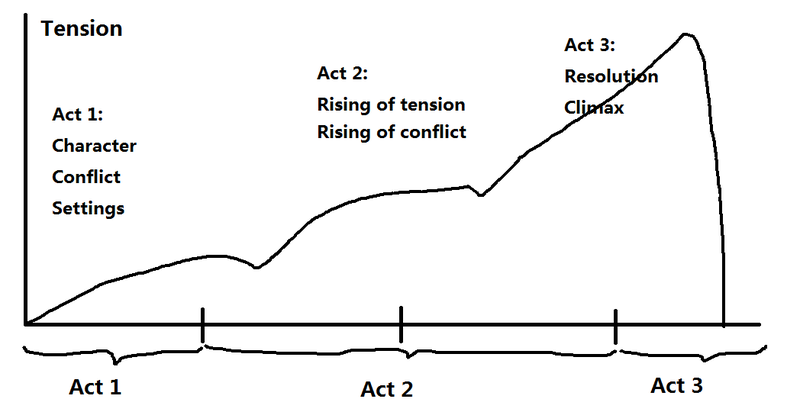
How can writers improve their mental visual representations? I can think of several ideas, including outlining, sticky-noting, and storyboarding. I’m personally shopping for a good-sized whiteboard to plan the structures of future Medium essays.
Case in point, at the time of my writing this piece, I have been brainstorming ideas for a larger project—a novel. I am using InDesign (graphic design software) to make a virtual poster of sorts of my thoughts. Then, my plan is to bounce my ideas off some people whose opinions I trust.
Having a visual representation of your mental representation has the added benefit of allowing you to more easily test-run and explain your idea to others. Running story ideas through your head—mental representations—also allows you to get to know your plot better. A clearer grasp of your plot means a clearer expression of your story.
Practice Performing
Public speaking is a very common fear, but I’m strangely comfortable with it. I attribute this to having experienced performance from a young age. This has allowed me to acclimatize to performing in front of crowds.
Not being anxious in front of people is a highly useful skill in all aspects of life, from enticing investors to impressing a first date. For writers, the equivalent to performance may be getting your writing read and critiqued. I don’t know about you, but the thought of having my writing scrutinized makes me panic a little each time.
It’s important to get your writing read and critiqued by a large audience of strangers. After all, this is the purpose of writing: to be read! But many writers are understandably shy about this.
It might help to gradually expose yourself to more and more critique. Perhaps start with a small group of supportive peers. For me, my workshoppers are old classmates from my undergrad writing program. Having studied and struggled together, these are people whom I trust and whose opinions I respect. We are also at similar points in our careers.
If you don’t have an alma mater of writing-friends, consider poking around your local scene: ask bookstores and online communities if similar-minded writers are interested in writing together.
Then, submit your work to smaller, niche-r publications. My first publications—including my first publications in Medium—were all pretty niche. I owe much of my early success to publications geared especially towards elevating writers of colour and queer writers. Currently, I am working towards getting into more mainstream publications.
If your niche is sci-fi, autofiction, radical feminist poetry, or whatever, start with that — whatever you are most comfortable with and have the most expertise in. It’s easier to perform in front of a small crowd—and a crowd you identify closely with—than it is to go directly for Carnegie Hall.
Another thing musicians do to help them prepare for a performance is to record themselves and play it back. When I do this, I often find that I am not playing with as many dynamics and as emotively as I thought. Similarly, writers can read their work out loud to hear where all the kinks are.
Reading yourself out loud is awkward. Getting your stuff read and critiqued is also awkward. But this awkwardness is good practice, and it will make you a braver and more confident writer in the long run.
Practice for Pride
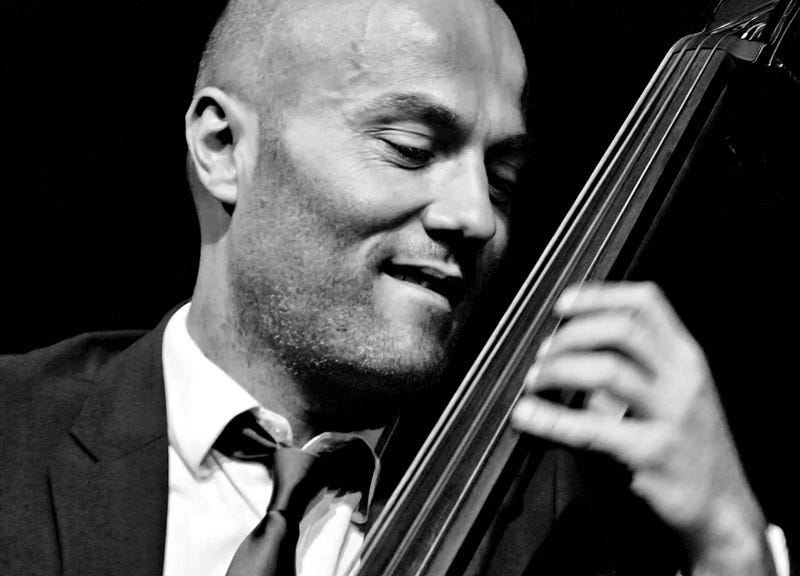
Go on YouTube and look up a famous pianist. Now watch the pianist’s face. At some point, I guarantee you will spot the telltale pianist’s smile, where a playful grin tickles and tugs at their mouth and you know this person is having a good time.
When I learn a new piece on the piano, my goal is to reach a point where I am proud of my performance. That’s it. I apply the same principle to my writing. I find that the prouder I am of a piece, the more successful it is with other people.
How do I know when to stop writing? This is a difficult question to answer, and it may be different for everyone. I always find it helpful to take a step back and do something else—perhaps even let a piece sit for a day—before coming back to evaluate it. I like getting to a point where I can come back to a piece and think, hey, that was a pretty good piece I wrote that day.
It really boils down to intuition. I believe we all possess an innate ability to adequately judge our work. At the end of the day, you are your toughest critic. Aim to impress yourself and good things will undoubtedly follow.
Get a Mentor
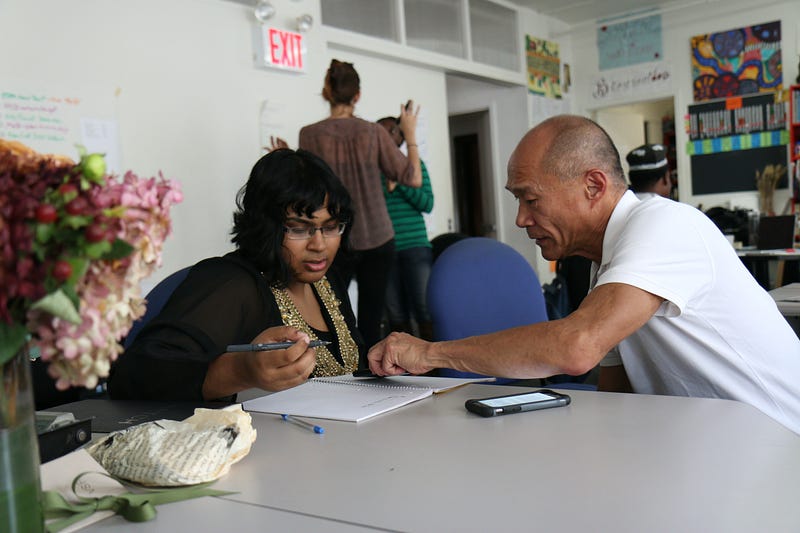
A recurring theme in Peak is the importance of having a coach or mentor. A more experienced individual can give you consistent and valuable feedback. Indeed, many of the techniques I’ve listed here came from my own childhood piano teacher.
But finding mentors is more challenging in some fields. Unless you count my time as a writing student in university, I’ve never had an actual “mentor.” I plan on applying to some mentorship programs in the near future, but these aren’t super common (and some cost money).
Writing is a very private discipline, and it’s hard to get a peek behind the curtain. But we can still analyze the techniques of experts. Stephen King’s On Writing is on my homework list. If you, dear reader, have done more study on the techniques of accomplished writers, I invite you to share some insights with me in the comments below.
Limits of Deliberate Practice
It’s worth noting that the science of succeeding is still relatively new. If you do some Internet research yourself, you’ll find that there isn’t a strong consensus on what constitutes “correct” practice. Indeed, a more recent study contests Ericsson’s thesis: while deliberate practice accounted for 26% of the variance in gaming performance, it only explained 1% of the variance among professionals.
Ericsson acknowledges that some fields (like classical music) simply have a longer tradition of established practice methods. A discipline like writing, in contrast, doesn’t have a set of established methodology. That being said, I still believe — strongly — that a focused, regimented, and disciplined writing practice is conducive to success.
Ericsson did find that the elite violinists he studied had one thing in common: they dedicated hours and hours of practice to attain their level of skill. It goes without saying that in order to get good at writing (or any discipline, really), one must put in the requisite hours, 10,000 or not. How you spend those hours is up to you.
I would spend them wisely.


