How To Use A Business Model Canvas To Create Your Own Assets

Nowadays, the career ladder is almost broken, and all the jobs seem to be in decline in the long term. That is why I recommend my students to work on multiple asset creation projects for their future. In fact, creating an asset creation project is the biggest part of their portfolio submissions due next month.
The career ladder is dead — long live entrepreneurship
Of course, the career ladder might not be dead yet — we are not quite there. I recommend my students to apply for jobs and kickstart their careers in a full-time job. Full-time jobs still provide you much-needed security, networks, career advancement, a stable salary, and mental comfort. However, at the same time, you need to realize that the name of the new game in town is asset creation. While working full time, you need to think about what type of assets you want to create to take control of your future.
Create your own creative assets now
I ask my students to work on their asset creation projects this semester. Following this recipe, you can also create your own asset creation project in the upcoming weeks. You will treat your next 2 months as your time for intensive asset creation. What type of creative assets do you wish you create? Books, music, brands, digiral products, services, blogs, podcasts, videos, or other investments? What could they be? What are the fresh and exciting things you will bring to the world? How can you create your own creative assets? Where would you like to start? Choose your option(s) below:
- Creating your own Medium blogs or podcast
- Establishing your own YouTube channel
- Creating your own portfolio of artwork and then creating your own Kickstarter or Patreon page to find your fans
- Investing in your social media assets, such as an Instagram page
- Writing a book
I provide my students with two options for their asset creation projects to choose from:
- Seven I Project (Kickstarter type project)
- Entrepreneurial Business Proposal (Shark Tank type project)
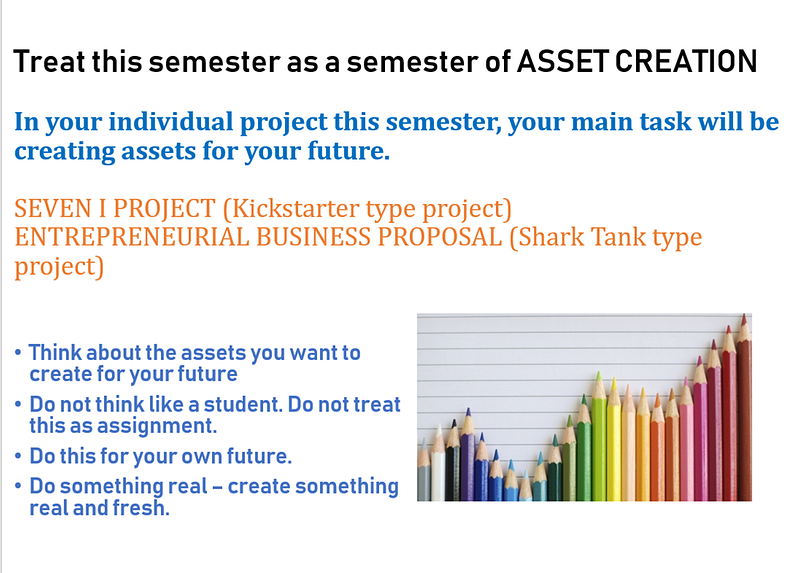
Both of these options are explained below. I want my students to think about the assets you want to create for your future. I ask them not to think about this project as a student, but instead as an entrepreneur or an artist. Here is what I tell them:
“Do not think like a student. You are an entrepreneur and an artist now. Do not treat this as an assignment. Do this for your own future. Do something real — create something real and fresh.”
Seven I Project (Option A)
Inspiration. Imagination. Insight. Integration. Inquiry. Innovation. Implementation
In this project, try to summarize and integrate what you have learned in this module creatively and insightfully. Do this in a creative and personalized way that makes sense to you. Be creative and consider alternative innovative formats. Use your best creative skills and talents. Think out of the box. You can create a Medium page and blog, a podcast, an Instagram gallery of your artwork, a story, a web page, a YouTube channel, a song, a book draft and outline, and whatnot. The sky is the limit.
This exercise is about creating creative assets for your future. What are you really curious and passionate about? Think of it as a “Kickstarter” type of project. Try to demonstrate creativity, originality, reflection, and depth. Use your best creative skills and talents.
Some of the sample artwork or projects or alternative ideas from past students are below:
- Create and showcase a fun video summarizing what you have learned here, the spirit and essence of the class
- Establish your own YouTube channel, podcast, or blog
- Compose songs and create ideas for your first album
- Create your own fashion line, brand, and catalog (with sample clothing designs)
- Create your own book proposal and write sample pages and introduction for your book
- Create a virtual art exhibit
- Come up with a toolkit for our class called: “The Survival Book: What it is to be a Global Leader in the 21st Century”
- Act as our citizen journalist in your city: Follow up, report or video-tape, and share ongoing cross-cultural activities, organizations, arts events, festivals, conferences in this city; and upload them as blogs and videos
After you experiment with your ideas, make sure you apply them and put them into action. You should also share your ideas and experimentation with the world. For example, if you are creating your YouTube channel, you need to upload at least one or two videos and your channel should be active and open to the public. Your project should have the following sections (each of these should be very focused/brief):
1. Executive summary: Summarize your artwork as an elevator pitch. How does this work represent and document your learning and skill development in this module?
2. The artwork: Make sure that you capture your artwork through photographs or Internet links; and clearly attach these to your appendix. It should be very easy for the graders to access your work online — make their job easier, not harder.
3. Description and the process of creation: Why and how did you come up with this work? How did you design and build this work? Why is this work original and unique? How does it connect to the learning objectives and skills of this module?
4. Explanation and evidence of learning and skill development: Make sure you describe your artwork clearly and make sure you connect it rigorously with the learning outcomes and skills you have mastered in this module. Explain how this work constitutes evidence of your learning and skill development.
5. Significance and utility of this work: Where is your contribution? How does this work connect to your personal branding? How does it connect to your career goals and passions? How can you use this work for your future career?
6. Reaching your fans: Who could be your fans? How do you define your target group? How do you reach your “1000 true fans”? How can you build your audience for the long term?
7. Creative advertisement/poster: Create an A4 poster for your artwork; which will be an advertisement that will position and market this work for relevant stakeholders.
The applicable word limit for the written part (main body) of this assignment is 1500 words. Please feel free to use concept maps, figures, tables, and visuals as these do not count towards the word count. Appendices (i.e. seminar and lecture evidence materials) are not counted.
Indicative Notes:
1) At the heart of this assignment is independent thinking and creativity. We want you to take ownership of your ideas and express them passionately and eloquently. The structure is less important. How you visualize and represent your ideas in an engaging and interesting way is more important. Think of it as an exercise in imagination. We encourage you to play, create stories, dream possibilities, and incorporate your own strengths and passions.
2) There is no one best way to create your Seven I project or artwork. It is your playground and you are encouraged to play/experiment with crazy, risky, creative, imaginative ideas. You can also choose to experiment with your hobbies that could become parallel careers for you in the future. You will need to find your own voice and incorporate that voice into your Seven I project.
3) Demonstrating evidence of your module learning and engagement with module materials is a critical aspect of this assignment. Therefore, it is important that you explain your artwork and connect it rigorously with relevant skills, learning outcomes, and module materials. The appendices are also important. You will need to incorporate and apply the toolkits, models, or skills we have discussed and learned during the lectures and seminars. Please incorporate these in the form of tables, figures, and visuals. Feel free to apply multiple perspectives, frameworks, or toolkits that are relevant (such as design thinking tools, creativity tools, inspirational careers, perspectives on self-making, six hats thinking, etc.)
2. Entrepreneurial Business Proposal (Option B)
In this project, you will imagine yourself as an entrepreneur establishing a business after graduation. You will prepare a focused and creative entrepreneurial business proposal for your enterprise. Think of this as an ‘elevator pitch’ where you present your business idea to potential funders.
As you come up with your business proposal, try to identify real problems in society, create innovative solutions, and commercialize those solutions to a target market.
You can create a one-person digital business for example. Or you can learn to sell on Amazon or Etsy. You can establish your freelance company and use online platforms to share your online work. You can start a café, a restaurant, a consulting/training company, a technology company, a social media company, and whatnot. The sky is the limit. Try to demonstrate creativity, insight, reflection, and depth. Innovation, integration, and synthesis are critical. Use your best creative skills and talents. What are you really curious and passionate about?
Your business proposal should have the following sections (each of these should be very focused/brief):
1. Executive summary: Summarize your business idea as an elevator pitch. Where is your unique value proposition?
2. Business description: What is your core or your “secret sauce” which is not easily duplicated? How do you define your sustainable competitive advantage? How does this business idea relate to your passion and goals?
3. Your product /service: How do you design and build your product or service? How do you develop the idea, technology and passion necessary to get started? Think about your impact and contribution you want to make if this business is successful.
4. Market analysis: What about the competition in the market? How do you differentiate your business in this market?
5. Marketing plan: Who are your customers? (A profile of your targeted customer) How do your customers access/reach your product or service? What is the process for acquiring a targeted customer?
6. Financial/operational plan: What metrics need to be put into place to determine if your product/service is successful (or not) early in the process? How do you make money? How do you scale to widen and diversify the revenue stream?
7. Creative advertisement/poster: Create an A4 poster for your business; which will be your advertisement.
Please note that the points above are intended to help you structure and write your business idea, but you do not have to strictly follow this structure or answer all the questions from 1 to 7. It is your business idea, you are the owner and the entrepreneur and it is up to you how to narrate or present it.
The applicable word limit for the written part (main body) of this assignment is 1500 words. Please feel free to use concept maps, figures, tables, and visuals as these do not count towards the word count. Appendices (i.e. seminar and lecture evidence materials) are not counted.
Indicative Notes:
1) At the heart of this assignment is independent thinking and creativity. We want you to take ownership of your ideas and express them passionately and eloquently. The structure is less important. How you visualize and represent your ideas in an engaging and interesting way is more important. Think of it as an exercise in imagination. We encourage you to play, create stories, dream of possibilities, and incorporate your own strengths and passions.
2) There is no one best way to write up this assignment. There is no one right answer. You will need to find and develop your own ‘right’ answer. It is your playground and you are encouraged to play/experiment with crazy, risky, creative, imaginative business ideas. You will need to find your own voice and incorporate that voice into your pitch.
3) This project does not require you to write an advanced business plan with all its functional, operational, and financial details. In this sense, do not think of this assignment as a traditional business plan. It is more like an elevator pitch for your business idea. As we live in a world of information overload, people do not want to read very long business plans or business reports. Try to make it compelling, visual, and creative. Make it interesting to capture attention.
4) Try to illustrate the basics of how you would pitch and initiate your business idea. We do not want you to delve into all the details of your market analysis report or your marketing communications strategies or your projected financial statements for the next five years. Please remember that this module focuses on the big picture, rather than the managerial functions. We want you to conceptualize, design, and integrate your business ideas into an exciting business proposal.
5) Demonstrating evidence of your module learning and engagement with module materials is a critical aspect of this assignment. Therefore, the appendices are very important. You will need to incorporate and apply the toolkits/models/skills we have discussed and learned during the lectures and seminars. Please incorporate these in the form of tables, figures, and visuals. Feel free to apply multiple perspectives, frameworks or toolkits that are relevant (such as business model canvas, design thinking tools, benchmarking, six hats thinking).
Choose your option and start creating your assets
Therefore, you can choose between these two options to start your game of asset creation:
- Entrepreneurial Business Proposal, or
- Seven I Project
Whichever option you choose, your focus is on creating your own assets. Mark McGuinness is an artist and expert that provides guidance on how to create your own assets. Here is his fascinating article that will teach and guide you with the significance of creating assets:
Create a large body of work
Whatever your passion is, you need to create a huge body of work to make a big contribution, and this means creating hundreds of pieces of your work. You should be ready to create a minimum of 300 pieces of work before expecting any returns.
Joe Rogan created 4000 episodes of podcasts which were downloaded almost 200 million times. Creating this huge library made him the king of podcasting and Spotify recently paid Joe Rogan $100m to license his contents.
Find your own way & act like a superhero
Another great example of asset creation comes from David Baldacci. David Baldacci is one of the most inspiring people in scheduling creative time in his calendar. He is a full-time lawyer, but he writes his mystery novels every night between 22.00 and 02.00. He does not skip a night and keeps writing every night. He has been able to write and publish 40 novels using this crazy method. So, you need to think and act like a superhero to amplify your unique strengths.
Imagine where you would be in just 6 months if you wrote one page every day, you created one visual, and you spoke one minute on video: You would have 180 pages written on your Medium. You would have 180 visuals/pictures on your Instagram. You would have 180 videos uploaded on your YouTube channel. This would make you a totally different person.
My Medium journey in the last 7 months
I am a living example and proof of this. I have aspired to write practitioner articles for the last 15 years, but I have always procrastinated this. “One day, I will start writing a book,” I said, and that day never came. I felt like an utter failure and gave up hope. The Coronavirus lockdown has enabled me to make a radical decision: I would write regularly on Medium during the lockdown period. I would try to write and publish a minimum of 1 article every 2 days — however small, messy, crap, and insignificant that article might be. During the last six months, I have written 180 articles on Medium.
I would have never guessed that I could write so many articles. I have come across a diary entry from last year where I told myself to write one article every month. This goal was not inspiring, so I ended up not writing for several months. When I decided to pursue ‘an impossibly high’ goal of publishing 150 articles in 6 months, I felt more intrigued and took this as a serious game to challenge myself. It worked really well.
Exercise: Create your Business Model Canvas to systematically think about your asset creation
I asked my students to apply Business Model Canvas to their asset creation projects (whether they have chosen Seven I Project or Entrepreneurial Business Proposal).
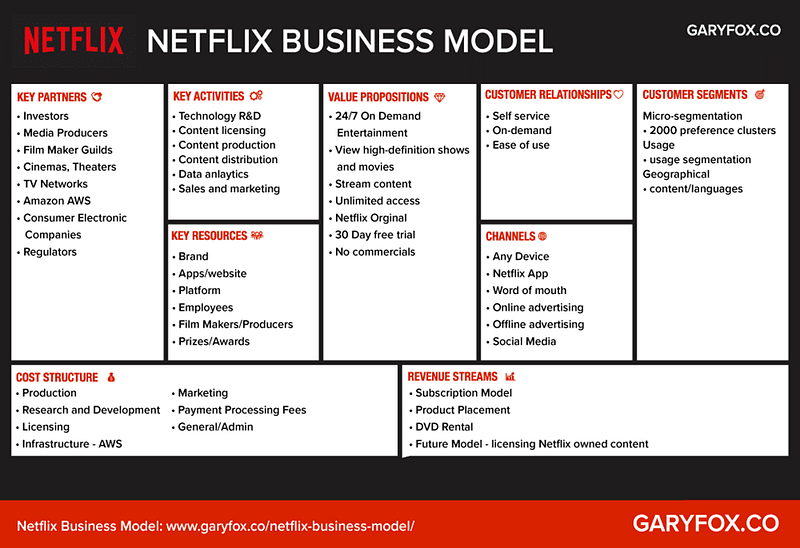
The Business Model Canvas was proposed by Alexander Osterwalder in the book titled “Business Model Ontology”. It enables both new and existing businesses to focus on operational as well as strategic management and marketing plans. It also helps individuals to position their creative or entrepreneurial work for the long term.
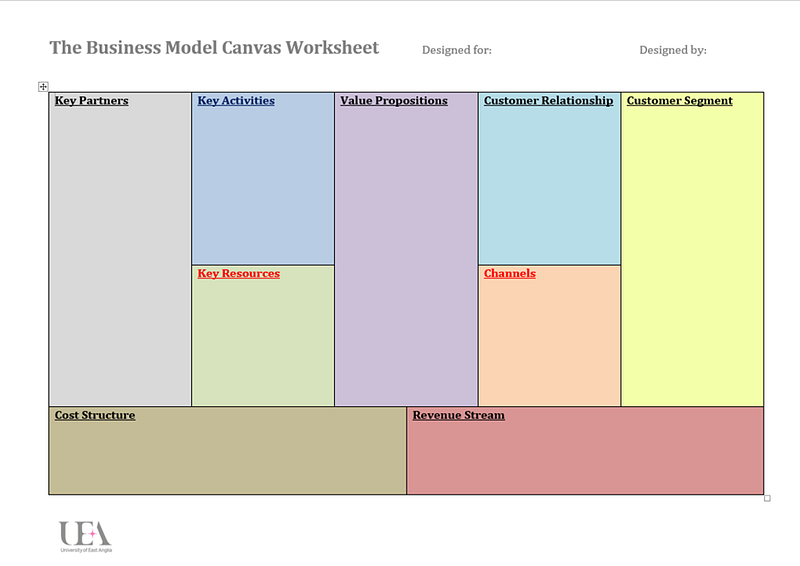
In this exercise, you will create your own Business Model Canvas to think about your own assets. The Business Model Canvas will help you reflect systematically on your asset creation model, and map each of your elements regarding your assets.
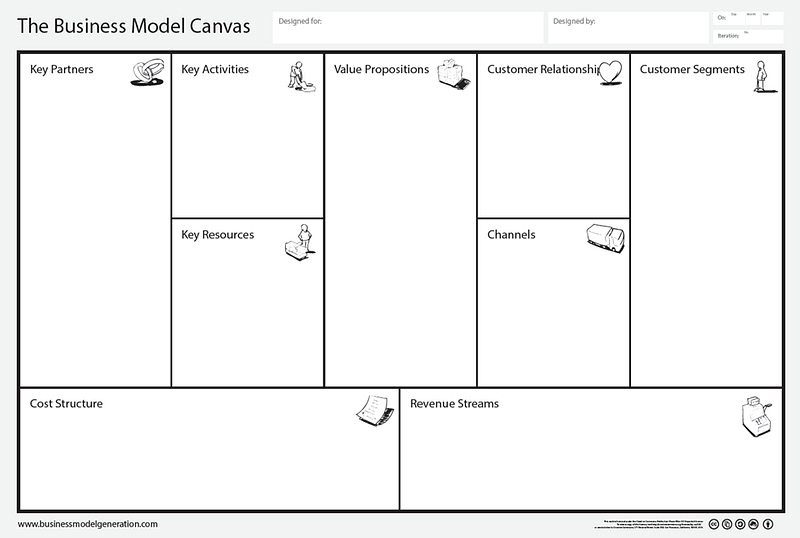
Here is a sample business model canvas applied to Netflix, prepared by Gary Fox. It will help you to consider your own strategic issues:
Nine Elements
Business Model Canvas provides you a holistic view of your business or your assets, whichever you are interested in. There are 9 elements together. Together these elements provide a multidimensional view of the most important factors and drivers that matter to you in your journey of asset creation.
- Customer Segments: Who are your target segments, customers, or your audience? What do they think, feel, or need?
2. Customer Relationships: How do you interact with your target segments? How do you build relationships with them?
3. Channels: How do you reach your target segments? Which platforms are you using? YouTube, Twitch, TikTok, Instagram, Linked In, Facebook, Patreon, Kickstarter, or Twitter? How will you promote?
4. Value Proposition: What is your core value proposition? How do you create or add value? What’s compelling your value proposition? Why does your target segment reach you, your products, or your offerings?
5. Key Activities: What are your key activities? What strategic things will you do to create and deliver value?
6. Key Resources: What resources do you need to create your assets? How will you create or access these resources?
7. Key Partnerships: Who can be your collaborators? Can you build partnerships with individuals or organizations? You will work with whom?
8. Cost Structure: What are your major cost drivers? Can you make a list of all your costs?
9. Revenue Streams: How can you create multiple income streams? Can you build systems of revenue?
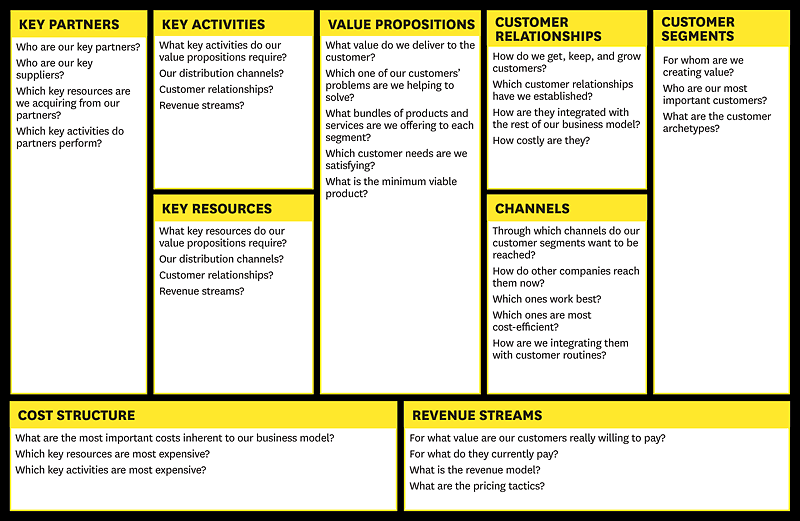
You can look at the following questions. They will also help you to address critical issues.
Create your own canvas
You are going to create the Business Model Canvas for your asset creation project. For each part, you will create your own bullet point list:
Sample: My Own Canvas
Below, you can see how I created a business model canvas for my own assets. I applied the canvas to think systematically about my creative assets. For the last seven months, I have been working on creating YouTube videos and Medium articles. I am still at the start of my journey of asset creation. I view my journey of asset creation as a long term venture which will last at least a decade.
As you can see below, my goal is to create at least 1000 videos on YouTube and 3000 articles on Medium over the next 10 years. My goal is to keep learning, growing, and creating during the 2020s until I establish myself as a serious educator, teacher, artist, and entrepreneur.
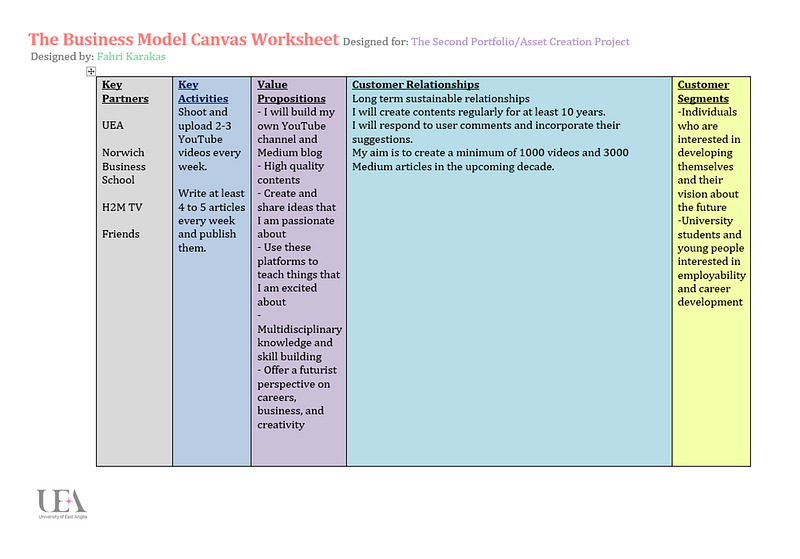
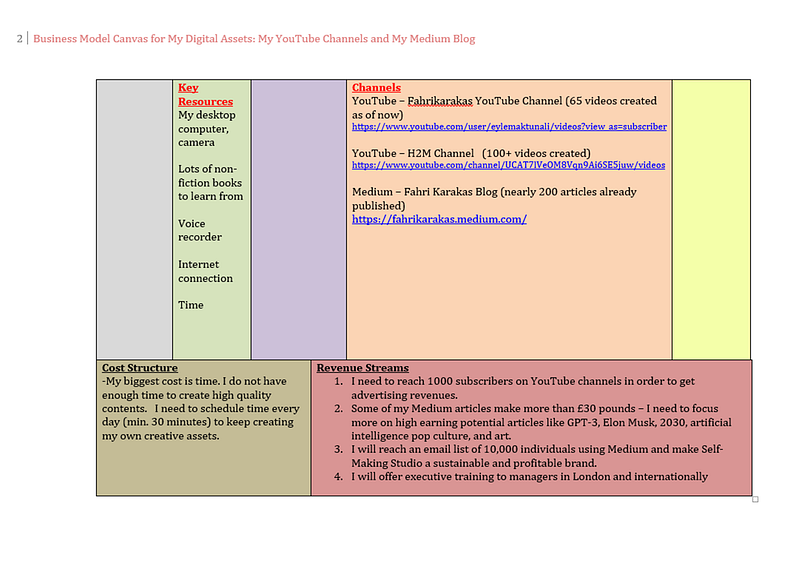
Based on the samples, please create your own canvas now. Who are your fans or audience members? How will you create value for them? How will you reach them? How will you establish a system of creativity and productivity that will work for you? How will you keep creating? What is your long term vision?
Give yourself a decade for asset creation
If you really want to make a lasting contribution in your field, you need to give yourself a decade’s worth of inventing, experimenting, creating, inventing, innovating, creating assets, and disrupting yourself. Start with a challenging goal you can achieve in 6 months. Provide yourself hundreds of chances for failure. This is the best recipe for achieving sustainable innovation and personal growth. The 2020s can be a decade of asset creation for you, and you can achieve your personal renaissance in a decade. Creating your creative assets is one of the best investments you can make for the long term.


