
How to Turn on the Lamp — Two Ways to Write a Great Article
Know your approach and give yourself a break
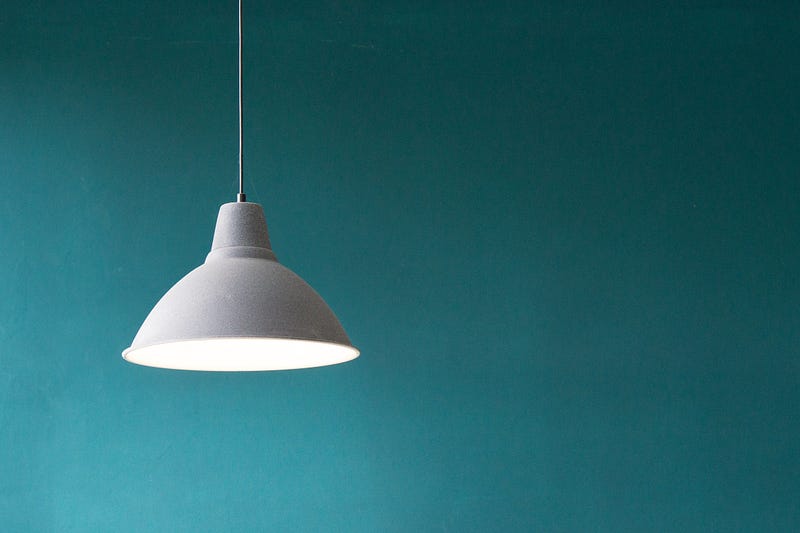
The lamps in my living room have been a point of contention between my husband and myself for years. You’d think we’d have better things to fight about, but . . . nope, we fight about how to turn our lamps on and off. I guess that’s a good thing.
Interestingly enough, though, I have recently realized that these lamps are pretty great metaphors for two very different ways to approach researching and writing an article.
First, a little back story: About two years ago, my husband hooked both of the lamps in our living room up to our Alexa. He spent a good hour (at least) painstakingly programming them in as “Mini one” so that we can verbally turn our lamps on and off. Since then, he only needs to shout (from wherever he is in the front portion of our house), “Alexa, turn on Mini one!” And voila — the lamps alight.
I, on the other hand, either always forget that the lamps are attached or I forget what they’re called. (Really? Mini One? What is this, Star Wars? I don’t know honey, how about “lamps”?) I’m also a traditionalist, so when I want to turn one of the lamps in the living room on or off, I get up off my a$$, walk over, and turn the knob on the side. Sure, it’s more work than asking Alexa to do it, but I like doing it my way.
Here’s the thing, though, our two approaches to our living room lamps are very similar to two different and equally-as-effective approaches to writing articles. And knowing which approach you plan to take before writing an article can keep you from stressing about the process along the way.
Here are the two article approaches:
The Alexa approach
Like my husband’s lamp setup, one way to approach writing an article is to do a significant amount of work ahead of time. You can do research on your topic, do research on the publication to which you hope to submit said article, write an outline, search SEO keywords to work in, etc.
While this seems like a lot of work, the Alexa approach makes the writing of the actual article super quick and easy. Why? You’ve already done all of the work. If you have an outline, you just fill it in with the ideas you’ve already researched. In essence, the writing of the article is the equivalent of sitting on your sofa and yelling, “Alexa, turn on mini one.”
One of the pros of this approach is that you have very little risk of wandering aimlessly in your writing. If you already have an outline and you’ve done your research, you’ll be good to go with creating a comprehensive and understandable article.
One of the cons of this approach, though, is that it takes a good amount of time and you run the risk of hindering the conversational flow of your article (if that’s a thing you enjoy having). On average, in my experience, this approach is not my go-to approach, but when I have taken it, my articles are, on average, structured more clearly and more comprehensive.
The manual approach
On the other hand, my preferred way to get into writing a piece (particularly for Medium) is to jump in with both feet, start writing, and research and structure as I write. Now, sometimes this works out, but sometimes it doesn’t. (And, when it doesn’t, it’s pretty terrible.) However, I believe that the jump-in-with-both-feet-manually-turn-on-the-lamps approach is better for me even if it makes a few of my articles tank from time to time.
Why? Well, I like to write about things when I’m excited about them. When I get inspiration, I get excited! Ideas fly around my head and I want to write them down as quickly as possible. And I believe that a little bit more of this passion comes through in my writing when I start writing right away rather than when I prep ahead of time (I may be wrong, though).
I also, though, sometimes screw things up with my haphazard article writing. Sometimes, an article starts out as one thing and then, as I research while I’m writing, it becomes something completely different. I then need to go back, dig through what I’ve written, and separate my chunks of writing into the articles in which they belong. It’s more than annoying.
The great thing, though, is that the other half of the time, I stick to topic, pull random bits of information from my head, confirm the validity of this information with quick internet research, fly through an article, and have something written that I’m super proud of within an hour. It’s the writing equivalent of instant gratification. It’s getting up, manually turning on the lamp switch, and sitting back down.
Like my manual-lamp-turning-on approach, though, it’s risky. If I manually turn on the lamp and don’t forget to turn it back off, it messes up the whole system. This drives my husband CRAZY because this detaches it from Alexa and messes up his whole “smart house” thing. And, like jumping into writing an article without planning first, manually turning on the lamp runs the risk of starting an argument if I forget to turn it off.
A lamp at the end of the tunnel
The good news is that whether you choose to spend a lot of time setting up your article before you write or if you jump into writing right away, the fact of the matter is there is a lamp at the end of the tunnel. If you stick with it, both approaches finish with a completed article. You just need to choose which one works best for you. OR which approach works best for the article you are about to write.
No matter which method you choose with which to turn on your proverbial lamp, I encourage you to always back your statements up with evidence, write an introduction and conclusion, and make sure that you edit your piece afterward. These steps are KEY and, as an editor of a publication, I see these mistakes a lot of the time.
Neither approach to writing an article is wrong and, whether you feel that you take too long to get writing or you beat yourself up for going too fast, I recommend that you give yourself a break. Choose a path to completing a story and know that you can stop and pivot along the way. Whether you ask Alexa to do it or you manually turn the knob, know that if you work toward it, you can always turn on the lamp.
Shout out to Sarah Willey (you should follow her!) for suggesting that I write about “lamps” after reading this article that I wrote: