
How to Turn Any Idea Into a Good Story
Become a master in the art of storybuilding

FYI, click the link if you would like to get a free copy of How To Write A Killer First Draft in 6 Steps.
Regardless of the genesis, every simple idea can be turned into a good story. The question is how. Notice I said ‘good story’, not ‘story’. Anyone can write a story. What we desire are good stories, the kind that make people stop and go “wow!”
In the past, I tried to turn an interesting idea into a good story by going straight to writing. As in, I got the idea today, and by the next day, I had a title (The Enigma) and was already writing the prologue. I know many other writers who try this approach. A few of them succeed, but most fail.
Given what I know now about the art of storybuilding, it’s no surprise to me why I’m still in chapter 2 of The Enigma more than four years after. This is interesting because since then I’ve written 3 novels, 3 feature-length scripts, and a few short stories.
Why did I fail with The Enigma where I succeeded with others? Because I skipped the process of storybuilding. Nothing is more fatal to your story than skipping storybuilding
This article will explain:
- Why storybuilding is important for creating good stories
- The key to storybuilding
- Creating characters
- Creating plot
- Defining the storyworld
- Creating the theme
- God’s view — a proven process for effective storybuilding
- Two approaches to storybuilding
- A faster way to build stories
By the end of this article, you will learn all you need to know to turn your ideas into good stories, the kind with the power to make the world go ‘WOW!’
Without further ado, let’s begin with the most important question of all.
Why storybuilding?
The struggling writer tends to have a way of working that goes something like this: He dreams up an idea, noodles on it for a while, then rushes straight to the keyboard… Successful writers tend to use the reverse process. If, hypothetically and optimistically, a screenplay can be written from first idea to last draft in six months, these writers typically spend the first four of those six months writing on stacks of three-by-five cards: a stack for each act — three, four, perhaps more. On these cards they create the story’s step-outline. — Robert McKee Story
Imagine trying to construct a house without creating the plan first. What do you think will happen to this house?
A story is a lot of information. Characters, backstories, motivations, theme, how it begins, how it ends, etcetera. Given the million decisions you have to make, it is unwise to begin writing a story from the first idea. Doing this puts a lot of burden on your creative mind when you are writing.
You are advised to write first and edit later. Why?
Because these are two separate processes that engage the mind differently. Same with writing and storybuilding. The process of storybuilding and writing are separate and should be treated as such.
Writing deals with finding the right words to convey information. Storybuilding deals with creating the information that needs to be written down.
When you build your story before writing, you make the writing sessions easier because you no longer have to create information and find the words to express them at the same time.
This isn’t to say that it’s not possible and should be avoided at all costs. No, I’m showing you why storybuilding is necessary. It is left for you to decide if it agrees with your method because the truth is that every writer has their method.
In summary, we storybuild before we write because:
- It helps us know what to write when it’s time to write, which reduces the chances of us abandoning the story.
- It helps us create the best version of the story.
- It helps us reduce the number and scope of future narrative edits.
If you’re convinced of the necessity of storybuilding, then let’s consider how.
The key to storybuilding

The only way to build a story is to ask questions and find answers. That is all there is to it. But then the next question that follows is, ‘what kind of questions?’
The right questions. But what are the right questions? To know what the right questions are, we must first know what makes up a story.
Story = characters x plot x theme
Every story can be broken down into these three primary components. Thus, if we know the characters, the plot, and the theme, we know the story. What are the right questions to help you find these?
Creating characters
All stories are about characters. Characters are composed of two elements — characterization and true character.
Characterization describes everything about the character that we can observe — height, weight, eye color, nationality, etcetera. When creating characters, characterization is not so important because it is not what drives the story.
What we want to know is their true character — the person behind the mask of characterization. To know this true character, there are just a few things we must define for the character at this stage.
Goal
What does the character want? It is this desire that sets the story rolling. Don’t confuse that to mean that the character must have a goal when the story begins. No, the goal sets the story rolling in the sense that it gives us (both writer and audience) direction.
No matter what you know about a character, if you don’t know what they want, they are almost useless to you and the story. Without a goal, a character is mostly undefined and the story is flat.
Motivation
Why does the character want this thing? What happened in the past to make them desire it? What point do they feel they must prove? This could be in the main plot or in the character’s backstory.
Action — Reaction
What do the characters do to achieve their goal. In what ways are they thwarted? How does she bounce back from that? Notice that with each answer to these three questions so far, your story is beginning to take shape.
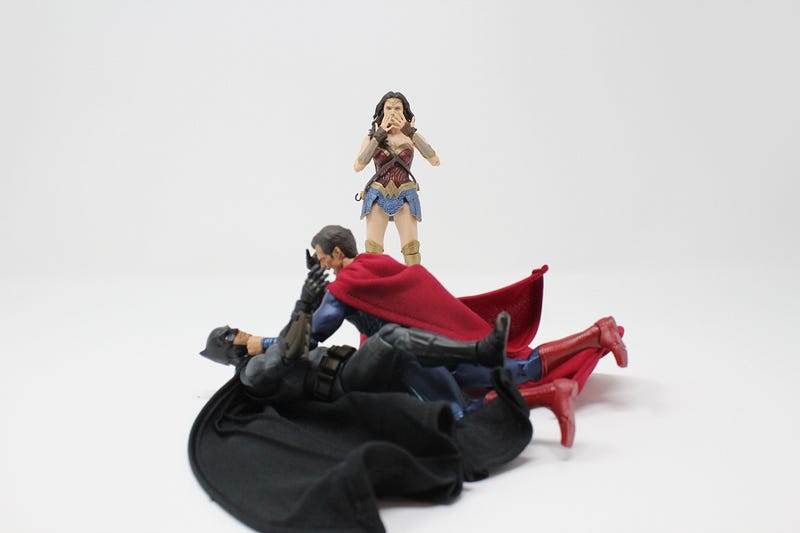
Flaw
What flaw do the characters have that they need to overcome during the story. In a well-built story, overcoming the flaw within is the path that leads the character to their goal. Are they too shy? Has that kept them from getting a promotion at work they so deeply desire?
Need
What lesson does the character need to learn? What habit must they change?The goal is a characters’ conscious desire, while the need is a subconscious one. Some of the best stories create a conflict between what a character wants (goal) and what he needs.
Change
How does the character change by the end of the story? Is it a positive or negative change? If things end the same way they began, the story will have failed to achieve something worthwhile.
The moment you answer these questions for your main characters, you’ll be surprised by how fleshed out your story becomes. Up next is plot.
Creating plot
If you notice, by answering questions on true character, you inevitably answer questions on the plot. This is because plot = character. You only find a separation between the two in poor stories.
We cannot ask which is more important, structure or character, because structure is character; character is structure. They’re the same thing, and therefore one cannot be more important than the other — Robert McKee, Story
The plot is what characters do, and so if you know what characters do, you know the plot. If, instead of finding true character, you focus on characterization, you will find that you still have no plot. Maybe you will have some ideas about what could happen, but you won’t know what happens. Details do not inspire action, true character does.
Defining the storyworld

Nature or nature? The age-old question.
Every sensible person knows that it’s neither nature nor nurture, it is both.
For this reason, you can’t properly define a character unless you define his environment. This is where the storyworld comes in.
To build a story, you should answer some questions about the character’s environment.
- What time and place does the story exist in? As in, what period?
- What is the politics?
- What are the history of the people and the period?
- How is the culture? What values do they emphasize or diminish? What is taboo?
- If fantasy/magic, then what are the rules of engagement?
The questions you answer about the storyworld will be influenced by the kind of story you want to tell.
For this, you do not need details, only as much information as helps you define true character better. There will be plenty of time to fill in the details later.
However, if you want to dwell on all the details because that’s your method, then go right ahead.
Designing the theme
The last set of questions but not the least important. In fact, many great storytellers will argue that theme is the most vital consideration to be made during story-building.
A man sits in his workshop, busy with an invention of wheels and springs. You ask him what the gadget is, what it is meant to do. He looks at you confidingly and whispers: “I really don’t know.”Another man rushes down the street, panting for breath. You intercept him and ask where he is going. He gasps: “How should I know where I’m going? I am on my way.”Your reaction — and ours, and the world’s — is that these two men are a little mad. Every sensible invention must have a purpose, every planned sprint a destination.Yet, fantastic as it seems, this simple necessity has not made itself felt to any extent in the theater. Reams of paper bear miles of writing — all of it without any point at all. There is much feverish activity, a great deal of get-up-and-go, but no one seems to know where he is going.[…] — Lajos Egri, the Art of Dramatic Writing
Whenever I have to explain Theme to someone, I always find it difficult because ‘theme’ has many meanings. I overcome this difficulty by switching using the term controlling idea.
The controlling idea for a story is, as the name suggests, the main idea that drives the story towards its end. It is the writer’s opinion about the events of the story.
It is written out as a one-sentence summary which guides the writer even though he doesn’t know. For example, below are some controlling ideas I’ve used to create my own stories.
- Tranny prevails when the good guys aren’t as ruthless as the bad guys.
- The death of hope brings despair, and despair leads to catastrophe.
- Kindness redeems the worst men.
How do you find or create the controlling idea?
Controlling idea = story value at the end + cause
But what does story value mean? Let’s turn to Robert Mckee’s wisdom for guidance:
“Story values are the universal qualities of human experience that may shift from positive to negative, or negative to positive, from one moment to the next. For example: alive/dead (positive/negative) is a story value, as are love/hate, freedom/slavery, truth/lie, courage/cowardice, loyalty/betrayal, wisdom/stupidity, strength/weakness, excitement/ boredom and so on. All such binary qualities of experience that can reverse their charge at any moment are Story Values. They may be moral, good/evil; ethical, right/wrong; or simply charged with value. Hope/despair is neither moral nor ethical, but we certainly know when we are at one end of the experience or the other.”
Thus, you make meaning by interrogating the universal values of human experience and taking a stand.
It means that your film isn’t about good guys and bad guys, lovers and haters, rich men and poor girls, etcetera. It is also about the values inherent in the story, good and bad, love and hate, wealth and poverty.
It seems like saying the same thing, but you’ll admit it’s also very different.
When you realize that your story has to make a claim between different values — like faith/fear, justice/tyranny, hope/despair — it makes you consider every story decision from a deeper level.
Why does love turn into hate? What makes greed become kindness? What turns a kind child into a tyrant willing to wipe out half of life?
The story answers these questions using plot and characters. Returning to our formula:
Controlling idea = value at ending + cause
What this means is that you can construct the controlling idea for any story by identifying the value that wins the argument and the reason why.
For example, the controlling idea for Todd Philips’ Joker can be: insanity prevails because society makes people insane.
The reason being that Arthur becomes Joker at the end because of what the world (his mother, co-workers, television, etc.) has done to him. Now look back at that story. Doesn’t it seem like everything was constructed to make this statement true at the end?
Does this mean you must know your controlling idea before writing your story? Definitely not.
To find/create your controlling idea
- Let your story assemble itself.
- When you have your ending, ask yourself: what seems to be the controlling idea of this story?
- When you answer, ask yourself: do I like it? Is that what I want to say?
- If yes, then you go over your story again and ensure that every story element is supporting the expression of this idea.
- If no, then you identify what it is you want your controlling idea to be based on the story you already have. Next is to change parts of your story to express the new controlling idea. Be careful though, there’s a high chance that you may twist your story in a way it doesn’t want to go just because you want your controlling idea to be what you want, as opposed to what the story wants.
Another way to find your controlling idea is:
- First, build your ideas until you have the makings of a story (you can see from the beginning to the end, even though it’s still somewhat vague.)
- Look at your story and identify values that match the content and context of your story. Example: love, pain, death, justice, hope, redemption, sacrifice
- Sift through the many values and choose a primary value. The primary value is one-half of your story’s main argument.
- Find the opposite of this primary value. For example, if your primary value is love, then hate would be your opposite, or self-hate, depending on the story.
- Create a controlling idea based on what you really want to say about these values.
The controlling idea or theme is a compass that helps you identify what the right questions and answers are. If you are fully aware of the value-argument you want to have (justice/tyranny, love/hate, etc.) then you will be able to craft characters and events (plot) that help make this argument in a way that is totally organic.
Note that your controlling idea is allowed to change. In fact, it is encouraged. This is because Story is dynamic and it will change many times while you are working on it. I know my controlling idea changes a few times until it merges with the story and desires to change no more.
Now you know the questions to ask, you are one step closer to building a good story.
To elevate your story-building to greater heights, you need the help of a proven process that helps you create the best stories possible. Enter God’s View.
God’s view — the proven process for effective storybuilding

God’s view is a process of story-building that helps you create the best stories possible by using the powers of time and your subconscious mind.
It is the most important part of my storytelling process and I’ve found over time that if I flunk this, the rest of the journey is much harder.
What does it tell us about the architecture of our psyches that, without our exerting effort or even thinking about it, some voice in our head pipes up to counsel us (and counsel us wisely) on how to do our work and live our lives? Whose voice is it? What software is grinding away, scanning gigabytes, while we, our mainstream selves, are otherwise occupied? Are these angels? Are they muses? Is this the Unconscious? The Self? Whatever it is, it’s smarter than we are. A lot smarter. It doesn’t need us to tell it what to do. It goes to work all by itself. It seems to want to work. It seems to enjoy it— Steven Pressfield, The War of Art
God’s view turns the task of storybuilding into a systematic process that guarantees better results. This is possible because GV realizes that your subconscious mind is the true creator. As a result, it divides the task of storybuilding between your two minds, giving more respect to your subconscious.
Your conscious mind is mostly concerned with asking the questions and documenting the answers, while your subconscious delivers most of the answers.
To be clear, sometimes you will ask questions and get a reply from your conscious mind, and that is fine. However, it is impossible to build a story without help from the subconscious.
How to god’s view
All you have to do is daydream about your story and take notes. If you do this right, you will never stop doing it for any of your stories. In details, this is what you do:
Think — Set a duration of each day and consciously think of your story for that period. You could either try to fix any issues (unknown sections) you have or create new story materials.
Take notes — Using anything that feels comfortable, take notes of any ideas you get. Try to be fairly organized so you can always reference old material for new ideas.
Learn — Keep learning about storytelling. Whenever I’m working on a story and I read an article or book on storytelling or watch a course, something interesting happens. I filter every new knowledge I get through the lens of my old story, leading me to new and better answers which make the story better.
Consume — Whenever you consume good stories while in GV, you will find elements to borrow and make your story better. Sometimes you will see something that sparks your imagination and gives you a solution to a plot hole you had.
Relax— Let the almighty subconscious handle the rest.
Some FAQs to help with God’s View
- How long should your notes be? — whatever length you want is fine. There are zero rules at this stage.
- What should you make notes about? — anything and everything that seems noteworthy to you. Characters, story events, thematic ideas, etcetera. Don’t try to be too structured because the notes are not where the story is, they only help with creating/building the story. The story is in your mind, but your mind can’t think efficiently if it’s also burdened with remembering every detail.
- How should the notes be arranged? — you are god, do whatever what works best for you. The key is that the process shouldn’t be stressful. I use the notes app on my iPad/iPhone. I usually have a note dedicated to the story. I keep this updated by using an asterisk to demarcate new ideas. When a lot of time has passed and that note has become cluttered, I create a new note within the same notebook. I also create new notes for characters, theme, specific story elements (especially for fantasy stories), backstories, etc. You can use any note taking app.
- How long should you god’s view? — until you feel you have a story you’re happy with.
Two approaches to storybuilding
When you start building a story, you have two main options on how to go about it. I call them the inside-out and outside-in approaches. Neither is better than the other. They are just different ways to view the story so that you can build better.
Outside-in approach
When building my stories, this is usually my starting point. This involves figuring out what the plot of the story is before narrowing down on the character-specific details.
By starting with this approach, you lay the foundation of the whole story before interrogating your characters deeply. The questions you ask in this approach are more related to Plot than Character. For example:
- How does the story begin?
- What is the main conflict?
- Who are the main characters and what do they want?
- How does the story enter the second act and third act?
- How does the story end?
- What is the primary argument in the story and how does it resolve (theme)?
Such plot-specific questions help you see the story from beginning to end in the scantiest details possible. This helps you create an overview of your story with many parts for characters to fit into.
Inside-out approach
Here, your primary focus is understanding your characters and their goals, flaws, needs, motivations, actions, etcetera. Once you find these, you are one step closer to a complete story.
Depending on who you are, you can choose to start with any of the approaches. Whichever approach you choose first, be sure that you balance it with the second approach. To use only one would create a weaker story.
Recall that Character isn’t more important than Plot, nor is Plot more important than Character. Using both approaches maximizes the quality of the plot and the characters, which naturally results in a better story.
Many writers think it’s not possible to go wrong if you focus on just character, but this is false. If you focus too much on the characters with no consideration to how engaging the plot is, you run a higher risk of creating a boring story that is very true to Character. No one wants that.
A faster way to build stories

One of the reasons I always suggest people take a lot of time to storybuild is that one mind requires a lot of time to create a complex structure (story) that works well (delights).
Many times, one mind will imagine that its complex structure is complex enough after just one week of building. More often than not, this one mind will be wrong for the simple reason that one mind can only see and create so many details in a short period of time.
However, if this same mind gives itself another month or two to keep building, more time will be available to view the structure from many different perspectives. New arrangements (character combinations, decisions, theme, etcetera) will be tried, and more material will be created to support the structure.
But, there is one way to build a good story faster.
The problem is that one mind can’t see from many sides at the same time, and so to fix this, more minds are invited to the party. This is one of the reasons why production companies hold story conferences with many writers when trying to flesh out a TV series.
When many minds work on one story, more perspectives are viewed simultaneously, and a lot of story material is created that is either used, discarded, or saved for later. It’s like a bricklayer who gets help from many other bricklayers. It makes the work go faster.
The most efficient way to do this is to have someone lead the session. This way, every new idea is filtered through a single vision. It’s like having a director on a film set. Without a director, every department will be trying to tell the story in the way they deem fit, which will result in artistic chaos.
When running the group session, I suggest using a mind-map method. This helps keep the ideas flowing faster compared to writing down detailed notes.
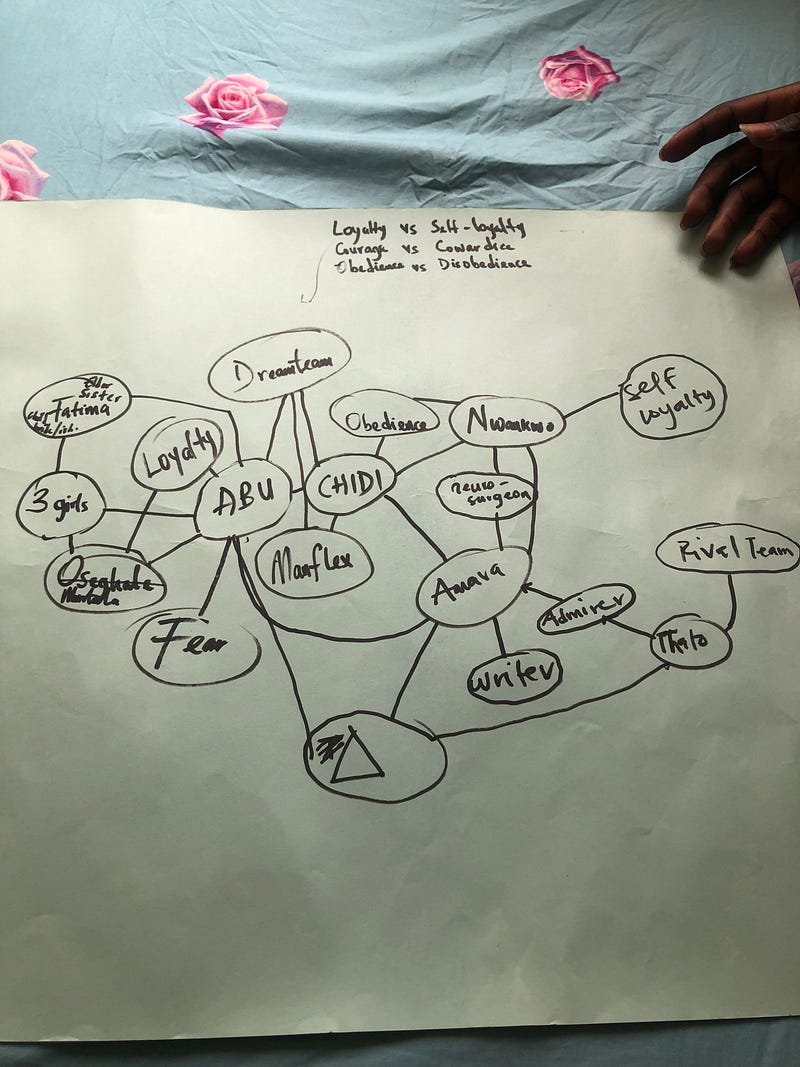
The details will be held by the minds in the group. Also, having a recording of the session is helpful if you’re open to listening later.
Depending on your storytelling ability, you can use regular people who do not identify as storytellers. Sometimes, I build stories with my friends who have no storytelling background. I’m able to do this because I know how to fix whatever wild idea they suggest into the story in an organic way. I’m also fully aware when something just can’t work.
Never forget that the level of your talent and your knowledge of the craft influences the quality of your story-building.
In conclusion
When you get an idea, especially one that’s really good, it is very tempting to dive into the writing. Having read this article, I hope that you can see that giving in to this temptation is not in your best interest.
The right thing to do at this point is to dedicate adequate time to build the story. An idea isn’t a story. To turn an idea into a story, you must build it. Building stories simply requires that you know the right questions to ask.
Questions on character, plot, storyworld, and theme. The answers you find here will build your story for you. It is also important that you have the patience to allow the subconscious to deliver the best answers.
If you’re hard-pressed for time, then you can go ahead and invite some friends over and have a group storybuilding session. Regardless of the method you choose, by giving adequate time to building your story, you exponentially increase your chances of creating a great story.
Gilbert Bassey is a writer, filmmaker, and story consultant dedicated to telling great stories and helping other writers do the same. He loves dogs but is too lazy to care for them so he has none. He’s on twitter @gilbertbassey. Join his storycraft newsletter and get the best tips on storytelling in your inbox.