avatarCatherine Aragon

Free AI web copilot to create summaries, insights and extended knowledge, download it at here

2605

Abstract

pick up a book. It works.</p><h2 id="bd86">Advantages</h2><p id="3717"><a href="https://biblioteca.sagrado.edu/eds/detail?db=tfh&amp;an=84557833&amp;isbn=15424715">Laurence Gander</a> contends audiobooks are advantageous for a few reasons:</p><ol><li>The reader can learn sentence cadence and proper punctuation.</li><li>The reader develops comprehension skills and expands vocabulary.</li><li>Audiobooks can be “read” anywhere and anytime.</li><li>The voices used by the audiobook readers creates interest and captivates the reader.</li></ol><figure id="90ee"><img src="https://cdn-images-1.readmedium.com/v2/resize:fit:800/1*zxXpukztgZNz2BLt63bGDA.jpeg"><figcaption>Photo by <a href="https://unsplash.com/@hyingchou?utm_source=unsplash&amp;utm_medium=referral&amp;utm_content=creditCopyText">Yingchou Han</a> on <a href="https://unsplash.com/s/photos/headphones?utm_source=unsplash&amp;utm_medium=referral&amp;utm_content=creditCopyText">Unsplash</a></figcaption></figure><p id="e1f9"><a href="https://eric.ed.gov/?id=EJ720640">Shu-Hsien Chen</a> agrees with Gander but goes on to state that pairing the physical book with the audiobook teaches readers to associate the sound with the actual word. Eventually, struggling readers develop confidence as they master the text.</p><h2 id="a829">Development of Reading Strategies</h2><p id="6eac">Additionally,<a href="https://eric.ed.gov/?id=EJ720640"> Chen</a> states the reader must actively listen to make sense of the story turning what seems to be a passive activity into an active one. Therefore, comprehension skills develop together with critical thinking skills.</p><p id="e2bd">According to <a href="https://search.proquest.com/openview/bf82544ba9322f3ac495b5737fb3fb8a/1?pq-origsite=gscholar&amp;cbl=27602">Natalie Puckett,</a> her students who struggled with reading retained more information as they listened to more audiobooks, which increased their enthusiasm for reading. These reluctant readers’ interest in reading print books increased as well. Essentially, audiobooks became the gateway to books in print.</p><p id="2a13">Moreover, struggling young readers learn early that reading is difficult. This dislike continues throughout their academic career and, in turn, affects other academic areas creating not just struggling readers but struggling students. As a matter of fact, <a href="https://search.proquest.com/openview/bf4717ace8593777ae61625f5772f367/1?pq-origsite=gscholar&amp;cbl=47169">one study</a> contends, “reading competence as a vital skill in its own right and as a necessary skill [achieves] competence in other academic

Options

subjects, including the humanities, science, mathematics, and the social sciences.”</p><h2 id="d0fc">Other Benefits</h2><p id="f0dd">Audiobooks are also now widely available eliminating yet another argument against audiobooks. <a href="https://search-proquest-com.eznvcc.vccs.edu:2443/docview/1899009220/6536942A11D54610PQ/12?accountid=12902">Francisca Goldsmith</a> discusses the availability of not just the audiobooks but also the means by which struggling readers can access audiobooks. Many libraries now loan out tablets thereby increasing the availability of audiobooks.</p><p id="fdca">Even English majors can benefit from audiobooks. To obtain an English degree, certain courses specializing in Shakespeare or Milton or Chaucer are required. Yet, how many average college students are prepared to read Middle English? Not many. Pairing the audiobook with the text can benefit the advanced student as well. Shakespeare wrote his plays to be heard, and not necessarily to be performed. Think about the Globe Theatre and how many patrons could actually see the performance; however, all of the patrons could hear the performance.</p><figure id="ce71"><img src="https://cdn-images-1.readmedium.com/v2/resize:fit:800/1*jUpWs4muH1AXBZKAkZcEfg.jpeg"><figcaption>Photo by <a href="https://unsplash.com/@thefakebhogra?utm_source=unsplash&amp;utm_medium=referral&amp;utm_content=creditCopyText">Siddharth Bhogra</a> on <a href="https://unsplash.com/s/photos/headphones?utm_source=unsplash&amp;utm_medium=referral&amp;utm_content=creditCopyText">Unsplash</a></figcaption></figure><p id="455d">Finally, audiobooks can be a bonding experience. Unlike printed books where the interaction with the text is limited to one reader, audiobooks can be shared. For example, when taking a road trip, the family can listen to an audiobook. My stepdaughter fondly remembers our road trips. We listened to standalone books, but we really loved listening to the book series. It became our own little tradition, which she still remembers and cherishes.</p><p id="892b">When I decided to obtain my Masters in reading, I did so with the altruistic intention of gifting non-readers the world of reading. Part of me still identifies with these reluctant readers. However, in middle school, I learned I could escape my problems simply by opening a book. Today, reading has done more for me than simply allowing me to escape my everyday woes. It’s opened up worlds and opportunities. I am more empathetic. I am a critical thinker. Don’t you want to develop these skills for that reluctant reader in your life?</p></article></body>

How to Turn a Reluctant Reader into an Avid Reader
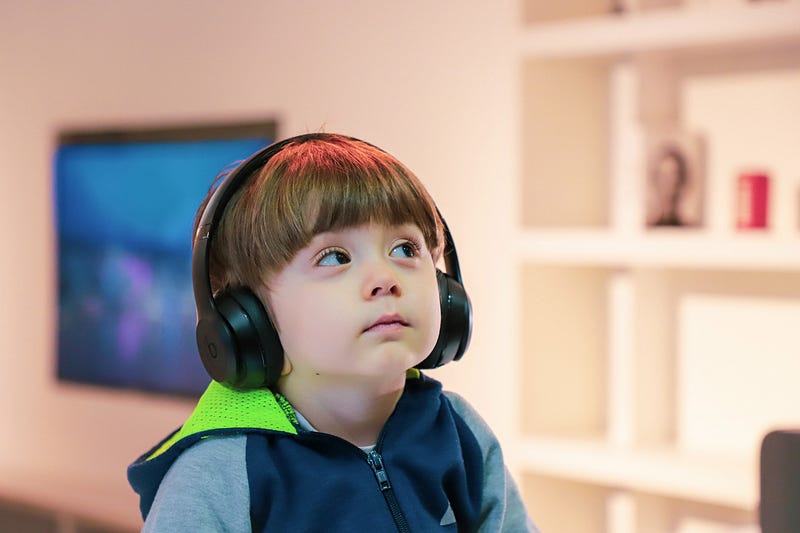
Photo by Alireza Attari on Unsplash

Before COVID-19 hit, I listened to audiobooks every day because my commute ran about an hour and a half each way for a total of three hours a day. I always had two books going — one audiobook and one on my Kindle. The time flew! I became addicted to audiobooks. However, friends doubt the benefits I derived from listening to audiobooks.

As a reading specialist with a Masters in Reading, I know the activity is as beneficial as reading, especially for struggling readers. Anything that creates interest in reading is beneficial, but listening to audiobooks develops many of the same skills as reading a book, including comprehension, but the idea it creates avid readers is most important.

Adobe Stock By Jacob Lund

As a kid, I wasn’t a reader. My teachers placed me in a special reading group for reluctant readers. Then, in sixth grade, my mom attended a parent-teacher conference wherein my math and science teacher informed my mom I wasn’t working to my full potential.

Oh, the humanity! My mom came home and immediately forbade me from watching TV. When I left home at 18, my TV watching privileges still hadn’t been restored. At 11 years old, I turned to the only thing left: reading. I read anything and everything even Helter Skelter, which scared me to no end.

This punishment ended up being the best thing my mom did for me. I read and read. I hid under the covers, flashlight in hand, reading. During the summer, my mother would throw me outside to play. Instead, I read on the porch. I went everywhere with a book. I still do. I carry a Kindle in my purse in case of emergencies. Instilling a love of reading in others is my mission.

Instead of forbidding TV, try audiobooks as a way to entice your reluctant reader to pick up a book. It works.

Advantages

Laurence Gander contends audiobooks are advantageous for a few reasons:

  1. The reader can learn sentence cadence and proper punctuation.
  2. The reader develops comprehension skills and expands vocabulary.
  3. Audiobooks can be “read” anywhere and anytime.
  4. The voices used by the audiobook readers creates interest and captivates the reader.

Photo by Yingchou Han on Unsplash

Shu-Hsien Chen agrees with Gander but goes on to state that pairing the physical book with the audiobook teaches readers to associate the sound with the actual word. Eventually, struggling readers develop confidence as they master the text.

Development of Reading Strategies

Additionally, Chen states the reader must actively listen to make sense of the story turning what seems to be a passive activity into an active one. Therefore, comprehension skills develop together with critical thinking skills.

According to Natalie Puckett, her students who struggled with reading retained more information as they listened to more audiobooks, which increased their enthusiasm for reading. These reluctant readers’ interest in reading print books increased as well. Essentially, audiobooks became the gateway to books in print.

Moreover, struggling young readers learn early that reading is difficult. This dislike continues throughout their academic career and, in turn, affects other academic areas creating not just struggling readers but struggling students. As a matter of fact, one study contends, “reading competence as a vital skill in its own right and as a necessary skill [achieves] competence in other academic subjects, including the humanities, science, mathematics, and the social sciences.”

Other Benefits

Audiobooks are also now widely available eliminating yet another argument against audiobooks. Francisca Goldsmith discusses the availability of not just the audiobooks but also the means by which struggling readers can access audiobooks. Many libraries now loan out tablets thereby increasing the availability of audiobooks.

Even English majors can benefit from audiobooks. To obtain an English degree, certain courses specializing in Shakespeare or Milton or Chaucer are required. Yet, how many average college students are prepared to read Middle English? Not many. Pairing the audiobook with the text can benefit the advanced student as well. Shakespeare wrote his plays to be heard, and not necessarily to be performed. Think about the Globe Theatre and how many patrons could actually see the performance; however, all of the patrons could hear the performance.
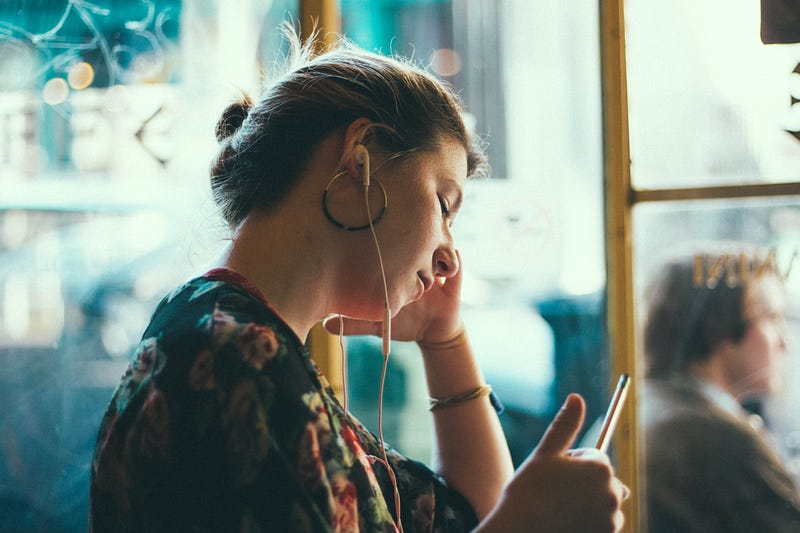
Photo by Siddharth Bhogra on Unsplash

Finally, audiobooks can be a bonding experience. Unlike printed books where the interaction with the text is limited to one reader, audiobooks can be shared. For example, when taking a road trip, the family can listen to an audiobook. My stepdaughter fondly remembers our road trips. We listened to standalone books, but we really loved listening to the book series. It became our own little tradition, which she still remembers and cherishes.

When I decided to obtain my Masters in reading, I did so with the altruistic intention of gifting non-readers the world of reading. Part of me still identifies with these reluctant readers. However, in middle school, I learned I could escape my problems simply by opening a book. Today, reading has done more for me than simply allowing me to escape my everyday woes. It’s opened up worlds and opportunities. I am more empathetic. I am a critical thinker. Don’t you want to develop these skills for that reluctant reader in your life?

Reading
Learning
Parenting
Education
Books
Recommended from ReadMedium