
How To Think Like Steve Jobs: Improve Your Understanding Of Things By Thinking In Analogies
Thinking with analogies can help you to solve problems efficiently.
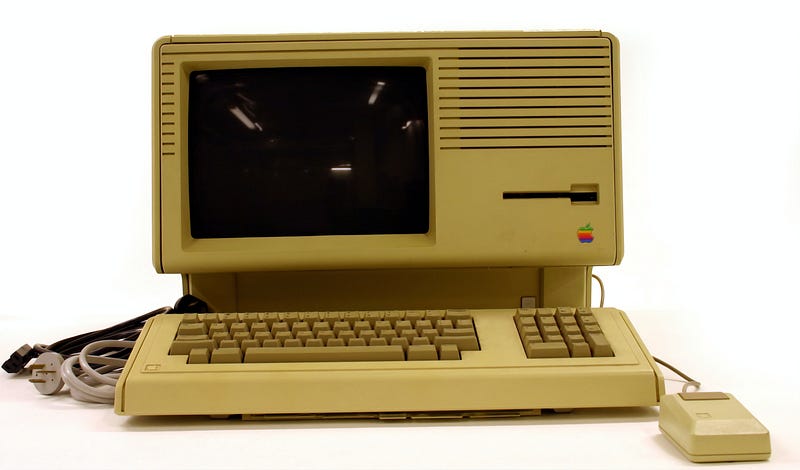
“Part of what made Macintosh great was that the people working on it were musicians and poets and artists and zoologists and historians who also happened to be the best computer scientists in the world.” — Steve Jobs
Steve Jobs often liked to compare computers to bicycles. According to the founder of Apple, a computer is like a bicycle for the mind. This idea popped into his head when reading a study describing the locomotion of various animals on Earth. While totally unrelated to his core business, the lessons from that one article had a profound effect on Jobs’s thinking.
A condor is very efficient when it comes to using energy in its movement. Humans, on the other hand are way less efficient. However, there is one thing that is special about these multi-colored bipeds. Humans are the only animals that have learned to surpass their natural limits. When you give them a bicycle, their energy efficiency blows the condor away.
Reading these statistics, Jobs had a brilliant insight. A computer is just like a bicycle for the mind!
“I read a study that measured the efficiency of locomotion for various species on the planet. The condor used the least energy to move a kilometer. Humans came in with a rather unimpressive showing about a third of the way down the list.
That didn’t look so good, but then someone at Scientific American had the insight to test the efficiency of locomotion for a man on a bicycle and a man on a bicycle blew the condor away.
That’s what a computer is to me: the computer is the most remarkable tool that we’ve ever come up with. It’s the equivalent of a bicycle for our minds.“
This is a great comparison, one that clearly demonstrates the advantages that a computer brings to the average person. A normal person, even one with great speed and stamina, can cover only a very limited range on foot at any given time. However, when they get up on a bike, the speed and range that they can cover expands exponentially.
Similarly, with your normal brain, you can remember only a limited amount of things and do a limited amount of actions. On the other hand, if you add a computer to the mix, you have access to vast stores of information and software that allows you to carry out a huge number of things that you cannot do just on your own.
An analogy is the process of comparing one thing to another, noting the similarities between them. What Steve Jobs did here is to use an analogy to pass a message across. His comparison of a computer to a bicycle served as a way to outline the enormous power that this machine gives to your mind.
Jobs’ analogy showed the listener how beneficial owning a computer would be to them personally. You often resort to artificial modes of transport to get around much faster. Why not use a computer to enhance the capabilities of your brain?
Using analogies is about comparing mental models
When you are doing thinking in analogies, you have two models that you are comparing: the source system and the target system. What happens is that you are using the source system as an analogy to infer some characteristics of the target system.
The source system is something that you are quite familiar with. The purpose of using an analogy is to better understand the functioning of the target system, the one you are less familiar with.
What you are doing is mapping the source system to the target system. You create maps in your brain between the two systems and apply concepts from the source system (which you know quite well), to the target system. This helps you then to better understand the target system.
The key to all this is determining how similar the two models really are in reality. If the two systems are very similar, then the conclusions you form are valid. However if the similarities are only superficial or weak, then the conclusions you form could be incredibly misleading.
What can you use analogies for?
There are two basic things that you can use analogies for: understanding (learning) and for problem-solving.
- Understanding
- Problem-solving
In school, in basic physics class, you might remember the lesson where they showed you how the atom looks like a tiny solar system. There were electrons rotating around a nucleus composed of protons and neutrons. This model (called the Bohr model) used the analogy of the solar system as a way to better demonstrate what happens inside an atom.
While modern research shows that what happens inside the atoms is much more complicated than that, this solar system analogy does give you a basic idea of the inner workings of the system.
This model works with the basic premise that most people have a decent understanding of how the solar system works (source system). The sun is at the center, and the planets orbit around it. By applying this analogy, people who are starting to learn about physics can get a better understanding of how atoms function (target system).
This is one of the main uses of analogies: understanding how something works. You can use analogies to help you learn better about the way things function. When you are learning about a new subject, you might use analogies from another similar subject (one that is more familiar to you) in order to understand it.
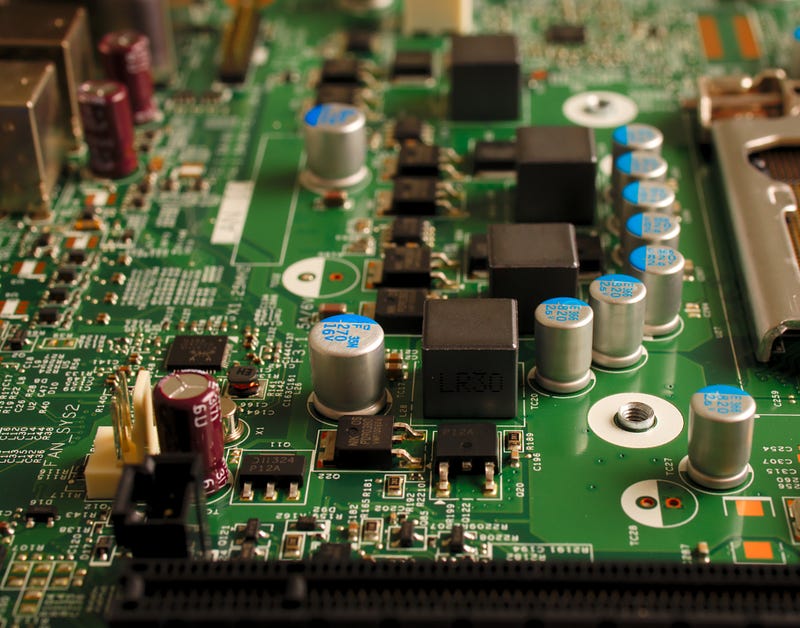
One analogy that is often used to show people how the brain works is comparing the human brain to a computer. Here the source system is the computer and the target system is the human brain. Let’s take an example of how the brain is described as being akin to a computer from a blog post by Shamli Prakash:
“If we break it down, the human body functions very similarly to modern day computers — or rather, computers are very closely aligned to the most complex processing unit there has ever been, namely the human brain. Going back to basics for a moment — any information processing system consists of 5 main components — input, output, storage, processing and program. We can draw parallels between the brain and computers for each of these elements.“
In this analogy, Prakash states that any processing system consists of 5 main components. These are input, output, storage, processing, and program. All these words come from the computer world.
Yet here, these words are used in order to describe what happens inside the human brain. For many people this type of an explanation can help them to better picture the different processes at play.
Apply analogies to solve problems
Learning about how things work is not the only use of analogies. Analogies are also quite important in problem solving. This is when you apply tested processes from one area to another, or reuse already existing solutions.
One thing that you are doing here is improving a process. Let’s take the example of Henry Ford and how he revolutionized the world of car-making. He used first principles thinking by changing the process of making cars.
However, he did this by using an analogy from another domain. In 1913, Ford introduced the assembly line at his factory in order to mass produce his Model T. This reduced the time it took to assemble an individual car by almost ten hours!
The main part of the assembly line at the Ford factory was a moving conveyor belt that was inspired by what could be seen in those years in Chicago’s meat-packing plants. The credit here should go to one of Ford Company’s employees, William Klann.
Apparently, Klann went to a slaughterhouse in Chicago and noticed how the carcasses of animals were butchered and disassembled as they moved along a conveyor belt. Each person standing at the conveyor belt had their own piece of animal to remove, over and over again.
Klann was inspired by how smooth and efficient this process was and reported it to his superiors at the Ford plant. Using this analogy from the domain of meat-packing ended up changing the world of cars forever.
Car manufacturing is not the only industry that used analogies from other domains in order to revolutionize itself. If you are like most people, then you have probably used the Google search engine to search for something on the internet in the past week.
Did you know that the early Google search algorithm was also based on an analogy, but a very unusual one? Larry Page and Sergey Brin were both researchers when they came up with Google search, and the fact that they came from the academic world inspired how it worked.
In a very good example of combining things to make something new, Larry Page used the analogy of citations to web pages. Basically, in academia, you get ahead by getting citations. The more citations of your works that you have, the more important and authoritative you are.
Page thought of links to web pages as citations, and applied this to search engines. The more links a web page has, the more authoritative it is and the higher in the search results it should rank. The initial Page Rank algorithm that Google used was based on this ingenious analogy.

You can use different analogies to come up with very interesting answers to problems. The analogy of a human brain as a computer can serve as a model to illustrate how the brain works, however some researchers are doing the reverse and using the analogy of how the brain works to make the functioning of computers better.
One team of scientists have modeled computer robot brains after the synapses in human brains:
“A team of scientists at MIT has completed a successful initial test of a computer modeled after brain synapses rather than binary 1’s and 0’s, which could well lead to robot brains that are structured like our own — thereby giving our adaptability to computers so that we become truly obsolete.“
The way the brain works also serves as analogies for several of the methodologies behind machine-learning and artificial intelligence. For example research into how humans remember things has inspired the creation of deep learning models for artificial intelligence:
“When you remember autobiographical events such as events or places we are using a brain function known as episodic memory. This mechanism is most often associated with circuits in the medial temporal lobe, prominently including the hippocampus. Recently, AI researchers have tried to incorporate methods inspired by episodic memory into reinforcement learning(RL) algorithms for episodic control.“
There are many other analogies that are taken from the field of neuroscience and applied in the field of computers and artificial intelligence. What is happening here is that the way the human brain solves problems is inspiring solutions to problems in the quest to make fully functioning thinking robots.
From changing the paradigm from making cars painstakingly by hand to the mass manufacture of them on conveyor belts by Ford, from Google algorithms for searching on the internet inspired academic citation scores, to deep learning methods of artificial intelligence based on the ways the human brain works, analogies have been used to solve many problems.
When you need a tried and tested way of solving a problem, then using analogies is something that can help you to come up with many solutions quiet fast.
Analogies can give you big insights into the world
The thing about using an analogy is that it can be adapted in many ways. A novel way of using an analogy can sometimes give you big insights into the world. However, the answer you get depends not only on the analogy you use, but also on the parts that you choose to focus on.
Going back to the analogy that Steve Jobs made, how do computers map to bicycles? On a first look, they look quite different. However, the analogy here is not about how these two things look or work, but about the fact that they help extend human abilities. The bicycle helps extend the human capacity for covering distances, while the computer helps extend the human capacity for knowledge.
The way to come up with some of these deeper insights, is if you realize that the key to analogies are not the features of the individual objects in the models you are using (computers and bicycles are very different individually), but instead the high-level relations underlying the two models you are comparing.
Steve Jobs was very good at finding these underlying higher-level relations between different things, and then incorporating them into his work. It is quite likely that you are reading this on some sort of a computer-based device (computer or pad, or smartphone), and your screen is organized a bit like a desktop.
There are different icons around the screen that you can click on and use. You have folders and documents and if you open them up, they serve the same functions as paper folders and paper documents in the physical world.
This is called the desktop metaphor and was based on the brilliant insight that what you see on the screen could be organized like the actual top of a desk. Before that, the user interfaces were clunky command lines, which were hard to get around. Using this metaphor really changed things.
People were used to physical desks and working on them. Why not organize the screen on the computer in a similar fashion? Steve Jobs was not the one who came up with this metaphor, but he was the one who saw the power of this for personal computers.
The idea originally dates from 1970 and came from Alan Kay, who was working at the motherland of all things personal computer, the Xerox PARC laboratories. There were some experimental computers that worked with this, but it was Steve Jobs who saw the potential of this analogy and incorporated it into his Apple Macintosh in 1984.
The concept was simple, yet elegant, and became the basis for how almost all personal computers (and other later devices) became organized. Jobs used another analogy when he was deciding on the way Apple computers should look like.
The story is quite curious, but it serves to illustrate that you can find working analogies almost anywhere. You just need to keep your eyes open, and your brain alert. One day, Jobs went into the kitchen section of a Macy’s store, and spent his time carefully examining food processors.
One of these food processors caught his eye in particular, and he decided to buy it. When he came back to talk to the designer of the Apple II computer, he said:
“Here’s what we need for the Apple II, a nice molded plastic case with smooth edges, muted colors, and a lightly textured surface.“
This is how a simple food processor became the inspiration for personal computers.

How to use analogies for management of your teams
One of Steve Jobs most versatile and iconic tools was his ability to use metaphors and analogies in different situations. Not only did he do this to create revolutionary products, but also in other spheres as well. One area which was particular targets of Job’s propensity for metaphors and analogies was the management of his teams.
There is one interesting quote from a lost interview with Steve Jobs that demonstrates one of these metaphors for working with people:
““When I was a young kid there was a widowed man who lived up the street. He was in his eighties. He’s a little scary looking. And I got to know him a little bit. I think he may have paid me to mow his lawn.
One day he said to me, “come on into my garage I want to show you something.” And he pulled out this dusty old rock tumbler. It was a motor and a coffee can and a little band between them.
And he said, “come on with me.” We went out into the back and we got some rocks. Some regular old ugly rocks. And we put them in the can with a little bit of liquid and little bit of grit powder, and we closed the can up and he turned this motor on and he said, “come back tomorrow.”
And this can was making a racket as the stones went around. I came back the next day and we opened the can. And we took out these amazingly beautiful polished rocks.
The same common stones that had gone in through rubbing against each other like this (clapping his hands), creating a little bit of friction, creating a little bit of noise, had come out these beautiful polished rocks.
That’s always been in my mind my metaphor for a team working really hard on something they’re passionate about. It’s that through the team, through that group of incredibly talented people bumping up against each other, having arguments, having fights sometimes, making some noise, and working together they polish each other and they polish the ideas, and what comes out are these beautiful stones.”“
This was the magic of Steve Jobs. He would be able to combine great storytelling with a perceptive eye for effective metaphors and analogies, and apply them in many different situations. He would not only be able to convince people of his vision, but also to apply them in order to inform the different processes and products of his company.
This is something that you can take away from the thinking processes of Steve Jobs, but also other world-class innovators. Analogies are one of the tools that you should have in your tool belt, not only if you want to make a shrewd comment or argument, but also if you want learn about things, and solve many different kinds of problems.

Note: I published a previous version of this article on Steve Jobs thinking by analogies on my blog.