
How to Tame Your Anger by Confronting the Pain That Lurks Beneath
Anger is always a secondary emotion.
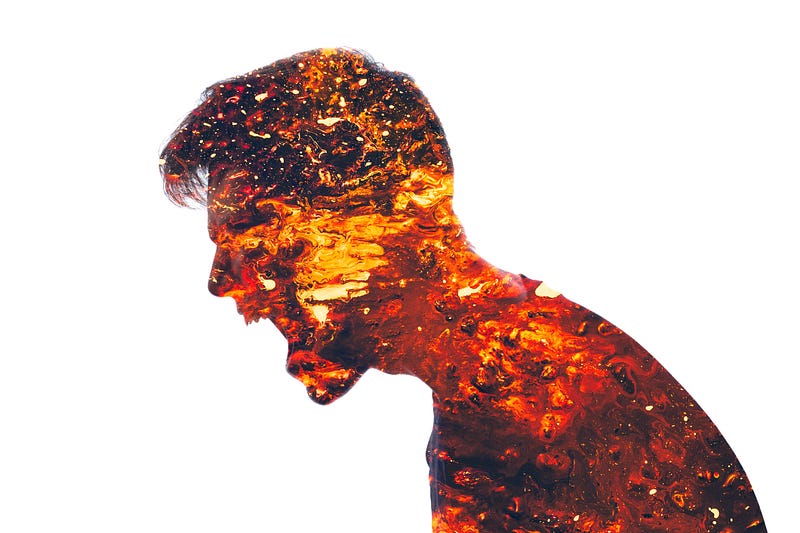
When my PTSD was at its worst, I had a hair-trigger temper. I’d rage against my family if they said a wrong word and I was horrible to be around.
It took me years to understand that anger wasn’t my real problem. Rage is never the primary emotion. It’s a cover for something deeper. I used it to hide my pain and sadness. It was easier to shout and push people away than cry.
If you’re like the old me, you feel anger without knowing why. It sabotages your dreams and relationships. Let's figure out what’s going on.
The many routes to rage.
Although many of us suffer from anger issues, our triggers differ.
Some people get angry when they feel threatened or personally attacked. While recovering from years of being bullied, I tried to make myself so formidable and indomitable that no one would ever be able to hurt me again. But my dad saw through my facade. He still saw the same scared, lonely boy, which drove me mad. We had so many arguments because the truth hurt. His bluntness and my sensitivity were a fiery combination.
Other people get angry in response to feeling frustrated or powerless. As a police officer, I saw people arrested for crimes they hadn’t committed, mainly due to malicious allegations. There’s an undercurrent of racism in the police as an institution where black people are stopped and searched more than white people. I saw a big divide between ethnic minorities and the police because of the disproportionate use of power.
More subtly, some people get angry when they believe their feelings aren’t respected. This is often the anger you get in relationships when people fail to communicate.
Grief is another reason for anger. My dad died in 2019, and the pain was overwhelming. Anger was far more familiar to me, so I raged at him for leaving me, and I seethed at society for going on as usual. I tried to bury the pain, but it still found a way through at 3 am when I cried silently in bed so as not to wake my partner.
We’re seduced by anger.
The common theme from all the above scenarios is that people make themselves angry so they don’t have to feel pain. It feels better to be angry than it does to hurt.
There are personal advantages to turning pain into rage. If you’re in pain, you can’t think about anything else. You'll know what I mean if you’ve ever had a toothache. It can be all-consuming. However, if you’re angry, you focus on harming those who have CAUSED the pain. You get to shift the attention away from yourself to other people. It’s better to lay in bed at night and plot revenge than to nurse a broken heart.
Therefore, it seems anger protects you from confronting and dealing with your pain. Instead, you get to take control and imagine exotic forms of revenge against the people who’ve wronged you. Men especially don’t like admitting they are frightened, scared, or vulnerable.
Another benefit of anger is a feeling of righteousness. You take the moral high ground and exert power over the situation. When you’re furious, you have a cause to dwell on. You get to decide who was right or wrong and demand punishment.
When fury explodes.
Things wouldn't be so bad if this were where the story ended. You could convert pain into anger, rage silently, feel morally superior, and be fine in time.
But there are problems with this approach.
First, there’s the risk you’ll become TOO angry. For some people, their anger erupts into violence. At the extreme, this turns into murder. America’s dark history of mass murderers is littered with young, angry men like Isla Vista shooter Elliot Rodger, Charleson shooter Dylann Roof, and Virginia Tech Shooter Seung-Hui Cho.
These people start off feeling pain. The pain of not fitting in. They are typically bad communicators who lose hope of anything changing. They feel worthless and see a future filled with loneliness.
The “cure” for this intolerable pain and self-loathing is a fantasy of revenge against the world that turned its back on them. Anger is their defense mechanism and their greatest protection against total humiliation.
Suddenly, these shooters feel empowered. They can punish others for their perceived slights, and they have nothing to lose as they see no future. They even see themselves dying in a blaze of glory — going out with a bang instead of a whimper and setting themselves apart from the rest of us for eternity, thus emerging from the shadows.
The pain turns inward.
For me, my pain from PTSD turned inward. While I briefly fantasized about hurting my bullies at school, most of the time, I felt self-loathing. The pain was still there, no matter how much anger I tried to force up inside me.
I tried to numb it with alcohol. Many weekends I could be found semi-conscious in various alleyways, covered in my own vomit and pitied as a down and out by anyone walking past.
I tried to numb it with food. No matter how bad things got, I could look forward to the brief high of stuffing my face with the kind of food that would repeat on me for hours afterward and make me feel even worse.
I tried to numb it with fighting. As a Police Officer, I loved going to large and violent disturbances. I enjoyed people resisting arrest because maybe I’d win the fight, which would make me feel good, or perhaps I’d lose and take a beating I thought I deserved anyway. It was a win-win situation.
All anger ever did for me was make me intolerable to be around — a shadow of my former self that sat in my room seething about how much I hated people. My loved ones described me as being full of rage. I never got on top of my anger until I began to face the pain that lurked beneath.
Stare into the abyss.
Anger is a seductive mistress when it comes to avoiding pain, but nothing good comes from it in the long term. Anger is poison whether it overflows and hurts people or turns inward and destroys you.
If you have anger issues, you have a pain problem; the quicker you address it, the better. You may need professional help to get to the bottom of your anguish, or maybe you already know the cause.
It takes real strength of character to be vulnerable instead of furious, cry instead of rage, and soft instead of hard.
The next time anger bubbles up inside you, ask yourself what it means and follow the trail to the pain. Have the courage to stare into the abyss.
Click here to join my Substack community, where we focus on all things related to mental health.