
How to Take Great Notes: The Best Note-Taking Systems Illustrated
“There’s nothing better than a beautiful day at the beach filled with sun, surf, and uh, diligent note-taking.” — Pam Beesly, The Office
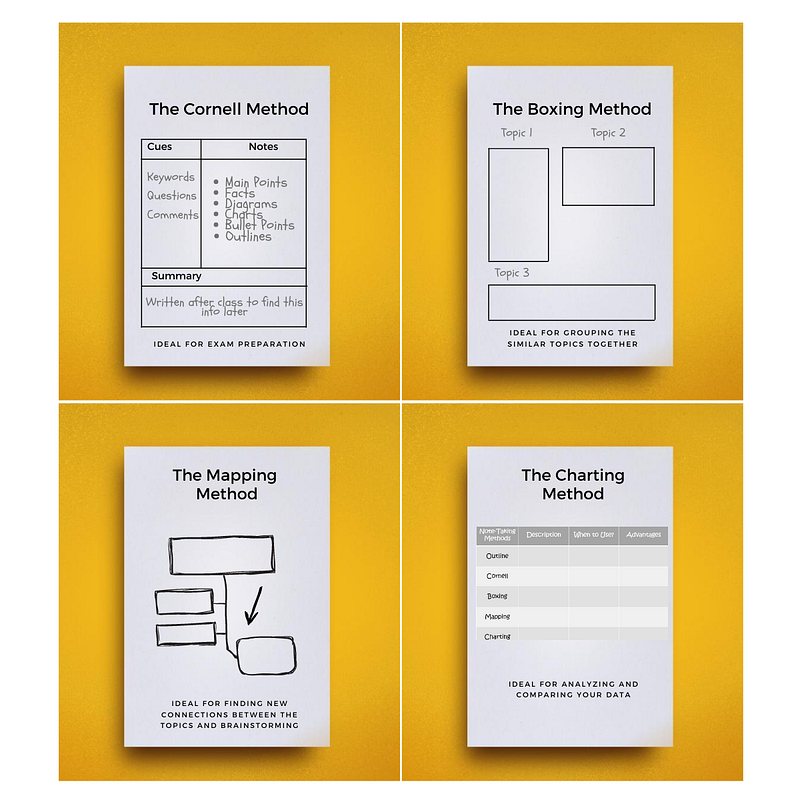
Good notes can justify the time and efforts you spent taking that online course or talking to a potential client. And you probably heard that there is more than one way of taking notes; all of them serve different purposes. However, all of them can make you a better student or even become a valuable skill that you might use daily at your job.
Maybe, you heard the names like “The Outline Method” or “The Cornell Method” but unless you actively used them, you might struggle to explain what each of them means. That’s why I tried not only to describe the most popular note-taking methods but also to add bright illustrations to the mix. Even if you forget everything you’ve read today, I hope that these pictures will pop up in your head when you need them the most.
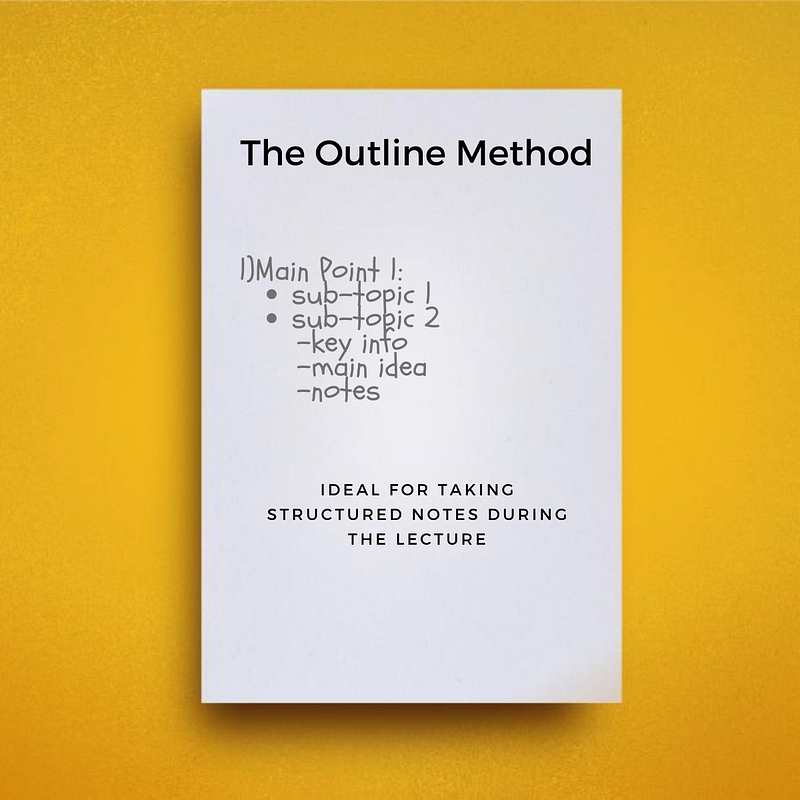
The Outline Method
Perfect for: taking structured notes during the lecture, material review
The easiest and probably the most used method out of them all is The Outline Method. You probably don’t call it that but intuitively, everyone knows how it works. Separate the lecture into main points, add subtopics, and specify additional bullet points if needed. Instead of writing full sentences during the lecture or a meeting (which is almost always impossible to do), writing down the key points and notes saves you both time and energy.
The Cornell Method
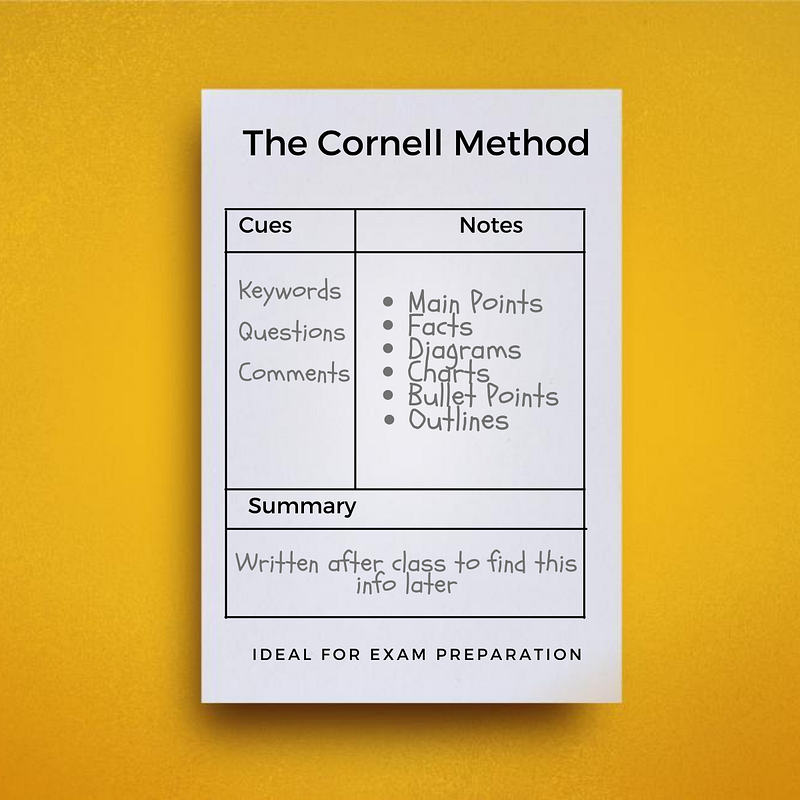
Perfect for: organized and systematic recording and reviewing notes. Easy format for pulling out major concepts and ideas. Ideal for exam preparation.
The Cornell method provides a systematic format for condensing and organizing your notes in one place. After writing the notes in the main space, use the left-hand space to label each idea and detail with a keyword, hashtag, or “cue.”
The Boxing Method
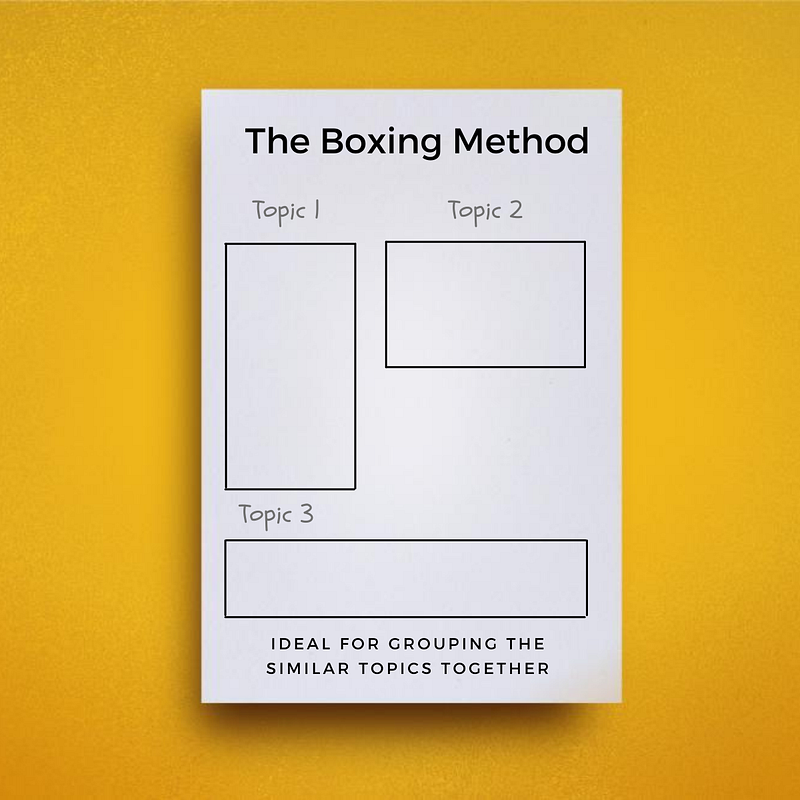
Perfect for: grouping similar topics together, finding connections, digital note-taking
Compared to other methods on this list, The Boxing Method is a relatively new concept created for digital note-taking. With the boxing method, you need even less time for taking notes. If you frequently use an iPad with an Apple Pencil, a touch-screen laptop, or even a good old Notes app (did you know that you can draw there too?), this method allows creating, grouping, and re-arranging notes on the fly.
The Mapping Method
Perfect for: visual learners, creative thinkers, brainstorming new ideas
This creative format helps you to visually track your lecture even if you don’t have a lot of time to write everything down. Little thinking is needed and relationships between topics can easily be seen. It is also easy to review and edit your notes later by adding numbers, marks, color-coding, sticky notes, stickers, note cards, flashcards, drawings, or whatever else you might need to understand the material better.

The Charting Method
Perfect for: analyzing, reviewing, and comparing your data
And finally, who wouldn’t like a good old excel-style chart? Just like with an excel spreadsheet, a lot can be done with a simple hand-written table. The best time to use The Charting Method is when the lecture is fast, the material is dense and focused on facts or relationships.

Are you excited to give these note-taking systems a try?
Grab this Notion template along with PDF downloads, perfect for effective digital and offline note-taking. Enjoy!
If you liked this article, here are some other articles you may enjoy:


