
How to survive when you’re struggling emotionally
The going has gotten tough. Now you need to survive it. Get the tips that can help you keep your head above water.

by: E.B. Johnson
No matter what stage you’re at in life, things can be tough. Whether you’re 20 or 100, it’s easy to get crushed and ground-down by the adversities and obstacles that pop-up all around us.
Life is full of hardships, heartbreaks, illness, abandonment and death — all of which can leave us feeling like vulnerable, emotional wrecks. Every hurt we experience is a personal one; every scar has a story. Surviving life is like surviving a war; but how can you possibly go on when it feels like your heart is aching with every single beat it takes?
The advice isn’t always comfortable, but it is always right. If you’re trying to survive an emotional disaster: the answer is on the inside.
Regulating our emotions.
We almost view our emotions like strange visitors, detached from ourselves and visiting irregularly and without invitation. Emotions, however, are actually far more important and play an important role in our behaviors and the way we achieve our goals.
Usually, our emotions are fleeting and minor, but occasionally they are far more intense and lasting in nature. The usual emotions are easy for us to regulate, but the big things can be far more overwhelming to deal with. When we struggle to deal with our emotions, they can get out of control, and manifest in our lives through negative beliefs, behaviors and reactions.
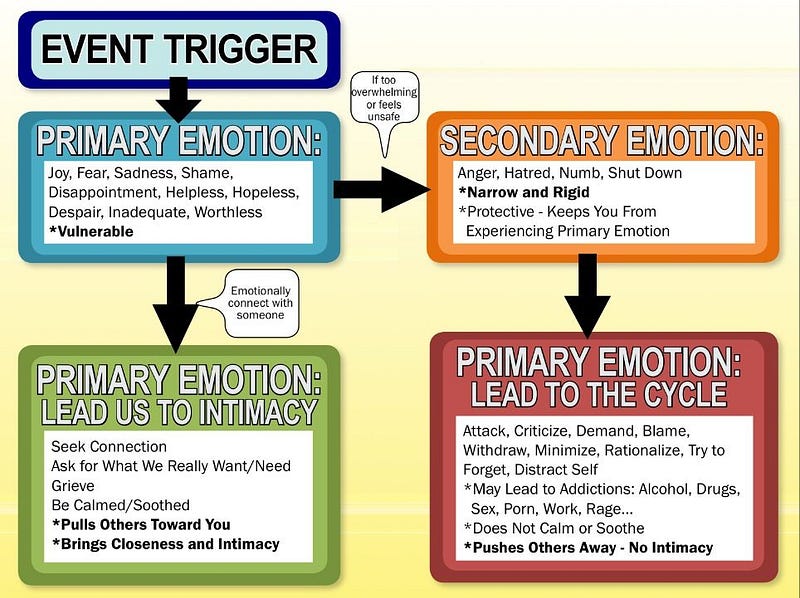
The type of regulation we usually engage in when it comes to our emotions is “down-regulation”. This type of regulation centers around intentionally or willfully reducing the intensity of your emotions, in order to meet a preconceived standard or ideal appearance. For instance, a grieving person might “put on a brave face” or an anxious person might drink until they’re giddy in a social setting.
The flip side of “down-regulation” is “up-regulation”, or an intentional amping up of your emotions to meet a challenge. This type of regulation is a bit more rare, but can be beneficial in helping you in fight-or-flight situations.
We engage in both types of regulation throughout a single given day but they can be useless when it comes to a barrage of trauma or difficulty. When we fail to regulate our emotions, we can find ourselves lashing out in anger and letting fear take over rather than common sense.
Our emotions are powerful and inherent, dictating everything from how we interact with the people around us, deal with challenges, spend our money and even how we spend our time. Gaining control over our emotions is imperative to build our mental strength and takes time, practice and dedication. It can be done, though, with just a little perseverance.
The things to remember when you’re struggling emotionally.
Before you take any steps toward regulating your emotions, there are a few important things you should remember about how you’re feeling and where you’re at right now.
This is your chance to dig deep.
Forcing yourself to be present when you feel like your soul is bleeding is a challenge, because it’s a lot harder than doing it when things are going well. Being present in the moment, however, is the only way you’re going to be able to tap into your inner strength and move forward with clarity and hope.
You have to look at this dark moment as a chance to dig deeper. You won’t get lost in the darkness if you keep your intention sharp and clear. Close your eyes, take a few deep breaths and let yourself feel what you’re feeling. Embrace the emotions, the good and the bad, and let the waves wash over you until the storm is over.
When you can feel the air in your lungs again repeat,
“I can do this. I am enough and I will thrive. No matter what.”
Embrace this opportunity to get down to the nitty gritty of who you really are. Emotions will drag you deep, but that is the only place you can find true growth. Open you arms to the ride and the going will be that much easier.
You’re getting stronger every day.
No matter how bad things are right now you have to remember one very, very important thing: You are getting stronger every day.
We can root through the reasons bad things are happening to us all we want, but it won’t make the pain any better. The past cannot be changed, but a new future can be designed. Embrace the truth that no matter what is going on around you in this moment, you will be a stronger version of yourself come the ending.
Your victory will be an inspiration to someone else.
Rising above our struggles makes us stronger and more resilient. It gives us perspective and a vantage point that is hard won and well-deserved. When we are able to triumph over our adversities, we are able to lift up and inspire others.
When you keep fighting, you give someone else the steam they need to keep fighting. Uplifting others is one of the most beautiful experiences we can have in life. We can’t lift up others from the ground, though. There’s got to be a climb involved.
This is the next step.
Life is just one collision with the future after another. Over and over again we experience trials and tribulations as our today collides with our tomorrow. These are growing pains; stretches between the places where the old us meets the person we are going to become.
If you’re in the midst of a truly miserable moment, realize that this is the next step.
This is your today colliding with your tomorrow, calling out the better you for a better future over the horizon. This is the boarding call for your flight to paradise, the next step in a journey that’s going to take you to some truly incredible places.
The sooner you realize that, the sooner you’ll be able to look forward to the future with excitement, rather than anxiety. Know that you’re heading for great things and you’ll get there.
It’s only getting more interesting.
Troubles and trauma have a great way of adding dimensions to us as humans. When you’re struggling, think of it like a novel. The setbacks are what make the story worth reading; obstacles are the things that make characters develop.
Life would be boring if it was nothing but a smooth ride. We, too, would be completely flat and static characters with no substance or understanding of what the world really is. Our suffering is good for us because it adds color to our character. It makes us better by forging us in fire and it builds our resilience in a way happiness just can’t.
Embrace the adventure for the color and character it’ll add to your story. No good tale ever existed without a little chaos. Welcome the opportunity to grow.
The Best Life Hacks for Surviving an Emotional Sh*t Storm
We all self-sabotage and find ourselves in messes that leave us feeling hopeless and isolated. When things are going wrong, our emotions can become overwhelming, but you have to stay focused and you have to stay clear about who you are and what you want.
Use these 11 life hacks to keep your head above water when you’re drowning in an emotional sh*t storm that just won’t seem to settle.
1. Be vulnerable. Ask for help.
Don’t be afraid to say you messed up and don’t be afraid to reach out to someone when you feel like you can’t tread water on your own anymore.
Vulnerability might be one of the most underestimated human experiences out there. When we are vulnerable with others, we often make deep and long-lasting connections that benefit us for years to come. Being vulnerable is to be honest and people respond well to shows of authentic honesty.
People are always more understanding of those who admit their faults, and they’re always more forgiving of those who ask for help. We all have faults, so stop pretending you don’t have any. Reach out to others when you’re hurting and let them know in no-uncertain-terms what you need from them to help.
2. Figure out what’s wrong instead of putting it off.
Being overwhelmed by our emotions is unpleasant, so it’s no surprise that we often resort to the “tomorrow” excuse when it comes to facing them. Tomorrow is an illusion and worse than that, it’s a lie. When we say we’ll face something tomorrow, what we’re really saying is, “I don’t want to deal with this.”
Enlightenment isn’t reached by putting off the work until tomorrow and neither is happiness. Whether you’re in the right mindset or not, you have to face your feelings as they happen and get to the root of them as quickly as possible (in order to avoid some nasty manifestations later on).
Take some time to figure out what’s going wrong instead of putting it off. Start putting your energy into reaching a state where you can embrace your emotions (rather than shying away from them) and you’ll find yourself able to reach a state of contentment — if not happiness.
3. Learn how to say goodbye in the digital age.
We spend a lot of our time and energy trying to control things that are unresolved and unwilling. Even worse, in this social media age, we spend more time comparing ourselves to the people around us than ever before. The problem with this, though, is that this world is composed only of “highlight reels”; the best bits of people’s lives, and not always that authentic.
You have to learn how to pluck yourself out of this ruthless comparison cycle when you find yourself feeling vulnerable. If you find yourself being annoyed, irritated or otherwise disturbed by the things you’re seeing in the digital world around you — remove yourself from it. It can make us feel better to cut ourselves off from the things that upset us, so don’t be afraid to cut the digital cord. Even if it’s only for a little while.
4. Re-teach yourself how to feel your emotions honestly.
Our past experiences form a “Bottom Line” that sets the standard for how we deal with every situation in our lives. Depending on the level of trauma we experience as children, this Bottom Line can distort or mold the way we go forward in the wrong ways. Sometimes, a good rewiring is necessary.
Re-teach yourself how to feel and deal with your emotions honestly. When we spend all our time fighting our emotions and our pasts, we give them more power than we hold over our own destinies. Instead, we have to learn how to embrace, analyze and release our emotions, in a way that allows us to keep moving forward without being chained to our past traumas.
Don’t devalue your emotions; don’t write them off. No matter how small or “silly” you might think a feeling is, welcome it and watch it go by with a cooly critical eye. Stop belittling people for what they do and how they feel. Stop belittling yourself.
Realize that though every experience is different, our feelings are often common and repetitive. Learn how to feel your emotions rather than living sad, dumb and numb to them.
5. Incorporate small, healthy practices that allow you to build change over time.
You didn’t get to the spot you’re in now in a single day. You won’t get back to happiness in a single day either. Instead of trying to change everything at once, interweave small, healthy practices into your life that allow you to build up change gradually over time.
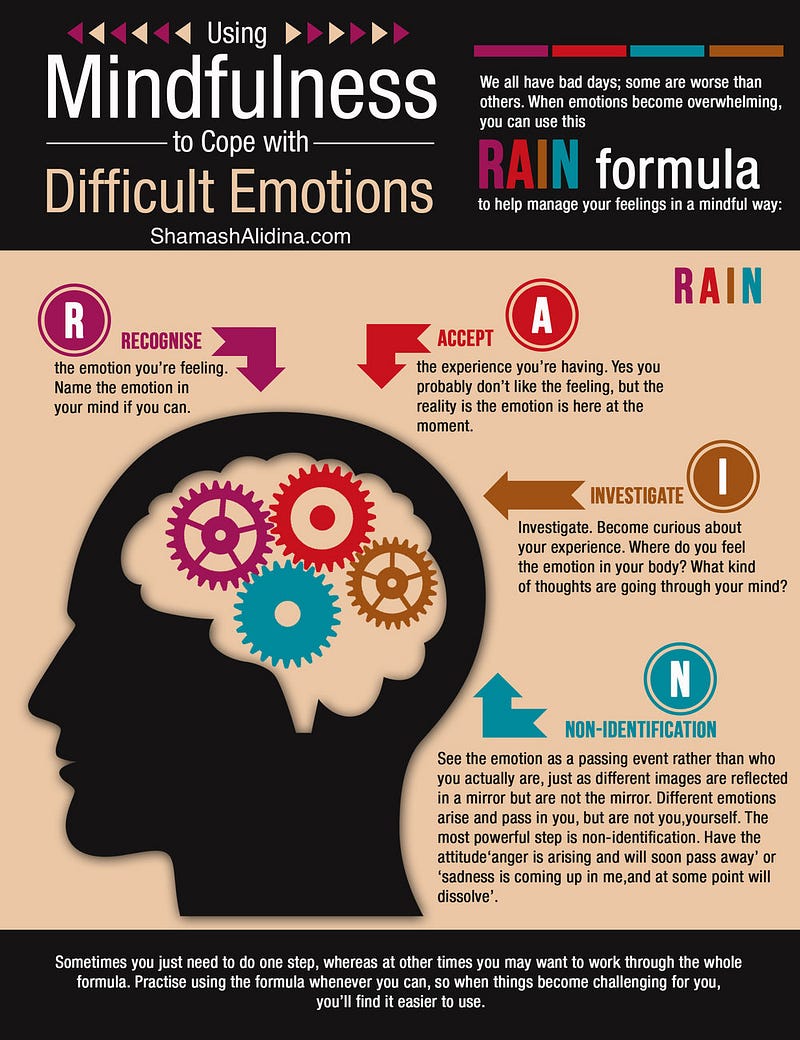
These practices can be as small as taking a few quiet, deep breaths each day or as big as training for a marathon. Learn how to recognize the difference in your physical body and the spirit that lives in it. The spirit is who you really are, the physical is simply who you appear to be.
Drink water, journal about the things that make you happy or sad or angry. Get to know who you are on the inside and the outside and you’ll wake up one day to realize you’ve been transforming all this time…you just didn’t realize it.
6. Focus on one thing at a time.
When we’re overwhelmed, we’re overwhelmed; biting off more than you can chew will do nothing to make things better. Focus on one thing at a time when you’re feeling emotionally overwhelmed and see that thing through to whatever it’s natural conclusion is.
If you need to just get through the work day — get through the work day. Don’t worry about meditating or running or having that intervention you’ve been thinking of for 20 years. Give your psyche a break and finish one task before you start on another. If you’re already on fire, the last thing you need to do is pile on more brush.
7. Free yourself from the negativity obsession.
You have to infuse your life with all the little things that make you happy, rather than just focusing and centering all your energies and emotions around the things that are going wrong in your life.
Bad things have a way of sucking up all our attention and forcing us to see the world around us in a harsh, dark light. In order to get back in touch with our “level headedness” we have to get back in touch with the little miracles that make life a beautiful experience.
The major aspects of our lives will always take over and make the basis of our day, but there are still a million startling things out there that can still capture our wonder and attention. Fill your life with those things when you can and reach out and touch the lives of those around you.
Life is worth living even if you’re forgotten that right now, but it’s going to take getting back in touch with the positivity all around you and letting go of your negativity obsession.
8. Get fascinated by your feelings.
When we can get fascinated by our feelings, we can unlock the truth of how we cultivate and express them. Get curious about the things that make you mad, sad, bitter or happy. Take an interest in why you feel the way you do and you’ll soon learn more about yourself and the way your emotions affect you.
Every situation has more than one dimension, and it is these dimensions that contain the greatest learning lessons for us. When you start to realize the possibility beneath your feelings, you start to understand what it really means to be alive.
9. Drop the incredulity response.
Getting blindsided by a setback or unexpected situation can leave you feeling stunned and focusing on all the things you did wrong to get there. This is called the “incredulity response” and it’s one of the ways our emotions paralyze us from enacting good change in our lives.
Sudden threats push us into an anxious or worried state of stasis. It zaps our decision-making skills and makes it impossible for us to think critically or creatively.
To beat this response, we have to learn how to loosen up and remember that there’s nothing that we can’t overcome with some time and effort.
Snap yourself out of the panic as quickly as you can when you encounter a bad situation and go through the motions until you feel the control starting to come back again. Give yourself time to shake things off completely before engaging in a reaction of any kind.
10. Stop minimizing your problems.
For some reason, we feel guilty when we talk about our problems, but this does nothing but deprive our problems of the attention they need and deserve. When we fail to identify our problems as what they really are, we sabotage ourselves and any modicum of success we’ve managed to build in our lives.
It’s essential to go through a self-pitying stage when it comes to our emotions. By constantly under-reacting and minimizing our problems, we store up stresses which lead to a bigger explosion of emotion later on down the road.
Our troubles may not seem as dramatic as those of others, but that doesn’t mean we feel them any less keenly. When the stakes matter to you, the contrast is irrelevant.
Minimizing your problems won’t help you get over them any faster and it won’t help them to get resolved or go away. The distinguishing factor between those who thrive and those who falter is the ability to turn the despair of our emotions into action.
11. Listen to opinions but build a strong filter.
People’s opinions are always going to matter to us, and the people around you are always going to have a lot of opinions when you’re emotionally struggling. Rather than shutting them all out, learn which ones to let in by building a strong filter that lets you sift out the bullsh*t.
Figure out a way to filter out what people say to you and about you. If they are offering you something of value, take it on board and store it in a place where you can use it later, but always stay grounded on the foundation of your own beliefs.
If they’re offering you something that comes from a place of dissatisfaction, dismiss it and let them know in no uncertain terms that you know what is best for your own life. The truth might be uncomfortable to hear, but lies are damaging. Build a filter and learn how to decide between the things that do and don’t matter.
Putting it all together…
The journey through emotional turmoil is a difficult one that can make it feel as though you’re struggling just to keep your head above water. Life’s hardships can leave us in a state of panic, making it impossible for us to move or make the decisions that could lead to a better tomorrow. Sometimes, we don’t even know why we feel the way we do and — more often than not — we get overwhelmed by the battering of emotions we experience on any given day.
Learning how to regulate your emotions is difficult, but it can be done over time by incorporating a few small, healthy practices into your life. Embrace and identify your emotions for what they are, cultivating happiness in your life by naming your problems for what they are. Drop the incredulity response and open yourself up to others and you will grab the reins of emotional control again. Get fascinated by your feelings again and take an interest in all the ways they impact your life.
Sometimes, you will be overcome with emotion. That’s okay. Dealing with our issues and finding happiness again can be as simple as changing our mindset. It’s just going to take some time and it’s going to take some dedication.
Are you up for the challenge?


