
Life Hacks
How To Survive a Crash
I’ve been in too many to not share

The impact was unavoidable. There was less than one full second between realizing my fate and the end of my car. Would it end me as well?
Probably not. The way cars are built today, it takes a severe impact and possibly some foolishness to die in a car wreck. The passenger compartment is reinforced and surrounded by impact-absorbing crush zones. Even convertibles have pop-up roll bars. The squishy humans are held in with belts strong enough to lift the entire car and surrounded by airbags. My 2 door Mini Cooper S had 6 airbags hidden away in the dashboard, steering wheel, and seat edges. So what happened when the car was totaled on the freeway and how can this help you?
Preparation
No one except a stunt driver prepares for an impact but there are some common sense things we are told and some may save your life.
The seat belt was the best safety invention for cars, second only to actual brakes. Before seatbelts, crashes would send the driver through a sheet of glass leaving them as sliced up as honey-baked ham. Safety glass was not much of an improvement as the resistance to breakage would sometimes let the head punch a hole through but hold back the shoulders so recoil would lop off the melon.
For a few years, I drove a Volvo 122 without seatbelts not realizing the equipment had been removed by a previous owner. Even after moving onto other cars with belts, I was inconsistent in use. It was not until I witnessed the aftermath of colleagues being ejected from a roll-over accident did I become a fervent user of the belt.
Distraction elimination is one item we have control over but continues to be ignored with rationalizations about it being just a glance. It was “just a glance” that put a truck bumper into the engine of my 328. Today when the phone rings, beeps, or squeaks my response is “I’m busy FO”.
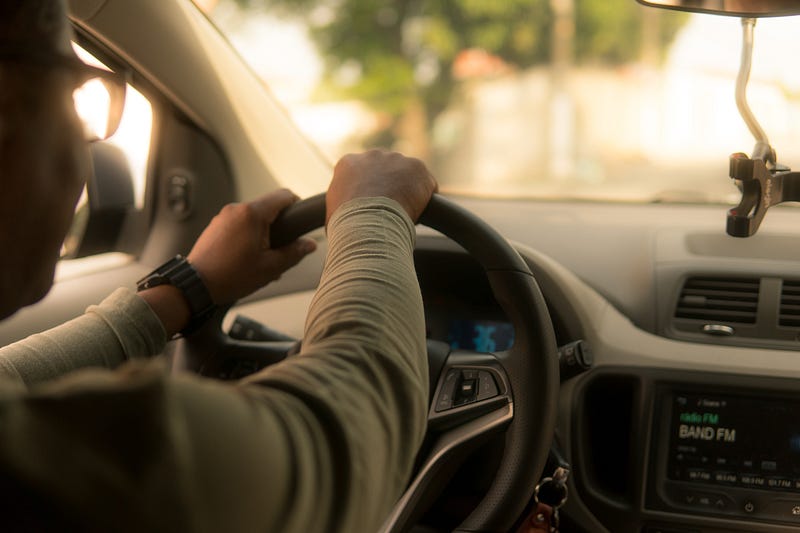
Wear sunglasses and long sleeves. Modern windshields have a plastic layer in the middle that holds it all together after being crushed. Even so, there will be a spray of glass particles like sand. Without sleeves, you will have a slew of tiny cuts, not life-threatening by any means but they will have to be carefully cleaned. The same for your eyes. You will blink so the glass sand will probably not cut your retina but it will be in your eyelashes making it hard to see until it gets rinsed out. Living in San Diego I am unlikely to start wearing long sleeves but sun glasses are standard. At night wear corrective lenses so I don’t see double images on tail lights.
There is no way to get your hands off the wheel in time to prevent cuts on your knuckles if driving with your hands at ten and two. There has been some advice to hold the wheel lower mainly to avoid arm fatigue on long drives and that could help. Also, some cars have steering wheel airbags that can break your thumbs if wrapped to the inside of the wheel. The Mini is not one but your mileage may vary.
Impact
This is the moment when all the defensive driving techniques and active evasion have failed and bent sheet metal is in the immediate future. At this point, your contact with the car is a liability.
Take your foot off the brake. The most common injury in a collision is to the leg and hip when the impact sends a shock wave up from the pedal. Most likely your foot will be pressed hard out of deliberation or panic. Either way that shock wave will travel into your body like a sledgehammer. You won’t feel the effect until the next day.
Put your head back on the headrest. This will increase the distance between yourself and the front impact as well as reduce the chances of whiplash should you be hit from behind in a multi-car pile-up. An increased distance between your head and the headrest also means you get smacked in the back of the head-on impact. This trick was taught to me in the Six Flags Superman ride where you are ejected from the station at 90 mph (the cars were front-facing in 1997).
Aftermath
First is re-orientation. Figuring out if you are right side up and which direction you are facing. This comes naturally as does the second part, checking for injury including bleeding. This is not a first aid course so let’s move to the next safety bit. DO NOT GET OUT OF THE CAR. It is highly unlikely the car is on fire and if it is you will still need this next moment.
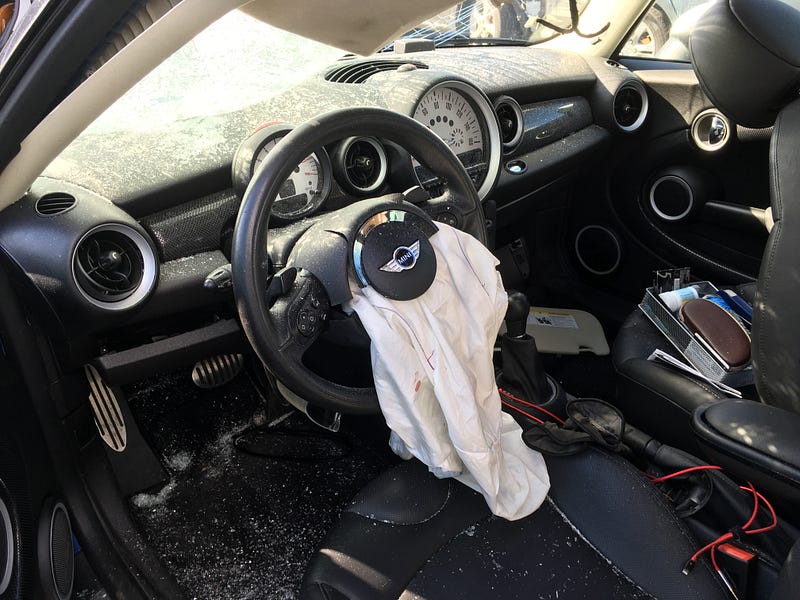
Is there a safe exit? If this is a freeway incident there will be other motorists to create a traffic block and assist your exit. Take it slow. The last thing you want is to exit the car and get hit by another vehicle. It will also take some observation of the interior to figure out which door can be used if at all. If you are in any doubt, stay put. The fire department will peel the car off you like skinning a banana.
Speaking of the fire department, do exactly what they tell you to the letter. I felt silly getting a neck brace and backboard but I would have looked sillier taking on additional injuries.
Most crashes fall into the fender bender variety but if the airbag inflates, follow the instructions of first responders.
Good luck out there and may the road be all green lights.


