
How To Survive A Breakup: Insights into Breakup Recovery

Breakups, a universal experience that leaves an indelible mark on the human heart. In this exploration, we delve into the intricate layers of emotions that accompany the dissolution of romantic relationships, offering profound insights into the complex tapestry of the human heart.
Understanding the Initial Shock
The moment a relationship ends, the heart undergoes a seismic shift. The initial shock, akin to a sudden jolt, leaves individuals grappling with disbelief. As we navigate this emotional earthquake, the mind races to comprehend the reality of separation, initiating a journey into the depths of self-discovery.
I vividly remember the day when my own relationship came to an abrupt end. It was a sunny Sunday afternoon, and we had decided to meet at our favourite park. Little did I know that our usual spot, once filled with laughter and shared dreams, would become the epicentre of my emotional earthquake.
As we sat on the bench, the atmosphere seemed oddly tense. The air carried an unspoken heaviness, foreshadowing the impending storm. When the words finally escaped my partner’s lips, declaring the end of our relationship, it felt like the ground beneath me had vanished. The initial shock hit me like a sudden thunderclap, leaving me frozen in disbelief.
In those first moments, it was as if time had come to a standstill. I could hear the distant sounds of children playing and birds chirping, but their joyous melodies seemed to mock the shattered pieces of my heart. The reality of separation was too surreal to grasp, and my mind struggled to process the sudden shift from “us” to “me.”
The days that followed resembled a foggy haze, as I grappled with the emotional aftershocks. Sleepless nights and tear-stained pillows became my companions. Amid the chaos of emotions, there was an undeniable sense of self-discovery. The initial shock acted as a catalyst for introspection, forcing me to confront aspects of myself that had been overshadowed by the dynamics of the relationship.
As the weeks passed, the pain began to transform into a quiet understanding. The emotional earthquake had unearthed layers of resilience and strength that I never knew existed within me. It wasn’t a linear journey, and there were moments when the aftershocks threatened to pull me back into the abyss of heartbreak. However, with time, I started to rebuild the landscape of my life, incorporating the lessons learned from the initial shock.
In retrospect, that painful episode became a pivotal chapter in my personal growth. Understanding the initial shock was not just about surviving the breakup but also about rediscovering my individuality. Like the phoenix rising from the ashes, I emerged stronger, more aware of my own needs and aspirations. The seismic shift, although agonizing, paved the way for a new beginning — a journey into the depths of self-discovery that continues to unfold with each passing day.
Navigating the Waves of Loneliness:
Loneliness, a formidable wave that crashes into the shores of a broken heart. Amidst the solitude, individuals grapple with the void left by the absence of a once-integral presence. Learning to navigate these waves is an integral part of the healing journey, and it often involves rediscovering one’s own identity.
“If you’re lonely when you’re alone, you’re in bad company.’ Navigating the waves of loneliness requires not only acknowledging the absence of external companionship but also delving into the inner realms of self-discovery. It is within the solitude that the true voyage towards healing begins, where one learns to be their own reliable anchor in the unpredictable sea of emotions.” — Jean-Paul Sartre
Amidst the solitude, individuals grapple with the void left by the absence of a once-integral presence, and Sartre’s words remind us that the key to overcoming loneliness lies in transforming the relationship we have with ourselves during these challenging times. Learning to navigate these waves is an integral part of the healing journey, and it often involves rediscovering one’s own identity. Embracing solitude as an opportunity for self-reflection and personal growth can empower individuals to not just weather the storm of loneliness but to emerge stronger and more resilient on the other side.
Reflection and Self-Discovery:
Breakups are not just an end; they mark the beginning of a journey of self-discovery. The heart, now unburdened by the weight of a relationship, has the space to introspect and redefine personal goals. This period of reflection becomes a catalyst for personal growth, transforming pain into an opportunity for positive change.
‘Even the darkest night will end and the sun will rise.’ — Victor Hugo
Breakups, often perceived as painful conclusions, paradoxically signal the commencement of an introspective odyssey. Liberated from the constraints of a relationship, the heart gains the freedom to delve deep within itself and reassess personal aspirations
‘And the day came when the risk to remain tight in a bud was more painful than the risk it took to blossom.’ — Anais Nin
This period of reflection serves as a powerful catalyst for personal growth, an opportunity to metamorphose anguish into a positive force for change. Through the lens of introspection, the journey post-breakup becomes a transformative chapter where resilience and self-discovery intertwine, ultimately leading to the emergence of a stronger, more authentic self.
The Role of Acceptance in Healing:
Healing is a nuanced process, and acceptance plays a pivotal role. Accepting the reality of the breakup is akin to mending the frayed edges of the heart. It’s an acknowledgment that paves the way for emotional recovery, allowing individuals to embrace the present and look towards the future with newfound resilience.
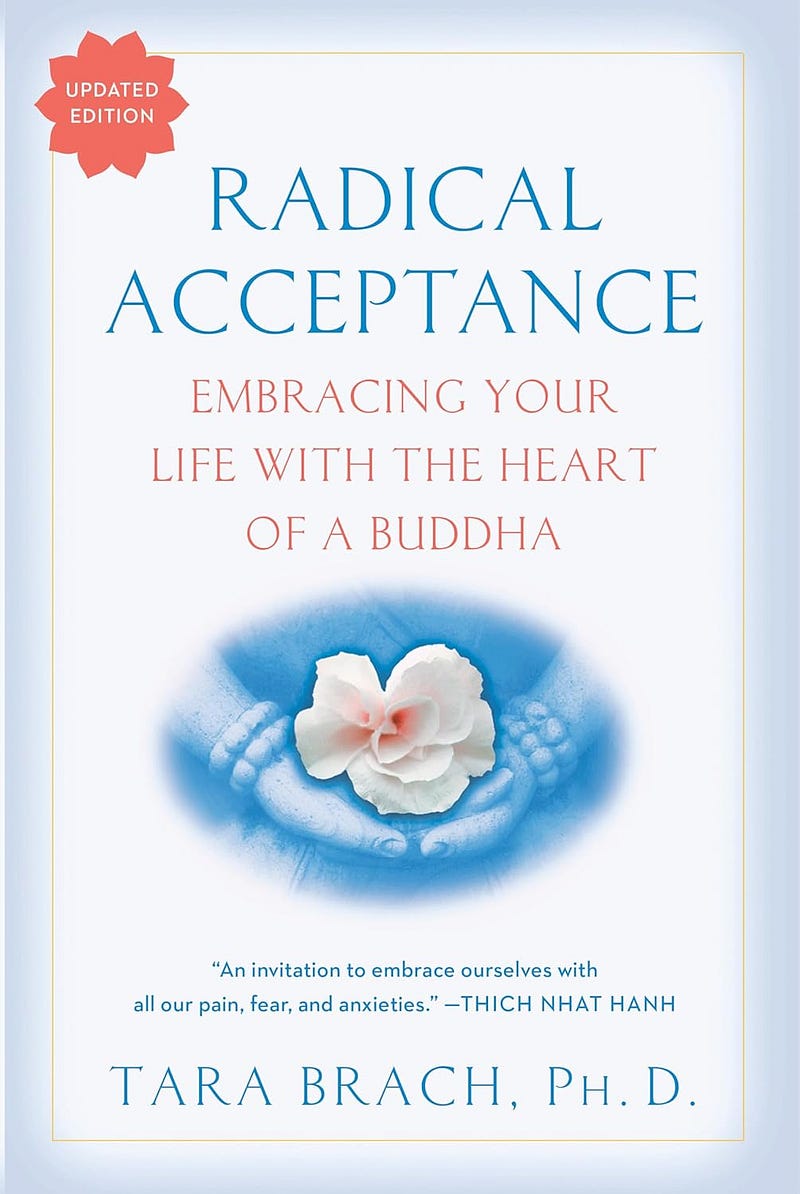
Healing is a nuanced process, and acceptance plays a pivotal role. Accepting the reality of the breakup is akin to mending the frayed edges of the heart. It’s an acknowledgment that paves the way for emotional recovery, allowing individuals to embrace the present and look towards the future with newfound resilience. In this journey of acceptance, ‘Radical Acceptance’ by Tara Brach becomes a guiding light. This transformative book delves into the concept of radical acceptance, emphasizing the power of fully embracing the present moment, no matter how challenging. Tara Brach, a clinical psychologist and mindfulness teacher, offers practical insights and exercises to cultivate acceptance, making it a valuable resource for those seeking healing. Integrating the principles of ‘Radical Acceptance’ into your healing process can provide the tools needed to navigate the complexities of emotional recovery and foster a deeper understanding of self.
Finding Faith In Love Again
““The greatest glory in living lies not in never falling, but in rising every time we fall.” — Nelson Mandela
In the aftermath of a painful breakup, it’s easy to feel disheartened and question the possibility of finding love again. Nelson Mandela’s words remind us that resilience and strength emerge from our ability to rise after falling. Similarly, in matters of the heart, finding faith in love again requires the courage to pick up the pieces and continue the journey.
Breakups can be emotionally draining, often leaving scars that may seem permanent. However, it’s essential to recognize that healing is a gradual process, and within that process lies the potential for rediscovering faith in love. Instead of viewing a breakup as the end, consider it a transformative chapter, a chance to redefine and rebuild.
Every relationship, regardless of its outcome, teaches valuable lessons about ourselves and our needs in love. By reflecting on these lessons, one can gain a deeper understanding of personal desires, boundaries, and the qualities that contribute to a healthy, lasting partnership. This introspection becomes the foundation for rebuilding faith in love and creating a more resilient heart.
It’s important to approach the healing process with patience and self-compassion. There is a significance in rising after a fall, regaining faith in love demands a commitment to self-growth and a belief in the possibility of a brighter romantic future.
Ultimately, finding faith in love again is a testament to the human spirit’s capacity for renewal. By recognizing the strength within, learning from past experiences, and embracing the journey of self-discovery, we can open ourselves up to the possibility of a love that surpasses the challenges of the past
The journey through a breakup is not just about surviving the end of a relationship but about rediscovering individuality, embracing solitude for self-reflection, and transforming pain into an opportunity for growth. It is a testament to the human spirit’s capacity for renewal and the possibility of a love that surpasses the challenges of the past.


