
How To Successfully Wing It
3 ingredients that mostly come from within.
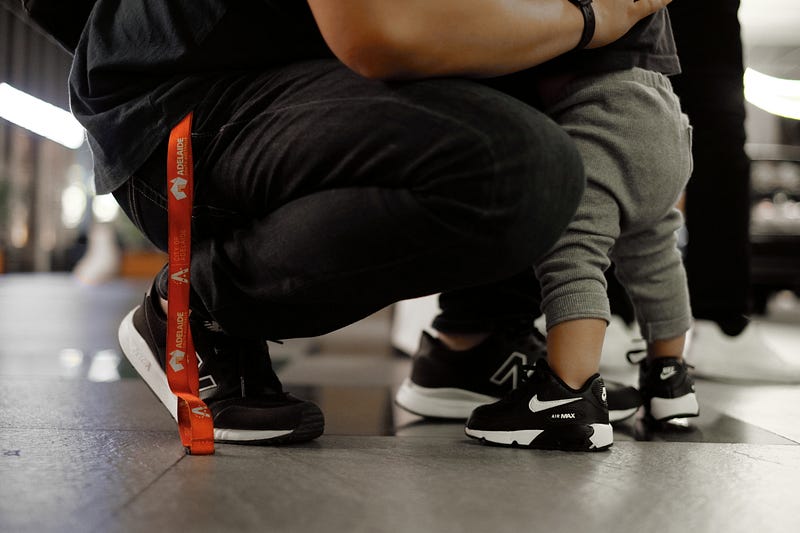
Have you ever felt like you don’t know what you’re doing? Maybe you’ve been working hard on a project and you’ve stopped, paused, and asked yourself, “how the hell am I going to pull this off?”
We’ve all been there. This moment is quite monumental to your future because it symbolises a crossroads. It is the choice that you make here that determines whether you’re going to actually make it, or whether you’re gonna go downhill and prove your self-doubt right, at least temporarily.
You could continue the project but half-heartedly, or you could find a way to pump yourself up and carry on until you nail it — even if you don’t know you’re nailing it till the very end.
Honestly, nobody knows what they’re doing 100% of the time. I argue I don’t know what I’m doing when I pick up my 2-year-old and he expects the world of me. I don’t know what I’m doing when I’m writing notes for my articles. I question my credibility as a parent and as a writer every single day.
Imposter syndrome is vastly common and incredibly underestimated, especially amongst those who are seen to be the most successful. This is the god honest truth.
Literally, everyone is winging it.
But how do we distinguish ourselves from being someone who fails terribly, and instead, actually feel like we’re doing it right?
We Really Fake It Till We Make It
Nobody is comfortable in new shoes until they wear them in a little bit. That’s why you hear of women wearing their new heels around the house before needing to actually wear them a week later. They need to feel comfortable for the main event and the preparation for it involves being uncomfortable for a while.
Actually, those shoes are probably still going to kill her at the main event, but she’ll pull it off. She will fake that comfort till she looks the part, even if it costs her a few blisters for a week or two after that. To her, it’s all worth it. And she looked damn gorgeous.
Now, as a parent, and now as a 5-months pregnant woman, I haven’t worn heels for years. The idea terrifies me. To me, getting uncomfortable means clicking “submit” on this very article because I feel like I am not yet successful enough to preach about how to become successful. You could argue I am faking it till I make it.
But this is the journey we all take in order to get good at something.
A part of that journey is correctly identifying what’s holding you back. If you don’t do this exercise and face your weaknesses, you could end up causing tremendous damage to yourself and others if you try to act like someone you are not. Psychology Today says that if your motive is to appear successful to others rather than being successful, your approach will make you feel worse than before:
“A study published in the Journal of Consumer Research found that people who tried to prove their worth to others were more likely to dwell on their shortcomings.”
Faking it till you make it works when you act like the person you want to become — for the right reasons.
To be the part you want to be, you have to practice it time and time again, till it sticks.
We Use Challenges as Steps Towards Success
“The greater the obstacle, the more glory in overcoming it.” ― Molière
Obstacles and hardships help build your resilience. It literally means you become stronger as you go through hard times because you have learned to survive in stressful situations. You have probably developed some coping strategies, some that help, and some that do not. You use what you have learned in the past to push forward into the next challenge.
You channel your past energy and put it into solving the next problem.
Helpguide published an article explaining that going through difficult times can teach you important lessons about yourself, cultivate your sense of empathy, and help you grow as a person. The article also says how resilience can help you to:
“Stay focused, flexible, and productive, in both good and bad times. Feel less afraid of new experiences or an uncertain future. Manage and tolerate strong emotions outside your comfort zone, even those you’d rather avoid like anger or despair. Strengthen your relationships and improve your communication skills, especially under pressure. Bolster your self-esteem. Be confident you’ll eventually find a solution to a problem, even when one isn’t immediately apparent.”
A student midwife looked after me when I was in labour. Honestly, I thought she had no idea what she was doing, and I was mean to her. She spent a little too long down there trying to work out how dilated I was while I was contracting every 2 minutes or less.
What with hormones rising and the pain escalatingly present, I flipped just a little bit.
But when my son’s heartbeat started dropping and I needed to be moved into a different ward for doctors to intervene, she literally ran along the hospital corridors pushing my wheelchair (might I add my husband was also there but he was holding the Go Pro *rolls eyes*).
When my son was born but I had to go into theatre to have the placenta surgically removed, she came in with me and held my hand. When I was moved into an actual room to rest and be with my family, she checked in on me regularly, well after her shift had ended.
She was the only health professional that stayed with me throughout the entire labour and she made me feel comfortable.
She took on the full role and got through every single obstacle put in front of her. She reacted with professionalism and her gut. She had the drive to ensure my baby’s and my safety. Her head was in the right place the entire time, even if she did probably curse at me for being impatient with her. She did not let me put her off but rather, she took me on and used me as a step towards her goal.
Her badge might have read “Student Midwife”, but she put her all into it. She was, to me, the definition of success in the making.
Embrace the obstacles that come your way because they will always be there — and use them to your advantage.
We Interpret All The Ups and Downs Positively
Life is a continuous series of mountains and valleys that go up and down. If it was completely flat, it would be boring and pointless.
Sometimes, going down feels like we are falling. But sometimes, going downhill is supposed to be fun, like rolling down a hill with your kids.
Going up a hill is considered to be like stepping up the ladder of success. But sometimes, it feels more like climbing the North Wall in Game of Thrones and the White Walkers are at the bottom to catch you if you fall.
The slopes and hills, the events in our life, matter. But it’s really our perspective that matters more and has the greatest impact.
We have the power to choose how we react to what life throws at us. We can find the good in everything that comes our way, because there is always good. Something horrific can happen and we can grieve, we can cry, and we can mourn — but we can do all of those with hope. We can allow ourselves to suffer, and we can allow ourselves to move on.
I will never forget the saying my husband told me about that he learned in tech.
“Fail fast.”
We aren’t obliged to dwell even if it may be the normal thing to do because you see everyone else dwelling. We can control our reaction to our seeming shortcomings. We can swiftly move on shamelessly.
We choose our perspective. Simply looking on the bright side, no matter what our situation, can turn an entire life chapter around.
Takeaway
Everybody has the potential to “make it”. Everybody deserves to. It all begins with our desire to be something that matters, and pushing forward no matter what challenges come our way.
Imposter syndrome is common in everyone. It is about embracing that feeling rather than running away from it that makes the difference.
Fake it till you make it is a saying for a reason. We all do it. You have to act the part to be the part. You act confident to be confident. You act determined to keep the determination going. You act happy and put yourself in positive environments when you want to be happy.
You take on every challenge and you use it to build on your resilience and reach your goals.
You take every upward and downward hill with excitement and anticipate positive results. You don’t dread or dwell — you simply enjoy each moment as it comes and you react positively. Most of all, you allow yourself a little time to mourn when you need to — but you learn to mourn with hope.
We are all winging it. No one really knows what they are doing, and when they do, they just put themselves in a new situation that challenges them because successful people don’t stay in their comfort zone.
The ingredients to become successful all come from you. So use yourself to your full potential and go get ‘em.
“If you aren’t in over your head, how do you know how tall you are?” ― T.S. Eliot
Sylvia Emokpae is passionate about self-love and motherhood. See more work like this.