avatarKevin Vogel

Free AI web copilot to create summaries, insights and extended knowledge, download it at here

2442

Abstract

is italki?</h1><p id="10f2"><a href="https://www.italki.com/">italki</a> is an online language learning platform that connects language learners and teachers through video chat. You can pick among hundreds of community (not certificated) tutors or certificated tutors for your desired language as a student.</p><p id="b2b6">italki is not free, but most teachers usually offer a lower <b>Trial Lesson</b> price to attract new students. Community tutors are generally cheaper.</p><p id="21a3">You can create a new account <a href="https://www.italki.com/i/ref/FaAaEH?hl=en&amp;utm_medium=user_referral&amp;utm_source=copylink_share">here</a>.<i> This is a referral link. I might get rewarded if you sign-up by this link.</i></p><figure id="402f"><img src="https://cdn-images-1.readmedium.com/v2/resize:fit:800/1*p2e2VMlwycWE8m2dSgLzEg.png"><figcaption>Screenshot of italki</figcaption></figure><p id="01fb">This screenshot shows the italki profile of my certificated Japanese tutor, <a href="https://www.italki.com/teacher/7283735">Shunpei</a>. I highly recommend him, especially to beginners, because his English skills are fantastic. If you don’t understand something, he can explain it in English very well. Furthermore, he can teach you everything about Japanese culture.</p><h1 id="7fb2">Genki or Minna No Nihongo</h1><p id="0cd8">Last but not least: Textbooks! That’s something you can’t avoid studying a new language. Going through textbooks can become very frustrating from time to time, but fortunately, there are two excellent and top-rated book series out there.</p><ul><li>Genki</li><li>Minna No Nihongo</li></ul><p id="a66b"><a href="http://genki.japantimes.co.jp/index_en"><b>Genki</b></a> is easier for absolute beginners as it uses English as a medium to explain Japanese. I recommend Genki when you study by yourself or study with a Japanese tutor who is familiar with this textbook (most likely they do).</p><p id="2017"><b>Minna No Nihongo</b> is a deep dive into Japanese, which might be an excellent tool to learn quickly since the book series doesn’t contain any English. But there are additional books which English explanations to their primary non-English textbooks. I would recommend this approach if you have a Japanese tutor who helps you get through.</p><figure id="ed7b"><img src="https://cdn-images-1.readmedium.com/v2/resize:fit:800/0*1n1DZ3ku58e7qDrG"><figcaption>Photo by <a href="https://unsplash.com/@marekpi

Options

wnicki?utm_source=medium&utm_medium=referral">Marek Piwnicki</a> on <a href="https://unsplash.com?utm_source=medium&amp;utm_medium=referral">Unsplash</a></figcaption></figure><h1 id="8914">BUT!</h1><p id="bd9b">ワニカニでかん字をべん強するのに、まずは仮名を全部知っている必要がある。</p><p id="b6b7">But before you join Japanese online lessons or hop into textbooks, it’s essential to learn and understand <b>Hiragana</b> and <b>Katakana </b>first. I am serious. It doesn’t make sense to study Japanese without knowing Hiragana and Katakana!</p><h1 id="8912">What are Hiragana and Katakana?</h1><p id="ae29">Hiragana (ひらがな) and Katakana (カタカナ) can be seen as<b> two sets of Japanese alphabets or syllabaries </b>which are a significant part of the Japanese language<b>.</b> They do not represent unique meanings as kanji do. They are phonetic letters representing one of the 46 individual syllables. That’s what Japanese children will learn first in their very first two years in school.</p><p id="b4fa">It’s possible to learn them within two weeks. Check out this article <a href="https://www.tofugu.com/japanese/learn-hiragana/">Learn Hiragana</a> from Tofugu and try <a href="https://realkana.com/">realkana</a> to study them for free. There are tons of mobile apps for iOS and Android to study Hiragana and Katakana.</p><p id="9167">Thanks for reading my first article about the Japanese language. I hope I could give you a good overview of how to start studying Japanese.</p><p id="fe04">がんばって!</p><p id="cee0">I hope you enjoyed reading this. If you’d like to support me as a writer, consider becoming<a href="https://medium.com/@hellokevinvogel/membership"> a Medium member</a>. It’s just $5 a month, and you get unlimited access to Medium.</p><p id="4cc3">Want to support me? Please buy me a coffee.</p><h1 id="99fa">Read Next</h1><div id="140c" class="link-block"> <a href="https://readmedium.com/japan-the-kobe-school-killer-be9a79567e3e"> <div> <div> <h2>Japan: The Kobe School Killer</h2> <div><h3>The crucial case of Seito Sakakibara, a 14 years old serial killer from Japan.</h3></div> <div><p>medium.com</p></div> </div> <div> <div style="background-image: url(https://miro.readmedium.com/v2/resize:fit:320/1*4-zoWxaXMi7hSZB1_Rd30w.png)"></div> </div> </div> </a> </div></article></body>

3 Ways To Study Japanese & Kanji in 2023

A brief guide on how to study Japanese nowadays

Today, I want to talk about how I study Japanese while not living in Japan anymore and how I recommend starting to learn Japanese while living outside of Japan.
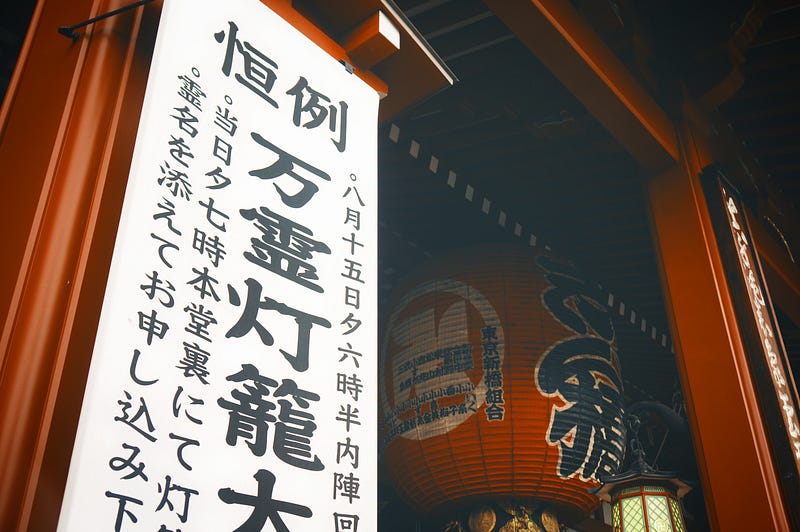
Photo by Zhiyue Xu on Unsplash

In my personal experience, I made the best out of it by combining three approaches to studying Japanese:

  1. Wanikani (to study Kanjis & Vocabularies)
  2. italki (to have live video sessions with Japanese tutors)
  3. Textbooks (to learn Grammar etc.)

What is Wanikani?

Wanikani is a website that uses mnemonics and a spaced repetition system (SRS) to help students memorize approximately 2,000 kanji and radicals, plus over 6,000 Japanese vocabularies in two years or less.

Wanikani is free until you’ve reached level 4. From then, you have to pay USD 9 per month. That’s a pretty fair deal, I would say. They even reach out to you by E-mail, announcing that they will charge you within three days before they would charge you. That’s so sympathetic.

In my experience, I visit Wanikani at least once a day to study. The first level could be confusing because the amount of kanjis and vocabulary is meager at first, but keep going. The number of items will increase with each level you’ve reached. It will become more fun when you hit level 2. Shortly, you will need to handle tons of Kanjis and vocabulary every day.

You can create a new account here.

If you want to read more about Wanikani, I can recommend this article written by Joey Bertschler.
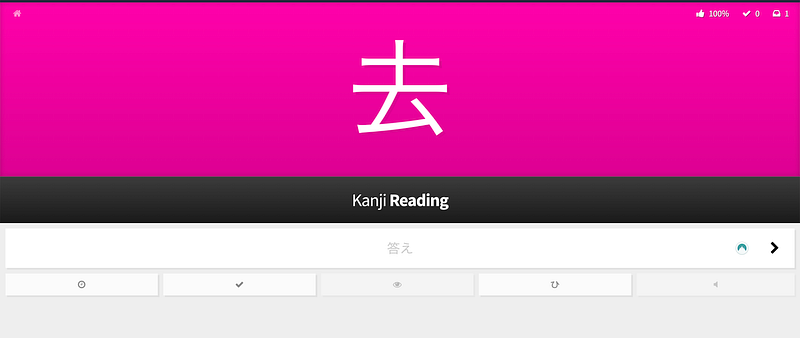
Screenshot of Wanikani

What is italki?

italki is an online language learning platform that connects language learners and teachers through video chat. You can pick among hundreds of community (not certificated) tutors or certificated tutors for your desired language as a student.

italki is not free, but most teachers usually offer a lower Trial Lesson price to attract new students. Community tutors are generally cheaper.

You can create a new account here. This is a referral link. I might get rewarded if you sign-up by this link.
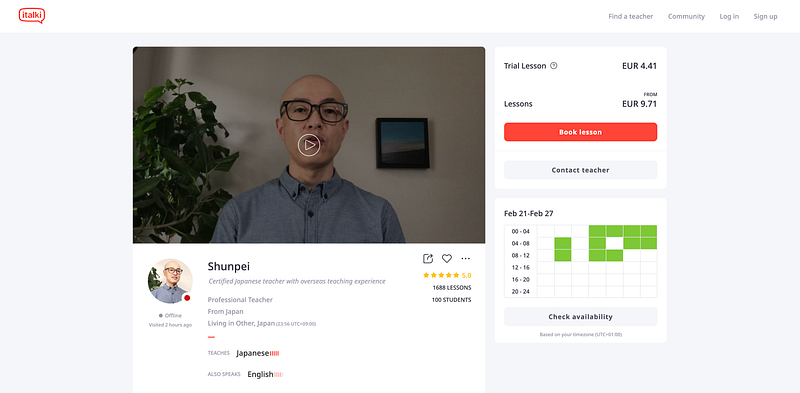
Screenshot of italki

This screenshot shows the italki profile of my certificated Japanese tutor, Shunpei. I highly recommend him, especially to beginners, because his English skills are fantastic. If you don’t understand something, he can explain it in English very well. Furthermore, he can teach you everything about Japanese culture.

Genki or Minna No Nihongo

Last but not least: Textbooks! That’s something you can’t avoid studying a new language. Going through textbooks can become very frustrating from time to time, but fortunately, there are two excellent and top-rated book series out there.

  • Genki
  • Minna No Nihongo

Genki is easier for absolute beginners as it uses English as a medium to explain Japanese. I recommend Genki when you study by yourself or study with a Japanese tutor who is familiar with this textbook (most likely they do).

Minna No Nihongo is a deep dive into Japanese, which might be an excellent tool to learn quickly since the book series doesn’t contain any English. But there are additional books which English explanations to their primary non-English textbooks. I would recommend this approach if you have a Japanese tutor who helps you get through.
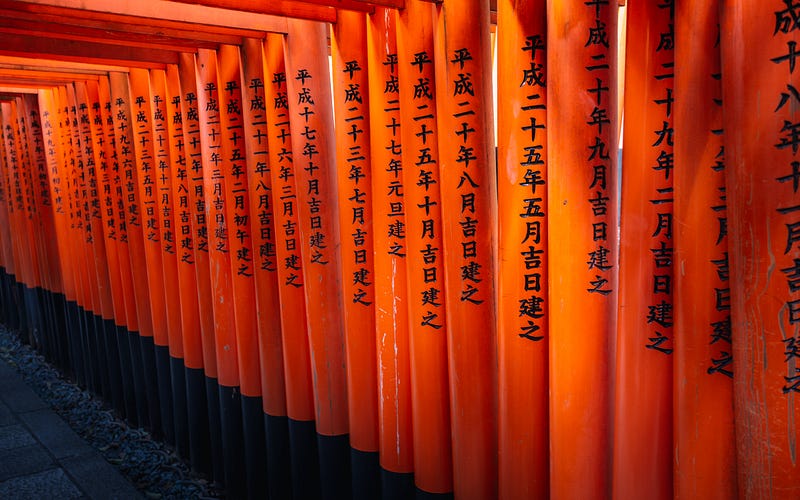
Photo by Marek Piwnicki on Unsplash

BUT!

ワニカニでかん字をべん強するのに、まずは仮名を全部知っている必要がある。

But before you join Japanese online lessons or hop into textbooks, it’s essential to learn and understand Hiragana and Katakana first. I am serious. It doesn’t make sense to study Japanese without knowing Hiragana and Katakana!

What are Hiragana and Katakana?

Hiragana (ひらがな) and Katakana (カタカナ) can be seen as two sets of Japanese alphabets or syllabaries which are a significant part of the Japanese language. They do not represent unique meanings as kanji do. They are phonetic letters representing one of the 46 individual syllables. That’s what Japanese children will learn first in their very first two years in school.

It’s possible to learn them within two weeks. Check out this article Learn Hiragana from Tofugu and try realkana to study them for free. There are tons of mobile apps for iOS and Android to study Hiragana and Katakana.

Thanks for reading my first article about the Japanese language. I hope I could give you a good overview of how to start studying Japanese.

がんばって!

I hope you enjoyed reading this. If you’d like to support me as a writer, consider becoming a Medium member. It’s just $5 a month, and you get unlimited access to Medium.

Want to support me? Please buy me a coffee.

Read Next

Japanese
Japan
Kanji
Italki
Wanikani
Recommended from ReadMedium