
How to Stop Using Food to Numb Your Inner Pain
I’m trying to recover from food addiction.
I gained 90 lbs in a year. Mental illness had taken so much from me, and now, after being someone who worked out six days a week, it had performed one more act of cruelty.
I’d been prescribed a potent combo of an antidepressant and an antipsychotic for PTSD and Schizophrenia. It was the antipsychotic — used to stop me from hearing voices and thinking the government was sending spies to kill me — that did the physical damage.
The secondary reason for my weight gain was sorrow. I felt like a failure for having PTSD and being medically retired. It hurt to exist. But I could guarantee ice cream still tasted nice. Cake was delicious, and for the few minutes when I was stuffing my face, I felt a pleasant sensation among the turmoil.
The chemical cosh.
Many antipsychotics cause extreme weight gain. Lifestyle adjustments can help, but it’s a common side effect. When you find the right one, it’ll fix your mind but destroy your body.
For the first month of taking these meds, I spent most of my time flat out on the sofa, slurring my words and sounding drunk. They call it the “chemical cosh.”
This medication was sapping my soul, and the only reason it had a positive effect on my delusions and voices was that I was so groggy and out of it that I wouldn’t have noticed them anyway.
Other medications caused either insomnia or made me sleep for 15 hours a day. I got so angry on one type that I wanted to smash the house up, which isn’t like me.
During all this time, food was my companion—the guarantee of respite. My activity level decreased, and my overeating skyrocketed.
The lies we tell.
I’d tell myself that today is the day I make a change. Yet I always broke this promise to myself. Eating so much was bad for me, and the drugs made me want to eat all the wrong foods. This made me feel even more worthless, and suddenly I was reaching for the ice cream again.
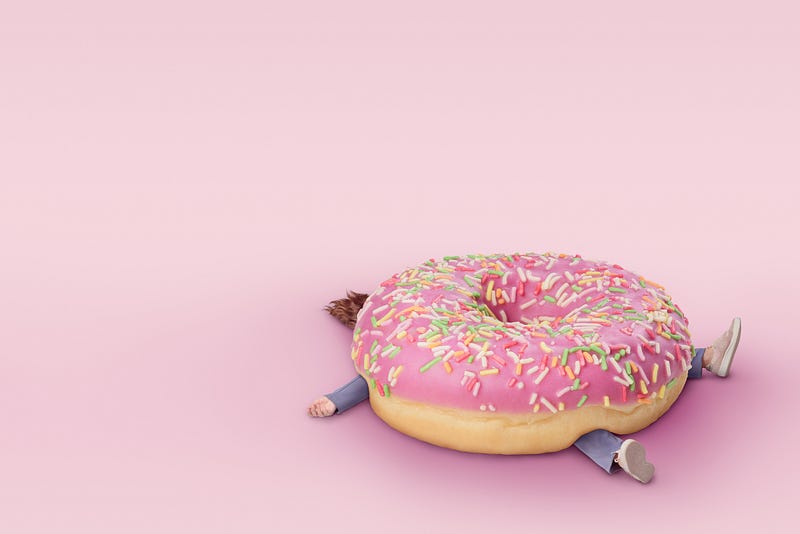
Why was my willpower letting me down? I’d overcome so many challenges in my life. I’d fought back against bullying and faced huge challenges as a police officer, yet here I was, defeated by a donut.
The road from where I was to where I wanted to be looked so long and seemed so hard that I couldn’t motivate myself to start. I felt overwhelmed.
If you’re like me, you’ve told yourself some variation of “it’s ok to cheat because it’s Christmas/Thanksgiving/my birthday. Gradually, the requirement of a special occasion is reduced to “the weekend” or “relaxing after getting home from work.”
I started overeating to suppress my pain and because of the meds. But eventually, any blip in life — anytime things didn’t go how I wanted — would be reason enough to find comfort food.
If you’ve eaten one bag of chips, you might as well eat the rest, right?
I was always going to change tomorrow or next week. Kicking my problem further down the road.
Recovery starts now.
I’m nowhere near where I want to be. I still slip almost daily. I’ve lost some weight, but nowhere near all, and I still go through the same self-loathing when I don't live up to my expectations. So this isn’t some guru with all the answers telling you what to do. Instead, these things have helped me and might help you too.
- Be honest with yourself.
When you admit to having a problem with overeating, you’ve taken the crucial first step. You can be addicted to food, just like alcohol or drugs. Many foods have high doses of sugar, an incredibly addictive substance.
The difference between food and all other addictions is that you need to eat. Cold turkey isn’t an option. You’re going to be tempted all the time.
You don’t have to broadcast your addiction to the world. Just be honest with yourself.
- What are your trigger foods?
Mine are foods that contain excessive sugar. The worst examples are the foods you can eat copious amounts of. Buying only one small cake is better than buying a pack of cookies, knowing you’ll eat every single one.
- Healthy eating vs. dieting.
I realized I had to start small. I can’t give up all the sugary foods and change my lifestyle overnight. So don’t try and diet. First, work on reducing your portion sizes, saving the snacks for the weekend, and not buying anything that can be binge eaten. Make a series of small changes, and you’ll look back in a year and be amazed.
- Live in the moment.
Stoicism and Mindfulness teach us to live in the moment. We need to put distance between our thoughts and emotions. You don't have to listen if your mind is spitting unhelpful nonsense at you.
Trying to give up thinking about food so often is counterproductive — like trying not to imagine a white elephant. Instead, notice your thoughts as they pass. What feels intense and intimidating can float away in a matter of seconds.
You can have bad thoughts, but it doesn’t mean you must act on them. You, as a person, are not your thoughts.
Play the long game.
After you finish this article, the first thing to do is admit you have a problem with food, write down your trigger foods and reduce them over time. The best way is by buying them less and slowly getting them down to zero.
This will be a hard enough time without adding the burden of a formal diet into the mix—everything in moderation. Play the long game.
Once you start logging all the successful days where you beat your addiction, you gather self-respect and momentum. Every win is part of a much bigger prize — your freedom from self-loathing and the power to control yourself and live how YOU want.
You’ll gain new confidence and a healthier life. You owe this to yourself.
Click here to join my Substack community, where we focus on all things related to mental health.


