
How to Stop Overthinking: Understanding and Overcoming Rumination
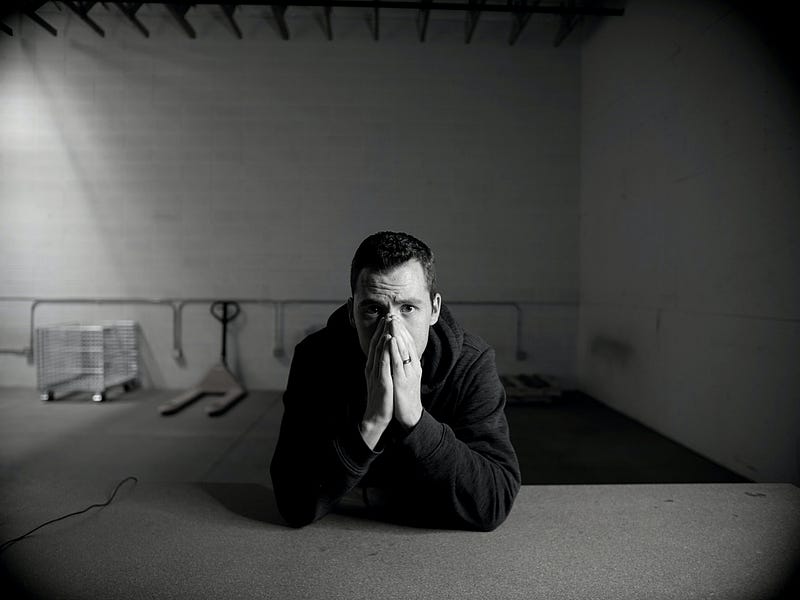
Perseverative Cognition, also known as “Rumination” is what many mean when they describe overthinking. Our thoughts take on a mild to moderately obsessive quality and we find ourselves “stuck” thinking about the same thing over-and-over again. Our mind replays the greatest hits from our past, simulates social relationships, or becomes increasingly self-conscious. When overthinking is undesirable, it is a common pathway to both depression and anxiety.
What is Rumination?
When you have a problem to solve, your brain has determined a very simple solution. THINK ABOUT IT. Your brain turns your attention to the problem under the assumption that solving it requires prolonged consideration. Life is full of problems to solve, and many of these can be solved merely by putting more time and effort into devising a solution.
This works out very well when problems are relatively concrete problems with reasonably predictable rules. A Rubix cube is a puzzle that can be solved. The rules of the puzzle are simple, but coming to a solution requires so many steps that it is complicated. Anyone can solve a Rubix cube if they have enough time and effort to fiddle with the puzzle.
Your brain knows that it’s only a matter of time!
It uses this strategy for a wide variety of problems; treating solving a problem like a goal and then focusing our brain’s resources on solving the problem in a semi-obsessive manner.
This is part of the Analytic Rumination Hypothesis; that the purpose of rumination is to dedicate sufficient mental energy and focus to a complex problem to eventually arrive at its solution.
Rumination is at least partially subconscious…
Your brain is your most valuable resource and its incredible processing speed should be put to good use! We can certainly use our brains to solve problems intentionally or consciously. This is known as a Task-Focused Orientation. When we have identified a problem that we want to solve or a goal that we want to work towards and make concerted efforts to make progress, we are using the Task-Focused parts of our brain.
But we aren’t always focused on a task. Sometimes we are just… hanging out, chilling, daydreaming. We are in transit, resting, or just relaxing.
But your brain doesn’t just stop working whenever you aren’t doing something. After all, your brain is so powerful and requires so many resources to keep functioning that it would be a waste not to keep it doing something.
When you aren’t busy working on a task of focused on something, your brain switches into a kind of default mode. A network of brain areas switches on and gets busy trying to be productive.
What are productive uses of the brain when you aren’t busy with other things?
- The Past; your brain gets busy reflecting and processing your episodic memory.
- Your Future; your brain attempts to simulate social situations, other people, yourself, and how you might navigate future interactions.
After all, your brain is a meaning-making and prediction-crafting machine! If you can learn from the past to inform your future behavior and predict what will happen next, then you’ll have a huge evolutionary advantage!
Thus, when your brain has some downtime, it puts its extra resources into doing just that. It’s trying to set you up to succeed.
The Default Mode Network kicks in subconsciously when we aren’t focused on anything in particular, and it turns off when we turn our attention back to a specific task or goal.
In a perfect world, we would be able to passively reflect on, process, and learn from our past to better attend to the future and strengthen our relationships with ourselves and others.
Sounds pretty good right?
WELL… sometimes when our Default Mode Network turns on, it reminds us of that one embarrassing thing that we did that we should never do again. Or that one time that we had our hearts broken by “he/she who will not be named” and everything we did wrong. Or an itemized list of your perceived flaws that you should be very aware of in future social situations.
You know, helpful corrective feedback like that… (heavy sarcasm)
And when your brain recognizes a problem worth trying to solve, it puts more time, energy, and resources toward that problem. What starts as a harmless daydream or intrusive little reminder about that one cringe thing we did once spirals into a full mental investigation with top-priority clearance.
Remember, rumination works well when the problems we are trying to solve are relatively concrete and predictable. Even if a problem is complicated or complex, sufficient time and effort are enough to make progress. However, the intricacies of social situations, the nuances of our intrapersonal subjective worlds, and predictive efforts to anticipate the future are far from concrete.
Rumination is a poor strategy for abstract, esoteric, and subjective problems. It’s like trying indefinitely to solve a puzzle that has no “right” answer.
With both anxiety and depression, people get stuck in patterns of thought that include repeated and intrusive reminders of the “problem” and obsessive and compulsive mental efforts to simulate solutions to the “problem”. However, when we fail to arrive at a satisfying solution, our brain doubles down by dedicating more mental resources to the problem. Rumination spirals are, thus, self-reinforcing.
Who is Most Likely to Ruminate/Overthink?
We have likely all found ourselves in a temporary downward spiral of rumination. Even if you are in good mental health, life will still occasionally throw “problems” in your path that inspire moderately obsessive consideration.
This isn’t always “bad”.
Sometimes our goals and desires take on an obsessive quality as well. Anyone who has been “infatuated” or “had a crush” on someone else has experienced the mild to moderately obsessive mental effort of trying to figure out how to make their subject of desire reciprocate their feeling.
And for many of us, rumination ends when the situations we anticipate lapse. We have a big meeting or presentation at work, we agonize over what we will say, try to anticipate every question that we will be asked, and put all of our time and energy into preparing. When the presentation is over, our mind relaxes. The “problem” is solved merely by a factor of time passing.
But Chronic Rumination, the kind that happens frequently and over long periods, is most associated with anxiety and depression.
While everyone’s brains seem to have the capacity to fixate on problems to solve them, not everyone’s brains do so in a chronic way.
Neurological and personality differences lead some to be more prone to rumination than others. Likewise, repeated adverse experiences and developmental trauma prime some people’s minds for ruminating more frequently than others.
For some folks, rumination is a kind of “cognitive-behavioral habit”; a way of thinking that we have used with enough frequency that it becomes more automatic. This means that the Default Mode Network will call upon rumination more quickly whenever a problem is detected.
To make matters more vexing, the relationship between rumination and anxiety/depression is bi-directional. Anxious and depressed folks are more likely to ruminate, and also, rumination can cause depressive and anxious symptoms; another “negative spiral” where two undesirable things cause one another.
How to prevent and “work through” OVERTHINKING
The hypothesis is that overthinking is driven by differences in Default Mode Network activity. Since the DMN is at least partially subconscious, self-conscious, socially self-critical, and undesirable reminders of episodic memories seem to occur spontaneously. When our brain recognizes these things as “problems”, it then gets to work trying to solve the problems by dumping more mental resources into thinking about the problems.
Many who deal with rumination have discovered that they typically aren’t ruminating when their mind is busy. When they keep themselves distracted or focused on a task, they aren’t overthinking.
This is precisely what we would expect; Our Default Mode Network turns off whenever we are Task-Focused!
So… problem solved right? Just keep yourself busy and distracted forever and you never have to overthink! (Enter playfully sarcastic tone here).
While this may be true, it is not a sustainable solution. After all, we all need a break and time to rest and recover. This time is typically not associated with a specific task, and thus, when we rest, our DMN turns on. Many will report that they are most anxious or that their thoughts race most at the end of the day or night right before going to bed. When their mind is finally quiet and the DMN boots up, the rumination cycle begins!
Luckily, we have decades of research from the field of applied psychology to borrow inspiration from.
It’s helpful to remember that rumination is not happening for no reason. One generous interpretation is that compulsive overthinking is your brain's overzealous attempts to help you. Just trying to force yourself to stop thinking or “snap out of it” will ultimately prove unsuccessful. Why?
Because your brain isn’t convinced that not thinking about your problems will get you closer to solving them.
Much of cognitive behavioral therapy supports individuals in thinking more effectively. This includes identifying ways that thoughts can be unbalanced, maladaptive, or ineffective, and using cognitive reframing techniques to think in ways that are more productive.
In other words, your brain is going to ruminate whether you like it or not. Cognitive Behavioral Techniques teach us how to ruminate better.
In fact, things like journaling and talking with others are exactly that; by slowing your thought process down, or recruiting a well-trusted friend to ruminate with you, you are essentially ruminating more effectively. While we might not be able to solve complex and abstract problems, we might be able to make some kind of progress or come to a satisfying enough plan/conclusion that our rumination machine calms down a bit.
Cognitive Behavioral therapists are trained to specifically guide clients through their rumination process. In this case, it’s not about stopping rumination but finding ways to effectively “work through” it.
Of course, there will be times when thinking, no matter how effective, will still be challenging. To that end, a variety of mindfulness-based techniques have been designed to decrease rumination and overthinking.
You’ve likely heard of mindfulness because of the increasing popularity of meditation. But mindfulness doesn’t require that you sit cross-legged and focus on your breathing.
Mindfulness can include any practice that nonjudgmentally brings one’s attention to the present moment. Ideally, this focus would be as an observer of experience; every so slightly removed from what it is we are experiencing.
Much of rumination is about the past, the future, or episodically simulating social situations. Our mind drifts off into the “then-and-there”. Something interesting happens when we begin to visualize stressful or emotionally challenging situations; our body begins to react as though what we are imagining is happening to us in real-time!
This is when our daydreams become nightmares; when we think of anxiety-provoking things it causes us to feel anxiety, or we think of embarrassing, shameful to guilt things and we begin to feel those emotions all over again. When we visualize our traumatic experiences, our bodies begin to get “activated” as though we are re-living the trauma.
However, mindfulness encourages us to take our focus and attention off the “then-and-there” and into the “here-and-now”. What is actually objectively happening in your present moment? Where are you? What can you hear, touch, and see? What is your subjective experience like? What is it like to be in your body right now?
Most of the time, our present moment is rather… mundane. As I type this article, there isn’t a lot going on. I’m in my office, a quiet space, in front of a laptop. The air is conditioned and controlled. My chair is a smidgen less comfortable than I’d like. It’s pretty quiet. The tea that I’m drinking that was once hot is now only warm. My present moment is actually rather chill.
And when I bring my attention to the present moment, what happens?
My body begins to react to the present! Since my present reality is objectively and subjectively pretty chill, my body begins to relax.
But sitting here, if I begin to think about stressful things on my to-do list, or remind myself of something embarrassing I did in college that I’m not proud of, or fantasize about a raunchy experience with a past lover, my body will begin to react to those images and memories. Even if my environment hasn’t changed, my physiology reacts to what I visualize.
By bringing my attention to the present and calming my nervous system, it might be easier to think through things and process things more effectively. The complementary roles of mindfulness and CBT have given rise to… you guessed it, “Mindfulness-Based Cognitive Behavioral Therapy” (MCBT).
As I see it, the strategies involved in MCBT are the gold standard for managing rumination. There is a vast amount of free resources and techniques exist online for those looking for a “DIY” approach, but for many, walking through these skills is best most effective a professional counselor or consultant.
For some, medication and other treatment modalities may be not only appropriate but necessary. If the gold standard is MCBT, then the platinum standard is likely MCBT and psychoactive medication such as a Selective Serotonin Reuptake Inhibitor (SSRI). Many find that adjunct therapies such as exercise, self-compassion-based therapy, and good ol’ fashion self-care all play a huge role in slowing down our overzealous minds.
In Summary,
Chronic Rumination is a common pathway to depression and anxiety. One hypothesis is that rumination is a thought strategy utilized by the brain to try to solve complex problems. Rumination is often associated with our Default Mode Network (DMN), which spends our downtime episodically considering the past, the future, and social self-consciousness.
Cognitive Behavioral strategies might help aid us in ruminating more effectively so that our overthinking doesn’t become chronic. Writing down our thoughts, typing them out, or ruminating with trusted other are helpful ways to process situations that would otherwise spiral in our own minds.
Mindfulness techniques can ground our mind and body in the “here-and-now” and decrease the distress of overthinking about the “then-and-there”. Mental health professionals trained in CBT can guide these processes and customize them for individual differences and needs.
MCBT is the gold standard and only further benefits from the inclusion of other treatment and preventative measures like SSRI, exercise, self-compassion and self-care.
Reference
Chou, T., Deckersbach, T., Dougherty, D. D., & Hooley, J. M. (2023). The default mode network and rumination in individuals at risk for depression. Social Cognitive and Affective Neuroscience, 18(1), nsad032.
Mao, L., Li, P., Wu, Y., Luo, L., & Hu, M. (2023). The effectiveness of mindfulness-based interventions for ruminative thinking: A systematic review and meta-analysis of randomized controlled trials. Journal of Affective Disorders, 321, 83–95.
McCarrick, D., Prestwich, A., Prudenzi, A., & O’Connor, D. B. (2021). Health effects of psychological interventions for worry and rumination: A meta-analysis. Health Psychology, 40(9), 617.
Olatunji, B. O., Naragon-Gainey, K., & Wolitzky-Taylor, K. B. (2013). Specificity of rumination in anxiety and depression: A multimodal meta‐analysis. Clinical Psychology: Science and Practice, 20(3), 225.
Perestelo-Perez, L., Barraca, J., Penate, W., Rivero-Santana, A., & Alvarez-Perez, Y. (2017). Mindfulness-based interventions for the treatment of depressive rumination: Systematic review and meta-analysis. International Journal of Clinical and Health Psychology, 17(3), 282–295.
Tozzi, L., Zhang, X., Chesnut, M., Holt-Gosselin, B., Ramirez, C. A., & Williams, L. M. (2021). Reduced functional connectivity of default mode network subsystems in depression: meta-analytic evidence and relationship with trait rumination. NeuroImage: Clinical, 30, 102570.
Vălenaş, S. P., & Szentágotai-Tătar, A. (2017). The relationship between rumination and executive functions: A meta-analysis. Journal of Evidence-Based Psychotherapies, 17(2), 23–52.
Yang, Y., Cao, S., Shields, G. S., Teng, Z., & Liu, Y. (2017). The relationships between rumination and core executive functions: A meta‐analysis. Depression and anxiety, 34(1), 37–50.
Zhou, H. X., Chen, X., Shen, Y. Q., Li, L., Chen, N. X., Zhu, Z. C., … & Yan, C. G. (2020). Rumination and the default mode network: Meta-analysis of brain imaging studies and implications for depression. Neuroimage, 206, 116287.


