
How To Stay Productive When Your Work is the Distraction

I’ve been doing a lot of thinking about personal productivity lately, having appeared on a number of podcasts in the lead up to the release of my next book, Time Rich, in October.
Distractions and interruptions knock us out of the flow state, or ‘the zone’, and each time we’re interrupted we suffer a cognitive switching penalty which can be up to 23 minutes long.
But what if your work is intertwined with so-called distractions, such as social media marketing?
This is a question I was posed at a recent online workshop I hosted for Startup Grind.
My answer was this.
Output is the result of a value chain of inputs.
At an organisational level, a simple value chain might look like the below, inspired by famed management thinker, Michael Porter.
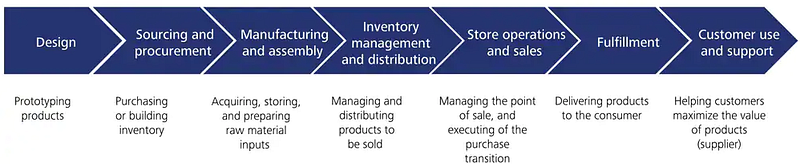
The Value Chain of Your Work
Applying this to social media marketing, we might end up with an end-to-end sequence like this:
- Define Objectives
- Research In-Demand Content
- Shortlist Content Ideas
- Source Media Assets
- Develop Content
- Schedule Post
- Engage with Audience
- Review Performance
- Iterate
It’s easy to spend all day hopping, skipping, and jumping between these activities ad infinitum, which will see you suffering the dreaded cognitive switching penalty all day long, have you spending little time in flow, and ultimately feeling exhausted with less than you should have to show for it.
You might post something, and then spend the next two hours checking back every five minutes to see how it is performing.
What To Do Instead
Instead, execute on the individual steps sequentially and don’t move on until the previous step is completed. This empowers you to spend more time in the flow state, and less time playing whack-a-mole.
But it’s not just social media. Basically any task can be broken down into its residual components in this manner.
If I’m writing, I’ll research story ideas, then write a draft without editing as I type, then look for references and case studies to support my arguments, before editing and revising it.
It’s just as easy to do many of these steps at the same time, and confer with Google every time I want to add a reference, but doing so might be the difference between finishing a post in one hour, or going down numerous rabbit holes, spending little time in flow, and finishing it in three hours.
Consider which tasks take up most of your time, what their component parts are, and whether or not you might benefit from applying sequential workflow like this.
Steve Glaveski is the co-founder of Collective Campus, author of Time Rich, Employee to Entrepreneur and host of the Future Squared podcast. He’s a chronic autodidact, and he’s into everything from 80s metal and high-intensity workouts to attempting to surf and do standup comedy.


