
How to Stay Motivated When Learning to Code: The Power of Atomic Habits
Have you ever found yourself losing motivation or struggling to stay consistent when learning to code? You’re not alone. Many aspiring programmers face these challenges, and it can be discouraging. But fear not, because there is a solution: atomic habits.
In his book “Atomic Habits,” James Clear provides insights on building and maintaining habits that can help you stay motivated and make progress in your coding journey. In this article, we will explore the key concepts from the book and how you can apply them to develop the revolutionary habit of learning programming.
The Power of Small Changes
Imagine a plane taking off from Los Angeles to New York. Just before takeoff, the pilot adjusts the flight path by only 3.5 degrees. It seems like a trivial change that no one would notice. However, when the plane lands, the passengers find themselves in Washington, DC, instead of New York. This small adjustment completely altered their destination.
Similarly, as a novice programmer, you might believe that you need to create something groundbreaking to succeed in the tech industry. But the truth is, all you need to do is take small steps towards your goal every day. These tiny changes, though seemingly insignificant at first, can lead to significant outcomes in the long run.
If you spend your time scrolling through social media or watching YouTube without purpose, you won’t make any progress in your programming skills. By building atomic habits that contribute to your learning journey, you’ll be well on your way to landing that dream software engineering job within a year.
The Reality of Progress
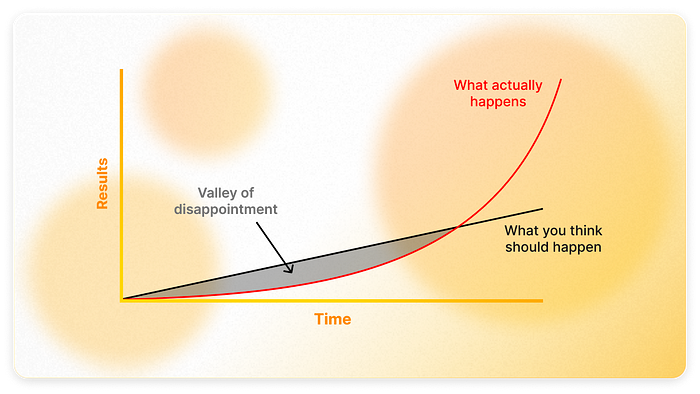
When you start learning programming, you might expect to see linear improvement, where each day brings noticeable advancements. However, the reality is quite different. In the early stages, progress may seem slow, and it’s easy to get discouraged. James Clear refers to this phase as “The Valley of Disappointment.”
During this phase, it’s crucial to persevere. Although the results might not be immediately evident, the returns for your efforts are delayed. Once you push through the disappointment, you’ll experience a breakthrough. Learning a new programming language, building projects, and securing job opportunities will become second nature. Looking back at your early code, you’ll laugh at how far you’ve come.
Building Habits for Success
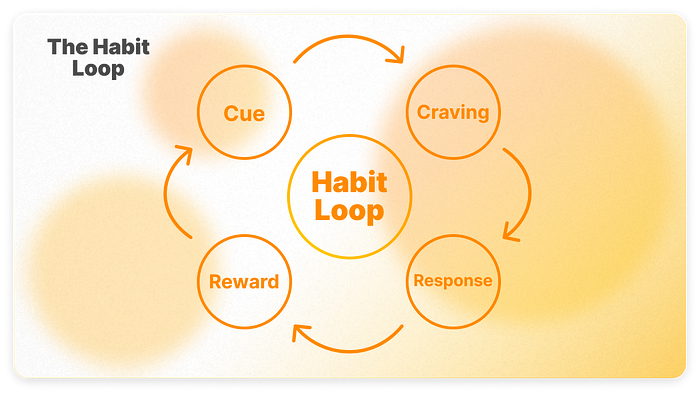
To build a habit, it’s important to understand the concept of the “Habit Loop.” This loop consists of four stages: Cue, Craving, Response, and Reward. It is the fundamental process behind the formation of both good and bad habits that we repeat over time.
The Habit Loop
- Cue: The trigger that prompts your brain to initiate a habit.
- Craving: The desire or motivation to fulfill the habit.
- Response: The action or behavior that follows the cue and craving.
- Reward: The positive reinforcement that reinforces the habit.
Let’s illustrate this with an example of a bad habit many of us can relate to: mindlessly scrolling through social media. The cue is a notification on your phone, which triggers the craving to check who sent the notification. Your response is picking up the phone, and the reward is the temporary entertainment or distraction you find on Instagram or YouTube.
By understanding the habit loop, we can use it to develop positive habits in programming. For instance, you can use your laptop as a cue to start learning. Clear suggests making the cue obvious by placing your laptop in a prominent location that catches your eye.
However, a cue alone is not enough. You also need to employ Implementation Intentions to ensure clarity about what you want to achieve. Instead of vaguely saying, “Tomorrow, I will learn programming,” use the Habit Stacking method. For example, after brushing your teeth, commit to sitting down and coding for two straight hours. This technique, known as habit stacking, helps cement the habit into your daily routine.
The 2-Minute Rule
James Clear introduces the 2-Minute Rule as a means of building sustainable habits. Setting unrealistic goals can often lead to demotivation and inconsistency. Instead, make habit-building easy by taking small steps every day.
“Make it easy to do right and hard to go wrong.” — James Clear
For example, if you want to develop the habit of reading programming books, start by dedicating just two minutes a day to reading. Gradually increase the time as the habit becomes ingrained in your routine. The same principle applies to coding. Rather than attempting to complete an entire 40-hour course in a matter of days, focus on watching a single video and implementing what you’ve learned. This approach prevents frustration and establishes a sustainable habit of continuous learning.
Exclusive Newsletter for Web Developers
Are you always on the lookout for the latest tips and tricks in web development? Look no further! Sign up for our weekly newsletter, exclusively created for web developers like you. Each week, we share short and trending articles on web development tips, free tools, and resources. Plus, you’ll gain access to exclusive content not found anywhere else. Join our community of forward-thinking developers and stay one step ahead in web development.
Learning to code can be a challenging journey, but by harnessing the power of atomic habits, you can stay motivated and make consistent progress. Remember, small changes can lead to significant outcomes, so focus on building habits that support your learning goals. Understand the habit loop, use implementation intentions and habit stacking to your advantage, and start with the 2-Minute Rule to make habit formation easier.
Stay committed, embrace the “Valley of Disappointment,” and trust that your efforts will pay off. With perseverance and the right habits, you’ll be well on your way to becoming a skilled programmer. So, go ahead, take that first step, and embark on your coding adventure!
Don’t forget to subscribe to our exclusive newsletter for web developers to stay updated on the latest trends and resources in the industry. Share this article with others, so they too can benefit from the power of atomic habits in their coding journey.
Remember, success lies in the small, consistent actions you take every day. Happy coding!


