
How to stay motivated to eat well and exercise
The answer is not more willpower or self-discipline (it’s easier than that)
How do you stay motivated to eat well or exercise regularly?
It’s a common question and challenge for people who are looking to adopt a healthier lifestyle. There are many tips and tricks out there to help, such as getting an accountability partner, keeping track of your progress, visualizing where you want to be, etc.
But I usually start off with a simpler answer:
Stay present.
Why we lose motivation (it’s not a lack of willpower)
We face a unique problem in the modern age when it comes to motivation, in that we face a much higher opportunity cost than people used to.
Opportunity cost is what we give up with every choice we make, and with the Internet, there is an infinite opportunity cost– we are constantly bombarded with images, ads, and advice on what we could’ve or should’ve been doing with our time instead.
I should’ve been cooking dinner instead of watching Netflix.
I should’ve been grocery shopping instead of going out to brunch.
I should’ve been working out instead of taking a nap.
With the Internet, we have become much more likely to be reminded of what we could’ve been doing with our time instead, and consequently, we feel bad about the choices we make– even if we made them in our best interest at the time.
And if we feel bad about how we spend our time too often, we begin to feel confused, then stuck. When it comes to our goals, we begin to think: what is the point of trying?
In a world with so many options, I like to reflect on the Japanese spirit of ganbaru (頑張る)
In a world with so many options, I like to reflect on the Japanese spirit of ganbaru (頑張る)– which roughly translates to putting your best foot forward. And there are 2 main reasons why it’s so effective.
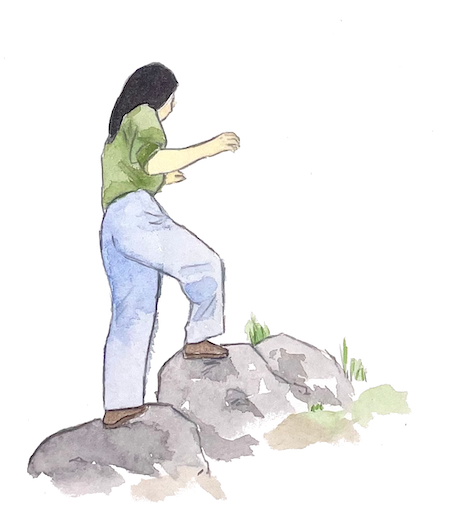
How the spirit of ganbaru can help you stay motivated
1. It encourages you to be focused.
With ganbaru, you are so concentrated on the task at hand, that there is no room in your mind to wander and think about what you could’ve been doing otherwise.
The mindset is not “I should’ve”, but you’re only focused on what you’re doing in the moment– you might be going a bit slow, or maybe you’re not being the most efficient, but when you’re focused, you’re unconcerned that you could’ve been doing something else.
2. It’s a mindset that requires a certain level of not just optimism, but also pride.
When we ganbaru, we feel proud of ourselves, no matter how small, simple, or boring the accomplishment. It encourages us to focus less on comparing ourselves with other people, but to reflect on our accomplishments.
We recognize we did something, and we feel good we did it.
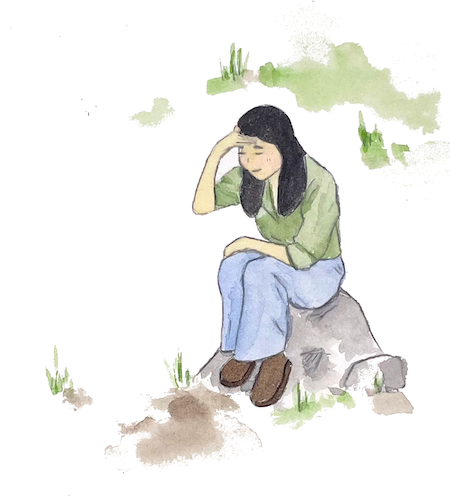
When in doubt, bring yourself to the present
Ganbaru is more than just doing your best, but it’s the practice of staying present. Instead of thinking about how you could’ve done better or what you wish you would’ve done with your time instead, gently nudge yourself to the present moment: What do I want to be doing now?
Maybe you didn’t work out in the morning, but you can go on a walk right now.
Maybe you didn’t cook dinner, but you can still add some vegetables to your takeout meal.
Maybe you didn’t sleep early last night, but you can still go to bed early tonight.
Ganbaru is more than just doing your best, but it’s the practice of staying present.
When it comes to our goals, we can all use a bit more self-compassion. In the modern world, we are constantly reminded of what we could’ve been doing instead or what other people have accomplished, and it’s much easier to be hard on ourselves.
But instead of reinforcing those narratives, take a deep breath. In a world with so many options, sometimes the best thing we can do is put our best foot forward.
Warm regards,
Kaki
Learn to be healthier, inspired by life in Japan:
I teach about health inspired by simple Japanese philosophies and lifestyle practices, so you can learn to find peace, fulfillment, strength, and health in your own body. Stay in the loop and get access to free resources: Sign up here!


