
How to Start Your First Newsletter in Less Than 10 Hours
A realistic step-by-step plan you’ll actually follow.

If you want to:
- Build credibility, authority, and an audience online
- Reliably monetize your skills and passion
- Or make a living by creating content, you need an email list.
While content creation itself can be considered an unreliable career option, owning an email list can lead to a sustainable business and freedom.
Without an email list, creators and experts have to rely on external platforms. You need to trust that the platforms you’re using will continue to exist and lead to the results you want.
Even though that’s the ideal scenario, it’s not always what reality looks like. As creatives, we need to anticipate changes, even if we don’t want them.
The online world is changing fast, and we have to expect platforms to change too. With an email list, navigating those changes is much easier because you have more control.
Over the last three years, I slowly fell in love with email marketing for various reasons:
- A newsletter allows you to build a strong relationship with your audience. Social media is loud and crowded, but our email inboxes are still sacred places.
- Email marketing is reported to lead to the highest ROI when selling online and monetizing an audience.
- Owning an email list means owning your audience. Compared to social media and various algorithms, you control your email list. Your list size, publishing frequency, content, and promotional campaigns all depend on nothing but your preferences.
While external platforms force us to stick to specific rules and guidelines, email marketing allows us to be creative and personal.
But most importantly, owning a relevant and engaged email audience means having various monetization opportunities.
When Zulie Rane, Kati Amberry, and I started running Better Marketing, one of our short-term goals was to create a newsletter for marketers.
At Better Marketing, we publish dozens of brilliant stories per week and reach hundreds of thousands of readers per month. We wanted to leverage this massive opportunity through an additional channel.
We knew an email list was necessary to:
- Communicate with our writers & readers
- Build a community
- And monetize our work
So we launched The Marketing Memo (in less than 10 hours):
Starting your first email list can feel incredibly intimidating and huge, but it doesn’t have to be that way.
Here’s your step-by-step plan to ensure you don’t waste endless hours by keeping yourself busy instead of taking action:
Step #1 — Get clear on the format and concept of the newsletter
My #1 tip for all writers and creators is to start their newsletter as soon as possible — there’s no being too early.
Yet, it makes sense to spend some time thinking about the concept and framing of your newsletter before you invest too much time setting it up. Without clarity, you might end up doing the same work twice if you have to pivot after a short time.
For The Marketing Memo, we had three clear rules in mind:
- We wanted to create a newsletter that’d be valuable for anyone who has to do marketing — from corporate marketers to solopreneurs.
- We wanted a consistent, recurring format.
- We wanted to be able to feature pieces we publish at Better Marketing because we have a huge library of amazing marketing stories.
With these rules in mind, we had to make the following decisions:
- How often do we want to send emails?
- What’s the specific newsletter format we want to use?
- What’s the exact content of each email?
- How will we promote and grow the newsletter?
We wanted to keep The Marketing Memo simple and easy to digest. Ideally, marketers will spend only a few minutes reading each email and find something useful or inspiring in each edition of the newsletter.
To decide on the actual format of the newsletter, we first asked ourselves which marketing newsletters we enjoy reading. Since we’re marketers ourselves, we are our own target audience.
We took a close look at relevant newsletters in our niche, like Marketing Examples and Send & Grow, and got inspired by their best practices.
Based on our resources, expectations, and previous experience, we decided to go with a simple format to feature three pieces of content in each email:
- One long-form guide or deep dive
- A (marketing) tool we recommend
- A quick tip
📨 Take action:
The first thing you want to do before starting your newsletter is to ask yourself what kind of email you want to send your subscribers.
Do you want to write long, conversational emails? (That’s what I do in my Write • Build • Scale newsletter.)
Do you prefer a simple, recurring format like The Marketing Memo, where you can feature resources from different creators and sources without needing to write much yourself?
There are lots of different ways to combine those two options too. You can have a conversational intro and resource recommendations. That’s the beauty of email marketing: There are very few rules you really have to stick to.
I recommend spending 30–60 minutes analyzing your favorite newsletters to decide on a format for your emails.
Ask yourself the following questions:
- Who’s your ideal newsletter subscriber? Who will benefit from your emails, and how? (Create an Ideal Reader Persona if you don’t know the answers to those questions yet.)
- What’s the kind of email your target audience would enjoy? Are they looking for entertainment, quick tips, resource recommendations, or something else?
- How often do you want to send emails? (Committing to a specific schedule will help you ensure you show up consistently. I recommend following a weekly or biweekly schedule.)
Step #2 — Brainstorm the content for your first emails
When you have a clear idea of the concept of your newsletter, it’s time to think about the specific content of your first few emails.
Ideally, you’ll create a backlog of ideas to ensure you don’t get overwhelmed and burned out during the first weeks.
Before creating The Marketing Memo, we looked for specific resources, links, and tools we’d like to share in the newsletter. This forced us to get more specific about the actual newsletter content.
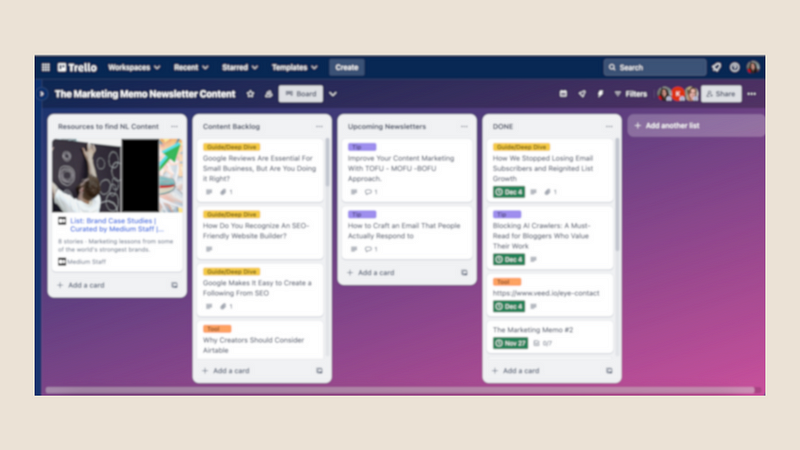
We started a Trello board to collect specific resources we’d like to feature in the newsletter. That way, we always have a large backlog of content we can refer to when we don’t have anything timely to share.
📨 Take action:
Use your preferred project management tool to brainstorm and save specific content pieces or ideas you want to feature in your newsletter.
If you go with a recurring format that consists of curated resources, save specific links with a note on why you think they’re share-worthy.
If you want to write longer, conversational emails, take a look at Kate Doster’s brilliant (free) guide full of inspiration for 24 months of email content. She also has amazing podcast episodes titled “What to send your list in [insert month],” which I adore.
The easiest tool to save interesting links and resources might be Raindrop — a simple bookmark manager that I love to use on all my devices.
If you’ve already been creating content for a while, make sure you have a list of all your published pieces, so you can share those too.
Spend 1–2 hours creating your backlog of ideas, so you have content for your first 3–5 newsletter editions.
Step #3 — Pick your email marketing tool and create your account
Now it’s time to actually start building your newsletter!
Most creators, entrepreneurs, and marketers waste endless hours learning about different newsletter tools and end up feeling confused and depleted.
And it’s no surprise. Most tools are so similar it’s hard to spot differences, especially if you’re starting your first newsletter and have no idea which features you even need.
My go-to email marketing tool is Convertkit: I’ve been using it to run two separate newsletters for the past three years and have been in love with the tool since day one.
For The Marketing Memo, we decided to use Beehiiv since there are lots of positive voices about the tool, and we wanted to see if it could be a cheaper alternative to Convertkit.
📨 Take action:
Even though you could spend weeks searching for the perfect newsletter platform, I recommend you decide in less than 30 minutes:
- If you know that you’d like to build a proper content business with automated workflows, evergreen funnels, different monetization options, referral systems, and more, I recommend using Convertkit. You can start with the free plan and upgrade to the Creator plan once you’re ready for automations.
- If Convertkit seems too expensive, go with Beehiiv. My impression after sending the first few editions of The Marketing Memo is quite positive. What I can’t judge yet is how automations or segmenting work since we haven’t used those features yet.
When deciding between Converkit and Beehiiv, check whether they integrate with other tools you’re using.
I want the different tools I use to integrate and communicate with each other without a third-party tool like Zapier.
Since Converkit integrates with my course hosting platform (Teachable), my page builder (Clickfunnels), and my webinar tool (Webinarjam), I’m happy to pay a little more.
- Last but not least, if this whole email marketing thing feels a little overwhelming and you’re only starting a list because everyone tells you to, go with Substack. Since Substack doesn’t offer tools like automations or segmentation, it’s much simpler to use. If you don’t want to go too deep into email marketing, Substack might be enough to communicate with your subscribers. And if you ever realize that you do need more features, you can always switch to another tool down the road.
Step #4 —Create your first draft
Once you decided on your email marketing tool and created your account, it’s time to create your first email draft.
📨 Take action:
Most creators spend weeks being stuck at this stage, so here’s what I recommend:
- Write the content of your first email. Keep it simple: Don’t try to write a long essay on why you’re starting the newsletter. Very few people will ever see your first email, so allow yourself to move fast.
- Once you have the content, take a look at your favorite newsletters, which you identified in Step #1. Are there any design elements you want to use in your own emails?
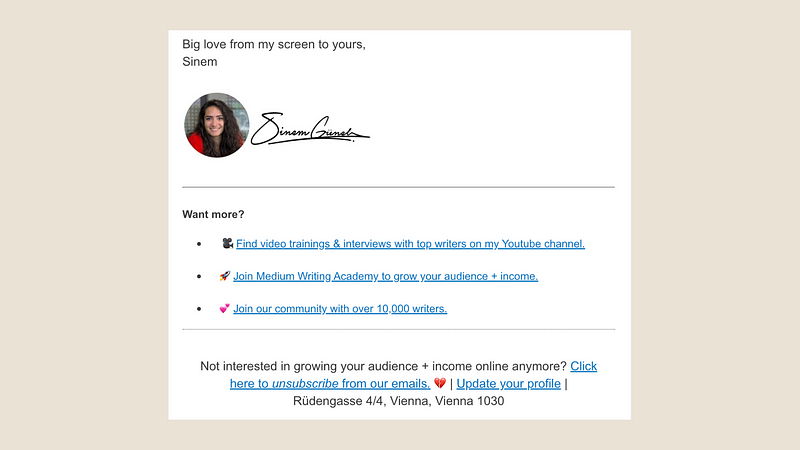
Here’s an example: I use the same closing section in all my emails for the Write • Build • Scale newsletter:
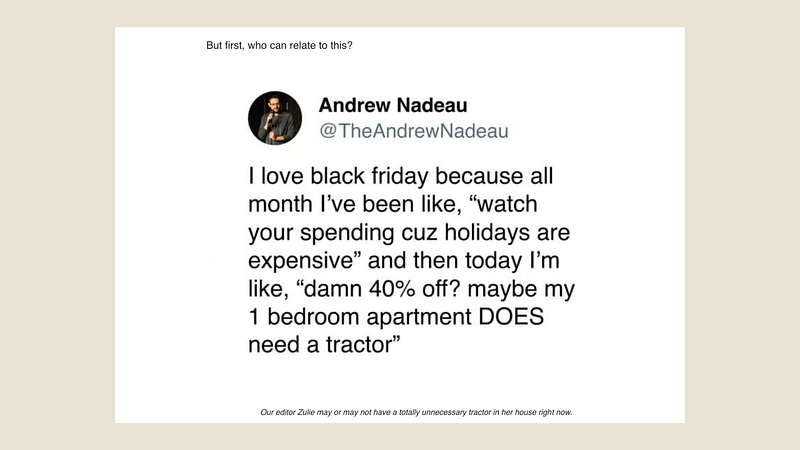
Our design for The Marketing Memo is quite simple, but we decided to start each email with a quote:
Most creators overcomplicate creating the template and design of their newsletter — and I’ve been there myself. I spent dozens of hours creating templates I never even used.
It’s so easy to think that you have to get those things perfect for a newsletter to be worthwhile, but that’s not true.
Your audience will be interested in reading your emails for the value you provide, not because they look nice.
You can always adapt the design and template for your newsletter on the go.
If you want to move fast, pick an existing template in your email marketing tool and only make the most basic adjustments (like adapting your brand colors). Go with that template until you have everything else figured out and want to adjust the design of your emails.
Convertkit, for instance, has a library with hundreds of free templates you can use.
Step #5 — Publish your first email
Once you know what you want to share in your newsletter and have set up your account, it’s time to publish your first email.
Full honesty: This is the scariest part of starting your newsletter, but it’s also the most important one.
Most creators procrastinate for months before they eventually publish their first email. They wait for the perfect time, better ideas, or more subscribers before they finally send their first email.
I recommend doing the opposite: Publish your first newsletter, even when you have zero subscribers on your list.
This is all about making a commitment and moving fast.
Most email tools allow you to have a web version of your emails, which is great for promoting your newsletter because you’re able to show potential subscribers what they can expect once they sign up.
You can see all newsletters we published for The Marketing Memo in our library, and the same is available for my Write • Build • Scale newsletter.
Ideally, you’ll create a freebie that’ll be an incentive to sign up for your newsletter, but to keep things simple, you can start without one.
A freebie can be a short ebook, an audio file, a video, a worksheet with exercises, or anything else that your ideal audience member would love to receive. To get access, they’ll share their email address and also sign up for your newsletter.
I have dozens of different freebies speaking to different desires and problems of my target audience, for instance:
- A 5-day email course where I teach you how to make money writing online
- A cheatsheet with 15 writing tips to immediately write better content.
- A video training on how to build an online education business and make money by sharing your ideas and knowledge with the world.
You should definitely consider creating freebies down the line since they lead to faster audience growth, but you don’t necessarily need one to get started.
📨 Take action:
Using the content ideas you brainstormed in Step #2, write and publish your first newsletter.
Once your email is live, make sure it’s also available online. On Convertkit, for instance, you’d do that through your Creator Profile. When that’s done, you’ll be able to share a direct link to your first newsletter (like this).
Step #6 — Schedule at least one more email in advance
Even though starting your newsletter is the biggest challenge, there’s a second obstacle that might hold you back from eventually running a successful email list: Consistency.
You don’t necessarily need to send an email each week, but I recommend sending at least two per month to ensure your readers don’t forget who you are and stay interested.
📨 Take action:
After sending your first newsletter, write at least one more. You should’ve figured out how often you want to send emails in Step #1.
Creating a backlog will help you ensure you stick to your schedule and don’t have to miss one of your first weeks. It’s no drama if you eventually have to skip a week or two at some point, but ideally, you want to stick to your promised schedule.
For The Marketing Memo, we scheduled two more emails right after publishing the first one. You’ll thank your future self for creating that backlog and working ahead of time.
Step #7 — Proudly promote your newsletter on your existing channels
Once your email list is set up and your first newsletter is published, it’s time to think about how to grow your list, so you don’t continue publishing emails for an audience of zero.
For The Marketing Memo, our job was easy because we already had existing channels that we were able to leverage to promote the newsletter.
For instance, we published a short post introducing the newsletter to our existing Better Marketing readers:
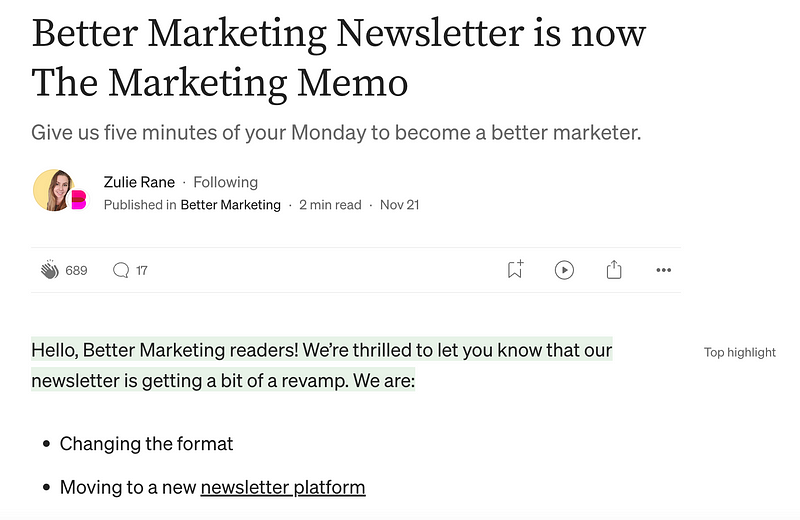
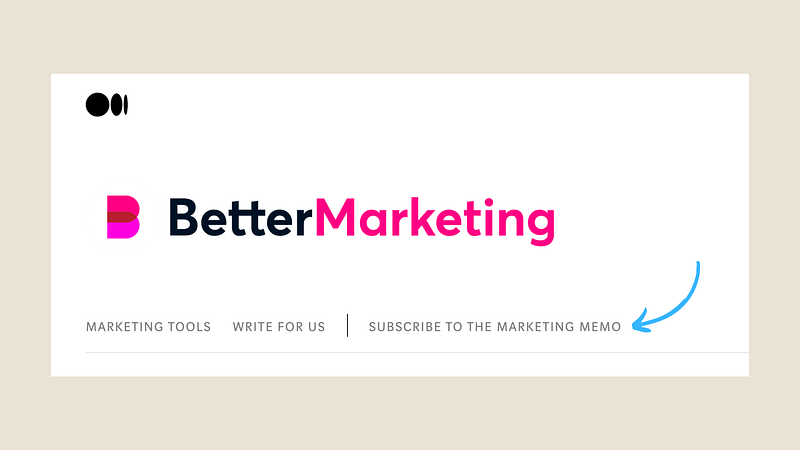
We also added a new tab to the publication’s navigation bar:
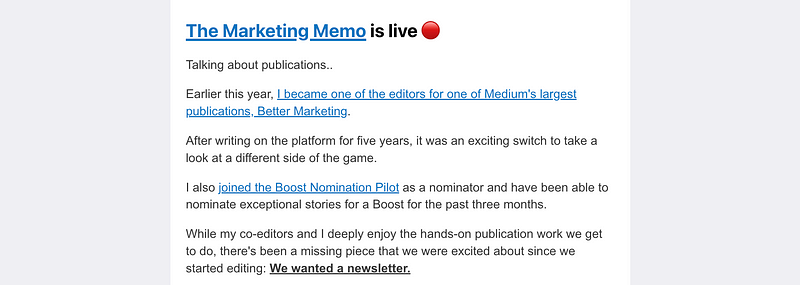
I also knew my existing audience could be interested in the content we publish at The Marketing Memo,so I promoted it in my own newsletter:
📨 Take action:
Full disclosure: Promoting and growing your newsletter is hardest when you’re new to building an audience. But even then, you have various opportunities to gain new subscribers.
First of all, you want to prominently share your newsletter subscription link in your profiles and bios. Here’s how I do it:
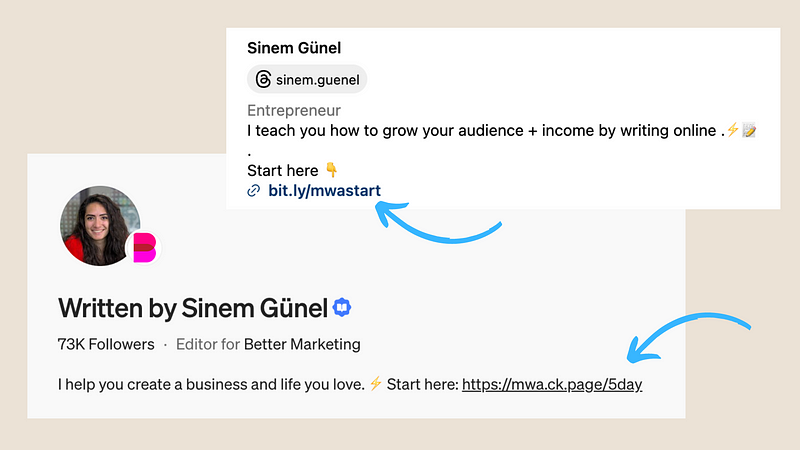
Next, you also want to use a call-to-action to refer your audience to your newsletter whenever you publish new content.
On Medium, for instance, you can easily use a short line to promote your freebie or newsletter at the end of every piece you publish. This is how I do it:
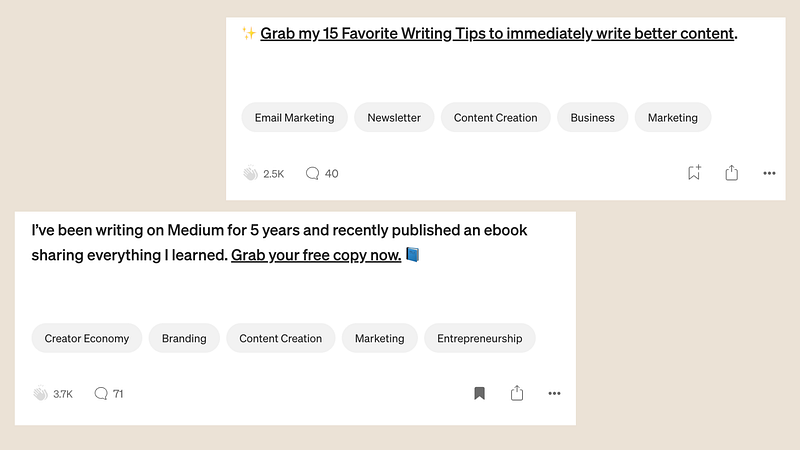
For The Marketing Memo, we keep it even more simple by writing:
Want more marketing tips and tricks? Subscribe to The Marketing Memo here.
Another fantastic way to grow your email list is to use free recommendations. Many email marketing tools have already launched their own recommendation programs. If your preferred newsletter tool doesn’t have one, you might be able to use the Sparkloop integration.
I’ve been able to grow my own email list 30% faster through Converkit’s Creator Network.
(Y)our next steps
Running a newsletter is a never-ending game. There’s always work to do and something you can learn and improve. But let’s be honest: Like with so many things, getting started is the most scary and challenging part.
Once you gain your first few subscribers and receive positive replies, you might want to keep going anyway.
You want to listen to the feedback of your readers and stay up to date on trends and new opportunities to grow and eventually even monetize your email list.
For The Marketing Memo, we’ll soon consider:
- Collaborating with creators to grow our list
- Testing different content formats and keeping an eye on link clicks to see what our audience enjoys reading about
- Different monetization options like paid recommendations, sponsorships, and ads
At this point, I’d be a lousy marketer if I didn’t tell you to sign up for The Marketing Memo and download my free Cheatsheet with 15 Tips to Immediately Write Better Content. Happy emailing!


