
How to start Python Development on Windows 10 with Anaconda
Learn how to execute Python on Windows 10 via Anaconda in 3 ways: Via editor, via console and via Jupyter notebook
The Python programming language is used for web development, data analysis, machine learning, statistics, web scraping, and so much more. There are tons of tutorials which, ironically, makes it pretty hard to recommend one. However, there is also a lack in support for Windows.
Let’s get the very first step done: Install it on Windows. After reading this article you will be able to execute Python in 3 different ways on a Windows 10 machine via Anaconda. This prepares you to go with one of the many tutorials to start your Python career.
Anaconda Installation
Anaconda is a Python and R distribution. It does not only bring the Python interpreter, but also an editor called Spyder and Jupyter Notebooks. I’ll explain that later.
Download Python 3 for Windows — at the time of writing, Python 3.7 and most likely the 64-bit Edition. Use the default values and install it. After that, you should see the Anaconda Navigator in your programs.
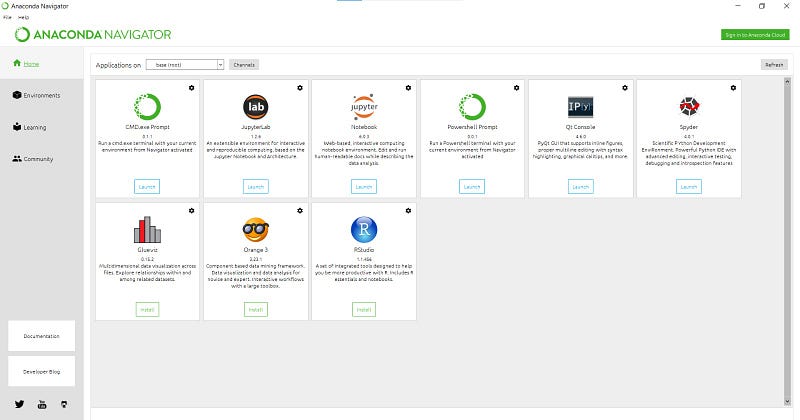
Run Python through Spyder
Now Launch Spyder. You will be prompted with a lot of different things. You can just click them away.
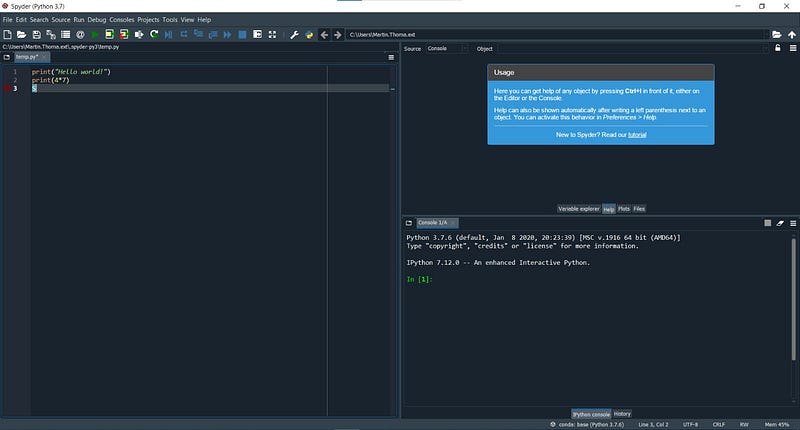
Then enter some hello world code:
print("Hello World")
print(4*7)
And click on the green “play” button. You will be prompted with options how to run this file. Just leave all at default and click on “Run”:

Congratulations, you executed Python code!
How to install packages for Anaconda?
Installing packages gives you super powers: You can execute other peoples code — code written by hundreds and thousands of people!
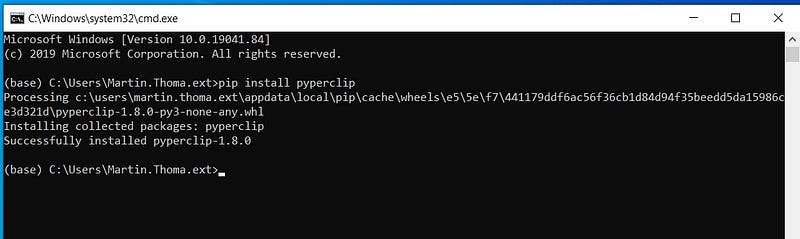
Go back to the Anaconda Navigator and click on CMD.exe Prompt. A window with black background and white text will appear. This is a terminal. It’s sometimes also called console or shell (see the exact terminology; it doesn’t matter for now). Enter the following:
pip install pyperclippip is a command-line tool to install packages for Python.
After entering the command, it should look like this:
Congratulations, you’ve just installed one of 200,000 Python packages!
To test it, go back to Spyder and enter the following code:
import pyperclipprint("This is currently in your clipboard: " + pyperclip.paste())
pyperclip.copy("Pyperclip can copy something to your clipboard")Run Python via Terminal
Start a terminal via the Anaconda Navigator / CMD.exe and enter python . This will start the interactive Python shell:
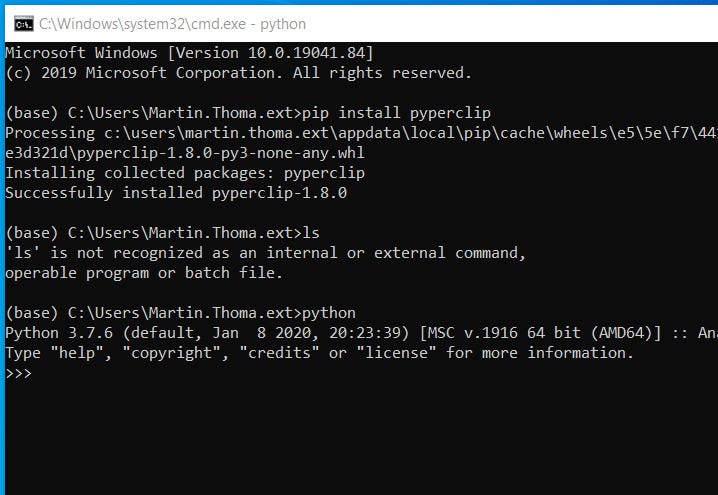
The string >>> is called a prompt and it indicates that you should enter something. You can enter any Python code you want. For example:
>>> 4+7
11
>>> 2**3
8
>>> print("Hello World")
Hello World
You’ve just mastered the next milestone in your Python career — using the interactive shell! It’s also called a REPL for Read-Evaluate-Print-Loop. It is extremely useful for quickly trying things out.
Run Python in Jupyter notebooks
Jupyter notebooks are the data scientists tool of choice. They can be hosted in the web and include images and text directly next to the code. There are pretty impressive examples out there. The charm of it is that you don’t need to restart the execution over and over again. Still, for real development it’s not a good fit.
Click on “Launch Jupyter Notebook” in the Anaconda Navigator.
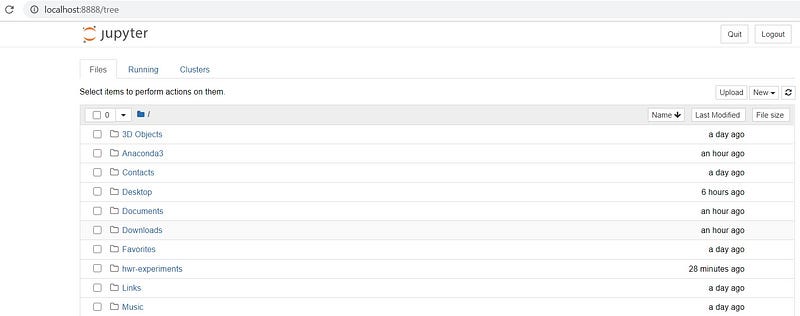
Click on “New” in the upper right corner below Quit / Logout. In the dropdown menu, you can see “Python 3”. Click on that:
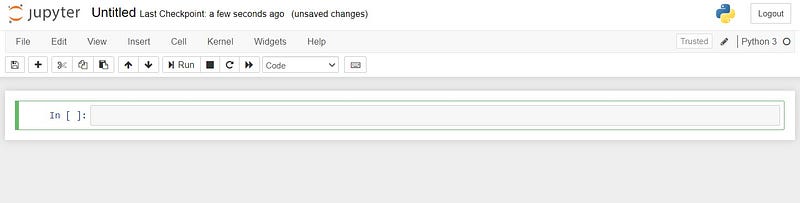
Enter some code (e.g. print(3*7) and hit Shift+Enter. It should now print 21 and give you a new box to enter code:

Amazing, you’ve just used Jupyter notebooks the first time! There are way more things you can do with Jupyter.
How can I continue?
If you want an introduction into Python from the beginning, try the official Python tutorial. Although I already had programming experience when I started with Python, I went through this to make sure I know the basics.
If you have some programming background, there is also the Python Jumpstart by building 10 apps. I haven’t tried it, but I love the talk Python podcast.


