avatarJennifer Clinehens

Free AI web copilot to create summaries, insights and extended knowledge, download it at here

3749

Abstract

ight to adding something new?</p><h1 id="d377">An Example of Lateral Thinking in Action</h1><p id="4c39">That all sounds great, but how can we apply Lateral Thinking? Let’s do a thought exercise.</p><p id="511f"><b>Here’s your challenge:</b></p><p id="d0b9">Imagine you’re a national pizza chain whose sales have been dipping due to the quality of your pizza. You’ve just spent a year improving your product, and you know it’s top of the line, but now you have a new problem — your pizzas are leaving the shop looking great but being damaged in transit. By the time your pizzas get to your customers, they look like this:</p><figure id="eae9"><img src="https://cdn-images-1.readmedium.com/v2/resize:fit:800/1*EzWU6jOLly7WGKoR7o6Rog.png"><figcaption>Source: <a href="https://www.reddit.com/r/shittyfoodporn/comments/kou9pj/some_of_the_toppings_was_stuck_on_the_top_of_the/">Reddit</a> via u/Your_FriendlyKaiser</figcaption></figure><p id="8101">So let’s use Lateral Thinking to solve this problem.</p><h2 id="fc8a">1. Consider Alternative Solutions</h2><p id="7376">The obvious first solution is to add one of those tiny plastic tables to the pizza box. After all, that’s what they’re designed to do.</p><figure id="bfce"><img src="https://cdn-images-1.readmedium.com/v2/resize:fit:800/0*H3KqGo81K9uy3YPh.jpg"><figcaption>Source: <a href="https://www.google.com/search?q=pizza+plastic+table&amp;safe=active&amp;tbm=isch&amp;sxsrf=ALeKk012b_hw3Fq5GqxM3MqU1OdkDngEYw%3A1619799983166&amp;source=hp&amp;biw=1893&amp;bih=943&amp;ei=ry-MYPGlB-WOjLsPjcOnyAQ&amp;oq=pizza+plastic+table&amp;gs_lcp=CgNpbWcQAzICCAAyBggAEAgQHjoECCMQJzoFCAAQsQM6CAgAELEDEIMBUIUCWJAUYOEVaABwAHgAgAE9iAHEB5IBAjE5mAEAoAEBqgELZ3dzLXdpei1pbWc&amp;sclient=img&amp;ved=0ahUKEwixueeUsabwAhVlB2MBHY3hCUkQ4dUDCAc&amp;uact=5#imgrc=wf_Vt-EjWgOuaM">Google Images</a></figcaption></figure><p id="5ffd">But that’s the obvious answer, so you decide to try “Consider Alternative Solutions” and throw out your first idea. You start digging deeper, mulling over the root causes of damaged pizzas. What might be an unexpected approach?</p><h2 id="90e3">2. Random Stimulation</h2><p id="5b57">You’re stuck, so you decide to take a walk down the residential street where you live. You ruin your trousers and almost break your ankle after walking through what looked like a small puddle but ended up being a deep pothole. You watch a car drive through it and violently bump down the road.</p><p id="1508">You haven’t come up with a solution yet, but you’re starting to wonder, “Could our delivery drivers do anything to help us keep pizzas in better shape?”</p><h2 id="1f56">3. Subtractive Thinking</h2><p id="05ac">Damaged pizza sounds like a business problem because our company’s operations are failing somewhere. But what if it’s not? What external factors might be causing our pizzas to get damaged that we can take away?</p><p id="f62e"><b>Of course!</b> Bumpy roads, specifically potholes. You run some numbers and discover that the areas with the biggest number of potholes also have the highest numbers of product quality complaints.</p><figure id="b050"><img src="https://cdn-images-1.readmedium.com/v2/resize:fit:800/0*OyxqyJTlDw_T5VpG"><figcaption>Photo by <a href="https://unsplash.com/@marcojodoin?utm_source=medium&amp;utm_medium=referral">Marc-Olivier Jodoin</a> on <a href="https://unsplash.com?utm_source=medium&amp;utm_medium=referral">Unsplash</a></figcaption></figure><h1 id="e901">Dominos Pizza: Real World Lateral Thinkers</h1><p id="0cc7">If you followed a lateral thinking process like this, you might develop a solution to fix your damaged pizzas like Dominos did when it launched the “Paving for Pizza” initiative.</p><figure id="7350"><img src="https://cdn-images-1.readmediu

Options

m.com/v2/resize:fit:800/0*ep1nambKi8ncvn0R"><figcaption>Source: <a href="https://www.google.com/search?q=dominos+pot+hole&amp;tbm=isch&amp;ved=2ahUKEwjqxcToyaPwAhUK-BoKHYhLAtUQ2-cCegQIABAA&amp;oq=dominos+pot+hole&amp;gs_lcp=CgNpbWcQAzICCAA6BAgjECc6BAgAEEM6BQgAELEDOgcIABCxAxBDOgoIABCxAxCDARBDOgYIABAIEB5QmDdYhkVgvkZoAHAAeACAAUCIAesGkgECMTaYAQCgAQGqAQtnd3Mtd2l6LWltZ8ABAQ&amp;sclient=img&amp;ei=4baKYKrROYrwa4iXiagN&amp;bih=842&amp;biw=1584&amp;safe=active#imgrc=TFLpwxqv6UBXfM">Google Images</a></figcaption></figure><p id="2da0">Dominos used Lateral Thinking to figure out that many of its product complaints were related to its drivers hitting potholes while delivering pizza. So, Dominos figured out a creative solution that not only benefitted them but their community as well.</p><p id="92f5">Truck and road crews soon hit the road, emblazoned with the slogan, “Bad roads shouldn’t happen to good pizza.” Funded by Dominos, these teams began fixing potholes on streets frequented by its delivery drivers.</p> <figure id="ccee"> <div> <div> <img class="ratio" src="http://placehold.it/16x9"> <iframe class="" src="https://cdn.embedly.com/widgets/media.html?src=https%3A%2F%2Fwww.canva.com%2Fdesign%2FDAFWQ3TnwqY%2Fview%3Fembed%26meta&amp;display_name=Canva&amp;url=https%3A%2F%2Fwww.canva.com%2Fdesign%2FDAFWQ3TnwqY%2Fview&amp;key=a19fcc184b9711e1b4764040d3dc5c07&amp;type=text%2Fhtml&amp;schema=canva" allowfullscreen="" frameborder="0" height="100" width="275"> </div> </div> </figure></iframe></div></div></figure><h1 id="6d0a">The Bottom Line</h1><p id="ab54" type="7">“You cannot dig a hole in a different place by digging the same hole deeper.”</p><p id="a398" type="7">— Edward de Bono</p><p id="b6a5">Don’t let anyone kid you — Lateral Thinking is hard work. But it’s hard work that can help solve impossible problems. Brands like <a href="https://bigthink.com/videos/lateral-thinking-the-reason-youve-heard-of-nintendo-and-marvel">Marvel and Nintendo</a> cite this approach as a competitive advantage over their peers. Business legends like <a href="https://www.entrepreneur.com/article/367350#:~:text=Lateral%20Thinking%20Defines%20Today%27s%20Leaders,lateral%20thinking%20their%20calling%20card.&amp;text=You%20can%20learn%20to%20think,attitude%20that%27s%20accepting%20of%20flexibility.">Steve Jobs and Elon Musk</a> have relied on Lateral Thinking for market breakthroughs.</p><p id="301e">If you choose to apply Lateral Thinking, know that although the anecdotal evidence supports it, there’s <a href="https://aeon.co/essays/lateral-thinking-is-classic-pseudoscience-derivative-and-untested">limited</a> empirical evidence that it works. As sociologist Antonio Melechi <a href="https://aeon.co/essays/lateral-thinking-is-classic-pseudoscience-derivative-and-untested">put it</a>:</p><p id="21f6" type="7">“Nobody has been able to prove that literature, history or mathematics classes have prepared people for society…”</p><p id="e8a9">But Melechi goes on to admit that:</p><p id="8c74" type="7">“There are practical positive effects that are regularly reported as a result of the efficient use of de Bono’s lateral thinking tools.”</p><p id="7a9d">If you need an innovative solution to a complex challenge, give it a shot. Lateral Thinking takes time and effort, but history has proven it can help you create an impactful, effective, and creative solution to your most impossible problems.</p><p id="6bf1">If you enjoyed this article, you might enjoy my book “How to Solve Impossible Problems” — available worldwide on Amazon.</p><p id="13ff">👉👉 <a href="https://geni.us/H2SIP">Click here to check it out.</a></p></article></body>

How to Solve Impossible Problems: Lateral Thinking

How to use the thinking tools of billionaires, inventors, and CEOs

Photo by Cristina Gottardi on Unsplash

Every day we’re presented with what seem like impossible challenges. Issues that you can’t crack, even after weeks, months, or years of trying.

How do you approach these challenges? Do you have a strategy that you follow, or do you just hope for the best? There’s a better way to solve impossible problems — improve the quality of your thinking.

Better thinking, problem-solving, and reasoning are skills. They can be developed through learning new frameworks and expanding our mental models.

To solve impossible problems, improve the quality of your thinking.

Lucky for us, brilliant thinkers, creators, entrepreneurs, and philosophers have left behind proven ways to attack these impossible problems.

Lateral Thinking is one of those tools.

What is Lateral Thinking?

Lateral Thinking is a system for how to approach creative thinking. It can help us look at problems in new, unexpected ways and craft innovative solutions.

Lateral Thinking can help us create innovative answers by looking at our problems in new, unexpected ways.

The term Lateral Thinking was coined by author and psychologist Edward de Bono in his book, Lateral Thinking: Creativity Step by Step. Lateral Thinking is presented by de Bono as an alternative to our “normal” style of analytical thinking.

Source: Image created by author

Lateral Thinking describes an approach, but it also represents a set of tools that can help us open our minds to new ideas, innovate, harvest the best ideas, and refine them to fit real-world constraints.

How to Perform Lateral Thinking

Because Lateral Thinking describes a process, not a specific tool, it can help to have a list of specific techniques to try. For example:

1. Consider Alternate Solutions

Edward de Bono argued that even if there’s an obvious solution to a problem, setting it aside to deliberately consider different approaches can help make sure you’ve considered a problem from all possible angles.

2. Random Stimulation

Take a walk, visit a museum, drive down the street. Inviting random stimulus into your environment while noodling on a problem can help you find unexpected solutions. A study performed at Stanford University even found that walking improves creativity.

3. Subtractive Thinking

When asked to solve problems or fix issues, studies show our first instinct is often to add things — to create new products, new packaging, or a new project. But what would happen if you began subtracting instead of skipping straight to adding something new?

An Example of Lateral Thinking in Action

That all sounds great, but how can we apply Lateral Thinking? Let’s do a thought exercise.

Here’s your challenge:

Imagine you’re a national pizza chain whose sales have been dipping due to the quality of your pizza. You’ve just spent a year improving your product, and you know it’s top of the line, but now you have a new problem — your pizzas are leaving the shop looking great but being damaged in transit. By the time your pizzas get to your customers, they look like this:
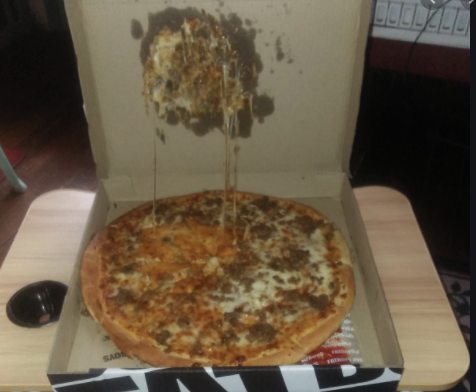
Source: Reddit via u/Your_FriendlyKaiser

So let’s use Lateral Thinking to solve this problem.

1. Consider Alternative Solutions

The obvious first solution is to add one of those tiny plastic tables to the pizza box. After all, that’s what they’re designed to do.
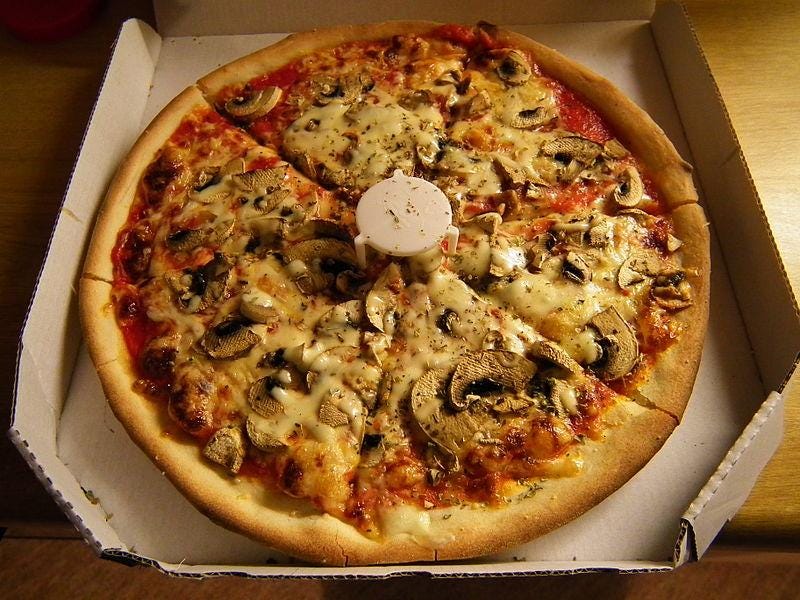
Source: Google Images

But that’s the obvious answer, so you decide to try “Consider Alternative Solutions” and throw out your first idea. You start digging deeper, mulling over the root causes of damaged pizzas. What might be an unexpected approach?

2. Random Stimulation

You’re stuck, so you decide to take a walk down the residential street where you live. You ruin your trousers and almost break your ankle after walking through what looked like a small puddle but ended up being a deep pothole. You watch a car drive through it and violently bump down the road.

You haven’t come up with a solution yet, but you’re starting to wonder, “Could our delivery drivers do anything to help us keep pizzas in better shape?”

3. Subtractive Thinking

Damaged pizza sounds like a business problem because our company’s operations are failing somewhere. But what if it’s not? What external factors might be causing our pizzas to get damaged that we can take away?

Of course! Bumpy roads, specifically potholes. You run some numbers and discover that the areas with the biggest number of potholes also have the highest numbers of product quality complaints.

Photo by Marc-Olivier Jodoin on Unsplash

Dominos Pizza: Real World Lateral Thinkers

If you followed a lateral thinking process like this, you might develop a solution to fix your damaged pizzas like Dominos did when it launched the “Paving for Pizza” initiative.
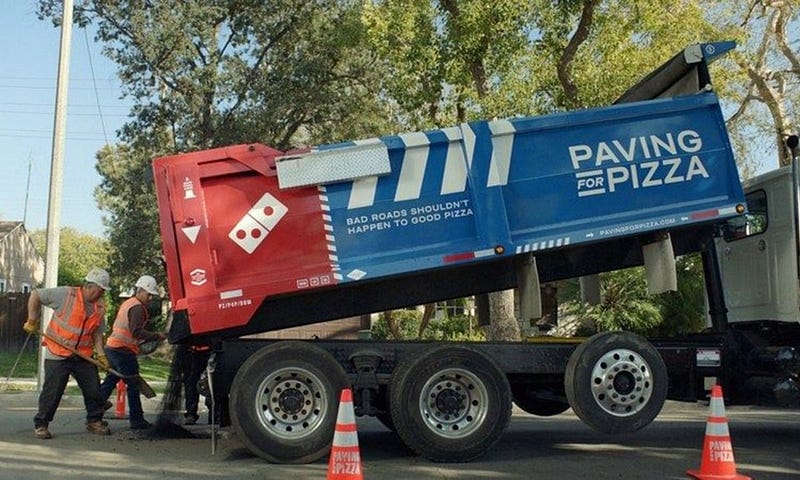
Source: Google Images

Dominos used Lateral Thinking to figure out that many of its product complaints were related to its drivers hitting potholes while delivering pizza. So, Dominos figured out a creative solution that not only benefitted them but their community as well.

Truck and road crews soon hit the road, emblazoned with the slogan, “Bad roads shouldn’t happen to good pizza.” Funded by Dominos, these teams began fixing potholes on streets frequented by its delivery drivers.

The Bottom Line

“You cannot dig a hole in a different place by digging the same hole deeper.”

— Edward de Bono

Don’t let anyone kid you — Lateral Thinking is hard work. But it’s hard work that can help solve impossible problems. Brands like Marvel and Nintendo cite this approach as a competitive advantage over their peers. Business legends like Steve Jobs and Elon Musk have relied on Lateral Thinking for market breakthroughs.

If you choose to apply Lateral Thinking, know that although the anecdotal evidence supports it, there’s limited empirical evidence that it works. As sociologist Antonio Melechi put it:

“Nobody has been able to prove that literature, history or mathematics classes have prepared people for society…”

But Melechi goes on to admit that:

“There are practical positive effects that are regularly reported as a result of the efficient use of de Bono’s lateral thinking tools.”

If you need an innovative solution to a complex challenge, give it a shot. Lateral Thinking takes time and effort, but history has proven it can help you create an impactful, effective, and creative solution to your most impossible problems.

If you enjoyed this article, you might enjoy my book “How to Solve Impossible Problems” — available worldwide on Amazon.

👉👉 Click here to check it out.

Pineapple2021
Marketing
Psychology
Technology
UX
Recommended from ReadMedium