
How to Sketch Your Start-Up
How my millionaire mentor follows simple steps to draft the visual map for a new business

Ted N. Strader is a genius at visually mapping start-up plans — he’s basically a business Da Vinci.
He’s also a multi-millionaire who consults individuals, teams, organizations, and even the U.S. federal government. He knows what makes a successful start-up and what can, unfortunately, cause one to fail.
He also mentored me for 13 years.
Under his mentorship, I personally watched him sketch portraits of budgets, organizational charts, and timelines for a dozen planned launches.
His two main businesses — The Resilient Futures Network (RFN) and the Council on Prevention and Education: Substances (COPES) — both still exist after nearly 40 years. He has also helped start an international online learning platform called eLeap, along with several other local businesses.
One of the “secrets” to his success in start-ups is visually mapping out plans. In this article, I will break down exactly how he does it.
Sketch Your Map
Usually, he sketched his first draft on white printer paper or a flip chart. This allowed him (and others) to easily and quickly update the start-up map. Sometimes he added new positions or tasks. Other times he combined or deleted sections.
Occasionally, he scraped the entire plan for a completely new model.
Each sketch looked different depending on the complexity of the start-up or business model. However, he usually used boxes, squares, or circles to illustrate key positions, timelines, and goals.
Sketching out your plan allows you to maximize flexibility. You can adapt to changed thinking without slowing down discussions. Everyone “sees” the big picture on the page, chart, or whiteboard.
“To achieve great things, two things are needed; a plan, and not quite enough time.” ― Leonard Bernstein, composer and conductor
Once the thinking gets concrete, so does the map.
My boss translates the sketch into a digital map using available smart devices. As technology advances, more options open up for entrepreneurs.
Even once the map goes digital, it still morphs as plans change, positions shift, funding comes or goes, and timelines align with reality. The initial sketch may take a few minutes to scrawl on paper.
The digital version typically takes a few hours. The entire process can take days, weeks, or months of deep thinking. In that period, the map often transforms into something completely new — and highly useable.
The map becomes the centerpiece for pitches, funding requests, hiring decisions, and more.
Takeaway: Sketch your map using materials that you can easily edit in real-time.
Start With the Money
Ted almost always began with the total budget for the startup. He then distributed the money visually into three major buckets:
- Staffing — Who does what? How many people do we need? How much will we pay?
- Infrastructure — Where will the start-up be located? What materials do we need? How much will it cost?
- Implementation — How will the business run? How will we get customers? How will we deliver products or services? How much will we charge?
Every part of the start-up plan eventually went into one of these three buckets. By starting with the money, he quickly uncovered gaps in thinking. Those he consulted often sat back, scratched their heads, and racked their brains until innovation struck.
They simply hadn’t thought of a certain position, how many individuals they might need, insurance, recruitment, sustainability, etc. These gaps in thinking helped many people improve their start-up plans, craft pitches to key stakeholders for funding, or — rarely — reconsider launching altogether.
Takeaway: Start with the three money buckets: staffing, infrastructure, and implementation.
Million-Dollar Visual Map Tips
My mentor makes simple maps that visually illustrate the major elements of a start-up plan. His maps either flow vertically from the top of a page to the bottom (to show organizational leadership) or horizontally from left to right (to demonstrate activity over time).
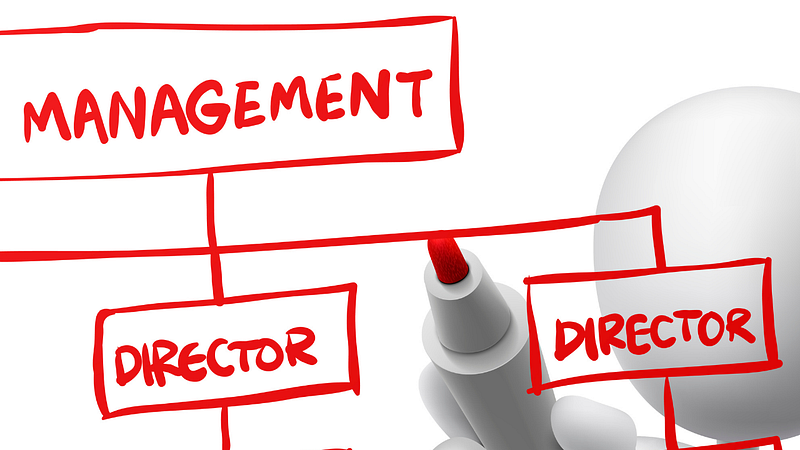
His maps offer as much sophistication as simplicity. Here are the “million-dollar” map tips I’ve picked up from him:
- Sketch freely and wildly for the first sketch. Don’t restrict your thinking. Brainstorm with pictures, shapes, and other graphical elements.
- Sketch several maps for different purposes. For example, one sketch for the organizational chart and another for timelines. Or, one sketch for an internal map and another that includes external partners.
- Sketch simply. Complex maps overwhelm and shut down planning. Keep things as simple as possible while mapping out the major sections. Not every detail needs to be mapped.
- Sketch connections. Use solid lines to show established or existing leadership, management, or responsibility. Use dotted lines to show proposed connections or advisory oversight.
Takeaway: Sketch freely, simply, and connectedly.
The Million Dollar Question
Like a keen police sketch artist, Ted asked lots of questions about the potential start-up. Some viewed his questions as criticism, but really he played “The Devil’s Advocate”.
The million-dollar question hanging over these conversations was always the same: Do you start up or start over?
Ted focused on winning — for everyone involved. He asked hard questions to find real answers to common start-up problems. By dong so, his sketches often visually displayed weaknesses in the design of the start-up.
Common weaknesses include:
- Insufficient funding
- Unrealistic role expectations (one position managing too many responsibilities)
- Lack of infrastructure
- Delusional thinking about recruitment, sales, or marketing
Once Ted finished an initial sketch, logical flaws jumped out at those in the room. It’s hard to ignore glaring weaknesses. Hard, but not impossible.
How people handled those flaws could make or break a start-up.
Takeaway: Everything hinges on the million-dollar question. Don’t be afraid to ask it or answer it.
Talk About What You See
Ted facilitated many uncomfortable conversations with the smooth panache of a skilled leader. The conversations typically resulted in one of two outcomes: a revised sketch or defensive arguing.
Thankfully, the first outcome occurred much more frequently.
Ted always wanted to talk about the map. What works? What doesn’t work? How to make it better? To him, a better map constituted a better business.
“It does not do to leave a live dragon out of your calculations, if you live near one.” — J.R.R. Tolkien
As a busy professional, Ted prioritized meetings with those willing to talk openly, honestly, and humbly about strengths and flaws. He either postponed conversations with those not willing to talk or, occasionally, walked away from collaborations.
A map is only as good as the conversation — and action — that follows.
Takeaway: Always talk about your dragons.
Show Off Your Sketch
During each iteration of the map, Ted sought outside feedback. He shared the sketch with family, other professionals in divergent fields, key stakeholders, and consulted his own cache of mentors.
In short, he showed off his sketch.
This process gave him (and the entire team involved) lots of feedback. Good feedback in the planning stage can save thousands of dollars later. The feedback almost always changed the map. Either the advice revealed a missing piece, a mistake, or an unexplored opportunity.
Whatever the case, the feedback made a better map.
Takeaway: Seek feedback at each iteration of the map.
Parting Thoughts
My mentor is old school so he started with pencil and paper. I think it grounds him (and others) in concrete, visual thinking. There is something magical about holding the utensil that marks the page.
Your map, itself, is magic.
It’s the talisman that guides your thinking. The potion for your planning. The incantation for innovation and eventual implementation. The map visually collates and incubates your start-up plans.
So, sketch your start-up like a millionaire. Hopefully, it’s the first step in the adventure of a lifetime.


